
NAND flash is not automatically green. Its environmental impact depends on more than how quickly or densely it stores data: manufacturing, electricity used in operation, useful life, opportunities for reuse, and end-of-life treatment all matter. To assess a sustainability claim, check what it measures, its boundary and time period, and whether it can fairly be compared with another product.
What makes NAND flash more sustainable?
NAND flash is the memory technology used in products such as solid-state drives (SSDs), memory cards, and USB flash drives. Its sustainability is a lifecycle question, not a single product feature. Relevant stages include extracting and processing materials, manufacturing and testing chips and devices, operating them, and handling them after use.
Kioxia says it works to reduce product impacts throughout their lifecycle, including manufacturing emissions intensity per unit of capacity and energy efficiency while data is processed. Samsung Semiconductor describes lifecycle assessment (LCA) across raw-material extraction, transport, manufacturing, use, and disposal. Those are different parts of the picture: a factory or production metric does not, by itself, describe a device’s lifetime impact.
Higher capacity or speed is not proof of a lower environmental impact. Kioxia also cautions that growing demand for faster, larger-capacity flash can increase the electricity needed to operate devices. Efficiency per unit of data and total energy use are related, but they are not interchangeable.
Do these 3 things before closing this tab:
1Scan for outdated or missing drivers - takes under a minute2Clear out junk files and repair common Windows errors3Fix the driver behind crashes, sound loss and screen glitches#1 Best Overall

- MOVE FILES IN A FLASH: Fast and convenient read speeds up to 300 MB/s* with the latest USB 3.1 standard give you more time to work, play, watch, and create; Send a 3GB 4K UHD video file from your Bar Plus to your PC in just 10 seconds**
- RUGGED REFINEMENT: As strong as it is stylish; The sturdy metal body keeps your data safe and intact, and the integrated keyring prevents accidental misplacement or loss; The Bar Plus is the ideal combination of stunning design and worry-free durability
- TOUGH & TRUSTED: The Bar Plus a trustworthy drive to store your valuable data; It works through it all with a waterproof, shock-proof, temperature-proof, magnet-proof, and X-ray-proof body, all backed by a 5-year limited warranty***
- WORLD'S #1 FLASH MEMORY BRAND: Experience the performance and reliability from the world's #1 brand for flash memory since 2003;**** All firmware & components, including Samsung's world-renowned DRAM & NAND, are produced in-house
How to read energy and carbon claims
Before comparing a sustainability figure, identify its denominator, baseline, lifecycle boundary, and date. A per-gigabyte efficiency figure, a product carbon footprint, recycled-material content, and renewable electricity used at a factory describe different things. They should not be combined into one unqualified “green” score.
- Energy per data processed: Check what workload and quantity of data the metric covers, and which baseline year is used.
- Manufacturing emissions per capacity: Check whether the figure covers only production or a wider lifecycle, and how electricity-related emissions are accounted for.
- Product carbon footprint (PCF): Check which lifecycle stages are included. A cradle-to-gate figure generally stops when the product leaves manufacturing, so it does not establish impacts from use or disposal.
- Recycled materials or renewable electricity: Treat each as a specific attribute, not a substitute for a comparable whole-product assessment.
Samsung Semiconductor says its LCA process is based on ISO 14040, ISO 14044, and ISO 14067. Its PCF system describes a cradle-to-gate scope covering extraction, manufacturing, packaging, and testing. Because that boundary excludes later use and disposal, a cradle-to-gate number should not be compared as though it covered the same stages as a full-lifecycle result. See Samsung Semiconductor’s LCA and PCF methodology.
Rank #2

- Lightweight and convenient: Lexar JumpDrive A30E (USB Type-A) boasts a slim, portable design for easy device compatibility; lightweight at 7.41 g
- Transfer speeds up to 100 MB/s: 10x faster than standard USB 2.0 drives; Based on internal testing, performance may vary depending upon the host device, interface, and usage conditions
- Wide compatibility: Compatible with tablets, laptops, Macs, and traditional Type-A devices, no software installation required; Reliably stores photos, videos & files
- Compact: Features a push-button retractor and a lanyard loop for on-the-go use
- Enhanced security: Lexar DataShield protects files, easily creates a password-protected safe with auto-encryption; Files deleted from the safe are securely erased and can't be recovered
What Kioxia’s energy-efficiency figures do—and do not—show
Kioxia Holdings Corporation reports that its products required around 38% less energy to process 1 GB in FY2024 than in FY2017. The company attributes progress to higher speeds, advanced NAND integration, and controller design. This is a company-reported use-efficiency comparison; it is not a measured 38% reduction in a product’s total lifecycle carbon footprint, nor a comparison between competing brands.
Kioxia’s current products page also states a target of reducing energy consumed per 1 GB processed by 50% in FY2025 compared with FY2017. The same page reports around 38% progress for FY2024; the available information does not establish whether the FY2025 target was ultimately met. Kioxia says it has obtained DNV third-party verification for product LCAs since March 2024 and plans to expand the number of products assessed. That statement does not mean every Kioxia product has a verified LCA. The figures and qualifications appear on Kioxia’s product sustainability page.
The Tool Desk
Outbyte PC Repair FREEClear out junk files and repair common Windows errorsFree Scan →Outbyte Driver Updater FREEScan for outdated or missing drivers - takes under a minuteDriver Scan →Rank #3
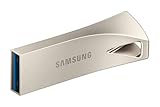
- MOVE FILES IN A FLASH: Fast and convenient read speeds up to 300 MB/s* with the latest USB 3.1 standard give you more time to work, play, watch, and create; Send a 3GB 4K UHD video file from your Bar Plus to your PC in just 10 seconds**
- RUGGED REFINEMENT: As strong as it is stylish; The sturdy metal body keeps your data safe and intact, and the integrated keyring prevents accidental misplacement or loss; The Bar Plus is the ideal combination of stunning design and worry-free durability
- TOUGH & TRUSTED: The Bar Plus a trustworthy drive to store your valuable data; It works through it all with a waterproof, shock-proof, temperature-proof, magnet-proof, and X-ray-proof body, all backed by a 5-year limited warranty***
- WORLD'S #1 FLASH MEMORY BRAND: Experience the performance and reliability from the world's #1 brand for flash memory since 2003;**** All firmware & components, including Samsung's world-renowned DRAM & NAND, are produced in-house
A separate Kioxia Europe brochure reports around a 19% improvement in energy consumption efficiency for processing 1 GB in FY2021 compared with FY2017. That historical figure refers to a different reporting year; it should not replace or be blended with the FY2024 figure. See Kioxia Europe’s 2022 sustainability brochure.
Why efficiency does not settle the total-impact question
A device can use less energy for each gigabyte processed while total energy demand rises if the amount of data stored or processed grows. Capacity, throughput, workload, and operating time all affect total use. Kioxia explicitly notes that demand for higher-speed and larger-capacity flash may raise the electricity required to operate devices. Its per-gigabyte result is useful evidence about efficiency, but cannot alone establish whether total environmental impact is falling.
Rank #4
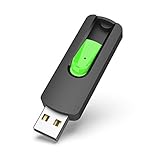
- Large Data Storage Capacity: Flash Drive with 128GB capacity, meet your needs of daily use on work, school, home and travelling for photos, music, videos, files storage and transfer
- Easy to use: The thumb drive is plug and play without any software installation; Supports Windows 7/8/10 / Vista / XP / Unix / 2000 / ME / NT Linux and Mac OS, also compatible with USB 2.0 and 1.1 ports; Storage is fast, safe and stable
- Wide Compatibility: USB flash drive support TV, desktop, notebook computer, car, audio and other device; It is your great data storage and transfer companion with traveling and working
- Retractable Desgin: The usb drive's retractable design can effectively protect the USB interface; The capless design can avoid losing of cap; Weight: 7g, Size: 2.6 × 0.8 × 0.4 inch. Portable to take your digital world anywhere
- What You Get: 1 x 128GB USB Flash Drive Thumb Drive, All of usb drives have been rigorously tested and formatted before leaving the factory; The default format of the USB stick is exFAT
For a meaningful comparison, look for equivalent workload and measurement periods, the same energy denominator, and comparable lifecycle boundaries. Also consider capacity and expected useful life: a drive that serves a workload for longer may avoid replacement, but that benefit should not be assumed without evidence about actual use and durability.
Independent reader supportYour contribution helps us test, update, and keep practical guides available for everyone.What product labels and recycled materials can tell you
Samsung Semiconductor reports that 38 semiconductor products received Carbon Trust Product Carbon Footprint certification during the 2019–2021 period, including SSDs. Its page says the certifications expire two years after acquisition, so this history is not evidence that a particular current SSD remains certified. The company’s description is at Samsung Semiconductor’s product footprint page.
Best Value

- High-speed USB 3.0 performance of up to 150MB/s(1) [(1) Write to drive up to 15x faster than standard USB 2.0 drives (4MB/s); varies by drive capacity. Up to 150MB/s read speed. USB 3.0 port required. Based on internal testing; performance may be lower depending on host device, usage conditions, and other factors; 1MB=1,000,000 bytes]
- Transfer a full-length movie in less than 30 seconds(2) [(2) Based on 1.2GB MPEG-4 video transfer with USB 3.0 host device. Results may vary based on host device, file attributes and other factors]
- Transfer to drive up to 15 times faster than standard USB 2.0 drives(1)
- Sleek, durable metal casing
- Easy-to-use password protection for your private files(3) [(3)Password protection uses 128-bit AES encryption and is supported by Windows 7, Windows 8, Windows 10, and Mac OS X v10.9 plus; Software download required for Mac, visit the SanDisk SecureAccess support page]
SanDisk identifies recycled aluminum in its Extreme Pro Portable SSD. That is a material attribute, not proof that the drive has a lower overall footprint than a competing model: the cited product information does not provide an aligned, whole-life comparison. See SanDisk’s environment page.
Reuse and recycling at the end of a drive’s life
Reuse is not the same as recycling
Keeping a working SSD in service, or restoring it for reuse, can extend its useful life; recycling instead recovers or processes materials after a product is no longer used as a device. Kioxia says its research and development team is studying ways to restore NAND performance with the goal of reusing used SSDs. This is research, not a consumer repair or refurbishment service.
A current U.S. recycling option
SanDisk describes its free SANDISK Trade Up program for people in the United States. The company says it accepts used SSDs, hard drives, memory cards, and USB flash storage from any manufacturer. Its page identifies e-Stewards-certified recycler USMe as a partner and says the process includes a prepaid shipping label and a Certificate of Destruction. Check SanDisk’s program information for current eligibility and terms before sending a device. Follow the program’s instructions for data and device preparation; a recycling offer is not a reason to assume stored data has been securely erased before shipment.
SanDisk also states a target to divert 95% of waste from landfill by 2035. This is a company target, not a reported achieved rate, and it should not be read as the diversion rate for an individual SSD.
What’s actually slowing this PC down?
Pick the symptom - the matching free tool is one click away.
Quick Recap
A practical checklist for evaluating a “green NAND” claim
- Identify whether the claim is about a chip, a complete SSD, a factory, or a company-wide program.
- Find the metric and denominator: for example, energy per gigabyte processed, emissions per capacity, or recycled-material share.
- Check the dates, baseline, workload, and whether the figure is a target or a reported result.
- Read the lifecycle boundary. A cradle-to-gate footprint does not include device operation or end of life.
- Compare products only when their measurement scopes and conditions align; otherwise, describe the claims separately.
- Consider expected service life, opportunities to keep a drive in use, and an accessible recycling route, including where the program operates.
Product prices and availability are accurate as of the date/time indicated and are subject to change. Any price and availability information displayed on Amazon at the time of purchase will apply.

