
Pliops’ Extreme Data Processor (XDP) is a PCIe accelerator designed to offload key-value and storage-management work from CPUs in SSD-based systems. Pliops began offering it to traditional enterprise data centers in 2021, widening its market beyond cloud providers—but that does not mean it suits every business. A Gartner analyst quoted at the time described the strongest fit as enterprises with very large SSD deployments.
What Pliops XDP does
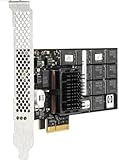
XDP is a hardware-enabled key-value engine on a PCIe add-in card. Pliops says it offloads storage-management and key-value functions associated with SSD workloads, with the aim of reducing CPU and storage overhead. The company says its block-storage offering presents itself to software as a standard block device and can work with existing SSDs without application changes; those are vendor-described capabilities, not a guarantee for every server or software stack. Pliops product overview


Pliops’ 2025 XDP PRO-I datasheet describes a low-profile, single-slot PCIe card. The company lists PCIe Gen 3/4/5, NVMe and NVMe-oF, SAS and SATA interfaces, and TLC, QLC and ZNS SSD types. It also lists a standard block-device host interface, plus key-value and application-library APIs. These are vendor specifications: check the exact card revision, server, drives, firmware and software combination before planning a deployment. Pliops XDP PRO-I datasheet
What “not just for hyperscalers” means
In August 2021, Pliops expanded its sales focus after several years of pursuing cloud service providers, making XDP available to traditional enterprise customers as well. Pliops president and chief business officer Steve Fingerhut said the company was “making this not just available to the largest cloud and web service providers, but to everyone that manages their own data centers.” That describes a broader addressable market—not a promise that the card is practical for every organization. Data Center Knowledge, August 5, 2021
Do these 3 things before closing this tab:
1Clear out junk files and repair common Windows errors2Scan for outdated or missing drivers - takes under a minute3Repair Windows errors before they cause bigger problems#1 Best Overall

- 4x M.2 Ports (dedicated x4 lanes per port)
- No. of Devices: Up to 4
- PCIe M.2 Devices: (2242 / 2260 / 2280)
- Bus Interface: PCIe 5.0 x 16
- Natively supported by Mainstream Operating systems
The same report quoted Gartner analyst Joseph Unsworth describing the fit as enterprises with “very large SSD deployments,” where the value and return on investment could be justified quickly. He said he did not see it as a fit for small or medium enterprises with modest performance and capacity needs. This was an analyst’s assessment reported in 2021, not a current eligibility rule or a published minimum drive count. The available figures do not establish a universal threshold for when XDP pays off. Data Center Knowledge, August 5, 2021
How to evaluate the performance claims
Pliops has published figures from different product materials and a customer case study. They are not directly comparable: they come from different dates and contexts, and the sources cited here do not establish independent, universal results across workloads.
Rank #2
- More for the money with this high quality Product
- Offers premium quality at outstanding saving
- Excellent product
- 100% satisfaction
| Source and context | Published figure | How to read it |
|---|---|---|
| Pliops, as reported by Data Center Knowledge in 2021 | Up to 3.2 million random-read IOPS and 1.2 million random-write IOPS; up to 128 TB of protected data on 64 TB of SSDs | Launch-era figures attributed to Pliops in the 2021 report, not independent test results. Source |
| Pliops, as reported by Data Center Knowledge in 2021 | Up to 10× application-speed improvement and up to 6× SSD capacity through compression | Vendor claims reported in 2021; the report does not establish these as results for every workload or system. Source |
| Pliops 2025 XDP PRO-I datasheet | 11 million random-read IOPS, 9 million random-write IOPS, 105 GB/s sequential reads and 50 GB/s sequential writes | Product performance specifications from Pliops; not a guarantee of achieved performance in a particular deployment. Source |
| Pliops 2025 XDP PRO-I datasheet | Up to 6× more capacity than traditional RAID | A Pliops capacity claim; the comparison depends on configuration and the meaning of usable capacity. Source |
| Pliops Paperspace case study | Up to 5× throughput improvement, 23× throughput during drive rebuild, 2× faster drive rebuilds, 8× storage-density improvement and 33% lower cost per TB | Reported outcomes for the case study’s configuration, not general benchmarks or independently validated comparisons. Source |
The Paperspace case study identifies an XDP-RAIDplus configuration using eight Solidigm P5316 15.36 TB QLC NVMe SSDs. It offers a concrete example of the high-capacity flash deployment discussed in the 2021 market assessment, but it is not a head-to-head test against another product. Pliops Paperspace case study
What to check before considering XDP
Evaluate XDP against the needs and costs of the intended deployment, rather than treating a headline maximum as a forecast. Useful questions include:
Free tools Windows power users keep installed
One-click scans. No signup required.
- Workload: What latency, random IOPS and sequential throughput does the actual application require, and under what workload conditions?
- Usable capacity: How much capacity remains after redundancy and any compression, and how does that compare with the existing storage design?
- Recovery: What happens to performance and availability during a drive rebuild, and how important is recovery time to the service?
- Compatibility: Are the exact server, PCIe slot, SSD model, interface, firmware and software stack supported together?
- Economics: What is the total cost at the planned scale, including the accelerator and supporting infrastructure, and what value does the workload gain?
The cited sources provide no independent comparison of XDP with competing products and no general-purpose ROI threshold. A buyer therefore needs workload-specific evidence and compatibility confirmation for the proposed configuration; vendor maximums alone cannot settle the decision.
Independent reader supportYour contribution helps us test, update, and keep practical guides available for everyone.Pliops and the proposed Kalray merger
A proposed merger between Pliops and Kalray did not close. Kalray announced on August 1, 2024, that negotiations had ended and said the companies would study commercial ways to combine Pliops’ key-value technology with Kalray’s architecture. The announcement does not support describing Pliops as acquired by Kalray. Kalray announcement, August 1, 2024
Rank #4
The newer product specifications cited here come from Pliops’ 2025 XDP PRO-I datasheet. Current retail availability and any specific retailer listing are not established by the cited sources, so confirm that the product and the exact configuration you need are available before making a purchase decision.
Quick Recap
Best Value
Product prices and availability are accurate as of the date/time indicated and are subject to change. Any price and availability information displayed on Amazon at the time of purchase will apply.

