
What’s actually slowing this PC down?
Pick the symptom - the matching free tool is one click away.
NIST’s final lightweight-cryptography standard, Special Publication 800-232, was published on August 13, 2025. It specifies four Ascon functions for constrained devices: authenticated encryption, a fixed-length hash, a variable-length-output function, and a customizable variable-length-output function. They serve different cryptographic tasks; Ascon is not one interchangeable encryption algorithm.
What NIST standardized
SP 800-232 specifies a family of permutation-based functions intended for constrained environments where energy, time, or memory budgets can make conventional cryptography difficult to use. NIST presents Ascon as an alternative for cases where AES may not perform optimally—not as a claim that Ascon is faster or preferable on every device.
| Function | What it does | When that task fits |
|---|---|---|
| Ascon-AEAD128 | Nonce-based authenticated encryption with associated data. It provides confidentiality and detects unauthorized changes to protected data; NIST specifies 128-bit security strength in the single-key setting. | When data must be encrypted and authenticated. |
| Ascon-Hash256 | A fixed-function hash that produces a digest for checking data integrity. A hash does not encrypt its input. | When a digest is needed to verify that data, such as a software update, has not changed. |
| Ascon-XOF128 | An extendable-output function (XOF) that produces a caller-selected amount of output. | When a variable-length output is useful. |
| Ascon-CXOF128 | A customizable XOF that accepts a customization string as well as a selected output length. | When a variable-length output needs a customization string to distinguish its use or context. |
The names are not four interchangeable products. Choose by cryptographic task and requirements, then measure performance on the target platform; the cited NIST materials do not establish a universal speed or efficiency ranking. See the final standard for the normative specifications.
Why NIST developed a lightweight standard
NIST says it began investigating cryptography for constrained environments in 2013. The subsequent public process evaluated authenticated encryption and optional hashing for settings where existing NIST standards could be too resource-intensive. NIST selected the Ascon family for standardization in 2023, published a draft of SP 800-232 in November 2024, and issued the final standard on August 13, 2025. The 2023 selection was a step in that process, not the publication date of the final standard.
#1 Best Overall

- Perfect choice for beginners to learn, electronics and program.
- The Basic Starter Kit is easy to use and you can learn to program at an introductory level.
- You can use ESP32 modules to control other modules, such as LED,DHT11,OLED module, etc
- The tutorial include codes and lessons.It will teach every users how to assembly Basic Starter Kit for ESP32.
- Please download our tutorial and learn after you receive the goods.
The intended contexts include IoT devices, embedded systems, low-power sensors, RFID tags, medical implants, smart-home devices, and toll transponders. These are examples of constrained environments, not evidence that every device in those categories currently uses Ascon. NIST computer scientist and project co-lead Kerry McKay said, “We encourage the use of this new lightweight cryptography standard wherever resource constraints have hindered the adoption of cryptography,” in NIST’s August 13, 2025 announcement.
Is Ascon a replacement for AES?
Not universally. NIST describes Ascon as an option for constrained environments where AES may not perform optimally. That is a platform- and workload-dependent choice, not a recommendation to replace AES everywhere. Engineers should compare implementations on their actual hardware and account for the relevant security requirements, energy budget, memory, throughput, and latency.
Rank #2

- CARD-SIZED ESP32-S3 POWERHOUSE: Stamp-S3A core (ESP32-S3FN8) delivers strong processing in a pocket-sized body – ideal for rapid prototyping, IoT development, and embedded system learning.
Security depends on implementation as well as the algorithm
NIST says Ascon can make side-channel-resistant implementations easier than many traditional algorithms, but no cryptographic algorithm is inherently immune to side-channel attacks. Power use, timing, and other physical observations can still expose information if an implementation is not designed and tested appropriately. Selecting a standardized algorithm alone does not establish that a device or its implementation resists those attacks.
Check implementation version and conformance before integrating code. The Ascon implementation catalog warns that some projects implement the earlier candidate design rather than final NIST SP 800-232; those versions are not compatible. The catalog also cautions that third-party implementations can become outdated or incorrect. Confirm explicitly that a library or hardware design implements the final standard, and review its maintenance and validation status.
Crashes, No Sound, or Screen Glitches?
Random freezes, missing sound and display glitches usually trace back to one bad driver. Find and replace yours safely.Free scan · under a minuteWindows Errors? Fix Them Before They Spread
Repair common Windows errors and clear accumulated junk for a smoother, more stable PC - no reinstall needed.Free scan · no reinstallRank #3
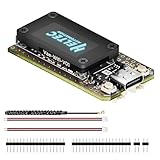
- V4 Upgraded ESP32-S3 & LoRa SX1262 Development Board: This Lora V4 Development Board features the latest ESP32-S3R2 chip with 2MB PSRAM and 16MB Flash, delivering superior processing for complex IoT applications and Meshtastic projects. This major upgrade from V3 models provides enhanced performance for Meshtastic devices, LoRa development boards, and sophisticated user interfaces, ensuring smooth operation of advanced firmware.
- High Power 27dBm Long-Range LoRa Radio Communication: The Meshtastic device experience exceptional wireless range with 27dBm transmission power and -137dBm sensitivity. Perfect for building reliable Meshtastic nodes, LoRa radio networks, smart home IoT devices, and industrial applications. This LoRa module provides greater communication distance across large properties and urban environments.
- Integrated OLED Display & Complete LoRa Meshtastic Kit: This heltec V4 includes a 0.96-inch OLED display for real-time data visualization without additional hardware. The protective casing features FPC antenna for stable Wi-Fi/Bluetooth and external antenna for enhanced LoRa performance. Provides a complete Meshtastic development board experience ready for immediate deployment.
- Advanced Power Management with Solar & GPS Connectivity: The ESP32 LoRa 32 V4 Designed for outdoor use with optimized battery management and 20μA sleep current. Includes solar panel interface for Meshtastic solar nodes and GNSS port for Meshtastic GPS applications. Type-C interface with voltage regulation ensures reliable operation for asset tracking and remote monitoring.
- Fully Compatible ESP32 LoRa Development Board: The ESP32 Lora V4 Development Board Maintains complete pin compatibility with Heltec LoRa 32 V3 for seamless project migration. Ready for Arduino and PlatformIO development, this versatile board supports LoRaWAN, Wi-Fi, and Bluetooth protocols for smart agriculture, industrial IoT, and wireless security systems.
What is not included in SP 800-232
The final publication specifies the four functions in the table; it does not include a dedicated MAC or a variable-output-length pseudorandom function (PRF). NIST says it is considering those functions for a future standard, which is not the same as their being standardized or available as part of SP 800-232.
Quick Recap
Best Value
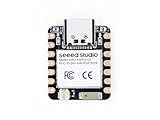
- Enhanced Connectivity: Combines 2.4GHz Wi-Fi 6 (802.11ax), Bluetooth 5(LE), and IEEE 802.15.4 radio connectivity, allowing you to apply the Thread and Zigbee protocols.
- Matter Native: Supports building Matter-compliant smart home projects thanks to its enhanced connectivity, achieving interoperability
- Security Encrypted on Chip: Powered by ESP32-C6, it brings enhanced encrypted-on-chip security to your smart home projects via secure boot, encryption, and Trusted Execution Environment (TEE)
- Outstanding RF performance: Has an on-board antenna with up to 80m BLE/Wi-Fi range, while reserving an interface for external UFL antenna
- Leveraging Power Consumption: Comes with 4 working modes, with the lowest being 15 μA in deep sleep mode, while also supporting lithium battery charge management.
Rank #4

- High-Performance Low-Power Wireless SoC with ARM Cortex-M4F processor running at 64MHz for demanding IoT applications
- Features 1MB flash and 256KB RAM, plus rich peripherals including ADC, PWM, SPI, I2C, UART, USB, and GPIO for versatile connectivity
- Integrated advanced security features like AES encryption and SHA-256 hashing to protect your data and communications
- Development board includes a 3.7V Li-ion battery interface and software-controlled LED power switch for efficient power management
- Ultra-low standby power consumption down to 1mA when LEDs are off, extending battery life for portable projects
Product prices and availability are accurate as of the date/time indicated and are subject to change. Any price and availability information displayed on Amazon at the time of purchase will apply.

