
Facebook kept servers in environmentally controlled trucks during delivery to its Luleå, Sweden, data center because the dangerous part was not the cold itself but a rapid change between temperatures. Moving electronics from a warm warehouse into frigid Nordic air, or back again, can cause moisture to condense on circuit boards. The Luleå facility could then use cold outdoor air for cooling—under tightly controlled temperature and humidity conditions—while hydroelectric power supplied the site and excess server heat warmed its office.
The transport problem was condensation, not freezing
In an August 2, 2012 report, Data Center Knowledge described Facebook’s plan to use environmentally controlled trucks for equipment deliveries to Luleå. Facebook hardware and supply-chain director Frank Frankovsky explained the concern: “A rapid rate of change (in temperature) can create condensation on the electronics, and that’s no good. The transition is the important part. We want to make sure we don’t have a big rate of change.”
Cold, dry air does not automatically damage a powered-down server. The risk appears when equipment crosses between environments with different temperatures and moisture levels. A cold surface can fall below the surrounding air’s dew point, allowing water to form on connectors, boards and other components. A controlled vehicle slows that transition instead of exposing a shipment to an abrupt outdoor temperature change.
What the controlled journey accomplishes
- Stabilizes the shipment: The truck keeps equipment within a managed temperature range while it travels.
- Controls the handoff: Loading docks and staging areas can bring the hardware toward the data hall’s conditions gradually.
- Allows inspection before power-up: Operators can wait until equipment and the surrounding air are stable rather than energizing a cold shipment immediately.
The published account does not provide a percentage of Luleå’s total energy savings attributable to this transport procedure. Its purpose was risk control during delivery, not a measured cooling-efficiency feature.
#1 Best Overall

- Ventilation Fan: Designed to quietly ASUS GT/RT- AC5300 , cool Xboxs, CPU/ GPU, Playtations, Rokus, TVs, receivers, mondems, routers, DVRs, window fans ,network appliances, DIY aquarium cooling and other audio video electronics
- Variable Speed Control: 110V - 220V Fan power supply with speed control function, turn the knob to adjust the speed, 4V - 12V adjustable fan speed,and can turn off the fan . | Input: 100V - 240V 50/60Hz | Output: DC 3-12V 200-2000ma
- DIY Vertical Window Fan: Can both vertical and horizontal, provide efficient cooling and ventilation. Mining rigs rely on the cooling power of fans for optimal operation.Double Metal Protective, the fan is equipped with double metal protective net
- Easy to Install: Draw out air in refrigerators, provide ventilation in greenhouses, prevent amplifier overheating, and vent hot air from living room consoles like PS4. Y cable connects 2 fans, two fans can be 42cm/16.5 in far away from each other
- Dual Ball Bearing: 240mm x 240mm x 25mm / 9.45in(L) x 4.72in(W) x 1in(H) in in total. | Rated Voltage :12V | Rated Current: 0.93A at full speed | Airflow: (82CFM)x4 at 12V | Speed: 2500 RPMx4
How Luleå uses Arctic air without exposing servers to the weather
Facebook’s Luleå design treats outdoor air as a cooling resource, not as an uncontrolled blast into the server room. Meta says the system mixes outside air with server exhaust when the incoming air is too cold. Sensors monitor supply-air, cold-aisle and hot-aisle conditions so operators can maintain the environmental limits required by the equipment.
Outside-air cooling
When Nordic outdoor conditions are favorable, outside air can remove heat without the same compressor work required by conventional refrigeration. That reduces mechanical cooling demand, but it does not eliminate fans, filtration, controls or humidity management. The air must be conditioned and distributed evenly through the data hall.
Rank #2
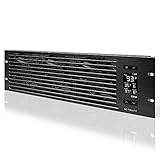
- An intelligent fan system designed for cooling audio video, DJ, server, network, and IT equipment racks.
- Protects rack-mount equipment from overheating, performance issues, and shortened lifespans.
- Programmable thermostat controller with automated speed control, alarm warnings, and backup memory.
- Premium anodized aluminum construction with CNC-machined detailing for a professional appearance.
- Size: 3U Rack Space | Design: Intake | Airflow: 60 to 300 CFM | Noise: 12 to 38 dBA | Bearings: Dual Ball
Why mixing is necessary
Air that is too cold can be unsuitable even when it is clean. Mixing it with warmer server exhaust moderates the supply temperature and recovers some heat already inside the building. The control system continuously adjusts the balance as weather and IT loads change.
Mechanical and liquid cooling remain different options
A mechanically cooled facility relies on refrigeration equipment when outdoor conditions cannot provide enough cooling. Liquid-cooling systems move heat through a fluid close to high-density components and can support workloads that exceed the practical limits of air cooling. Luleå’s original story centers on controlled outside-air cooling; it should not be read as evidence that every current Meta data center uses the same design.
Rank #3

- [Adjustable] Adjustable temperature control helps ensure optimal performance for your rackmount such as network, server, music, and AV cabinets
- [Quiet and powerful] Equipped with three powerful 4” (120mm) noise control ball bearing fans capable of pumping 225 CFM of air, preventing overheating of expensive equipment
- [Optimal Airflow] This three fan cooling system will provide excellent cooling with its high-performance fans, which keep the hot air stream away from your setup with its top exhaust cool air system.
- [Compact Design] Device is standardized to mount to any 19" server rack or cabinet while taking only a single unit (1U) of space and has a wide variety of applications.
- [Programmable] Equipped with a programmable thermostat sensor controller for better temperature monitoring that will trigger fans based on your parameter configuration.
The environmental controls that make cold-climate operation reliable
| Concern | Why it matters in Luleå | Control described in the sources |
|---|---|---|
| Temperature transition during delivery | Rapid changes can produce condensation on electronics. | Environmentally controlled trucks and gradual staging. |
| Supply-air temperature | Very cold air can push equipment outside its operating envelope. | Mixing outdoor air with server exhaust. |
| Humidity | Moisture becomes hazardous when surfaces are below the air’s dew point. | Managed transitions and sensor-based environmental control; a specific Luleå humidity setpoint is not stated. |
| Hot and cold aisles | Uneven airflow can create local hot spots even when the building average looks safe. | Sensors tracking supply, cold-aisle and hot-aisle conditions. |
| Equipment reliability | Fans, filters and controls must operate through changing weather. | Continuous monitoring and a design that combines outside-air and recirculated exhaust. |
The key distinction is that “free cooling” describes the source of the cooling capacity, not the absence of engineering. Temperature, dew point, airflow and equipment limits still need active control.
Why Luleå’s power supply was part of the decision
Meta described the Luleå site as using locally generated hydroelectric power. Hydroelectricity gave the facility a lower-carbon electricity source than a fossil-heavy grid would, while the cool climate reduced the energy needed to reject server heat. Meta also described reduced reliance on backup generators at the site.
Rank #4

- Adjustable temperature control helps ensure optimal performance for rackmount such as network, server, music, and AV cabinets
- Noise controlled fans makes the cooling system useful for a quiet office or business space
- Compact design mounts to any 19" inch cabinet and takes up only 1 unit of space
- Simple and easy to use LCD display allows user to control temperature
- Air pumped through to the top exhaust system of the fan
Those advantages are separate from the transport procedure. A controlled truck prevents moisture damage before installation; hydroelectric power and efficient cooling reduce the operating impact after the servers are running. Neither claim means the facility is immune to outages or that every electricity unit is renewable at every moment.
Server heat does not have to be wasted
Once servers are operating, nearly all of the electricity they consume becomes heat. Meta’s Luleå announcement says, “Any excess heat that is produced is used to keep our office warm.” This is a small but concrete example of heat reuse: the data center’s waste stream becomes a useful building-heating input instead of being rejected entirely outdoors.
Recommended Free Tools
Best Value
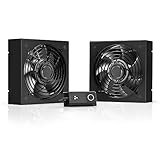
- A quiet fan kit designed for standard 19” racks, to be mounted on the roof or to replace existing fans.
- Features a speed controller utilizing PWM which can control the fan's speed without generating noise.
- Compatible with CLOUDPLATE series rack fans and can be linked to share the same programming.
- Heavy-Duty steel construction with spiral fan guards, mounting hardware, and power adapter.
- Size: Standard 120mm Rack Fans | Fans: 2 | Airflow 200 CFM | Noise: 26 dBA | Bearings: Dual Ball
Meta later described a separate Odense, Denmark, project planned to recover 100,000 MWh of heat per year—according to Meta Data Centers in 2019—enough for 6,900 homes. Those figures belong to the Odense project, not a measurement of Luleå’s office-heating system, and they should not be combined into one site’s performance claim.
Independent reader supportYour contribution helps us test, update, and keep practical guides available for everyone.Open hardware helped make the design practical
Meta linked the facility’s efficiency to designs developed through the Open Compute Project. Open hardware approaches can make server layouts, power delivery and cooling infrastructure easier to optimize at scale. They do not by themselves solve condensation or humidity problems; the benefit comes from applying the hardware design together with appropriate airflow, controls and operating procedures.
What has changed since the original Luleå project
Luleå went live in 2013, and the transport plan reported in 2012 is a historical detail of that deployment. Cooling controls continue to evolve. In a 2026 Meta explainer, a pilot using reinforcement-learning control reported an average 20% reduction in air-cooling supply-fan energy and a 4% reduction in water use across weather conditions. Meta presents those as pilot results from the newer control approach, not as measurements of the original Luleå installation.
How the main design choices compare
| Design axis | Luleå approach described by Meta | What an operator still has to manage |
|---|---|---|
| Transport and staging | Environmentally controlled trucks and gradual transitions. | Preventing condensation before equipment is powered on. |
| Primary cooling source | Outside Nordic air, mixed with server exhaust when it is too cold. | Fans, filtration, airflow balance and weather changes. |
| Mechanical or liquid backup | The original account emphasizes outside-air cooling; a complete current backup configuration is not stated. | Maintaining safe conditions when outdoor air is unsuitable or workloads are unusually dense. |
| Humidity management | Controlled transitions and sensor-based monitoring. | Dew point, condensation risk and a stable operating envelope. |
| Electricity | Locally generated hydroelectric power, with reduced backup-generator requirements described by Meta. | Grid and site resilience during interruptions. |
| Heat reuse | Excess heat warms the Luleå office. | A nearby heat demand and infrastructure capable of receiving the heat. |
The practical lesson for Arctic data centers
An Arctic location lowers cooling demand only when the facility treats the climate as a controlled input. The same cold that helps reject heat can create condensation during logistics, excessive temperature swings in the air system and difficult humidity conditions. Luleå’s model combines managed transport, sensor-controlled air mixing, a locally described hydroelectric supply, open hardware and a use for at least some recovered heat. The “warm servers” on the journey were therefore protected from abrupt environmental changes—not heated because servers need Arctic warmth.
The Tool Desk
Outbyte PC Repair FREEClear out junk files and repair common Windows errorsFree Scan →Outbyte Driver Updater FREEScan for outdated or missing drivers - takes under a minuteDriver Scan →Quick Recap
Product prices and availability are accurate as of the date/time indicated and are subject to change. Any price and availability information displayed on Amazon at the time of purchase will apply.

