
XMOS xcore.ai is a two-tile, programmable processor designed to combine application-processor-style AI and signal-processing capability with microcontroller-like real-time behavior, low power and flexible I/O. XMOS introduced it in 2020 for AIoT endpoints such as voice interfaces, event detectors, cameras and sensor hubs. The device can run inference locally while also handling DSP, control, communications and programmable I/O, but its published performance and price figures are vendor or trade-report claims rather than independent benchmark results.
What is XMOS xcore.ai?
xcore.ai is XMOS’s adaptation of its proprietary Xcore processor core for machine-learning workloads. The company calls it a “crossover processor” because it sits between the usual microcontroller and application-processor categories: it is intended to run real-time control and I/O deterministically while supplying the arithmetic, memory bandwidth and software flexibility needed for on-device AI.
The original launch focus was voice. XMOS described products that could perform local keyword or dictionary detection, then leave room for customer-specific models and a MIPI camera interface. The broader target is an AIoT endpoint that makes decisions on the device instead of sending every sensor sample to a cloud service.
XMOS summarizes the design as combining “the performance and functionality of an application processor, with the ease of use, low-power and real-time operation of a microcontroller.”
Quick wins for a faster PC:
Fix the driver behind crashes, sound loss and screen glitchesFind Drivers →Repair Windows errors before they cause bigger problemsFix Now →Scan for outdated or missing drivers - takes under a minuteDriver Scan →#1 Best Overall

- Omnidirectional Microphone - It is not a Speaker or Speakerphone, it is a condenser microphone. The microphone has an omnidirectional pickup pattern with a pickup distance of 11.5 ft, making it easy to capture the most subtle sounds from 360° directions and transmit the sound more loud and clear. Participants can hear each other without raising their voices.
- Made for Conferences - This microphone is perfect for small or medium meetings over an internet network by using Skype/GoToMeeting/WebEx/Hangouts/Fuze/VoIP/Zoom and other softwares. You can also use it for court reports, seminars, remote training, business negotiations, video chats, etc.
- Plug & Play, No Drivers Required - The microphone is compatible with all operating systems - both Windows and macOS. You just need to plug the microphone to start recording. If there is no response after inserting the mic, please go to the microphone setting of your computer and select the mic as the INPUT device.
- Convenient Mute Button - Quickly mute/unmute your microphone. The built-in blue indicator light for checking whether the USB microphone is working.
- Well Designed Cable - The microphone is constructed of sturdy and metal material and the base is fitted with an anti-slip mat which keeps it stable on desktop during use. It is small, convenient and does not require much space when in use. Connected with a 1.8m nylon shielded wire, it effectively eliminates signal interferences to achieve the best recording results.
How the architecture is organized
Two tiles and 16 logical cores
The device uses two tiles. EE Times reported eight logical cores per tile, or 16 logical cores across the two-tile device. Each tile includes memory, arithmetic and logic resources, and a vector unit shared by its logical cores. XMOS’s current product information lists up to 3,200 MIPS on package options running at 800 MHz; that is a vendor specification for selected packages, not a universal result for every xcore.ai variant.
AI arithmetic and memory
Figures reported by EE Times from XMOS describe 51.2 GMACCs, 1,600 MFLOPS and 1 MB of embedded SRAM, together with an LPDDR expansion interface. These are 2020 vendor or trade-report figures. They indicate the intended workload class, but they do not substitute for an independent benchmark using a particular neural network, clock setting, memory configuration or power limit.
Multiple numeric formats
XMOS says xcore.ai supports 32-bit, 16-bit, 8-bit and binarized 1-bit neural-network values. In XMOS’s explanation, a binarized network represents values as +1 or −1 and can deliver roughly a 10-fold improvement in performance and memory density, with a modest accuracy trade-off. That improvement is a vendor claim and depends on a model that can tolerate binarization; it should not be read as a guaranteed speed-up for every network.
Why process AI at the endpoint?
Local inference lets a product react without a round trip to a server. XMOS positions that approach around three practical benefits:
Rank #2

- ✔Crystal Clear Sound: Conduct advanced noise-canceling technology, the Conference microphone can easily capture clear sound with a 360°sensitivity pickup range(3m/10ft), 10 times better than a traditional computer microphone. (𝐍𝐎𝐓𝐄: 𝐈𝐭'𝐬 𝐣𝐮𝐬𝐭 𝐚 𝐦𝐢𝐜𝐫𝐨𝐩𝐡𝐨𝐧𝐞, 𝐧𝐨𝐭 𝐚 𝐬𝐩𝐞𝐚𝐤𝐞𝐫)
- ✔Plug and Play: Connected to a computer through a USB cable(1.8m/6ft), no drivers to install, hassle-free installation, well compatible with Windows and macOS. (NOT compatible with Raspberry Pi/Android)
- ✔Compact and Versatile: This microphone are small and portable. You can put it in your pocket or briefcase and take it wherever you want. Perfect for meetings, interviews, podcasting, home studio recording, YouTube, Twitch, Skype, Face Time, Gaming, and more.
- ✔Convenient Mute Button - Quickly mute/unmute your microphone: the built-in Indicator LED lights tell you the working status (Green Light: Microphone has been connected; Flashing Green Light: Working Mode; RED Light: Mute Mode)
- ✔Advanced Cancellation Technology - Built-in high-performance CMTECK CCS2.0 SMART CHIP can effectively block the noise and eliminate echo, better than a traditional computer microphone
- Latency: keyword, presence or event decisions can be made next to the sensor.
- Privacy: raw voice or sensor data can remain on the product rather than being continuously uploaded.
- Cost and resilience: a device can reduce cloud inference traffic and continue operating when connectivity is poor or unavailable.
The crossover approach also aims to avoid pairing a conventional application processor with separate parts for DSP, control and specialized I/O. Whether that reduces a product’s actual bill of materials depends on the peripherals, memory, audio chain, connectivity and certification requirements of the finished design.
How xcore.ai differs from a microcontroller and an application processor
The useful distinction is not a single clock-rate number. It is how the device combines deterministic execution, AI/DSP throughput, memory, I/O and software effort.
| Decision axis | Typical microcontroller | XMOS xcore.ai’s stated position | Typical application processor |
|---|---|---|---|
| Real-time behavior and I/O | Strong real-time control and fixed-function peripheral set | Real-time execution with programmable I/O intended to share the device with AI, DSP and control | Often optimized for rich operating systems and application code; deterministic low-level I/O may require additional hardware or software |
| AI and DSP workload | Usually limited by CPU/DSP resources or an optional accelerator | Vector resources, multiple logical cores and support for 32-, 16-, 8- and 1-bit neural-network values | May offer higher peak application performance or a dedicated AI engine, depending on the part |
| Memory model | Often relies mainly on on-chip SRAM and flash | 1 MB embedded SRAM in the reported configuration, with an LPDDR expansion interface | Generally designed for larger external memories and richer software stacks |
| Power and bill of materials | Usually favorable for simple control products | Designed as a low-eBOM platform that can combine several endpoint functions, subject to the complete design | Can require companion devices for real-time I/O, audio or sensor processing |
| Software effort | Familiar bare-metal or RTOS development, but AI optimization may be separate work | XMOS supplies an AIoT SDK and an offline model-conversion utility for xcore.ai | Broad ecosystem, but integrating low-latency control, DSP and edge inference can involve several subsystems |
| Best fit | Control, sensing and communications with modest inference | Voice, event detection, multimodal sensing, imaging, communications and control on one programmable endpoint | Rich user interfaces, operating systems, high-throughput multimedia or larger models |
This is an architectural comparison, not a benchmark ranking. A design team should measure its own model latency, memory use, power and I/O timing on the exact candidate parts.
Can xcore.ai run voice and other edge-AI workloads?
Voice interfaces and keyword detection
Voice is the clearest documented use case. xcore.ai is intended to keep always-listening keyword or dictionary detection local, with customer-specific models possible. The architecture also leaves processing resources for audio conditioning, control and communications instead of dedicating the entire chip to neural-network inference.
Rank #3
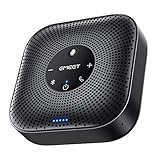
- Enhanced 360° Voice Pickup with 4 AI Mics - The EMEET OfficeCore M0 Plus Bluetooth speakerphone features a four-mic array, which enhances voice pickup from any direction. Powered by EMEET’s VoiceIA algorithm upgraded in 2023, the mic can filters out background noise and eliminates echos of the speaker.
- Crystal-Clear Audio Quality - The 3W high-quality bluetooth conference speaker can spread sound evenly throughout the room, ensuring no details are missed. With full duplex audio support, our conference speaker produces natural and rich sounds, so to feel like you are talking to others in person.
- Expandable for Larger Meetings - Room is too large? Link 2 EMEET’s Bluetooth speakerphones with the Daisy Chain, you will have 2x professional mics and speakers working seamlessly extending the conferencing space, effectively supporting up to 16 attendees. This feature supports multiple models of EMEET products, such as Meeting Capsule, M3, or M0 Plus, making it a flexible solution for setting up your conference room.
- Easy to Set Up and Use - The EMEET Conference Speaker and Microphone M0 Plus offers 2 ways to connect: USB-C & USB-C-to-A Adapter, and Bluetooth 5.0 with single-device or dual-device connection. No drivers or additional software is required, simply plug and play. The speakphone is compatible with most conferencing platforms, such as Zoom, Microsoft Teams, Slack, Webex, and etc. Connect Bluetooth-enabled phones using standard Bluetooth protocols, regardless of brand or model.
- Long Battery Life for Optimal Performance - Equipped with a large capacity battery, the M0 Plus Bluetooth conference speaker with microphone supports long-term calls over 10 hours of talk time on a single charge, making it perfect for all-day meetings. The M0 Plus Bluetooth Conference Speakerphone is optimal for use in the meeting room, home office, or on business trips, ensuring that you always have a professional meeting experience.
Event, presence and person detection
XMOS identifies event detection, presence or person detection and multimodal sensing as target applications. These workloads can combine microphones, motion or other sensors, making the ability to schedule signal processing, inference and control together important.
Imaging and sensor processing
The launch material included a MIPI camera interface, and XMOS lists imaging and sensor processing among the intended uses. A camera design still needs an appropriate image pipeline, storage and software; the presence of a connector does not by itself establish support for a particular sensor, resolution or frame rate.
Communications and control
xcore.ai is also aimed at communications and programmable control. This is where its crossover positioning matters: the same device is meant to coordinate I/O and real-time responses while running AI or DSP work.
What is in the XMOS xcore.ai evaluation kit?
The XMOS evaluation kit is the most direct way to explore the processor and its interfaces. XMOS lists these items:
Rank #4
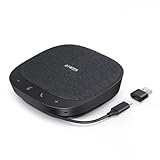
- Smart Voice Enhancement: Eliminate background noise while simultaneously enhancing voices for a professional meeting experience in any environment.
- Plug and Play: Connect via USB-C (includes standard USB adapter) and join meetings in an instant. A wired connection offers a stable and reliable USB speakerphone experience.
- 360° Voice Coverage: A USB speakerphone with 4 high-sensitivity microphones to pick up all voices within 3m in super-high clarity.
- Superior Sound: A 1.75” driver paired with 2 passive bass-radiators adds body and depth to both meeting audio and music.
- What’s In The Box: PowerConf S330 USB Speakerphone, USB-C to USB-A adapter.
- xcore.ai processor
- Four LEDs and two push-buttons
- PDM microphone connector
- Audio codec with line-in and line-out
- QSPI flash
- LPDDR1 external memory
- 58 GPIO connections
- Micro-USB for power and host connection
- MIPI camera connector
- xSYS2 debug connector
That combination supports experiments spanning audio capture, local inference, external memory, camera input, GPIO control and debugging. It does not guarantee that every accessory, sensor or software example is included beyond the listed hardware.
Software workflow for a custom model
XMOS describes an AIoT SDK with an xformer utility. xformer runs offline and converts TensorFlow Lite model files into models optimized for xcore.ai inference. A practical deployment path is:
- Choose or train a TensorFlow Lite model for the target voice, sensor or imaging task.
- Check its operators, tensor sizes and numeric format against the xcore.ai SDK’s supported flow.
- Run the model through xformer on the development computer; the utility produces an xcore.ai-optimized representation.
- Integrate that representation with the application code handling audio or sensor acquisition, preprocessing, control and communications.
- Measure latency, SRAM and external-memory use, accuracy and power on the evaluation hardware before selecting production settings.
The offline conversion path is useful when data must stay in the development environment or when a product team needs to deploy an off-the-shelf TensorFlow Lite model without a cloud conversion service. The SDK does not remove the need to validate unsupported operators, quantization effects and end-to-end timing.
Independent reader supportYour contribution helps us test, update, and keep practical guides available for everyone.Where can you buy an xcore.ai development board?
Search for the exact phrase “XMOS xcore.ai evaluation kit” and verify the board model, processor variant, included accessories, seller and stock before ordering. XMOS’s product information does not establish a current Amazon listing or inventory, so an apparently matching marketplace result should not be assumed to be official or current. For a production design, obtain the board and software details from XMOS or an authorized distributor and confirm that the kit matches the package and memory configuration you intend to build around.
What’s actually slowing this PC down?
Pick the symptom - the matching free tool is one click away.
Best Value

- Built-in AI Noise Reduction: Compared to the base model, G11 pro upgraded AI noise cancellation, effectively eliminates distractions like fan noise, keyboard clicks. It delivers clear, crisp teleconferencing experiences, making it perfect for conference calls, online learning and chatting
- Omnidirectional Conference Mic: Features omnidirectional pickup pattern with a pickup distance of 11.5 ft, making it easy to capture sounds from 360° directions. Highly sensitive pickup ensures participants hear everything clearly. Tips: This is not a speaker
- Effortless Control: Physical volume and monitoring control buttons are built into the microphone body, allowing you to effortlessly adjust both microphone and monitoring volume. Click to adjust volume between 4 levels
- Mute & Monitor: Quickly mute/unmute your microphone by one tap. Built-in 3.5mm jack allows connection of headphones for monitoring. Long press for 3 seconds to enable/disable: Blue-Mic mode, Red-Mute, Purple-Monitoring. Note: Do not connect the 3.5mm jack to external speakers, as this may cause feedback interference
- Plug & Play: Compatible with all operating systems,both Windows and macOS. No additional drivers needed . If there is no response after inserting the mic, please go to the microphone setting of your computer and select the mic as the INPUT device
Checks before purchase
- Confirm that the listing is the xcore.ai evaluation kit rather than another XMOS development board.
- Check whether the board includes the PDM microphone, audio codec, LPDDR1 and camera connectors described by XMOS.
- Verify revision, shipping region, return terms and current stock.
- Confirm that the SDK version and examples support the processor package on the board.
Performance, price and ecosystem caveats
Published performance is not an independent benchmark
The 3,200-MIPS figure is current product-page information for 800-MHz package options. The 51.2-GMACC, 1,600-MFLOPS and 1-MB-SRAM figures were reported by EE Times from XMOS material in 2020. Results for a real model will vary with precision, memory placement, preprocessing, concurrent I/O and clock configuration.
The historical “under $1” statement is not a current price
XMOS CEO Mark Lippett was reported by EE Times in 2020 as discussing a volume price below $1. That was a launch-era, volume-oriented claim, not a current retail price or a quotation for the evaluation kit. Obtain a current distributor quotation for any cost analysis.
Later Xcore context
XMOS later announced a fourth-generation Xcore architecture compatible with RISC-V while retaining software-defined combinations of AI, I/O, DSP and standard compute. That announcement describes later architecture direction; it does not mean the 2020 xcore.ai device itself is RISC-V based.
Who should choose xcore.ai?
xcore.ai is most compelling when one endpoint must combine always-on or event-driven AI with tightly timed audio, sensor, communications and control tasks, and when reducing separate companion processors is valuable. A conventional microcontroller may be simpler for basic control, while an application processor may be preferable for a rich operating system, large models or heavy multimedia. Compare the complete design on deterministic timing, model throughput, memory expansion, power, software migration and board availability rather than selecting on MIPS alone.
Quick Recap
Product prices and availability are accurate as of the date/time indicated and are subject to change. Any price and availability information displayed on Amazon at the time of purchase will apply.

