
Intelligent automation combines software automation with AI to move beyond fixed, repetitive scripts. Rule-based RPA still handles stable transactions; AI-augmented tools interpret documents, language and images; cognitive or agentic systems can coordinate multi-step work under permissions, monitoring and human approval. The practical decision is not which product is “most intelligent,” but where a process needs perception, prediction, generation, execution or accountable judgment.
What intelligent automation means
Intelligent automation is an operating model rather than one product category. It links workflow software, APIs, robotic process automation (RPA), process intelligence, machine learning, natural-language processing (NLP), computer vision, intelligent document processing (IDP) and, increasingly, generative-AI models.
The labels used by vendors vary. “Cognitive automation” has no universal industry definition in the cited evidence, so the progression below is a practical way to distinguish capabilities, not a formal standard.
1. Rule-based RPA
RPA bots follow deterministic instructions through structured applications: read a field, copy a value, click a control, call an API or reconcile a record. They work best when inputs, business rules and interfaces are stable. Exceptions normally stop the bot or send the item to a person.
#1 Best Overall

- 【2-in-1 Mopping and Vacuuming】 The ROPVACNIC Robot S1 integrates advanced electronically controlled mopping technology, significantly enhancing both cleaning efficiency and effectiveness, which makes your floors remain free from footprints, dirt, and dust throughout the day. It features an upgraded high-capacity water tank with a four-stage personalized water adjustment system, enabling it to address various stains across different settings according to user requirements.
- 【Comprehensive Intelligent Control】 Multiple Cleaning Modes, combined with personalized settings, allow you to easily accomplish various household cleaning tasks with zero effort from your smartphone. Moreover, by voice commands, you can start your cleaning while kicking back and relaxing (compatible with Alexa or Google Assistant). Enjoy an utterly hands-free cleaning experience.
- 【5200Pa Powerful Suction】A 3-point cleaning system coupled with strong suction ensures your floors are free from all dirt, dust, and crumbs for a thorough, superior clean. The highly passable compact design combined with 3-level suction facilitates cleaning in hard-to-reach areas where you can't, making it suitable for a wide range of surfaces from wood, and hard floors to low pile carpets.
- 【Smarter High Automation & Self-Recharge】 The robot aspiradora is equipped with an advanced high-coverage sensing system and multiple algorithmic data points, enabling autonomous completion of cleaning tasks—from scheduled starting, detecting obstacles, adjusting direction, and switching modes, to automatically returning to recharge. This hassle-free operation ensures a clean home when you return.
- 【Engineered for Pet Owner】 The exclusive no-entanglement design negates the need for your dirty hands to clean up tangled dog or cat hair, unlike traditional roller brushes. Its dual rotating electric side brushes sweep and collect hidden pet hair more efficiently throughout the house, saving you the hassle.
2. AI-augmented automation
Machine learning, NLP, computer vision and IDP add interpretation. A system can classify an email, extract fields from an invoice, identify a document type, summarize a case or recommend a next action before a workflow or robot executes it. The AI may be probabilistic, while the surrounding workflow remains deterministic.
3. Cognitive or agentic automation
An orchestration layer connects models to enterprise data, business applications, tools and software robots. It can plan or sequence several steps, select a tool, handle more variation and request approval when an action is consequential. In a well-controlled design, this is bounded autonomy—not unrestricted independence.
Where adoption is moving
Adoption figures point in the same direction but should not be combined into one market rate: the organizations, dates and definitions differ.
| Source and population | Measure | Reported result |
|---|---|---|
| U.S. Census Bureau, 2024 | Businesses using AI | Rose from 3.7% in September 2023 to 5.4% in February 2024; 6.6% was expected by early fall 2024. Common uses included marketing automation, virtual agents and data or text analytics. |
| Statistics Canada, September 2024–July 2025 period (reported 2026) | Workers aged 15–69 using technologies at work | Generative AI: 22.1%; NLP: 10.7%; machine learning: 4.9%; robotics: 2.0%. |
| UiPath survey, 2025 (vendor research) | Respondents reporting organizational use | IT process automation 90%; generative AI or large language/image models 79%; machine learning or predictive analytics 75%; IDP 55%; process intelligence/mining/discovery 45%; RPA 38%; agentic AI 37%. |
| Gartner survey, 2024 | Primary route for fulfilling generative-AI use cases | 34% of surveyed organizations primarily used AI embedded in existing applications, such as Microsoft Copilot for Microsoft 365 or Adobe Firefly. |
The pattern is important: organizations are adding AI around existing processes instead of discarding every earlier automation layer. A company may use an embedded copilot to draft a reply, IDP to read an attachment, a workflow engine to apply policy, and RPA or an API connector to update a legacy system.
Free tools Windows power users keep installed
One-click scans. No signup required.
From isolated tasks to end-to-end orchestration
Traditional automation often targets one repeatable task. Intelligent-automation programs map the whole process and assign each segment the right capability.
Rank #2

- 1. Compact and Quiet Operation: With a slim 2.85" profile, the eufy robot vacuum operates quietly, offering a comprehensive clean without causing a disturbance, making it perfect for use at any hour.
- 2. Extended Cleaning Performance: Capable of running up to 100 minutes on hardwood floors, the eufy vacuum robot provides powerful, consistent suction for a thorough clean at a noise level similar to a microwave.
- 3. Adaptive Suction Power for Different Surfaces: BoostIQ Technology adjusts suction within 1.5s for optimal cleaning on any surface.
- 4. Superior Protection and Efficiency: The eufy robot vacuum comes with an anti-scratch tempered glass-top cover, infrared-sensor for evading obstacles, and drop-sensing tech, ensuring a safe, efficient clean while self-recharging to stay ready.
- 5. Note: The 11s Max does not support WiFi or app connectivity; all operations are performed using the remote control and the buttons on the device.
- Perception: OCR, computer vision, speech or document classification turns messy inputs into usable signals.
- Interpretation: NLP and language models identify intent, entities, sentiment or required action.
- Prediction: Machine-learning models score risk, forecast demand or prioritize a queue.
- Generation: A model drafts text, code, explanations or a proposed decision.
- Execution: APIs, workflow engines and RPA change records or trigger transactions.
- Approval: A person reviews high-impact, uncertain or irreversible actions.
Process mining and discovery tools help locate bottlenecks and rework before automation is built. The result is usually a coordinated stack, not a single “AI bot.”
Generative AI inside existing work software
Gartner’s 2024 finding that 34% of surveyed organizations primarily fulfilled GenAI use cases through embedded applications reflects a low-friction deployment path. AI assistance appears in email, office documents, customer-service systems, developer environments and enterprise search, where users already have identity, permissions and data connections.
Copilot versus orchestrated automation
| Capability | Embedded copilot | Orchestrated automation |
|---|---|---|
| Typical output | Suggestion, draft, summary or answer | Completed or routed process with system updates |
| Action scope | Usually user initiated and reviewed | Can call APIs, workflows, tools and robots across several steps |
| Failure response | User notices and corrects an error | Confidence thresholds, approval gates, escalation and rollback must be designed |
| Primary control question | Is the generated content accurate and appropriate? | Was the right action taken, with the right permission, and is it traceable? |
An application that drafts an email is not equivalent to an agent that selects a customer record, changes a contract, issues a refund and closes a ticket. The latter requires explicit tool permissions, transaction limits and an audit trail.
Why intelligent document processing is a central layer
Invoices, claims, forms, contracts and email attachments are often semi-structured or unstructured. Traditional RPA expects predictable fields and screen layouts; it cannot reliably infer meaning from every variation.
IDP combines optical character recognition, document classification, field extraction, validation and workflow routing. A typical invoice flow might identify the supplier, extract totals and tax, compare the purchase order, flag a mismatch and send only exceptions to accounts payable. Human review remains appropriate when confidence is low or the financial consequence is material.
Rank #3
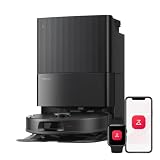
- 𝗔𝗹𝗹-𝗶𝗻-𝗢𝗻𝗲 𝗗𝗼𝗰𝗸 𝗳𝗼𝗿 𝗛𝗮𝗻𝗱𝘀-𝗙𝗿𝗲𝗲 𝗖𝗹𝗲𝗮𝗻𝗶𝗻𝗴 - The upgraded dock automatically empties dust into a sealed 2.7L bag that lasts 7–9 weeks, while 167℉ high-temperature self-cleaning helps refresh the mops after each use and 113℉ warm air drying keeps them ready for the next clean, making everyday floor care effortless for busy and pet-friendly homes
- 𝟭𝟴,𝟱𝟬𝟬 𝗣𝗮 𝗣𝗼𝘄𝗲𝗿𝗳𝘂𝗹 𝗦𝘂𝗰𝘁𝗶𝗼𝗻 - Engineered for strong everyday cleaning performance, the robot delivers powerful suction to effortlessly lift dust, crumbs, cat litter, stubborn debris, and pet hair from hard floors, carpets, and corners, helping keep every room fresh and spotless with less effort
- 𝗔𝗻𝘁𝗶-𝗧𝗮𝗻𝗴𝗹𝗲 𝗦𝘆𝘀𝘁𝗲𝗺 𝗳𝗼𝗿 𝗣𝗲𝘁 𝗛𝗼𝗺𝗲𝘀 - Built for homes with pets and long hair, the zero-tangle side brush, all rubber main brush, and easy-to-clean omnidirectional wheel help reduce hair wrap and simplify maintenance, making daily cleanup easier and less time-consuming
- 𝗦𝗺𝗮𝗿𝘁 𝗠𝗼𝗽𝗽𝗶𝗻𝗴 𝗳𝗼𝗿 𝗗𝗮𝗶𝗹𝘆 𝗦𝘁𝗮𝗶𝗻𝘀 - From kitchen splashes and cereal crumbs to pet paw prints and everyday footprints, the advanced dual mop system tackles daily messes with ease while adjusting water flow for cleaner, fresher floors throughout your home
- 𝗢𝗯𝘀𝘁𝗮𝗰𝗹𝗲 𝗔𝘃𝗼𝗶𝗱𝗮𝗻𝗰𝗲 & 𝟯.𝟴 𝗶𝗻 𝗟𝗼𝘄-𝗣𝗿𝗼𝗳𝗶𝗹𝗲 𝗖𝗹𝗲𝗮𝗻𝗶𝗻𝗴 - Powered by smart obstacle detection, the robot precisely avoids shoes, toys, and furniture legs while gliding smoothly under beds and sofas to clean hidden dust in low-clearance spaces for more complete coverage
UiPath’s 2025 survey reported IDP use by 55% of respondents. That vendor-reported figure is directional rather than a universal adoption estimate, but it illustrates why document intelligence is becoming connective tissue between incoming information and downstream automation.
Agentic and cognitive automation: useful autonomy with limits
Agentic systems can choose and sequence actions toward a goal, making them suitable for processes with branching paths and variable inputs. They also introduce a larger error surface: a mistaken interpretation can propagate through several tools.
What’s actually slowing this PC down?
Pick the symptom - the matching free tool is one click away.
Controls for bounded autonomy
- Least-privilege access: Give each agent only the data, tools and write permissions needed for its task.
- Approval gates: Require a named human to approve payments, legal commitments, employment decisions, external communications or other high-impact actions.
- Confidence and policy thresholds: Route uncertain classifications or out-of-policy requests to a queue rather than guessing.
- Observability: Log prompts, model versions, retrieved sources, tool calls, inputs, outputs and approvals.
- Transaction boundaries: Limit amounts, records, retries and execution time; make operations idempotent where possible.
- Rollback and fallback: Preserve the previous state and define a manual path when a model, connector or service fails.
- Evaluation and monitoring: Test representative and adversarial cases before launch, then monitor accuracy, drift, latency, cost and incident rates.
UiPath reported that 49% of respondents considered the inability of current AI technologies to learn and adapt without human intervention a problem. That concern is a practical reminder that “agentic” does not mean self-correcting or reliably autonomous.
Is RPA being replaced by generative AI?
Not generally. Generative AI changes how systems interpret and plan, while RPA remains useful for deterministic interaction with applications that lack modern APIs. The layers solve different problems:
- Use RPA when the path is stable, the fields are structured and the required action is repeatable.
- Add AI when the input is variable, such as a document, conversation, image or free-text request.
- Use orchestration when several systems and decision points must be coordinated.
- Keep a human in the loop when the action is high impact, difficult to reverse or not adequately testable.
RPA may be hidden inside a broader automation platform, replaced by an API where one exists, or retained for a legacy interface. The sensible modernization question is which execution method produces the lowest total risk and cost—not whether a component carries an AI label.
Rank #4

- 𝗨𝗹𝘁𝗿𝗮-𝗣𝗼𝘄𝗲𝗿𝗳𝘂𝗹 𝗗𝗲𝗲𝗽 𝗦𝘂𝗰𝘁𝗶𝗼𝗻: HyperForce 8,000 Pa lifts dust, hair, and debris from floor cracks and deep within carpets — for spotless floors, every time
- 𝗗𝘂𝗮𝗹 𝗔𝗻𝘁𝗶-𝗧𝗮𝗻𝗴𝗹𝗲 𝗕𝗿𝘂𝘀𝗵𝗲𝘀: A specially designed main brush and zero-tangle side brush prevent hair wrap, ensuring smooth cleaning and minimal maintenance, perfect for homes with pets.
- 𝗣𝗿𝗲𝗰𝗶𝘀𝗶𝗼𝗻 𝗟𝗶𝗗𝗔𝗥 𝗡𝗮𝘃𝗶𝗴𝗮𝘁𝗶𝗼𝗻: 360° laser mapping scans your home in real time, plans the most efficient route, and saves multiple floor maps for easy navigation
- 𝗩𝗮𝗰𝘂𝘂𝗺 & 𝗠𝗼𝗽 𝗶𝗻 𝗢𝗻𝗲 𝗚𝗼: The 270 ml water tank lets you vacuum and mop at the same time. With three water levels and a removable mop pad, it tackles everything from fine dust to dried-on stains. Reminder: The water tank and dustbin are designed as a single integrated combo part
- 𝗥𝗼𝗯𝗼𝗿𝗼𝗰𝗸 𝗔𝗣𝗣 & 𝗩𝗼𝗶𝗰𝗲 𝗖𝗼𝗻𝘁𝗿𝗼𝗹: Take full control of your robot with the Roborock app. Adjust suction levels, schedule cleaning for specific times or rooms, set up No-Go Zones to avoid specific areas, and enable child lock for the safety of children and pets. For ultimate hands-free convenience, use voice commands via Alexa or Google Home to start, stop, pause, resume cleaning, or send your robot back to the dock effortlessly
How work and roles change
AI can complement or replace labor in particular tasks, but the aggregate employment outcome depends on process redesign, demand, regulation and organizational choices. The National Academies’ summary supports this task-level view rather than a single job-loss forecast.
As routine steps are automated, work shifts toward process discovery, policy and prompt design, exception management, model evaluation, data stewardship, security review, quality assurance, training and change management. Accountability does not disappear: a business still needs an owner for the outcome, even when a model proposed or executed part of it.
Risks that belong in the design
The U.S. Government Accountability Office describes the technology plainly: “Generative artificial intelligence systems—like ChatGPT and Gemini—create text, images, audio, video, and other content.” That generative capability creates both value and risk.
- Inaccurate or fabricated output: A fluent answer can still be wrong; retrieval, validation and approval must match the consequence of error.
- Privacy and confidentiality: Classify data before sending it to a model and control retention, training use and cross-tenant access.
- Security and prompt manipulation: Treat retrieved documents and user text as untrusted input; prevent them from changing system instructions or gaining unauthorized tools.
- Disinformation and synthetic content: Verify provenance where identity, public information or evidence matters.
- Worker displacement and deskilling: Assess role impacts, provide training and preserve meaningful human review.
- National-security and environmental effects: Consider supply-chain dependence, model concentration, energy use and resilience.
- Automation bias: Design interfaces that expose uncertainty and make disagreement possible instead of pressuring reviewers to accept a recommendation.
How to compare automation platforms
Compare the process and control model, not just the feature checklist.
| Dimension | Questions to ask |
|---|---|
| Input structure | Are inputs fixed fields, documents, conversations, images or sensor data? What quality and volume can the system handle? |
| Decision autonomy | Does it execute deterministic rules, make recommendations or take bounded multi-step actions? |
| Exception handling | What triggers escalation? Can a person see the evidence, correct the item and resume safely? |
| Integration depth | Are there reliable APIs, workflow features, desktop automation, ERP/CRM connectors and governed data access? |
| Control and auditability | Are permissions, traces, explanations, model and prompt versions, retention and rollback available? |
| Economics | What are implementation, inference, infrastructure, maintenance and support costs? What do delay and errors cost? |
| Workforce effect | Which roles change, what training is required, and who remains accountable for the result? |
A practical adoption path
- Select a bounded process: Choose a measurable bottleneck with an accountable owner, accessible data and a defined risk level.
- Map the current state: Record systems, handoffs, exception rates, cycle time, rework and approval points using process discovery where useful.
- Classify each step: Mark whether it needs perception, prediction, generation, deterministic execution or human judgment.
- Start with the least risky layer: Remove unnecessary manual work with APIs or RPA; add IDP or language models only where variability requires them.
- Set controls before production: Define data boundaries, permissions, approval thresholds, logging, retention, rollback and a manual fallback.
- Evaluate realistic cases: Test normal, rare, ambiguous, adversarial and out-of-policy inputs. Measure accuracy and escalation, not just successful demos.
- Roll out gradually: Use a pilot, monitor live outcomes, train affected staff and expand permissions only when evidence supports it.
- Retire or redesign: Remove automations that no longer deliver value, and revise prompts, policies, models and connectors as the process changes.
What the longer-term outlook suggests
The World Economic Forum reported in 2025 that 86% of employers expect AI and information-processing technologies to transform their business by 2030, while 58% expect robots and autonomous systems to do so. These are expectations, not guaranteed results, but they indicate that intelligent automation is being planned as an operating-model change rather than a narrow chatbot project.
The durable architecture is likely to combine embedded AI for individual productivity, IDP and process intelligence for messy inputs and visibility, RPA or APIs for execution, and agentic orchestration for carefully bounded multi-step work. Governance, measurable outcomes and human accountability determine whether that combination improves a process or merely adds another layer of complexity.
Quick Recap
Product prices and availability are accurate as of the date/time indicated and are subject to change. Any price and availability information displayed on Amazon at the time of purchase will apply.

