
The Tool Desk
Outbyte Driver Updater FREEFix the driver behind crashes, sound loss and screen glitchesFind Drivers →Outbyte PC Repair FREEClear out junk files and repair common Windows errorsFree Scan →Threat detection is moving from disconnected alerting tools to integrated, cloud-scale operations. The modern stack links endpoint and extended detection and response (EDR/XDR), cloud SIEM, threat intelligence, hunting, automation and, where needed, managed incident response. The goal is not simply to create more alerts; it is to connect evidence quickly enough to contain an intrusion while keeping people in control of high-impact actions.
What is changing in threat detection and response?
Traditional security operations often split telemetry and responsibility among endpoint agents, network monitors, email gateways, identity systems and separate cloud consoles. Analysts then reconstruct an incident manually. That model struggles when workloads are distributed across cloud services, identities are constantly changing and attackers move faster than a human can inspect every alert.
The emerging model treats detection and response as one operating system for security:
- Broader telemetry: endpoint, identity, network, email, SaaS and cloud infrastructure data are collected together.
- Correlation instead of isolated alerts: related events are joined into an incident that an analyst can investigate as a sequence.
- Real-time processing: cloud-native pipelines ingest and analyze events continuously rather than waiting for periodic batch jobs.
- Threat intelligence and hunting: known indicators inform detections while analysts search proactively for behaviors that rules missed.
- Automated containment: approved playbooks can isolate a host, disable an account or block an indicator without waiting for every manual step.
- Human-guided operations: analysts set policy, review risky actions and tune detections as the environment changes.
This is a change in operating model, not a promise that one product eliminates the need for security staff.
Outdated Drivers Are Slowing You Down
One free scan finds every outdated or missing driver and matches the right update for your exact hardware.Free scan · exact hardware matchWindows Errors? Fix Them Before They Spread
Repair common Windows errors and clear accumulated junk for a smoother, more stable PC - no reinstall needed.Free scan · no reinstall#1 Best Overall

- Watchguard T145 Firebox with 3 Year Basic Security Suite License (WGT145033) - The Firebox T145 delivers enterprise-grade protection for branch offices and retail sites. With a blend of 2.5Gb, 1Gb, and SFP/SFP+ ports, it supports high throughput, AI-driven malware protection, and DNS filtering for robust network defense.
- The Basic Security Suite activates core protections on your Firebox, including intrusion prevention, gateway antivirus, URL filtering, and spam blocking in WatchGuard Cloud. Upgrade to Total Security Suite to add AI-powered malware detection, cloud sandboxing, DNS filtering, and advanced correlation.
- The Basic Security Suite equips your WatchGuard Firebox with a robust set of foundational security tools. This bundle delivers intrusion prevention, gateway antivirus, URL filtering, and spam blocking, all managed through WatchGuard Cloud. It’s a cost-effective choice for organizations that need reliable, essential protection without unnecessary extras.
- Interfaces and deployment: 2.5Gb and 1Gb Ethernet with SFP or SFP+ fiber for clean aggregation and segmented backhaul at the edge.
- Performance and scale: UTM up to 710 Mbps with inspection on; flexible VPN topologies for hub and spoke or mesh designs.
Why speed and scale matter
CrowdStrike’s May 9, 2024 official announcement reported that cloud intrusions grew 75% in the previous year and that adversaries could enter customer environments in as little as two minutes. Those figures are CrowdStrike’s reported findings, not independently verified industry-wide totals, but they illustrate the operational problem: a team that investigates alerts sequentially can fall behind an attack that moves across cloud resources in minutes.
Detection speed alone is not enough. A useful response must also have the context to distinguish a compromised administrator from a legitimate administrator, identify affected assets and apply the least disruptive containment action. High-volume collection without correlation can increase analyst workload rather than reduce it.
How EDR is expanding into XDR
EDR: the endpoint foundation
Endpoint detection and response records process activity, file changes, network connections and other signals on laptops, servers and workloads. It gives investigators a detailed view of what happened on a device and supports actions such as isolating that device or stopping a process.
XDR: connecting more control points
Extended detection and response adds telemetry outside the endpoint and correlates it with endpoint events. In a 2021 description of Falcon XDR, CrowdStrike said the platform could ingest endpoint, network, email, cloud IaaS/PaaS, SaaS and CASB data, combine those signals with threat intelligence and support automated response through Falcon Fusion.
The practical benefit is an incident-level view. A suspicious login, an unusual mailbox rule, a newly created cloud key and a process on a server can be evaluated as related activity instead of four unrelated alerts. XDR does not remove the need to verify data quality, permissions or detection logic; it makes those controls more valuable because decisions can affect more systems.
Rank #2

- SonicWall TZ270W Appliance Only - No Service Subscription (02-SSC-2823) - Combines enterprise-grade firewalling with integrated 802.11ac Wave 2 Wi-Fi to deliver secure wired and wireless connectivity in one compact device for small offices and clinics.
- Blocks zero-day threats and ransomware with Capture ATP sandboxing enhanced by RTDMI, plus IPS and anti-malware scanning for layered protection.
- Eliminates the need for separate access points in smaller spaces thanks to built-in high-speed wireless that is simple to deploy and manage.
- Supports VPN, SD-WAN, and TLS 1.3 decryption to secure hybrid cloud access and remote workers while maintaining usability and performance.
- Delivers gigabit performance with up to 750,000 concurrent connections to handle growth in users, devices, and SaaS applications.
Why cloud SIEM is being redesigned
Modern cloud SIEM platforms are intended to ingest and analyze security data continuously at cloud scale. Writing for SC Media in 2025, Ajit Sancheti described the use of AI, machine learning and cloud-native architectures for real-time ingestion, correlation, analysis and response.
A cloud SIEM can serve as the investigation and analytics layer across multiple products, including systems that an XDR agent does not control directly. Its design raises practical questions that buyers must answer:
- Which logs are collected, normalized and searchable?
- How quickly do events become available for detection?
- How long are raw and enriched records retained?
- What processing and storage costs result from higher telemetry volume?
- Can analysts pivot from an alert to identity, asset and cloud context without changing consoles?
Cloud delivery can improve elasticity and access, but it does not automatically produce good detections. Retention policies, parsing quality, access controls and tuning still determine whether the system is useful during an incident.
Recommended Free Tools
EDR, XDR, SIEM or MDR: what does each provide?
| Approach | Primary coverage | Main job | Operational burden | Best fit |
|---|---|---|---|---|
| EDR | Endpoints and servers | Record activity, detect suspicious behavior and contain devices | Agent deployment, policy tuning and analyst investigation | Organizations that need deep host visibility or are building a broader program |
| XDR | Endpoint plus connected network, email, identity and cloud sources | Correlate cross-domain signals and coordinate response | Integrations, data normalization, permissions and playbook governance | Teams seeking one incident view across several security domains |
| Cloud SIEM | Logs and events from many products and cloud services | Central search, correlation, analytics, detection and investigation | Data onboarding, retention, query performance, cost and detection engineering | Organizations needing broad telemetry analysis across heterogeneous tools |
| MDR | Depends on the provider’s platform and integrations | 24/7 monitoring, triage, investigation and guided or executed response | Customer must define authority, escalation paths and required integrations | Teams that cannot staff or sustain round-the-clock operations |
These categories overlap. An MDR provider may operate EDR, XDR and SIEM technologies on a customer’s behalf, while a self-operated team may combine products from several vendors.
Can AI automate response safely?
AI assistants can help analysts navigate large volumes of events, summarize related evidence and suggest investigative steps. S&P Global’s 2023 analysis cautioned that unsupervised automation can have unexpected consequences; people remain necessary to monitor, control and optimize automated systems.
Rank #3
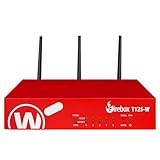
- Watchguard T125-W Firebox with 3 Year Basic Security Suite License (WGT126033) - The T125-W adds Wi-Fi 7 capability to the powerful Firebox T125 platform. Designed for branch or remote offices, it delivers 510 Mbps UTM throughput, advanced security services, and full wireless coverage in a single, compact appliance.
- The Basic Security Suite activates core protections on your Firebox, including intrusion prevention, gateway antivirus, URL filtering, and spam blocking in WatchGuard Cloud. Upgrade to Total Security Suite to add AI-powered malware detection, cloud sandboxing, DNS filtering, and advanced correlation.
- The Basic Security Suite equips your WatchGuard Firebox with a robust set of foundational security tools. This bundle delivers intrusion prevention, gateway antivirus, URL filtering, and spam blocking, all managed through WatchGuard Cloud. It’s a cost-effective choice for organizations that need reliable, essential protection without unnecessary extras.
- Interfaces and deployment: Wi-Fi 7 plus 1x 2.5Gb and 4x 1Gb Ethernet for coverage, clean uplinks, and straightforward VLAN segmentation with Cloud visibility.
- Performance and scale: UTM up to 510 Mbps with inspection on; add sites confidently with scalable VPN.
A safer operating pattern separates low-risk actions from consequential ones:
- Classify the action. Automatic enrichment or duplicate-alert suppression is lower risk than disabling an identity or shutting down a production workload.
- Require confidence and context. A playbook should check asset criticality, user role, known maintenance windows and corroborating signals before containment.
- Set approval thresholds. Permit automatic actions for narrowly defined, reversible cases and require analyst approval for disruptive actions.
- Log every decision. Record the evidence, rule, model recommendation, approver and result so the team can audit and improve the workflow.
- Provide rollback. Isolation, blocking and account changes need documented recovery procedures and an owner who can invoke them.
Automation should shorten the path from evidence to action, not conceal uncertainty behind a confident-looking recommendation.
What’s actually slowing this PC down?
Pick the symptom - the matching free tool is one click away.
How fast can a SOC detect and contain a cloud intrusion?
There is no universal detection or containment time. Results depend on telemetry coverage, event delivery latency, identity and asset context, detection quality, analyst availability, approval rules and the permissions granted to response tools. A vendor-reported possibility of entry in as little as two minutes makes near-real-time collection important, but it does not establish a guaranteed SOC response time.
Teams can examine the complete response chain:
| Stage | Question to measure | Typical improvement lever |
|---|---|---|
| Ingest | How long after an event does it reach the analytics platform? | Prioritize critical sources and fix pipeline delays |
| Detect | How long until a rule or analyst recognizes suspicious activity? | Use behavioral detections, threat intelligence and tuned correlation |
| Decide | How long to confirm scope and choose an action? | Enrich incidents with identity, asset and cloud context |
| Contain | How long from approval to effective isolation or blocking? | Pre-authorize tested, reversible playbooks and verify permissions |
| Recover | How quickly can normal service resume safely? | Document rollback, preserve evidence and coordinate with owners |
Self-operated security operations or managed detection and response?
The central buying decision is whether the organization wants software, operational expertise or both. A self-operated platform can provide control over data, detections and response policy, but it requires staffing, training, tuning and on-call coverage. MDR supplies continuous monitoring and experienced responders, while the customer still needs to define business context, authorities and escalation contacts.
| Decision axis | Self-operated platform | Managed detection and response |
|---|---|---|
| Coverage | Customer chooses endpoints, identity, network and cloud integrations | Coverage depends on the provider’s supported sources and configured integrations |
| Detection and containment speed | Depends on internal staffing, procedures and automation | Benefits from provider monitoring and escalation processes, subject to agreed scope |
| Automation control | Customer owns playbooks, approvals and permissions | Customer and provider must agree which actions are authorized |
| Deployment and tuning | More internal engineering and maintenance | Less day-to-day operation, but onboarding and cooperation remain necessary |
| Cost drivers | Licenses plus people, storage, processing and retention | Service fees plus platform, integration and data costs defined by the contract |
| Best fit | Organizations with a staffed SOC and strong detection engineering | Organizations that cannot sustain 24/7 monitoring or need additional incident expertise |
CrowdStrike’s May 9, 2024 announcement described an expanded alliance in which Falcon technology is paired with Mandiant Incident Response and Managed Detection and Response services and Google Cloud Security Operations. Daniel Bernard, CrowdStrike’s chief business officer, called the alliance “a watershed moment for cybersecurity: powering Mandiant’s industry-leading Incident Response and Managed Detection and Response services with Falcon in concert with Google Cloud’s Security Operations platform.” The example illustrates a combined model; it does not mean every organization needs that specific stack.
Rank #4
- Watchguard T125-W Firebox with 1 Year Basic Security Suite License (WGT126031) - The T125-W adds Wi-Fi 7 capability to the powerful Firebox T125 platform. Designed for branch or remote offices, it delivers 510 Mbps UTM throughput, advanced security services, and full wireless coverage in a single, compact appliance.
- The Basic Security Suite activates core protections on your Firebox, including intrusion prevention, gateway antivirus, URL filtering, and spam blocking in WatchGuard Cloud. Upgrade to Total Security Suite to add AI-powered malware detection, cloud sandboxing, DNS filtering, and advanced correlation.
- The Basic Security Suite equips your WatchGuard Firebox with a robust set of foundational security tools. This bundle delivers intrusion prevention, gateway antivirus, URL filtering, and spam blocking, all managed through WatchGuard Cloud. It’s a cost-effective choice for organizations that need reliable, essential protection without unnecessary extras.
- Interfaces and deployment: Wi-Fi 7 plus 1x 2.5Gb and 4x 1Gb Ethernet for coverage, clean uplinks, and straightforward VLAN segmentation with Cloud visibility.
- Performance and scale: UTM up to 510 Mbps with inspection on; add sites confidently with scalable VPN.
A practical decision framework
Choose an EDR-first expansion when host visibility is the gap
Start with EDR when the organization cannot reliably investigate endpoint activity, isolate compromised hosts or enforce consistent prevention policies. Add identity, email and cloud sources as the incident patterns require them.
Choose XDR when investigations cross products
XDR is most useful when analysts repeatedly join endpoint, identity, email, network and cloud evidence by hand. Validate which sources are supported, how data is correlated and which response actions are available before assuming “extended” means complete.
Choose a cloud SIEM when data is fragmented
A cloud SIEM is appropriate when the organization needs a central analytics and retention layer across many security and cloud products. Estimate ingestion, search and retention costs using actual event volumes rather than headline capacity.
Choose MDR when continuous staffing is the constraint
MDR is a fit when the business needs 24/7 monitoring or incident-response expertise that it cannot recruit or retain internally. Clarify escalation hours, response authority, supported regions, evidence handling and handoff procedures in the service agreement.
Implementation checklist
- Inventory critical identities, endpoints, workloads, SaaS applications and cloud accounts.
- Map which systems emit security telemetry and where gaps or delivery delays exist.
- Define a short list of high-impact scenarios, such as stolen credentials, cloud key misuse and ransomware behavior.
- Connect the highest-value data sources first and test that incidents contain enough context for a decision.
- Write response playbooks with explicit owners, approval thresholds, rollback steps and evidence requirements.
- Run controlled exercises to verify that isolation, account changes and cloud actions work with least-privilege permissions.
- Review false positives, missed detections, analyst workload and response outcomes; tune rules and automation continuously.
Metrics that show whether the model works
- Mean time to ingest: delay between an event occurring and becoming searchable.
- Mean time to detect: delay from relevant activity to a validated detection.
- Mean time to contain: delay from confirmation to an effective containment action.
- Coverage: percentage of critical assets, identities and cloud services sending usable telemetry.
- Detection quality: false-positive rate, missed scenarios and analyst rework.
- Automation safety: playbook success, rollback frequency and actions requiring emergency override.
- Resilience: ability to preserve evidence and maintain essential services during response.
The watershed is therefore operational: security teams are connecting more evidence, processing it closer to real time and using controlled automation to shorten response. The right combination of EDR, XDR, SIEM and MDR depends on coverage gaps, staffing, risk tolerance and who will own each decision when an incident is moving quickly.
Quick Recap
Product prices and availability are accurate as of the date/time indicated and are subject to change. Any price and availability information displayed on Amazon at the time of purchase will apply.

