
Uber drivers are not demonstrably doomed today, but robotaxis create a credible long-term substitution risk. Autonomous fleets can remove the driver cost from a trip and run for more hours, while Uber is adding autonomous vehicles to its marketplace rather than abandoning human drivers. The effect depends on the city, service area, fleet size, fares, operating conditions and whether autonomous cars replace or supplement existing rides.
What “doomed” gets right—and wrong
The economic concern is real: a robotaxi does not require a driver to be paid for each passenger trip. If a large autonomous fleet captures enough demand, human drivers could receive fewer requests, spend more time waiting, or accept lower fares. Vehicle owners and platforms could also keep more of each trip’s residual revenue.
But there is no authoritative nationwide percentage showing how many Uber driving jobs have already been lost to robotaxis. Availability remains limited to defined operating areas, and the measured effect differs by city and period. A claim that all Uber drivers are already being replaced goes beyond the available evidence.
Uber’s public strategy is a hybrid model
Uber says the impact should be minimal
In an official blog post dated May 13, 2026, Uber wrote: “We expect minimal driver impact.” The company describes autonomous vehicles as another way to meet passenger demand and says they can help drivers maximize earnings. That is Uber’s strategic position, not an independent finding that driver income will remain unchanged.
Do these 3 things before closing this tab:
1Fix the driver behind crashes, sound loss and screen glitches2Clear out junk files and repair common Windows errors3Scan for outdated or missing drivers - takes under a minute#1 Best Overall

- REAL-WORLD ROBOTICS: Embark on an exciting journey by building your very own self-driving robot car! This DIY kit introduces beginners aged 11+ to the world of robotics, AI, and coding in a fun and engaging way.
- INTERACTIVE LEARNING EXPERIENCE: Control your robot via Wi-Fi or Bluetooth using the included custom-built controller. Drive it around, explore its autonomous driving capabilities, and interact with its sensors to understand how AI perceives the world.
- STEM FUN: Enhance creativity, problem-solving, and critical thinking through hands-on learning. Assembling and programming the robot introduces users to electromotors, sensors, computer vision, and machine learning, providing a comprehensive STEM education experience.
- THE PERFECT GIFT FOR YOUNG INNOVATORS: Ideal for kids who are passionate about robotics and technology, this DIY self-driving car kit offers a hands-on learning experience that makes it a standout gift for any occasion.
Autonomous Solutions expands Uber’s AV network
Uber announced an Autonomous Solutions organization in February 2026. It named Nuro, Lucid, Wayve and WeRide among partners in a global autonomous-mobility and delivery strategy. The approach allows Uber to provide rides using a mix of human-driven vehicles and partner-operated autonomous vehicles.
Uber also treats AV companies as competitors
Uber’s SEC filing identifies Waymo, Tesla and Zoox as autonomous-vehicle competitors in mobility, delivery and logistics. That apparent contradiction is important: Uber can use AV partners to increase marketplace capacity while recognizing that autonomous companies may eventually compete directly for riders, trips and revenue.
Rank #2

- 【SMART & INTERACTIVE PLAY】 SMART & INTERACTIVE PLAY】Equipped with intelligent motion sensors, this automatic cat toy moves, turns, and avoids obstacles on its own. It keeps your indoor cats actively engaged, chasing, and jumping, helping to relieve boredom and encourage healthy daily exercise.
- 【LED LIGHTS & FEATHER ATTACHMENT】 【LED LIGHTS & FEATHER ATTACHMENT】Features vibrant built-in LED lights and a swaying green feather attachment that immediately captures your cat's attention. The combination of unpredictable movement and glowing lights stimulates your cat’s natural hunting instincts, even in low-light environments.
- 【MOTION-ACTIVATED & AUTO STANDBY】 【MOTION-ACTIVATED & AUTO STANDBY】Designed for energy efficiency and convenient play. The toy automatically enters standby mode after a period of inactivity to save battery life and easily reactivates with a simple tap or nudge from your curious feline friend.
- 【SAFE & DURABLE DESIGN】Made from high-quality, non-toxic ABS materials with smooth, rounded edges, ensuring complete safety for your pets. The soft rubber-coated wheels run quietly and smoothly across various floor surfaces, including hardwood, tile, and low-pile carpets.
- 【PERFECT GIFT FOR INDOOR CATS】An ideal solution for busy pet owners! This self-playing toy keeps kittens and adult cats entertained for hours while you are away or busy working. Comes ready to play and makes a wonderful gift for any cat lover.
What the evidence says about earnings and jobs
Earlier evidence shows that added supply can reduce driver earnings
A U.S. Census working paper examined what happened when ridesharing entered cities without fleet-size limits. Both incumbent taxi drivers and rideshare drivers experienced earnings losses. The result does not measure robotaxis specifically, but it demonstrates a relevant mechanism: when a new type of supply enters a market without a matching increase in demand, existing drivers can see lower utilization or pay.
Recent city data is suggestive, not a national estimate
Gridwise’s 2026 report analyzed Atlanta, Austin, Los Angeles, Phoenix and San Francisco from the first quarter of 2024 through the fourth quarter of 2025. Its release said trips per hour fell faster in cities with autonomous-vehicle activity. That pattern is a reason to examine local conditions, not proof that robotaxis caused every decline or that the same effect applies across the United States. The release does not establish one nationwide causal estimate.
Recommended Free Tools
Rank #3

- [Multiple Innovative Ways to Play]: Gesture RC car with 2 control modes: remote control and gravity sensor watch control. Control the RC car with your hand gestures, the toy car will go into twist, move, rotate, off-road and high-speed mode.
- [Cool Stunts & All-Round Drifts]: Newly upgraded 4WD RC stunt car can drift in all directions, 360°rotation, double-sided driving, autonomous driving and switch freely between on-road and off-road modes. With colorful lights and cool music, RC cars are the most popular car toys for boys aged 6-7,8-12 and up.
- [Support Cars Racing Together]: Gesture sensing remote control car with 2.4Ghz Anti-interference technology support multiple cars racing together. Featured with powerful motors and roller-traction tires, the off-road and on-road remote control car can easily overcome various terrains. Brings everyone an excellent racing experience.
- [2 Batteries for Hours of Fun]: Hand controlled rc car is equipped with 2 rechargeable batteries for 60 minutes playtime. Fast and convenient charging via USB. Stay away from screen and play the car toys with colorful lights and auto-driven mode. The remote uses two "1.5V" AA batteries (no included). The gesture remote uses two "1.5V" AAA batteries (no included).
- [Gifts for Boys & Girls Age 6-12]: Cool hand remote car is a great toy for boys and girls 6 7 8 9 10 11 12 years old. Ideal gifts for your son, daughter, grandson, granddaughter, nephew, niece, or cousin. Perfect for birthdays, holidays, Children's Day, Halloween, New Year and Christmas gifts. Please reach out to us when you need help.
Waymo’s scale is growing
Waymo reported 271.3 million rider-only miles through June 2026. In a March 19, 2026 company blog post, it wrote: “At our current scale, driving over 4 million miles weekly, our analysis suggests the Waymo Driver is preventing approximately one serious-injury crash every 8 days.” Both the mileage and safety statement are company-reported figures; they show operational scale and Waymo’s own analysis, not an independent count of Uber jobs displaced.
Why the effect is local rather than uniform
Service areas are limited
Robotaxis operate only in approved service areas and under defined conditions. A driver in a neighborhood outside those boundaries may face no direct competition, while a driver at the center of an autonomous operating zone may encounter more supply. Coverage can change as permits, mapping, weather policies and fleet deployments change.
Rank #4
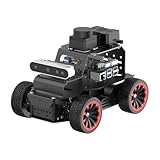
- For Raspberry Pi 5 & ROS2 Robot Car. MentorPi A1 smart AI robot car is powered by Raspberry Pi 5, compatible with ROS2, and programmed in Python, making it an ideal platform for AI robot development.
- High-Performance Hardware. Equipped with Ackerman chassis, closed-loop encoder motors, TOF lidar, depth camera, AI voice interaction box, and other advanced components to ensure optimal performance and efficiency.
- Advanced AI Capabilities. Supports SLAM mapping, path planning, multi-robot coordination, vision recognition, target tracking, and more, covering a wide range of AI applications.
- Autonomous Driving with Deep Learning. Utilizes YOLO model training to enable road sign and traffic light recognition, along with other autonomous driving features, helping users explore and develop autonomous driving technologies.
- Empowered by Large AI Model, Human-Robot Interaction Redefined. MentorPi AI robot car deploys multimodal models with ChatGPT at its core, integrating 3D vision and Al voice interaction box. This synergy enhances its perception, reasoning, and actuation capabilities, enabling advanced embodied AI applications and delivering natural, context-aware human-robot interaction.
Operating conditions matter
Time of day, weather, road design, airport rules, event traffic and rider pickup requirements affect whether an autonomous vehicle can serve a trip. Human drivers currently cover edge cases that a restricted autonomous service may decline. Conversely, an autonomous vehicle can potentially remain available for longer hours without a human shift, increasing supply during periods when a human driver would stop working.
Demand and fares can move in either direction
More vehicles may shorten passenger wait times and increase completed trips, which could expand the total market. It can also divide the same demand among more vehicles, reducing each driver’s utilization. Whether drivers benefit depends on which effect dominates in a particular market and on how Uber prices and dispatches the mixed fleet.
Outdated Drivers Are Slowing You Down
One free scan finds every outdated or missing driver and matches the right update for your exact hardware.Free scan · exact hardware matchPC Slower Than It Used to Be?
A free scan shows the junk files, broken settings and background clutter dragging Windows down - then fixes them in one click.Free scan · Windows 10 & 11Best Value

- Package: 1 Piece x Steering Wheel Toy (batteries are required but not included). Color: Yellow
- The electronic steering wheel helps your kids pass the time by joining the driving fun, with a horn, car sirens, police buttons, left signal, and a key dial.
- Flashing lights and sound effects are the perfect addition to keeping little ones entertained on long journeys.
- The electronic Interactive steering wheel is a sturdy toy with loads of fun, offering realistic car functions just like a real one.
Human Uber service versus a robotaxi
| Factor | Human-driven Uber trip | Robotaxi trip | Why it matters to drivers |
|---|---|---|---|
| Labor cost | Driver is paid from trip revenue and bears unpaid waiting time. | No human driver is paid per trip; the operator still has vehicle, remote-support and maintenance costs. | Removing driver labor can lower the cost of supplying a trip and put pressure on human-driver utilization or fares. |
| Vehicle ownership | Often the driver’s car, with fuel, depreciation, repairs and insurance paid by the driver. | Usually owned or controlled by an autonomous fleet operator or partner. | The owner of the vehicle receives the residual revenue after operating costs. |
| Net earnings | Gross pay must be reduced by fuel, depreciation, insurance, maintenance and taxes. | Fleet economics depend on utilization, charging or fuel, maintenance, insurance, remote operations and capital costs. | Comparing an app’s gross fare with a driver’s take-home pay is not an apples-to-apples comparison. |
| Utilization | Trips per engaged hour vary with demand, dispatching and unpaid repositioning. | Can potentially operate for more hours, subject to charging, maintenance, regulations and service restrictions. | A higher autonomous utilization rate could reduce the number of human-driven trips needed to serve demand. |
| Coverage | Human drivers can often accept trips beyond a robotaxi’s mapped or permitted zone. | Limited to approved areas, conditions and vehicle capabilities. | Drivers may retain work in locations or situations autonomous fleets do not serve. |
| Rider acceptance | Passengers interact with a human driver. | Passengers must accept a driverless vehicle and any remote-assistance process. | Adoption rate affects how quickly autonomous supply can take share. |
| Fare levels | Local Uber pricing and incentives determine the gross fare. | No comparable nationwide fare or driver-pay figure is established here. | Lower operating cost does not automatically tell you whether Uber will lower fares, increase demand or retain the difference. |
Can you still make money driving Uber?
Yes, but the relevant question is your local net hourly return, not a national headline about robotaxis. Lyft reported median U.S. driver gross earnings of $30.68 per engaged hour in the second half of 2023, including tips and bonuses. That figure is gross engaged-time pay, not profit after fuel, depreciation, insurance, maintenance or taxes, and it is Lyft data rather than an Uber guarantee.
Use a local decision checklist
- Map the actual autonomous zone. Identify which streets, airports, neighborhoods and hours are served by robotaxis in your market rather than assuming citywide coverage.
- Track your own utilization. Record trips per engaged hour, unpaid repositioning time, cancellations and wait time before and after autonomous service expands.
- Calculate net pay. Subtract fuel or charging, maintenance, depreciation, insurance, financing and taxes from gross app earnings.
- Compare time windows. Check whether your strongest periods—overnight, airport, bad weather, events or outer suburbs—are outside the autonomous fleet’s current operating limits.
- Watch platform terms. Uber’s commission, incentives, preferred dispatch programs and treatment of autonomous supply can change the result even when passenger demand is stable.
- Keep a fallback plan. If trips per hour decline persistently, consider other delivery or transportation work, a lower-cost vehicle strategy or skills that do not depend on one platform.
What would show that robotaxis are materially replacing drivers?
Look for several measures moving together in the same market:
- Autonomous vehicles serving a substantial share of completed trips, not merely operating pilot miles.
- A sustained decline in human-driver trips per engaged hour after controlling for seasonality and demand.
- Lower driver gross pay or incentives that cannot be explained by fuel prices, local regulation or changes in rider demand.
- Reduced driver utilization concentrated inside the autonomous service area compared with similar areas outside it.
- Evidence that Uber is substituting autonomous capacity for human capacity rather than using it to serve previously unmet demand.
One metric alone is not enough. For example, a fall in trips per hour could reflect weaker demand, road construction, a platform algorithm change or more drivers logging on—not necessarily robotaxis.
Bottom line
Robotaxis are a credible long-term threat to some Uber driving hours, especially where autonomous fleets achieve high utilization and broad coverage. They have not established that Uber drivers nationwide are already doomed. Uber’s own plan is to combine autonomous and human supply, while its filings acknowledge that AV companies may become direct competitors. For now, the most reliable answer is local: measure your net earnings and utilization in the exact areas and time windows where robotaxis operate.
Quick Recap
Product prices and availability are accurate as of the date/time indicated and are subject to change. Any price and availability information displayed on Amazon at the time of purchase will apply.

