
PC Slower Than It Used to Be?
A free scan shows the junk files, broken settings and background clutter dragging Windows down - then fixes them in one click.Free scan · Windows 10 & 11Crashes, No Sound, or Screen Glitches?
Random freezes, missing sound and display glitches usually trace back to one bad driver. Find and replace yours safely.Free scan · under a minuteYes. Pope Leo XIV said he personally refused authorization for a project that would have let people visit a website and hold a virtual audience with an AI version of the pope. The proposal was not a Vatican product or an announced Catholic service. It was an unnamed request described by Leo in a July 30, 2025 interview with journalist Elise Ann Allen.
What the proposed “AI pope” would have done
According to Catholic News Service reporting published September 23, 2025, someone asked permission to create an “artificial” Pope Leo. Users would sign in to a website, ask questions and receive answers from a virtual pope in a personal-audience format.

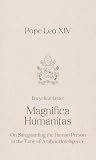


Leo said the request came to him and that he declined it: “Someone recently asked authorization to create an artificial me so that anybody could sign on to this website and have a personal audience with ‘the pope,’” he said. “This artificial intelligence pope would give them answers to their questions, and I said, ‘I’m not going to authorize that.’”
The reports do not identify the requester, website, software company, training data, moderation system or proposed launch date. Nothing in the coverage indicates that the Vatican was developing or preparing to release such a service.
#1 Best Overall
Why Pope Leo objected to an avatar
Authority and authenticity
For Leo, the problem was not simply that software might imitate his face or voice. A virtual pope could appear to speak with papal authority while lacking the pope’s real-time judgment, responsibility and presence. “If there’s anybody who should not be represented by an avatar, I would say the pope is high on the list,” he said.
That distinction matters in religious settings. A generated answer could look official even if it were incomplete, mistaken or invented. Users might not be able to tell whether a statement reflected Leo’s actual teaching, a human editor’s wording or an AI system’s prediction.
Rank #2
Truth and fabricated realities
Leo connected the proposal to a broader warning about digital systems that can blur what is real. He cautioned that “the digital world will go on its own way, and we will become pawns, or left by the wayside.” An AI persona that presents itself as a living religious authority would make that uncertainty especially consequential.
Human relationships and faith
Leo said human life does not derive its meaning from artificial intelligence: “Our human life makes sense not because of artificial intelligence, but because of human beings and encounter, being with one another, creating relationships, and discovering in those human relationships also the presence of God.”
Free tools Windows power users keep installed
One-click scans. No signup required.
He also remarked, “It’s going to be very difficult to discover the presence of God in AI.” The statement is a theological and pastoral concern, not a technical claim that computers cannot transmit information. It emphasizes that Catholic ministry involves relationships among people rather than only the delivery of answers.
Dignity and work
The same coverage places the AI discussion alongside Leo’s concerns about human dignity and employment. Systems that substitute for people can change how work is valued and how individuals participate in community life. The reports offer no measurement of job losses or user demand for this particular proposal, so its effects cannot be quantified from the available account.
AI religious avatar versus a human clergy interaction
The contrast is clearest when the proposed service is assessed as pastoral communication rather than as a novelty chatbot.
| Issue | AI avatar of a pope | Human clergy interaction |
|---|---|---|
| Authority and authenticity | May look and sound papal without being the pope or carrying his personal authorization for each answer. | A real person can identify their role, limits and responsibility for what they say. |
| Accuracy | Could generate a confident but incorrect or fabricated response; the proposal’s safeguards were not disclosed. | Advice can still be wrong, but the speaker can clarify, correct and explain their sources. |
| Privacy | Questions and personal disclosures could be recorded or analyzed; no data policy for the proposed site was reported. | Confidentiality depends on the church, jurisdiction and the individual’s practices. |
| Accountability | Responsibility could be divided among the model maker, operator and content reviewers. | A named minister or institution can answer for pastoral guidance and seek correction. |
| Access and scale | A website could potentially serve many users at once and across distances. | Availability is limited by people, schedules, language and location. |
| Human connection and work | Could make interaction easier while displacing or weakening some human encounters and roles. | Relies on presence, conversation and relationships that Leo describes as central to human and religious life. |
This comparison describes the issues Leo raised; it is not a test of a functioning product. No technical specification or user study for the proposed system has been published in the cited reports.
The Tool Desk
Outbyte Driver Updater FREEScan for outdated or missing drivers - takes under a minuteDriver Scan →Outbyte PC Repair FREERepair Windows errors before they cause bigger problemsFix Now →Best Value
Was the Vatican planning to launch an AI pope?
No evidence in the reporting supports that interpretation. The account describes a request for authorization made to Pope Leo, followed by his refusal. It does not describe Vatican approval, an official development program, a public beta, a partner company or a scheduled release.
When and where did Leo make the remarks?
Elise Ann Allen conducted the interview on July 30, 2025. Catholic News Service reported the AI-avatar account on September 23, 2025, with related Catholic coverage appearing from September 18 to 20.
The interview became the final chapter of Allen’s biography, Leo XIV: Citizen of the World, Missionary of the XXI Century. Penguin Peru published that book in Spanish on September 18, 2025. Readers seeking the full exchange should verify the edition and language, since the cited publication details refer to the Spanish edition.
What remains unknown
- The identity of the person or organization that made the request.
- The name and ownership of the proposed website.
- Whether a prototype was built or tested.
- What voice, image, language model, human review or disclosure system would have been used.
- How user data would have been stored, shared or deleted.
- How often the system might have produced inaccurate or unauthorized statements.
Those omissions are important: the public record establishes Leo’s refusal and his reasons, but not the project’s engineering or business details.
Recommended Free Tools
What readers should take from the episode
Pope Leo XIV did reject permission for an AI representation that would conduct virtual audiences as him. His objection rests on authenticity, the risk of false authority, the value of human encounter, the search for God in relationships and the effect of automation on human dignity and work. The episode is therefore about more than a digital likeness: it is a test of whether an automated system can stand in for a person whose authority depends on responsibility and presence.
Quick Recap
Product prices and availability are accurate as of the date/time indicated and are subject to change. Any price and availability information displayed on Amazon at the time of purchase will apply.

