
Free tools Windows power users keep installed
One-click scans. No signup required.
Dotdot is the application language and data model associated with Zigbee. It gives devices a shared vocabulary for capabilities such as switching, dimming, measuring temperature or locking a door. Zigbee supplies the low-power wireless network that carries those messages. Dotdot is not a radio, hub or mesh topology, and “Zigbee” alone does not guarantee that every device feature will work with every brand’s hub.
What is Dotdot?
Dotdot defines how an Internet of Things device describes what it can do and how another system controls it. Its reusable definitions specify capabilities, attributes, commands and events so that a light, sensor or lock can present a consistent interface to a platform.
Clusters are reusable capability definitions
In Zigbee terminology, a cluster is a standardized group of related data and operations. Familiar examples include on/off control, level control, temperature measurement and door locking. A certified product may implement only the clusters and features it supports; certification does not mean that every product implements every cluster.
Is Dotdot the same as Zigbee?
No. Dotdot is the application-layer language; Zigbee is a complete low-power wireless stack that includes networking and radio options. Zigbee combines a device data model with addressing, routing, security and a self-organizing mesh. Dotdot can therefore be thought of as the meaning of a message, while Zigbee supplies the path that delivers it.
What’s actually slowing this PC down?
Pick the symptom - the matching free tool is one click away.
#1 Best Overall
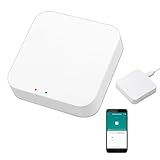
- 2 MODES IN 1 GATEWAY: This Smart home hub support Bluetooth mesh (SIG) + Zigbee3.0 multi-protocol communication. Only one gateway is needed to connect devices of different protocols to the 2.4Ghz network.
- APP REMOTE CONTROL: Smart Bluetooth Zigbee hub works with smart life/Tuya App, Support Adding devices, device reset, third-party control and group control. You can manage and remotely control the device through the Smart Life App. You can manage and remotely control your lights, fingerbot and other smart devices via the app, even when you're not home.
- VOICE CONTROL: The smart hub Support voice control, Simply give a voice command to Alexa or Google home to control devices(such as turn on/off the smart plug, turn on/off the Finger Bot).
- SMART HOME AUTOMATION: Sub-devices of the gateway act as trigger conditions for Interacting with devices such as ZigBee, Bluetooth, Wi-Fi, for device linkage. Featured as one powerful network bridge for whole house linkage in a real sense for all smart home devices.
- SUPPORT 128 DEVICES: Support up to 128 Tuya smart home devices, such as ZigBee Motion Sensor, Leak Detector, BLE Finger Bot, Zigbee Door Sensor, BLE Thermometer, ZigBee Window Gate Sensor, etc. NOTE: Supports Tuya/SmartLife devices only.
The distinction matters when comparing technologies. A shared language can make device behavior easier to understand across brands, but the network still determines range, routing, power use, radio band and packet delivery. Platform support, certification and product-specific features determine what actually works after pairing.
How the layers fit together
- Device behavior and data model: Dotdot and Zigbee clusters describe capabilities, attributes, commands and events.
- Network and transport: Zigbee provides low-power mesh networking. Thread provides an IPv6-based, low-power network when Dotdot is carried over Thread.
- Radio and physical layer: The radio transmits the packets. The Connectivity Standards Alliance (CSA) identifies 2.4 GHz and Sub-GHz options for Zigbee.
- Certification and integration: Testing establishes whether an implementation conforms to the relevant specifications and may use the applicable certification marks. A platform must still support the device type and feature set.
Will Zigbee devices from different brands work together?
They can, when the products are certified, use compatible device types and are supported by the same platform. CSA says certified Zigbee products use the same IoT language, are designed to communicate across certified platforms and are backward compatible with more than a billion Zigbee devices already deployed worldwide. Those are CSA statements, not a promise that every feature works with every hub.
What can prevent compatibility?
- Unsupported device type or cluster: A hub may pair a device but expose only the functions it understands.
- Certification and firmware: Products that are not certified, or that use incomplete implementations, may behave differently from fully certified devices.
- Regional radio band: Zigbee products may use different regional bands. Confirm that the device and coordinator are intended for your market.
- Platform onboarding: Each ecosystem maintains its own supported-device list and pairing process.
- Brand-specific features: A basic on/off function may be portable while a proprietary scene, sensor mode or diagnostic feature is not.
How large is the Zigbee ecosystem?
CSA currently reports more than a billion Zigbee chipsets sold and more than a billion deployed Zigbee devices, with hundreds of companies building products. It lists Amazon Echo Plus, Samsung SmartThings and Signify/Philips Hue as examples of major connected-home ecosystems using Zigbee. These figures and examples come from CSA; they should not be read as an assurance that every listed platform supports every Zigbee product.
Rank #2

- [Multi-Protocol Hub with Matter Bridge] The M3 is a versatile hub supporting Aqara Zigbee and Thread devices. It integrates third-party devices into the Aqara Home app. Supports advanced Matter bridge functionality, enabling Aqara-exclusive scenes and signals to sync with Matter ecosystems such as Home Assistant for seamless integration. Supports up to 127 Aqara Zigbee devices (** Not third-party Zigbee devices) and 127 Thread devices (Repeaters are needed).
- [Edge Compatibilities and Local Automations] The M3 serves as an Edge Hub, prioritizing local control and automation. Upon integration, it supersedes existing Aqara hubs, shifting the automations among them to local operation (Some cloud-based notifications still require internet). Upgrade-friendly, it supports migrating Zigbee devices from older Aqara hubs.
- [Smart IR Blaster with Feedback and Learning] The 360°IR blaster not only sends commands but also provides accurate status updates by detecting traditional remote use. It connects IR air conditioning units to Matter, functioning as an AC thermostat when paired with an Aqara Temperature and Humidity Sensor. (Note: Only one AC device can be exposed to Matter. Functionality may vary based on the Matter integration app. For Apple Home exposure, use Matter integration instead of HomeKit.)
- [Optimal Wired and Wireless Connectivity] Offering both wired and wireless solutions, the smart home hub M3 provides dual-band Wi-Fi (2.4/5 GHz) with advanced WPA3 security, and a Power over Ethernet (PoE) port. The addition of a USB-C port allows for mini-UPS and power bank connections, delivering unparalleled stability. (2A USB power adapter is not included. ) . Note: To ensure a stable connection, place the Hub M3 between 6 to 19 feet from the router.
- [Privacy-Focused with Encrypted Storage, Easy Setup and Versatile Placement] The M3 prioritizes privacy by excluding microphone or camera components. It boasts 8GB end-to-end encrypted local storage, for device lists, configuration parameters, and automation configuration data. Additionally, it includes a mount and screws for flexible placement on flat surfaces, walls, or ceilings. Magic Pair technology ensures effortless detection by the Aqara Home app upon power-up.
For historical context only, a 2017 Parks Associates survey cited by Tom Kerber reported that 26% of consumers owned a smart-home device. That dated figure is not a current adoption rate.
Quick wins for a faster PC:
Clear out junk files and repair common Windows errorsFree Scan →Scan for outdated or missing drivers - takes under a minuteDriver Scan →Can Dotdot run over Thread?
Yes. On December 12, 2017, the Thread Group and the Zigbee Alliance announced Dotdot over Thread. Their release described Dotdot as an application language running over Thread’s IP-based, low-power wireless network. The architecture demonstrates that an application model can be separated from the network beneath it: Dotdot defines device behavior, while Thread handles IPv6 addressing and packet transport.
The joint announcement stated: “Dotdot is the Zigbee Alliance’s universal language for the IoT, making it possible for smart objects to work together on any network.” In practical terms, carrying Dotdot over Thread does not turn Thread into Zigbee; it uses Thread as the network for the Dotdot application layer.
Rank #3
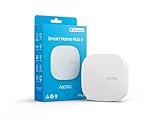
- Powered by SmartThings: Connect, monitor, and automate your home through the SmartThings app. Build a reliable, unified smart home using Samsung's proven ecosystem
- Matter + Zigbee Smart Home Hub: Supports the newest Matter standard plus Zigbee for lighting, sensors, plugs, switches, thermostats, and more - thousands of compatible devices. PLEASE NOTE: Z-Wave not supported
- Easy Setup with Wi-Fi or Ethernet: Get started in minutes using Wi-Fi or a wired Ethernet connection for apartments, houses, and expanding smart home systems - Z-Wave not supported
- Automations That Work for You: Create custom routines for security, lighting, comfort, and energy savings. Many local automations continue working even if your internet goes offline
- Wide Device Compatibility: Connect compatible smart devices from Aeotec and many other brands to build a unified system for lighting, voice control, energy management, and climate settings
Zigbee with Dotdot, Thread with Dotdot and Matter compared
| Aspect | Zigbee plus Dotdot | Thread plus Dotdot | Matter |
|---|---|---|---|
| Application model | Dotdot and Zigbee clusters define device behavior. | Dotdot remains the application language while Thread carries it. | Matter is a separate Connectivity Standards Alliance IP-based standard; it is not another name for Dotdot. |
| Network and transport | Zigbee supplies low-power wireless networking and mesh routing. | Thread supplies an IPv6-based, low-power network. | Matter operates over IP networking; the underlying connection depends on the device and ecosystem. |
| IP support | Zigbee itself is not the IP network in this comparison. | Thread is IP-based. | IP is fundamental to Matter. |
| Radio and range options | CSA identifies 2.4 GHz and Sub-GHz Zigbee options; range and routing depend on the deployment. | Thread is a low-power network; radio details depend on the Thread implementation. | Matter has no single radio; the device may use an IP-capable transport selected by its ecosystem. |
| Certification and interoperability | Zigbee certification covers conformance across stack layers, while platforms decide which device types they support. | The 2017 announcement presented Dotdot over Thread as an open, interoperable approach; verify current product certification and platform support. | Matter certification is separate from Zigbee and Dotdot certification. |
| Backwards compatibility | Zigbee 4.0 is announced as backward compatible with Zigbee 3.0 and Smart Energy; check the certified implementation. | Compatibility depends on the Dotdot and Thread implementations and their platform integrations. | Matter compatibility is governed by Matter device and controller support, not Zigbee compatibility. |
| What the home usually needs | A Zigbee coordinator or hub that supports the device, region and required clusters. | A Thread-capable platform, typically including a Thread border-router function, plus support for the Dotdot device. | A Matter controller; a Matter device using Thread also needs access to a Thread border-router function. A bridge may be used when translating non-Matter devices. |
What hub do you need for Zigbee devices?
A Zigbee device normally needs a Zigbee coordinator, often built into a smart-home hub or supplied as a dedicated coordinator. The coordinator forms or joins the Zigbee network and provides the connection to the platform where you control the device. A Wi-Fi router by itself is not automatically a Zigbee coordinator.
Choose the coordinator by capability, not logo
- Check that the hub explicitly supports Zigbee and the product category you want to add.
- Confirm the regional radio band and electrical version match your location.
- Look for support for the required clusters and features, not just basic pairing.
- Review the platform’s current onboarding instructions and certified-device list.
- If you are replacing a hub, verify whether the new coordinator can import or re-pair your existing devices; a shared language does not automatically transfer network credentials or automations.
Why a hub still matters when devices share Dotdot
Dotdot standardizes the meaning of device messages, but it does not provide a consumer account, automation interface or radio coordinator. The hub translates the standardized capabilities into the controls exposed by its app or voice assistant. That is why two hubs can recognize the same certified device yet expose different controls.
What does Zigbee add beyond the language?
CSA describes Zigbee as a self-organizing, self-healing mesh designed for low-power operation. It also identifies AES-128 message encryption and certification across stack layers. Mesh routing can let powered devices relay traffic for other devices, while battery devices can prioritize low power; the exact behavior depends on the network design and device roles. These network properties are separate from Dotdot’s vocabulary.
Rank #4

- 【Dual Mode Gateway Hub】NOTE: The ZigBee Hub isn't compatible with Blind, Sengled Bulb and Door Lock. It’s a ZigBee and Bluetooth dual mode gateway hub. With ZigBee 3.0 and Bluetooth 5.0, you can use it to connect most of the ZigBee and Bluetooth smart devices. NOTE: The ZigBee Hub is only compatible with Tuya Smart devices, It means your smart devices is compatible with Smart Life App or Tuya Smart Life App. Please confirm it before purchase.
- 【APP Remote Control】The wireless smart hub is compatible with Smart Life and Tuya Smart App. When it connects with your 2.4GHz WiFi, you can control your smart devices anywhere and anytime you want.
- 【Easy To Set Up】You can connect the ZigBee Hub with the video. No need to connect to network cable, just need insert the smart gateway hub cable into power and connect it with the Smart Life app. Within few second pairing, you can add your home bluetooth and zigbee devices and enjoy smart home automation.
- 【Stable and Reliable Connection】The Smart ZigBee gateway connection works stably, with wide coverage, strong reception signal, low power consumption, and the Type-C can keep working when it is powered on.
- 【Which kind of Products Can be Connected】The dual mode ZigBee and Bluetooth gateway is only compatible with those sub-devices who use Tuya protocols. The ZigBee gateway is not compatible with any other products who use other platform protocols! Please make sure your devices is compatible with Tuya protocols first.
What changed with Zigbee 4.0?
CSA announced Zigbee 4.0 on November 18, 2025. The announcement says the release harmonizes traditional Zigbee and Smart Energy, remains backward compatible with Zigbee 3.0 and Smart Energy, and adds optional security, commissioning, reliability and Sub-GHz capabilities. Availability, firmware support and certification are implementation-specific, so check the current specification and the product’s certification status before buying or deploying equipment.
A practical checklist before you buy
- Identify whether the product is Zigbee, Thread, Matter or a bridge device.
- For Zigbee, select a coordinator or hub that lists the product category and your regional band.
- Check which controls the platform supports: on/off, level, measurement, lock functions or other clusters.
- Confirm certification and firmware requirements, especially for newer Zigbee 4.0 products.
- Plan the network separately from the language: consider mesh placement, powered repeaters, battery life and security settings.
- For Thread or Matter, verify the required border-router or controller role in your chosen ecosystem.
The short answer
Dotdot is Zigbee’s reusable device language, not Zigbee’s radio or mesh. Zigbee provides the network; Dotdot gives devices a common way to describe and control functions. The Dotdot-over-Thread work shows that the language can run over another IP-based low-power network. In a real smart home, interoperability still depends on certification, supported clusters, regional hardware and the hub or controller you choose.
Quick Recap
Product prices and availability are accurate as of the date/time indicated and are subject to change. Any price and availability information displayed on Amazon at the time of purchase will apply.
The Tool Desk
Outbyte PC Repair FREERepair Windows errors before they cause bigger problemsFix Now →Outbyte Driver Updater FREEScan for outdated or missing drivers - takes under a minuteDriver Scan →
