
EE Times’ CES 2025 Day 2 coverage paired a show-floor recap of edge AI and sensor-fusion themes with an interview of EdgeCortix CEO Sakya Dasgupta. The article names topics including the company’s AI processors, aerospace and space applications, its Sakura roadmap, Japanese government funding, and the AI-RAN Alliance; it does not provide a transcript or a controlled product comparison.
What did the CES 2025 Day 2 coverage focus on?
EE Times framed its January 10, 2025, recap around a broad show theme: putting more intelligence near the devices and sensors that generate data. The article points to edge AI, sensor fusion, and making devices smarter as recurring ideas at CES, alongside the practical goal of improving capability without requiring proportionally more power or effort. These are event-level observations, not findings from a systematic survey or a ranking of exhibitors.
The companion show summary from EE Times Taiwan also mentions automotive software-defined vehicles, advanced driver-assistance systems (ADAS) and infotainment, healthcare sensing, IoT connectivity, and semiconductor technologies. Those examples indicate the breadth of the wrap, but do not establish that every area was equally prominent or that one vendor led the field. EE Times’ Day 2 article and EE Times Taiwan’s event summary are the sources for these descriptions.
What did EdgeCortix’s CEO discuss?
The EE Times article identifies Sakya Dasgupta, CEO of EdgeCortix, as its interview subject. Its accessible text says the conversation covered the company’s AI processors, reported traction in space and aerospace, the next Sakura processor generation, Japanese government funding, and participation in the AI-RAN Alliance. The article links to a video interview but does not reproduce the discussion, so its named topics should not be mistaken for a transcript or for exact statements by Dasgupta.
Free tools Windows power users keep installed
One-click scans. No signup required.
#1 Best Overall
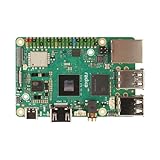
- POWERFUL COMPUTING: Advanced single board computer featuring high-speed LPDDR5 memory for superior processing capabilities and edge AI computing performance
- CONNECTIVITY: Multiple USB ports, HDMI output, and Ethernet connectivity provide versatile interface options for various applications
- COMPACT DESIGN: Space-efficient circuit board layout integrates powerful computing components in a single compact form factor
- DEVELOPMENT READY: Ideal platform for edge AI development, programming, and prototyping with comprehensive hardware interfaces
- EXPANDABILITY: Features multiple GPIO pins and standard connectors enabling extensive hardware expansion possibilities
A separate EE Times Taiwan summary published January 13, 2025, adds product and roadmap details attributed to the interview. Those details are reported claims from that date, not independent testing or confirmation of present-day status. The Taiwan interview summary provides the additional claims.
What is Sakura 2, and what performance was reported?
The January 13 Taiwan summary describes Sakura 2 as a compact AI accelerator in an M.2 card format. It attributes to Dasgupta the claim that it can process multimodal image, text, and video applications at 7 W and deliver up to 60 trillion operations.
Rank #2

- [High performance] Quad-core ARM SoC up to 1. 8GHz with 3GB RAM- The Tinker Edge R features the Rockchip RK3399Pro SoC and Mali - T764 GPU along with 2GB of Dual Channel LPDDR4 memory for system, 1 GB LPDDR3 memory for NPU and 16GB eMMC flash
- [Gigabit Class networking]Tinker Edge R features a high speed GB LAN port for true Gigabit Class networking throughput along with 3x USB3.2 Gen1 Type-A. It also features onboard Wi-Fi & Bluetooth for robust IoT & Network connectivity
- [Open-source]The board will come with fully open-source kernel and support for multiple APIs, including OpenGL, Vulkan, OpenCL, OpenVX, TensorFlow Lite, Android NN, and Caffe
- [HD Audio & UHD video support] It supports 192/24bit HD Audio playback with automatic Audio jack detection as well as accelerated HD & UHD ( 4K ) video playback and supports HDMI CEC for seamless power on & off configurations
- [WiKi]For more information please refer to the product description, any technical issues after purchase please contact with our tech-support team: click "WayPonDEV" and ask a question. Package Content: 1x Tinker Edge R (3GB+16G eMMC); 2x Wi-FiVBT antenna cable; 1x Stand offset(4xScrew+4xHex); 2x Camera MIPI Convert cable (22P to 15P); 1 x Shielding bag; 1 x Quick start guide
Those figures lack the details needed to interpret them as comparable benchmark results: the summary does not specify workload, numerical precision, throughput or latency conditions, or an independent verification method. “Up to” also matters: the reported peak is not evidence that every supported application sustains that rate at 7 W. The figures are useful as claims reported in the interview coverage, but not as a basis for ranking Sakura 2 against other processors.
What did the coverage say about space applications?
The Taiwan summary says Sakura 2 underwent NASA testing and reports radiation tolerance, then discusses low-Earth-orbit satellites as a potentially competitive application. It does not provide the radiation dose, test protocol, equipment configuration, or mission results. The account therefore supports saying that testing was reported; it does not establish flight qualification, operational deployment, or suitability for a particular satellite mission.
Rank #3

- Supports access to online large model platforms and includes Edge Impulse object detection demo for real-time multi-object recognition
- Equipped with Xtensa dual-core LX7 processor (up to 240MHz), 8MB PSRAM, 16MB Flash, and dual-mode WF + BT LE
- Dual-microphone array with noise reduction and echo cancellation for high-quality voice processing
- Integrated audio input and output module, supporting AI speech interaction and voice recognition applications
- Onboard camera interface (DVP) and SPI / QSPI display interface for image capture, recognition, and external display connection
What was the Sakura X roadmap?
The January 2025 summary describes Sakura X as a next-generation processor planned around a dynamic neural accelerator architecture and RISC-V processing support. It does not give a launch date, final specifications, or availability. These are roadmap details reported at CES, not confirmation that the product or features remain unchanged or are currently shipping.
The same January coverage mentions Japanese government funding and EdgeCortix’s participation in the AI-RAN Alliance. Because these are time-bound organizational and funding details, they should be read as statements from the January 2025 coverage rather than assumed to describe current funding, membership, or company plans.
Quick Recap
Rank #4
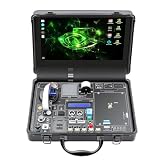
- 30-in-1 No-Solder Sensor Board, Plug and Play: Integrates 30 functional sensors including temperature & humidity, ultrasonic ranging, gas and motion sensors. Innovative common board design requires no soldering or complex wiring, and comes with a full set of accessories like 128G SD card, adapter board and acrylic mounting plates for zero-threshold experiments
- 8MP Gimbal Camera & Dual Servos for Professional Visual AI: The Starter Kit is equipped with an IMX219 8MP monocular camera and a dual-servo gimbal, supporting face and target tracking, and is ideal for AI edge computing scenarios such as intelligent monitoring, robot navigation, and automated recognition
- 38 Step-by-Step Python Tutorials, From Beginner to Practical Application: The Jetson Orin Nano Starter Kit comes with 38 well-designed Python tutorials progressing from basic programming to vision practice, covering all key knowledge of sensor control, embedded development and AI visual recognition for both beginners and advanced learners
- 11.6-inch IPS HD Screen & AI Voice Interaction System: Built-in 1366*768 resolution IPS screen eliminates the need for an external monitor, enabling one-device experimentation and visual feedback. The exclusive AI voice interaction system supports intelligent Q&A and voice command control for natural human-computer dialogue
- Rich Expansion Interfaces & Portable All-in-One Design: Features 2x I2C, 1x UART and 2 IO expansion interfaces to meet personalized experiment expansion needs; a custom carrying case integrates all components (11.81×7.87×3.94 inch), allowing AI experiments and demonstrations anytime and anywhere
How to interpret the recap
- It is event coverage, not a review. The EE Times piece combines CES observations with an executive interview; it does not report a controlled evaluation of EdgeCortix hardware.
- It spans more than one application area. Edge AI is discussed in relation to devices and sensors, while the summaries also point to automotive, healthcare, IoT, aerospace, and semiconductor activity.
- Performance claims need their conditions. The reported power and operations figures have no accompanying benchmark methodology in the accessible summary, so they should not be compared as though vendors tested equivalent workloads.
Product prices and availability are accurate as of the date/time indicated and are subject to change. Any price and availability information displayed on Amazon at the time of purchase will apply.

