
Free tools Windows power users keep installed
One-click scans. No signup required.
IoT changes business when data from physical objects becomes operational information that people and software can act on. A sensor on a pump, pallet, vehicle, meter or production line is only the starting point. The business system must collect trustworthy data, interpret it at the required speed, and connect the result to maintenance, planning, inventory, logistics, energy or customer workflows.
This article uses IoT to mean an interconnected set of physical devices whose state or operation can be observed—and, where designed for it, altered—over networks. In an enterprise, that set also includes data services and integrations with operational technology, enterprise resource planning (ERP), customer relationship management (CRM) and other systems. Because surveys use different device examples and definitions, adoption figures below are identified by geography and year rather than presented as a universal 2026 rate.

How does IoT affect business and industry?
IoT can make physical operations more visible, measurable and responsive. It can reveal an asset’s condition, show where materials are, expose production constraints, indicate abnormal energy use or trigger a service workflow. The change comes from the complete chain—device, network, data platform, analysis, decision and integration—not from connectivity alone.
That chain can reach beyond a plant. A machine alert may create a maintenance order in an ERP system; a vehicle location update may change a delivery plan; inventory readings may alter purchasing; and usage data may inform customer service. These are possible operating effects when data is accurate, timely and connected to accountable processes, not automatic results of installing sensors.
The Tool Desk
Outbyte PC Repair FREEClear out junk files and repair common Windows errorsFree Scan →Outbyte Driver Updater FREEScan for outdated or missing drivers - takes under a minuteDriver Scan →#1 Best Overall
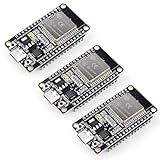
- Dual-Core Performance Up to 240 MHz: Run sensor processing, wireless communication, automation logic and connected-device tasks on a 32-bit dual-core ESP32 platform designed for responsive embedded and IoT projects
- Built-in Wi-Fi and Bluetooth 4.2: Connect to 2.4 GHz Wi-Fi networks or use Bluetooth Classic and BLE for wireless sensors, smart devices, remote controls, home automation and other connected projects
- Flexible Power-Saving Modes: ESP32 power-management features support dynamic clock scaling and low-power operating modes, helping developers reduce energy use in compatible sensing, monitoring and connected-device applications, suitable for battery-powered Internet of Things (IoT) devices.
- USB-C Programming with CP2102: Connect through USB-C for power, sketch uploads and serial monitoring, while GPIO, UART, SPI and I2C interfaces support sensors, displays, motor drivers and other modules (USB-C cable not included)
- Over-the-Air Update Support: Configure OTA functionality through a compatible ESP-32 software framework to update deployed firmware over Wi-Fi without reconnecting the board by USB for every revision
Where businesses use IoT
Equipment monitoring and condition-based maintenance
Temperature, vibration, pressure, current and other measurements can provide a live view of equipment health. Condition-based maintenance uses observed asset condition to decide what work is needed and when, rather than relying only on a calendar interval. Historical and real-time signals can also support prediction of likely failure, giving a team time to schedule labor, parts and downtime before an unplanned breakdown.
Logistics, vehicles and materials
Location-capable devices can track incoming supplies, work-in-progress, vehicles and outgoing goods. A warehouse or transport team can use those events to improve receiving, dispatch, routing and exception handling. The value depends on coverage, location accuracy, battery life, update frequency and the ability of logistics software to consume the data.
Production visibility and adjustment
Sensors distributed across a line can show throughput, stoppages, quality conditions and bottlenecks. Supervisors may adjust a process while it is running instead of waiting for an end-of-shift report. In a connected operation, production data can also inform scheduling and planning systems, although integration and control requirements vary by equipment and process.
Inventory optimisation
Connected bins, shelves, tags or production systems can report stock levels and movement. That visibility can support replenishment decisions and reduce the time spent reconciling physical counts. It does not remove the need to define ownership, counting rules, item identity and acceptable data latency.
Recommended Free Tools
Energy and facilities management
Smart meters, thermostats and lights can measure and adjust consumption in buildings or industrial sites. The same connected infrastructure may support alarms, smoke detectors, door locks and cameras. Energy savings depend on the baseline, control strategy, operating schedule and how people respond to recommendations or automated changes.
Rank #2

- Certified & Future-Ready: Espressif-certified ESP32-WROOM-32E ensures full hardware compatibility and lifetime firmware support. Upgraded 8MB Flash handles IoT data and OTA updates.
- Dual-Core Speed: 240MHz dual-core processor runs Wi-Fi/BLE and sensors 2x faster. 38 GPIO pins (10 RTC) support SPI/I2C/UART for LCDs, motors, and industrial sensors.
- Plug & Play Dev: USB-C driver pre-installed: upload code instantly on Windows/Mac/Linux. Works with Arduino IDE, MicroPython, and Espressif IDF.
- All-Environment Ready: Run Wi-Fi smart switches (Home Assistant) and BLE tracking on one board. Industrial-grade stability (-40°C~85°C) for outdoor/automated systems.
- Advantages: The ESP32 development board offers high performance, low power consumption, and rich wireless connectivity, making it suitable for developers of all levels, especially beginners.
How is IoT used in manufacturing?
Manufacturing IoT typically links shop-floor assets and production data to maintenance, quality, planning and supply-chain processes. A practical flow looks like this:
- Observe: sensors or machine interfaces capture condition, process or location data at a useful cadence.
- Transport: industrial networks move the data reliably, sometimes with local processing when a cloud round trip is too slow or unavailable.
- Interpret: rules, analytics or models identify a threshold breach, probable fault, quality deviation or material movement.
- Act: a person or control system changes a setting, schedules work, quarantines material, reroutes a shipment or raises an alert.
- Record and improve: the outcome is written back to a maintenance, production, inventory or enterprise system so future decisions use the operating history.
This is why an industrial IoT project should start with a measurable operating problem, such as unplanned downtime or poor inventory accuracy, rather than with a generic “connect everything” goal.
Industrial IoT is not consumer IoT in a factory
Industrial IoT (IIoT) has different device types, network technologies, quality-of-service expectations and command-and-control requirements from consumer smart-home systems. A missed update from a household sensor may be inconvenient; a delayed, corrupted or unauthorized command in a manufacturing, utility or transport process can affect safety, product quality or continuity.
Do these 3 things before closing this tab:
1Fix the driver behind crashes, sound loss and screen glitches2Clear out junk files and repair common Windows errors3Scan for outdated or missing drivers - takes under a minuteA NIST-hosted 2018 survey, A Survey on Industrial Internet of Things: A Cyber-Physical Systems Perspective, describes these distinctions. They affect architecture choices such as deterministic communication, local control, redundancy, lifecycle management and separation between operational technology and business networks. Compatibility should be demonstrated for the specific equipment and protocol rather than assumed from a device’s “smart” label.
What are the business benefits of industrial IoT?
Potential benefits are operational and context-dependent:
Rank #3
- Earlier warning of equipment degradation and better-timed maintenance.
- More complete visibility of materials, vehicles and work-in-progress.
- Faster detection of production constraints and process variation.
- More informed inventory and replenishment decisions.
- Measurement and control of energy use in facilities and operations.
- Shared operational facts across maintenance, planning, logistics, suppliers and customer-service teams.
The OECD’s manufacturing discussion cites a Vodafone 2017 finding that industrial IoT adopters reduced costs by 18% on average and increased uptime and productivity. That is a reported average for the studied adopters, cited by the OECD in 2023; it is not a forecast or guarantee for a new deployment. The OECD also notes that evidence on IoT’s wider economic and social effects is scattered, and that inconsistent definitions make broad causal claims difficult.
IoT adoption: what the available figures actually show
The OECD’s 2023 report, summarising Eurostat data for 2021, found that 29% of European firms used IoT. The same source reported these sector figures:
| Measure | Reported adoption | Qualification |
|---|---|---|
| All European firms | 29% | 2021 survey results summarised by the OECD in 2023 |
| Energy firms | 47% | European firms, 2021 |
| Transport firms | 33% | European firms, 2021 |
| Manufacturing firms | Close to one in three | European firms, 2021 |
| Large-versus-small-firm gap | Up to 20 percentage points on average | OECD countries, 2020; comparison depends on the survey population and definition |
These are dated European survey results, not a global 2026 adoption rate. The OECD cautions that survey wording, device examples, sectors and firm-size populations differ, limiting direct comparisons between countries. Smaller organisations may also face greater constraints in skills, investment, interoperability and scale.
IoT and Industry 4.0: what is the difference?
IoT is the connected-device and data layer: physical objects, networks, software and the flows between them. IIoT applies that idea to industrial operations, with stronger reliability and control requirements. Industry 4.0 is the broader transformation agenda. In the OECD’s description, it combines cyber-physical systems, IoT, big data, artificial intelligence, cloud and edge computing, and virtual or augmented reality.
Therefore, IoT can enable Industry 4.0, but the terms are not interchangeable. A connected machine that sends readings to a dashboard is an IoT use case. An integrated operating model that combines those readings with production planning, AI-assisted decisions, digital models and supplier or customer data is closer to the Industry 4.0 ambition.
Rank #4

- 2.4GHz Dual Mode WiFi + Bluetooth Development Board
- Support LWIP protocol, Freertos
- SupportThree Modes: AP, STA, and AP+STA
- Ultra-Low power consumption, Compatible with Arduino IDE
- ESP32 is a safe, reliable, and scalable to a variety of applications
The World Economic Forum’s Intelligent Industrial Operations Outlook 2026 describes industry moving from isolated pilots toward connected operating models in which people and intelligent systems work together in real time, with more adaptive systems as a longer-term direction. That is a forward-looking institutional view, not evidence that every business has reached that state. A 20 January 2015 World Economic Forum report similarly forecast that “In the next 10 years, the Internet of Things revolution will dramatically alter manufacturing, energy, agriculture, transportation and other industrial sectors of the economy.” The statement is a dated forecast, not a present-day measurement.
How to evaluate an industrial IoT approach
1. Start with the operational purpose
Specify whether the first objective is maintenance, production, logistics, inventory, energy, security or another defined process. A clear purpose determines which signals matter and what action should follow.
2. Check equipment and data fit
Verify that devices can observe the required asset, survive its environment and produce data at the needed accuracy and cadence. Establish how missing, noisy or contradictory readings will be handled.
3. Test integration and interoperability
Map connections to existing operational technology and systems such as ERP or CRM. Confirm protocols, APIs, identity, data ownership, timestamps and write-back requirements. Do not assume that a sensor, gateway or platform is compatible because it uses the same marketing category.
4. Define reliability and control requirements
Set acceptable latency, availability, fail-safe behaviour, buffering and recovery procedures. Determine which decisions may be automated and which require human approval. Industrial command-and-control paths deserve stricter testing than non-critical monitoring.
Quick wins for a faster PC:
Scan for outdated or missing drivers - takes under a minuteDriver Scan →Clear out junk files and repair common Windows errorsFree Scan →Best Value
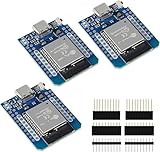
- D1 Mini NodeMCU Type-C ESP32 WLAN WiFi Bluetooth IoT Development Board 5V Compatible for Arduino
- Designed with ultra-low power technology, it offers the full range of performance and features of the ESP32 chip. The pin arrangement provides compatibility with the modules developed for the D1 Mini ESP8266 while also offering fast WLAN, enhanced GPIO, Bluetooth functionality, and with its higher performance, a wider range of applications.
- 100% compatible with Arudino IDE, Lua and Micropython, it shows robustness, versatility, and reliability in a wide variety of applications and power scenarios.
- All I/O pins have interrupt, PWM, I2C and one-wire capability, except the pin DO.
- Designed with ultra-low power technology, it offers the full range of performance and features of the ESP32 chip. The pin arrangement provides compatibility with the modules developed for the D1 Mini ESP8266 while also offering fast WLAN, enhanced GPIO, Bluetooth functionality, and with its higher performance, a wider range of applications.
5. Build security, privacy and governance in
The OECD identifies digital security and data protection as concerns that can slow uptake. Apply least-privilege access, device identity, secure updates, network segmentation, logging, retention rules and an incident-response process appropriate to the operation. Document who may view data and who may issue commands.
6. Assess scale and organisational readiness
Plan for device provisioning, firmware changes, replacement, support and data volume beyond the pilot. Assign process owners and train the teams who must interpret alerts or change work patterns. A technically successful pilot can fail to scale if governance, skills, procurement or investment decisions are unresolved.
7. Measure an outcome, not a device count
Choose a baseline and a defined evaluation period for measures such as unplanned downtime, maintenance lead time, inventory accuracy, order-cycle time or energy use. Compare results with the cost and operational risk of the intervention, and separate observed association from proven causation.
What can prevent IoT from delivering value?
- Unclear use case: collecting data without a decision or owner creates dashboards rather than improvement.
- Poor data quality: drift, gaps, duplicate identities or incorrect timestamps undermine alerts and analysis.
- Interoperability limits: legacy equipment and incompatible interfaces can make integration expensive.
- Insufficient scale planning: a pilot may work with ten devices but fail operationally with thousands.
- Unsafe automation: an inappropriate command path can create production, safety or quality consequences.
- Weak governance: unclear retention, access, security and responsibility can block deployment or increase exposure.
- Change-management gaps: employees need clear procedures for responding to alerts and exceptions.
The practical takeaway
IoT is best treated as a connected operating system for physical work: devices observe or affect the world, networks carry information, data services interpret it, and enterprise integrations turn it into coordinated action. Its business impact is strongest when a specific operational problem, suitable equipment, reliable industrial architecture and an owned workflow are designed together. Adoption and returns vary by sector, firm size, geography and execution; connectivity by itself is not transformation.
Quick Recap
Product prices and availability are accurate as of the date/time indicated and are subject to change. Any price and availability information displayed on Amazon at the time of purchase will apply.

