
Free tools Windows power users keep installed
One-click scans. No signup required.
Neuromorphic computing could extend beyond camera vision to always-on sensing with microphones, radar, lidar and ultrasound. In a 2020 report, Dutch startup Innatera Nanosystems described an analog-mixed-signal chip intended for tasks such as speech interfaces, wearable vital-sign monitoring, target recognition and equipment fault detection. Those were company targets, not proof of deployed products or independently verified performance.
Why look beyond camera vision?
Neuromorphic systems are often associated with vision, but sensors produce other kinds of signals that also change over time. Innatera CEO Sumeet Kumar pointed to microphones, radar, lidar and ultrasonic sensing as possible applications. “There is vast potential for value addition in sensing in general, and we’re working in many of these areas with solutions that outperform conventional implementations,” he said in the 2020 report.
The proposed advantage is relevance to sensor-edge devices that must monitor continuously while operating within tight power budgets. Instead of processing every input as a conventional digital system might, an event-driven design aims to process meaningful patterns as they occur. That is the intended approach; the report does not establish that it outperformed alternatives in independently tested deployments.
Which applications did Innatera identify?
- Speech interfaces: Intelligent speech processing for human-machine interfaces using microphone input.
- Wearables: Vital-sign monitoring from sensor signals.
- Radar and lidar: Target recognition based on spatial and temporal patterns.
- Industrial and automotive equipment: Fault detection from sensor data, including signals that may be captured ultrasonically.
These examples describe areas Innatera was pursuing or discussing, not confirmed customer products or market deployments.
Recommended Free Tools
#1 Best Overall

- ✅Powered by 26 Tera-Operations Per Second (TOPS) Hailo-8 AI Processor. 2.5W typical power consumption
- ✅Scalable, enabling simultaneous processing of multi-streams & multi-models
- ✅Enabling real-time, low latency and high-efficiency AI inferencing on the edge devices
- ✅Supports TensorFlow, TensorFlow Lite, ONNX, Keras, Pytorch frameworks
- ✅Supports Linux and Windows. Supports the temperature range of -40°C to 85°C
How was the chip supposed to work?
Innatera was developing an analog-mixed-signal chip for spiking neural networks (SNNs). These networks represent and process patterns in space and time, which the company considered useful for sensor data. Kumar described the chip as “a programmable array of analog-mixed signal spiking neurons and synapses” and characterized the architecture as “inherently sparse, event-driven, and massively parallel.”
In that design, dedicated hardware would process sensor patterns with what Kumar called “a high degree of temporal fidelity.” The company argued that SNNs could not simply be derived from mainstream neural-network algorithms, while claiming they were typically much smaller than conventional counterparts. This was a description of Innatera’s approach, not a general finding established by the report.
Rank #2
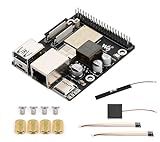
- High-Performance Dual-Core with Ample Memory--- Equipped with a 360MHz dual-core RISC-V processor, 32MB of onboard PSRAM, and 32MB of Flash memory, providing powerful processing capabilities and ample runtime for complex multimedia applications and edge computing.
- Powerful Multimedia Processing Center--- Integrated with a dedicated image processor (ISP), H.264 video encoder, and JPEG codec, perfectly supporting camera input and video processing, making it an ideal choice for developing smart displays, video surveillance, and other projects.
- Hardware-Level Security Protection--- Built-in digital signature, encryption accelerator, and key management unit, providing a one-stop hardware-level security solution from secure boot and data encryption to access control management, ensuring the security of your products and data.
- Full Connectivity Coverage: Wi-Fi 6, Bluetooth, PoE Power Supply--- Onboard with an ESP32-C6 chip, supporting the latest Wi-Fi 6 and Bluetooth 5.0; it also integrates an Ethernet port with PoE functionality, providing high-speed, flexible, and stable network connectivity, and can be powered directly via Ethernet cable, simplifying deployment.
- Rich interfaces and strong expandability--- It provides a MIPI camera/display interface, high-speed USB, SD card slot, microphone/speaker interface and a large number of programmable GPIOs, which greatly facilitates the expansion of external devices and meets the needs of various human-computer interaction and Internet of Things applications. Supports AI Speech Interaction: Allows access to online large model platforms such as ChatGPT, DeepSeek, Doubao, etc.
Kumar also said the silicon architecture was designed for “performance scalability, robustness and flexibility” within the sensor-edge power envelope. The report does not provide implementation details or independent results that would let readers assess those qualities against competing systems.
What performance did Innatera claim?
EE Times reported two sets of company-reported comparisons in 2020. Neither came with enough benchmark information in the article to treat the figures as independently verified or broadly applicable.
The Tool Desk
Outbyte Driver Updater FREEScan for outdated or missing drivers - takes under a minuteDriver Scan →Outbyte PC Repair FREERepair Windows errors before they cause bigger problemsFix Now →Rank #3

- Powered by 26 Tera-Operations Per Second (TOPS) Hailo-8 AI Processor.
- 2.5W typical power consumption
- Enabling real-time low latency and high-efficiency AI inferencing on the edge devices
- Supports TensorFlow TensorFlow Lite, ONNX, Keras, Pytorch frameworks
- Supports Linux and Windows.
| Reported comparison | What was claimed | Qualification |
|---|---|---|
| Sensor-data processing versus conventional digital processing | 100× faster and 500× less energy | Innatera’s claim as reported by EE Times; test conditions and a reproducible benchmark protocol were not supplied. |
| Inference versus an analog accelerator | 40× lower latency and 49× lower energy per inference | Kumar’s account of a recent development with an unnamed customer; workload and benchmark details were not disclosed. |
These numbers should not be compared as though they came from a shared test. A fair evaluation would need to match the sensor modality and workload, define latency and energy measurement boundaries, and account for the system’s power budget. The report does not provide those common conditions.
Independent reader supportYour contribution helps us test, update, and keep practical guides available for everyone.What did the 2020 funding and schedule mean?
EE Times reported on November 25, 2020, that Innatera had completed a €5 million seed round—approximately $6 million in the article’s conversion, not a separate funding total. The company said existing customers had funded operations before the round. It planned to use the new capital primarily for research and development, hiring analog and digital designers, speeding development of its product chip and extending its SDK.
Rank #4

- High-Performance AI Processing: The MX3 is designed to handle the most demanding AI computer vision workloads, delivering exceptional performance and efficiency.
- Flexible Integration: The MX3 can be easily integrated into your existing systems via its M.2 M-key form factor and support for Linux operating systems.
- Energy Efficient: The MX3 is designed to provide high performance while minimizing power consumption.
- Comprehensive Software Development Kit (SDK): The MX3 is supported by a comprehensive SDK that simplifies development and deployment.
- Hardware compatability: The MX3 is compatible with the PCI-SIG M.2 M-key 2280 Specification. It can be used with the Raspberry Pi 5 with a M-key 2280 HAT.
Innatera said it planned early-access samples for the second half of 2021. That was a forward-looking schedule stated in 2020; the report does not say whether samples shipped or establish the present availability of the chip, SDK or evaluation hardware. For the original account, see EE Times’ November 25, 2020 report.
What can readers conclude?
Innatera’s proposal was to apply event-driven spiking networks to sensor tasks beyond cameras, particularly where continuous monitoring and low power matter. The named use cases show the intended breadth of the approach. The 2020 report documents plans and company claims, but it does not establish current product access, deployment in those markets or independently validated performance.
What’s actually slowing this PC down?
Pick the symptom - the matching free tool is one click away.
Quick Recap
Product prices and availability are accurate as of the date/time indicated and are subject to change. Any price and availability information displayed on Amazon at the time of purchase will apply.

