
Recommended Free Tools
Intel says the desktop 13th- and 14th-Gen instability problem is a reliability failure in a clock-tree circuit inside the IA core, accelerated by excessive voltage and temperature. Updated BIOS firmware using microcode 0x12F or later and Intel Default Settings are the required mitigation; a processor that has already degraded may still need warranty replacement.
What Intel found
In its September 25, 2024 root-cause update, Intel localized Vmin Shift Instability to “a clock tree circuit within the IA core” that is particularly vulnerable to reliability aging when voltage and temperature are elevated.
The circuit controls timing inside the processor. As it ages, its clock duty cycle can shift far enough to reduce timing margin. The result can be intermittent instability rather than an immediate, total failure: a game may close, an application may crash, or the system may reset during light activity or heavier workloads.
“Intel has localized the Vmin Shift Instability issue to a clock tree circuit within the IA core which is particularly vulnerable to reliability aging under elevated voltage and temperature.”
Quick wins for a faster PC:
Fix the driver behind crashes, sound loss and screen glitchesFind Drivers →Repair Windows errors before they cause bigger problemsFix Now →Scan for outdated or missing drivers - takes under a minuteDriver Scan →Special offer. See more information about Outbyte and uninstall instructions. Please review EULA and Privacy policy.#1 Best Overall
 Intel® Core™ i9-14900K Desktop Processor
- Game without compromise. Play harder and work smarter with Intel Core 14th Gen processors
- 24 cores (8 P-cores plus 16 E-cores) and 32 threads. Integrated Intel UHD Graphics 770 included
- Leading max clock speed of up to 6.0 GHz gives you smoother game play, higher frame rates, and rapid responsiveness
- Compatible with Intel 600-series (with potential BIOS update) or 700-series chipset-based motherboards
- DDR4 and DDR5 platform support cuts your load times and gives you the space to run the most demanding games
— Thomas Hannaford, Intel, September 25, 2024
Vmin refers to the minimum voltage needed for a processor core to operate reliably at a given frequency. Vmin Shift is the progressive loss of that operating margin. Firmware can stop the conditions that accelerate the shift, but it cannot restore a circuit that has already aged beyond reliable operation.
The four operating scenarios Intel identified
1. Motherboard power settings exceeded Intel guidance
Some motherboard power-delivery configurations allowed the processor to operate outside Intel’s recommended power behavior. Intel’s mitigation is to use the board manufacturer’s implementation of Intel Default Settings, rather than an unrestricted or vendor-enhanced profile.
2. eTVB kept some Core i9 chips in high-performance states at high temperature
An eTVB (enhanced Thermal Velocity Boost) microcode algorithm allowed certain desktop Core i9 processors to remain in higher performance states while temperatures were already high. Intel addressed that behavior with microcode 0x125, released in June 2024.
Rank #2

- Get ultra-efficient with Intel Core Ultra desktop processors that improve both performance and efficiency so your PC can run cooler, quieter, and quicker.
- Core and Threads 24 cores (8 P-cores plus 16 E-cores) and 24 threads. Integrated Intel Graphics included
- Performance Hybrid Architecture Integrates two core microarchitectures, prioritizing and distributing workloads to optimize performance
- Performance Unlocked Up to 5.7 GHz unlocked. 40MB Cache
- Compatibility Compatible with Intel 800 series chipset-based motherboards
3. SVID requests could apply too much voltage for too long
An SVID microcode algorithm could request high voltages at particular frequencies and durations. Intel identified those requests as a mechanism that could contribute to Vmin Shift and addressed them with microcode 0x129 in August 2024.
4. Elevated voltage requests could occur during idle or light activity
Intel also found that microcode and BIOS code could request elevated core voltages while the processor was idle or lightly loaded. Microcode 0x12B, included in the September 2024 root-cause update, incorporated the earlier fixes and addressed this condition.
Microcode timeline and the firmware level Intel now requires
| Microcode | Date | Intel’s change | Meaning for owners |
|---|---|---|---|
| 0x125 | June 2024 | Corrected the eTVB behavior that could keep some Core i9 processors in high performance states at high temperature. | Earlier mitigation; not the final required level. |
| 0x129 | August 2024 | Corrected SVID voltage requests associated with Vmin Shift risk. | Earlier mitigation; not the final required level. |
| 0x12B | September 2024 | Included the preceding fixes and addressed elevated-voltage requests during idle or light activity. | Root-cause update, but newer firmware supersedes it. |
| 0x12F or later | Current Intel support guidance, reviewed July 21, 2026 | Intel’s current required microcode baseline for affected systems. | Install a BIOS containing this level or a later one. |
Microcode is delivered through the motherboard or system BIOS. Intel does not control when a particular board or prebuilt-system manufacturer publishes its package, so the exact BIOS version and menu names vary by model.
Rank #3
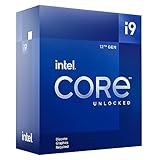
- Built for the Next Generation of Gaming. Game and multitask without compromise powered by Intel’s performance hybrid architecture on an unlocked processor.
- Discrete graphics required
- Compatible with Intel 600 series and 700 series chipset-based motherboards
- The processor features Socket LGA-1700 socket for installation on the PCB
- 30 MB of L3 cache memory provides excellent hit rate in short access time enabling improved system performance
Which processors and systems are in scope?
| Product group | Intel’s stated status |
|---|---|
| 13th-Gen desktop Core i5, i7 and i9 | Affected product families listed in Intel’s support guidance. |
| 14th-Gen desktop Core i5, i7 and i9 | Affected product families listed in Intel’s support guidance. |
| 13th- and 14th-Gen mobile processors | Unaffected by this Vmin Shift issue. |
| Future client families, including Lunar Lake and Arrow Lake | Unaffected by this issue. |
The Core i9-13900K, Core i7-14700K and Core i9-14900K are desktop 13th- or 14th-Gen processors within the affected desktop-family scope. That does not mean every individual chip has degraded or will fail; Intel has not published an incidence rate or failure percentage.
Does a BIOS update fix the instability?
A BIOS update is the correct first action because it can apply the microcode changes and expose the board’s Intel Default Settings. It prevents the voltage, temperature and boost behaviors Intel identified from continuing to stress the clock-tree circuit.
The Tool Desk
Outbyte PC Repair FREEClear out junk files and repair common Windows errorsFree Scan →Outbyte Driver Updater FREEFix the driver behind crashes, sound loss and screen glitchesFind Drivers →It is a mitigation, not a repair for physical reliability aging. If a processor has already developed Vmin Shift, the system can remain unstable after the triggering conditions are removed and may require replacement under warranty.
Rank #4

- Game without compromise. Play harder and work smarter with Intel Core 14th Gen processors
- 24 cores (8 P-cores plus 16 E-cores) and 32 threads. Discrete graphics required
- Leading max clock speed of up to 6.0 GHz gives you smoother game play, higher frame rates, and rapid responsiveness
- Compatible with Intel 600-series (with potential BIOS update) or 700-series chipset-based motherboards
- DDR4 and DDR5 platform support cuts your load times and gives you the space to run the most demanding games
Owner action plan
- Identify the exact system. Record the processor model, motherboard or prebuilt-system model, and current BIOS version.
- Obtain the BIOS from the system or motherboard manufacturer. Use the package for the exact model and follow that manufacturer’s flashing procedure. Do not substitute firmware for a different board revision.
- Install a BIOS containing microcode 0x12F or later. The BIOS release notes may state the microcode level directly; otherwise, check the manufacturer’s documented firmware details or an Intel-supported diagnostic method.
- Select Intel Default Settings in BIOS. The label and location differ by manufacturer. Choose the Intel-defined profile instead of an enhanced or unlimited vendor profile.
- Return the system to its supported baseline. Remove manual overclocking or custom voltage settings while troubleshooting so that Intel’s specified operating conditions are being tested.
- Retest the workloads that previously failed. Check both the game or application that crashes and ordinary idle or light-use periods, because Intel identified instability triggers in both high-load and low-load conditions.
When should you request an RMA?
Contact Intel or the system vendor when instability continues after the correct BIOS, microcode 0x12F or later, and Intel Default Settings are in use. Provide the processor and system details, BIOS version, crash symptoms, and any troubleshooting records requested by support.
A replacement is especially relevant when failures persist at Intel’s baseline settings rather than only under a vendor performance profile. Firmware cannot reverse degradation that has already occurred, so repeated crashes after mitigation should not be treated as proof that another accessory or a different operating-system installation will cure the processor.
How to distinguish the three practical owner situations
| Situation | Product scope | BIOS and settings | Typical diagnostic picture | Next step |
|---|---|---|---|---|
| Unaffected system | 13th/14th-Gen mobile or a future client family such as Lunar Lake or Arrow Lake. | The Vmin Shift requirement does not apply to that product scope. | This specific Intel issue is not the expected explanation. | Use normal platform support for the actual fault. |
| Mitigated affected desktop system | 13th/14th-Gen desktop Core i5, i7 or i9. | BIOS contains 0x12F or later and Intel Default Settings are enabled. | Instability stops after the triggering voltage, temperature or boost behavior is removed. | Keep the supported firmware and settings installed. |
| Potentially degraded processor | Affected desktop family with continuing failures. | Correct firmware and Intel Default Settings are already confirmed. | Crashes or resets continue during games, applications, idle or light activity. | Use Intel or system-vendor warranty support to determine replacement eligibility. |
Warranty extension for eligible processors
Intel says eligible affected processors receive a two-year warranty extension, providing up to five years of total coverage from the original purchase date. Eligibility and the replacement process must be confirmed with Intel or the system vendor; coverage can depend on the processor, purchase documentation and whether it was sold in a prebuilt system.
Windows Errors? Fix Them Before They Spread
Repair common Windows errors and clear accumulated junk for a smoother, more stable PC - no reinstall needed.Free scan · no reinstallCrashes, No Sound, or Screen Glitches?
Random freezes, missing sound and display glitches usually trace back to one bad driver. Find and replace yours safely.Free scan · under a minuteWhat Intel has not established publicly
Intel’s cited root-cause and support material does not provide a percentage of processors that fail, a total affected-unit count, or a guarantee that a particular model will become unstable. The documented remedies are BIOS and microcode updates, Intel Default Settings, and warranty support for eligible hardware. No single cooling product, power accessory or retail add-on is identified by Intel as an endorsed cure.
Quick Recap
Product prices and availability are accurate as of the date/time indicated and are subject to change. Any price and availability information displayed on Amazon at the time of purchase will apply.

