
The Tool Desk
Outbyte Driver Updater FREEScan for outdated or missing drivers - takes under a minuteDriver Scan →Outbyte PC Repair FREERepair Windows errors before they cause bigger problemsFix Now →For office work and basic desktop display, the Radeon HD 5450 is the more sensible default—provided the specific card fits your PC and its drivers work with your operating system. Choose an X1950 Pro only if you have a specific legacy-system or software need and have verified the exact card’s compatibility. Neither is a sound choice as a modern gaming upgrade, and the available evidence does not establish a reliable gaming-performance winner.
Check compatibility before choosing
These are old graphics cards, so the model name alone is not enough to establish whether one will work in your computer. AMD advises checking that the card matches the motherboard’s graphics-card slot, that the power supply can support it, and that the card has the display connections you need. Also verify case clearance and the exact board’s power and cooling requirements.
| # | Preview | Product | Price | |
|---|---|---|---|---|
| 1 |
|
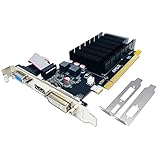
QTHREE Radeon HD 5450 Graphics Card,2GB,GDDR3,64 Bit,DVI,HDMI,VGA,SFF | $49.99 | Buy on Amazon |
- Slot and motherboard: Confirm the interface of the specific card and that the motherboard supports it. X1950 Pro cards came in interface variants, so do not assume compatibility from the GPU name alone.
- Power and fit: Check the card maker’s requirements, the PSU’s available capacity and connectors, and the space inside the case.
- Monitor connections: Inspect the actual card’s rear I/O and make sure it connects to your monitor, directly or through an appropriate adapter.
AMD’s graphics-card compatibility guidance covers slot, PSU, and display-connection checks.
Driver and operating-system support is a major limitation
The HD 5450 is legacy hardware, and AMD says no additional driver releases are planned. AMD’s Windows 10 graphics support guidance says ATI X-series products rely on Microsoft Basic Display Driver functionality; HD 4000-series and older products are not certified for WDDM 1.2 or later and lack AMD Windows 10 driver support. This is a significant constraint for both cards, not a reason to assume an old driver will provide current features or reliable support.
Recommended Free Tools
#1 Best Overall
- 【2GB GDDR3 Memory】AMD Radeon HD 5450 graphics card is with 650MHz core frequency, up to 1066MHz memory speed,80 Stream Processors,perfect for working,video and photo editing,allows good fluency,which can effectively meet your needs.
- 【Low Profile Design】The computer graphics cards is small in size,saves more space and plug and play.Small Form Factor design fits in today’s low profile desktops and workstations (with half height bracket).
- 【Multi-monitor Support】Supports up to two monitors for the video card including DVI,VGA,HDMI, and for flexibility of use(the VGA Interface is removable),This low profile, low power consumption card will improve multimedia performance, extend the desktop, and accelerate apps.
- 【Fanless Design for Zero Noise】The HD 5450 is a budget video card with silent passive fanless cooling system.Using high performance heatsinks,it is small enough to provide fanless operation and comfortable to use with zero noise.
- 【Independently Power】No external power supply, about 19W full-load power consumption.Works with Windows 10 as well as 7, 8 and 8.1(NOT compatible with windows 11).
AMD’s archived Catalyst 6.11 notes list X1950-series support, but that documents historical support rather than compatibility with a present-day operating system. The HD 5450 product page lists Catalyst 15.7.1 WHQL (dated July 29, 2015) and Crimson Edition 16.2.1 Beta (dated March 1, 2016) for some operating systems; AMD says no further releases are planned. Check the exact OS and card before purchase.
How they compare for ordinary desktop use
For basic display duties and office applications, the HD 5450 is the more practical choice if it passes the compatibility checks. AMD positioned it as an entry-level, low-power card with basic display and HTPC use in mind. AMD’s product page lists support for HDMI, VGA, DisplayPort, and Dual Link DVI, but these are GPU-level capabilities—not a guarantee that a particular board includes every connector. Look at the card’s actual ports.
AMD lists a maximum GPU frequency of up to 650 MHz and maximum GPU memory of 1 GB for the HD 5450; board configurations vary, so not every card necessarily has 1 GB. The model’s DirectX 11 feature support is not evidence that it will run modern games well.
Power figures favor the HD 5450, with an important caveat
AnandTech’s February 4, 2010 launch review reported AMD reference figures of 19.1 W TDP and 6.4 W idle power for the HD 5450. These are launch-era card figures, not current measurements of every manufacturer’s board or of a whole computer. No comparable X1950 Pro power figure is established here, so a precise power-consumption comparison is not possible.
For occasional gaming, don’t buy on an assumed performance ranking
The original question came from someone considering office applications and occasional gaming, but it dates to 2010. The available sources do not provide a controlled, direct X1950 Pro-versus-HD 5450 benchmark. Old forum opinions and individual anecdotes cannot establish a dependable performance winner, and a feature label such as DirectX 11 does not by itself predict useful gaming speed.
If you need a card for a particular older game, verify that game’s requirements, the operating system and driver path, and the exact card and system configuration. For a new gaming upgrade, neither model is an appropriate modern choice.
Quick Recap
Which one should you get?
- Choose the HD 5450 for basic desktop display or office work when its slot, power, physical fit, ports, and operating-system behavior are confirmed. Its low-power positioning and newer feature generation make it the more reasonable default for that limited use.
- Consider the X1950 Pro only for a specific legacy setup or software requirement, after checking the exact board’s interface, power needs, and driver environment.
- Choose neither if your goal is current gaming, dependable modern driver support, or a card that can be selected without checking the host PC and the individual board.
Product prices and availability are accurate as of the date/time indicated and are subject to change. Any price and availability information displayed on Amazon at the time of purchase will apply.

