
PC Slower Than It Used to Be?
A free scan shows the junk files, broken settings and background clutter dragging Windows down - then fixes them in one click.Free scan · Windows 10 & 11Crashes, No Sound, or Screen Glitches?
Random freezes, missing sound and display glitches usually trace back to one bad driver. Find and replace yours safely.Free scan · under a minuteEffective route planning is a decision system, not merely a shortest-path calculation. Data science prepares reliable locations, demand, travel and service data; optimization assigns work and sequences stops under real constraints; and business analytics decides whether the resulting plan improves cost, punctuality, utilization, workload fairness and customer service. A route can be mathematically efficient yet commercially poor if it ignores driver shifts, vehicle capacity, time windows or the cost of a missed delivery.
What each discipline contributes
Separating the roles prevents a common mistake: asking a solver to compensate for a poorly defined business problem or unreliable operational data.
| Layer | Primary question | Typical outputs | What goes wrong when it is missing |
|---|---|---|---|
| Data science | What is happening, and how should the network and tasks be represented? | Validated coordinates, travel-time data, demand and load fields, service-time estimates, cleaned historical records and optional forecasts | The model receives inaccurate distances, duplicate stops, unrealistic service durations or missing work |
| Optimization | Which vehicle should perform each task, and in what order? | Assignments, stop sequences, estimated arrivals and departures, distance, duration and objective cost | A feasible plan is not found, or a plan optimizes the wrong thing |
| Business analytics | Does the plan produce the outcome the organization values? | On-time rate, missed-stop cost, fleet use, route duration, workload balance and comparisons with a baseline | A technically impressive plan is accepted without evidence that it improves the business |
Define “better” before building a route model
“Optimal” has no universal meaning. The objective function determines which trade-offs the solver makes, so stakeholders should agree on the business definition before choosing an algorithm or API configuration.
| Objective | What it favors | Important caution |
|---|---|---|
| Minimize total distance or drive time | Lower aggregate travel | It may concentrate work on one vehicle or create late arrivals if service constraints are weak |
| Minimize the longest route | Faster completion across the fleet | Some total distance may increase while the slowest vehicle finishes earlier |
| Maximize on-time arrivals | Service reliability within customer windows | Extra vehicles, waiting or distance may be justified to avoid lateness |
| Minimize vehicle-use or labor cost | Fewer vehicles, hours or miles | Reducing resources can increase overtime, missed stops or customer penalties |
| Balance workload | More even route duration, stops or load | A balanced plan is not necessarily the cheapest or fastest plan |
Many operations use a weighted objective or a priority order, such as protecting hard customer windows first, then limiting overtime, then minimizing distance. Document the weights, penalties and tie-breaking rules. Otherwise, two teams can receive different routes from the same data and both claim to be optimizing correctly.
#1 Best Overall

- Real-Time Location Tracking with No Monthly Fees: Keep track of what matters most without any hidden costs. This GPS locator uses the SeekTag app to show your item's real-time location on your phone. There are no subscriptions and no SIM card required, making it a cost-effective tracking solution for your auto, motorcycle, truck, or trailer. You can track over a long distance with peace of mind.
- Universal Compatibility for Both iOS and Android: Whether you use an iPhone or an Android phone, this smart tracker works seamlessly for everyone. Simply download the free SeekTag application, pair the device via wireless Bluetooth connection, and you're ready to start tracking. It's the perfect personal equipment for families with mixed phone types.
- Compact, Durable Design with Multiple Attachments: Despite its powerful tracking capabilities, this device is remarkably small, tiny, and portable. The included magnetic mount securely attaches to metal surfaces, while the keychain allows for easy attachment to dog collars, kid backpacks, or luggage. With an IP65 rating, it's protected against dust and water splashes, ready for any adventure.
- Versatile Tracking for Your Valuables, Pets, and People: This isn't just for cars. Use it as a pet tracker to monitor your dogs & cats` location, a child locator for your children's safety, or an item finder for your bags and valuables. Its long range and tiny size make it an incredibly versatile tool for protecting your people and possessions from being lost.
- Reliable and Discreet for Long-Term Use: Engineered for reliability, this locator is designed for long-term use. Its efficient power management ensures a long battery life up to 360 days, providing extended tracking without frequent replacement battery. The small and undetectable design allows for discreet placement on your auto or other personal items, offering a reliable security solution.
Assemble trustworthy operational inputs
Google Maps Platform’s Route Optimization API documentation describes a model built from tasks, vehicles, constraints, costs and penalties. The same categories are useful whether the implementation uses an API, a general-purpose solver or an internal system.
Locations and travel data
- Use geocoded addresses or coordinates that identify the actual entrance, dock or service point, not merely a postal centroid.
- Record the provenance and timestamp of road-network, distance and travel-time data.
- Handle restricted roads, one-way access, vehicle-specific limits and depot locations explicitly where they affect feasibility.
Tasks and load
- Represent pickups, deliveries, returns and other work as distinct tasks.
- Include quantities and dimensions that consume vehicle capacity, along with pickup-delivery relationships when a parcel must be collected before it is delivered.
- Estimate service duration at each stop. A route that models only driving time will systematically understate the workday.
Vehicles, people and schedules
- Specify available vehicles, capacities, operating costs, depots and vehicle-task compatibility.
- Represent driver shifts, maximum hours, breaks and start or end locations.
- Capture skills, equipment or access requirements when only some drivers can perform a task.
Windows, costs and exceptions
- Set customer time windows and distinguish hard requirements from preferences.
- Assign costs or penalties for vehicle use, overtime, waiting, distance, lateness or an unserved stop.
- Define how cancellations, urgent orders, failed deliveries and unavailable vehicles enter the model.
Data validation belongs in the planning pipeline. Flag impossible coordinates, negative loads, overlapping or contradictory windows, missing service times and tasks whose demand exceeds every available vehicle. A solver cannot infer whether a bad value is a typo or a genuine operational exception.
Translate the network into a routing problem
From one tour to a fleet plan
The traveling salesperson problem (TSP) asks one vehicle to visit a set of locations and return. A vehicle routing problem (VRP) assigns many locations among multiple vehicles and sequences each vehicle’s visits. Delivery operations usually require a constrained VRP rather than a bare TSP.
Common constraints
| Constraint | Operational meaning | Typical consequence when violated |
|---|---|---|
| Capacity | Weight, volume, pallets or item count cannot exceed vehicle limits | Overloaded vehicle or an infeasible assignment |
| Time window | A stop must be served within an allowed interval | Lateness, customer failure or waiting time |
| Shift and break | Driving and service must fit the driver’s legal or contractual schedule | Overtime, unsafe work or an unfinished route |
| Pickup-delivery precedence | A pickup must occur before its corresponding delivery | Parcel unavailable at the delivery stop |
| Compatibility | Vehicle or driver has the required equipment, skill or access | Service failure despite a geographically short route |
| Dropped-visit penalty | The model may leave a stop unserved at a stated cost when serving all stops is impossible | A transparent exception instead of a falsely “complete” plan |
Dropping a stop is not the same as completing it. The penalty should reflect the business consequence, and every dropped task should flow to an exception queue for dispatch review.
How optimization searches for a usable plan
The optimizer evaluates candidate assignments and sequences against the objective and constraints. Typical results include the vehicle assigned to each shipment, visit order, estimated arrival and departure times, route distance and duration, and aggregate cost. These are model outputs, not measured business outcomes.
Rank #2
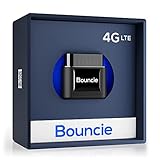
- Real-Time GPS Tracker Device for Vehicles — Ideal for personal use or fleet management, this car GPS tracker provides up-to-the-minute location updates. Our car tracking device also provides unlimited trip history, including a detailed route history
- Driving Insights — Our OBD tracker for cars monitors speed, acceleration, hard braking, idle time, and more. This versatile family and fleet GPS tracker for cars also helps improve road safety by sending alerts in response to unsafe driving practices
- Vehicle Health — Unlike other vehicle tracking devices, our car tracker device continuously monitors diagnostic engine data, alerting you to potential maintenance issues, so you can avoid downtime and keep fleet and family vehicles in peak condition
- Geo-Fencing & Accident Detection — Set up geo-fences to receive notifications when your vehicle enters or exits designated areas; Equipped with advanced sensors and software, this vehicle tracker device instantly detects impacts and sends SMS alerts
- Easy To Install & Low Monthly Subscription — Our OBD GPS tracker for vehicles plugs directly into OBD2 ports and works on most vehicles 1996 and newer; $9.65 monthly subscription required - no hidden activation or return fees - cancel anytime
Distance alone can produce the wrong fleet decision
Google’s vehicle-routing guidance notes that minimizing total distance can favor putting every stop on one vehicle when no other constraint discourages it. If the business goal is to finish all deliveries promptly, minimizing the longest route can be more appropriate. Capacity, shifts, windows and vehicle-use costs can change the preferred objective again.
Feasible is not necessarily globally optimal
Routing is computationally difficult as the number of stops and constraints grows. Google’s OR-Tools documentation warns that larger instances may take a very long time to solve optimally and that the toolkit can return a good, non-optimal solution. Report the solver status, time limit, objective value and constraint violations alongside the route. Do not label a heuristic or time-limited result “the proven best route” unless optimality was actually established.
Evaluate the plan with business analytics
Evaluation starts with a baseline: the previous planning method, a representative historical period or a controlled comparison. Keep the measurement window, geography, fleet mix, demand and traffic conditions comparable.
Do these 3 things before closing this tab:
1Repair Windows errors before they cause bigger problems2Scan for outdated or missing drivers - takes under a minute3Clear out junk files and repair common Windows errors| Metric | What it answers | Useful qualification |
|---|---|---|
| On-time arrival rate | Did stops fall inside their promised windows? | Define the tolerance and whether customer-caused delays are excluded |
| Missed-stop or late-delivery cost | What financial consequence did service failures create? | Include penalties, redelivery, refunds and lost capacity where measurable |
| Total and longest route duration | How much driving and work did the plan require? | Separate driving, waiting and service time |
| Distance and fuel or energy use | Did travel resources decline? | Control for changes in demand, vehicle type and traffic |
| Vehicle and driver utilization | How effectively were available shifts and capacity used? | High utilization can become a resilience problem if no slack remains |
| Workload balance | Were route hours, stops or loads distributed fairly? | Choose the balance measure that matches labor and safety policy |
| Exception rate | How often did dispatchers override, replan or drop a task? | Frequent overrides indicate missing constraints or weak inputs |
Keep three categories separate in reports: what the model predicted, what drivers actually experienced, and what the customer or finance system recorded. A lower planned distance does not prove lower fuel expense unless consumption and other conditions were measured.
Connect planning to execution
A route plan creates value only when it survives the operating day. Google’s integration guidance separates planning through the Route Optimization API from driver activity and real-time tracking supported by Fleet Engine.
Rank #3

- LONG-BATTERY VEHICLE TRACKING – Built for cars, trailers, fleets, equipment, boats, and motorcycles, Tracki’s trailer GPS tracker uses a 10,000mAh battery for 2 to 7 months active at 1–5 minute updates or up to 12 months in sleep mode.
- SUBSCRIPTION-POWERED SERVICE – The Tracki GPS tracker connects through 4G LTE Cat1 with built-in global SIM, giving app access, real-time location updates, alerts, and support after activation; Subscription Required, Cancel Anytime.
- FLEET-WIDE CONTROL – A practical fleet GPS tracker for work vehicles, with subscription-powered 15-second to 1-minute updates plus speed, geofence, movement, idle time, impact, and battery alerts through SMS, email, and app notifications.
- TRAILER & ASSET COVERAGE – A GPS tracker for trailer, car, truck, RV, boat, or equipment use, with 185+ country coverage, GPS accuracy of 5 to 10 meters outdoors, and Wi-Fi fallback indoors when GPS signals are harder to reach.
- SECURE TWO-WHEEL MONITORING – Use this motorcycle tracker for authorized bikes and powersport assets, with a built-in strong magnet, included screw mount, and weatherproof design for flexible vehicle placement.
- Initial planning: import confirmed work, vehicle and shift availability, constraints and cost assumptions; generate routes and send the approved plan to dispatch and drivers.
- Driver-facing execution: present stop order, windows, task details and navigation in the operational application, while allowing drivers to report service completion, access problems and actual durations.
- Midday re-optimization: incorporate traffic, cancellations, failed deliveries, new orders, vehicle problems and changed windows. Recalculate only the affected work when a full rebuild would create unnecessary disruption.
- New-stop allocation: evaluate incremental stops against remaining capacity, time windows, shift limits and customer promises instead of assigning them solely by geographic proximity.
- Tracking and learning: compare planned and actual arrival, departure and service times; feed systematic differences back into data quality checks, forecasts and model parameters.
Include operational knowledge in the design
Local knowledge can identify loading rules, building access, recurring congestion and customer preferences that are absent from a map. It should be captured as explicit data or reviewed exceptions rather than remaining an undocumented dependency on one dispatcher.
In a Yamato Transport case published by Google, delivery expertise, geospatial data, route logic and an implementation platform were combined, with driver feedback included during development. Shigeaki Namiki, Managing Director, Technology Consulting Division of Accenture, described the design principle this way: “The key is to integrate the drivers’ senses and experience with the logic of the Route Optimization API, thereby building a system that drivers can use naturally.”
The goal is not to let every manual preference override the model. It is to make legitimate operational rules visible, testable and maintainable while giving drivers a safe way to report conditions the data does not yet represent.
A practical analytics-to-routing architecture
- Define the decision: state the service promise, cost boundary, planning horizon and primary objective in measurable terms.
- Prepare the data: geocode and validate stops; normalize task, load, service-time, vehicle and shift records; retain source and timestamp fields.
- Build the model: encode capacities, windows, precedence, compatibility, breaks, depots, costs and missed-stop penalties.
- Run scenarios: test demand peaks, vehicle outages, late orders and alternative objective weights. Record solver status and run time.
- Review feasibility: inspect unserved tasks, tight windows, overloaded resources, excessive waiting and routes that depend on unrealistic assumptions.
- Approve and publish: give dispatchers an exception view and drivers an executable plan, not just a map visualization.
- Measure and improve: join planned routes with execution and customer data, then update inputs or constraints based on repeatable evidence.
How to interpret published performance claims
Google’s May 10, 2023 product announcement reported 93% to 98.5% on-time delivery reliability and a 10% increase in driver throughput for Skroutz Last Mile after integrating Google Maps Platform. These are vendor-published customer figures, not an independent study or a guaranteed result for another fleet. They do illustrate the type of outcome to measure: service reliability and throughput, rather than distance alone.
For an internal business case, reproduce the definitions behind each metric, establish a baseline and report uncertainty. Avoid transferring a customer story’s percentages directly to a different geography, fleet, demand profile or implementation.
Rank #4

- Premium GPS Tracker — The LandAirSea 54 GPS tracker provides accurate global location, real-time alerts, and geofencing. Easily attaches to vehicles, ATVs, golf carts, or other critical assets.
- Track Movements in Real-Time — Track and map (with Google Maps) in real-time on web-based software or our SilverCloud App. Location updates as fast as every 3 seconds with historical playback for up to 1 year.
- Powerful & Discreet — The motion-activated GPS tracker will sleep when not in motion for extended periods, preserving the battery life. The ultra-compact design and internal magnet create the ultimate discreet tracker.
- Lifetime Warranty — This GPS tracker is built to last. LandAirSea, a USA-based company and pioneer in GPS tracking offers a unconditional lifetime warranty that covers any manufacturing defects in the device encountered during normal use.
- Subscription Required — Affordable subscription plans are required for each device. Fees start as low as $9.95 a month for annual plans and $19.95 for monthly plans. No contracts, cancel anytime for a hassle-free experience.
Failure modes and corrective actions
The route is short but customers are late
Check whether time windows, service durations, waiting and traffic-sensitive travel times were modeled. Change the objective or add lateness penalties instead of merely asking for a shorter route.
One vehicle receives nearly every stop
Inspect vehicle-use costs, maximum route duration, shift limits and the selected objective. Total-distance minimization without balancing constraints can create this result.
Many stops are dropped
Review capacity, windows, depot hours, compatibility and precedence for contradictions. Then verify that the unserved penalty is high enough to reflect the real cost and route exceptions to dispatch.
Drivers routinely reject the plan
Compare planned and actual service times, access restrictions, loading practices and break assumptions. Incorporate validated driver knowledge as constraints or data, and involve drivers in testing before scaling.
Results change dramatically between runs
Preserve input snapshots, map-data versions, solver settings and objective weights. Small changes can alter a combinatorial solution; reproducibility requires recording the complete run configuration.
Quick wins for a faster PC:
Scan for outdated or missing drivers - takes under a minuteDriver Scan →Clear out junk files and repair common Windows errorsFree Scan →Fix the driver behind crashes, sound loss and screen glitchesFind Drivers →The dashboard reports improvement but operations do not
Audit whether it is reporting model estimates instead of completed deliveries, whether the baseline changed, and whether cancellations or failed stops were excluded. Reconcile planning, telematics, proof-of-delivery and finance records.
Quick Recap
Pre-launch checklist
- Is the primary objective written in business language and translated into measurable weights or priorities?
- Are coordinates, travel times, loads, service durations, vehicles, shifts, breaks and windows validated?
- Are pickup-delivery relationships, compatibility and depot rules represented?
- Is there an explicit policy and penalty for an unserved stop?
- Does the solver report feasibility, optimality status, run time and objective value?
- Can dispatchers approve, override and re-optimize without losing an audit trail?
- Can drivers execute the plan and return actual events and exceptions?
- Are planned outputs separated from measured customer and financial outcomes?
- Is the baseline comparable, and are vendor case-study results clearly labeled as such?
Product prices and availability are accurate as of the date/time indicated and are subject to change. Any price and availability information displayed on Amazon at the time of purchase will apply.

