
Free tools Windows power users keep installed
One-click scans. No signup required.
Yes—owners have reported useful ways to investigate DCM TimeWindow 1a speakers without immediately prying the drivers from their hardened adhesive. The practical first steps are to inspect through the removable outer cloth, listen closely to each driver position, check accessible wiring and crossover components, and experiment with placement. Those suggestions come from an AnandTech owner discussion, not from a DCM service manual or a controlled test, so a suspected tweeter failure still needs confirmation.
What the owner discussion actually establishes
The AnandTech thread concerns a used pair of DCM TimeWindow 1a speakers. The original poster wondered whether the tweeters had failed, whether an Onkyo receiver was adequate, and asked, “Is there anything I can do short of prying all four out of the super hard glue?” They also asked whether the speakers’ presentation was simply “just how they sound.” No driver failure was confirmed in the discussion.
A participant identifying as experienced with the model suggested visual inspection through the removable outer cloth, listening very close to each driver location, and checking wiring and the crossover after removing the end caps. Treat this as owner troubleshooting advice rather than an approved repair procedure.
Check for a silent driver before removing anything
1. Confirm the symptom at low volume
Play a familiar recording with clear vocals, cymbals, or other high-frequency information at a safe, low level. Compare left and right speakers in the same position if possible. A duller presentation can result from placement, wiring, amplifier settings, a crossover problem, or a driver—not necessarily a failed tweeter.
#1 Best Overall

- 2 x AUX INPUT - Convenient connection to any device that has a 3.5mm headphone output or dual RCA output. Connect to two devices via AUX at the same time, no plugging and switching needed.
- STUDIO SOUND QUALITY - Natural sound reproduction from 13mm silk dome tweeter and 4 inch full range unit
- REMOTE CONTROL - Adjust volume at your figure tips. Bass and treble control located on the side of main speaker.
- CLASSIC WOOD FINISH - High quality MDF wood build finished with wood effect vinyl serves as a great compliment to any home decor.
- SIDE PANEL CONTROLS - Use the side panel knobs to adjust the EQ to your liking. The controls are located on the active/powered speaker.
2. Listen near each driver position
With the volume still low, move your head close to each driver opening and compare the sound from the two cabinets. This close listening method was suggested by a forum participant; it is an informal comparison, not a measurement. Avoid touching the cones or applying power directly to a disconnected driver.
3. Inspect through the removable cloth
Remove only the outer cloth covering if it comes off normally. Look for visibly damaged cones, detached leads, pushed-in diaphragms, or obvious debris. Do not pull on a driver, cut adhesive, or use a battery test on tweeter terminals as a first step.
4. Swap channels to separate speaker and electronics faults
After switching the receiver off, exchange the left and right speaker connections. If the quiet side follows the receiver channel or cable, investigate the electronics or wiring. If it stays with the same cabinet, the speaker itself becomes more suspect. Keep polarity consistent when reconnecting.
Rank #2
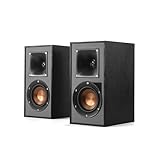
- Single 4" spun-copper IMG woofer
- 1" aluminum LTS tweeter mated to a 90x90 square Tractrix Horn
- 68 hertz - 21 kilohertz +/- 3dB; Nominal impedance - 8 ohms; Compatible crossover frequency – 1,730 hertz
- Sensitivity 90dB @ 2.83V/1M. Power Handling (CONT/PEAK) 50W/200W
- The exclusive Linear Travel Suspension (LTS) minimizes distortion for enhanced, detailed performances. Kapton is an extremely light and rigid material used in the tweeter suspension to provide high efficiency and improve resolution and detail. LTS tweeters are a hallmark of Klipsch speakers, making it a core component of some of the best speakers in the world
Inspect wiring and the crossover carefully
The experienced participant also recommended inspecting internal wiring and the crossover after removing the end caps. Only do this if the end caps can be removed without damaging the cabinet, and disconnect the receiver before opening anything. Photograph connections before disturbing them, and stop if adhesive, brittle wire, or damaged terminals resist movement.
The thread mentions possible crossover recap work and replacement drivers, but it does not provide a verified TimeWindow 1a schematic, capacitor values, or a confirmed compatible replacement-driver model. Do not buy generic capacitors or drivers based solely on the discussion. Component values, voltage ratings, physical fit, crossover topology, and driver impedance all need model-specific verification.
- Look for loose or corroded terminals, broken solder joints, and disconnected internal leads.
- Check for visibly bulging, leaking, or physically damaged crossover components, while recognizing that appearance alone does not prove an electrical fault.
- Do not bypass the crossover or connect an unknown driver directly to the receiver.
- If testing requires desoldering or removing glued drivers, use a technician familiar with vintage loudspeakers.
Is the Onkyo receiver powerful enough?
The original poster reported an Onkyo two-channel rating of 100 watts minimum into 8 ohms from 20 Hz to 20 kHz at 0.07% THD. That number is the poster’s transcription of the receiver specifications, not an independently verified specification here, so check the exact model’s manual before relying on it.
Rank #3

- BLUETOOTH WIRELESS - Popular classic bookshelf speakers now can be enjoyed without the hassle of wires. Simply connection to an iPhone, Android, Tablet, PC or Mac.
- STUDIO SOUND QUALITY - Naturally fine tuned sound reproduction from 4 inch bass and 13mm silk dome tweeter.
- OPTICAL AND COAXIAL INPUTS - Digital inputs to enable lossless connection to most TV and computers.
- REMOTE CONTROL - Adjust the volume and toggle inputs at your fingertips. Bass and treble control located on the side of main speaker.
- SIDE PANEL CONTROLS - Use the side panel knobs to adjust the EQ to your liking. The controls are located on the active/powered speaker.
Power alone cannot establish compatibility. Use the receiver’s documented impedance requirements, keep ventilation clear, and avoid sustained clipping. A receiver that sounds strained, shuts down, or becomes excessively hot needs investigation regardless of its headline wattage. Equal left/right operation at modest volume is a more useful first diagnostic than assuming a wattage number proves a tweeter is healthy.
Placement can change the sound dramatically
The original poster said moving the speakers improved the perceived center image. Other participants recommended experimenting with speaker spacing, distance from walls, listening position, and slight toe-in. A separate owner post in April 2024 described a large placement-dependent change in a garage setup. These are individual reports, not evidence of one correct TimeWindow 1a arrangement.
| Variable | What to try | What to listen for |
|---|---|---|
| Speaker spacing | Move the cabinets closer together or farther apart in small increments. | A stable vocal center without a hole between the speakers. |
| Front-wall distance | Pull both speakers forward or move them back by similar amounts. | Changes in bass balance, clarity, and image depth. |
| Side-wall distance | Keep left and right distances as symmetrical as the room allows. | More even tonal balance and a centered image. |
| Toe-in | Rotate both cabinets slightly toward the listening position, then compare with them facing straighter ahead. | Changes in treble level, vocal focus, and soundstage width. |
| Listening position | Move your seat forward, backward, or sideways while keeping the speakers fixed. | Whether the apparent tonal or imaging problem follows the room position. |
Change one variable at a time and mark each position so you can return to the best result. Match the left and right geometry before judging a possible driver fault.
Rank #4
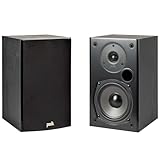
- EXPERIENCE AMAZING HOME THEATER SOUND WITH RICH, IMMERSIVE AUDIO – Featuring a 0.75" tweeter and a 5.25" Dynamic Balance driver, these passive bookshelf speakers deliver clear, balanced sound with deep bass, even at low volumes
- Use these wall-mountable bookshelf speakers as front, left-right, or rear for a surround sound system in your home theater setup and enjoy clear vocals and immersive sound—perfect for anyone starting their home audio journey
- Start your home theater journey with these Polk audio speakers then expand to a full 5.1 setup by adding T50 towers, T30 center channel, and subwoofer when ready
- QUICK & EASY SETUP – Just connect the speaker wire to your AV receiver, and you're ready to enjoy rich, high-quality sound—no complicated setup needed
- Over the past 50 years Polk has become one of the most trusted names in home audio speakers and entertainment. Our unwavering commitment to innovation allows you to sit back, relax, and enjoy music
When to stop troubleshooting at home
- A driver remains silent after channel swaps and careful close listening.
- You find loose internal wiring, damaged solder joints, or a component that requires desoldering.
- The cabinet or end caps require force because adhesive is exceptionally hard or brittle.
- The receiver clips, overheats, enters protection, or behaves differently between channels.
- You need replacement parts but cannot verify the original driver and crossover specifications.
At that point, document the cabinet model, driver markings, crossover-board markings, and receiver model, then consult a vintage-speaker repair technician. The forum discussion does not establish a model-specific parts list or prove that every TimeWindow 1a needs a recap.
Bottom line for a used pair
Start with reversible checks: low-level listening, channel swaps, inspection behind the removable cloth, and accessible wiring checks. Then optimize spacing, wall distance, listening position, and toe-in before concluding that the speakers are inherently dull or that a tweeter has failed. Only pursue glued-driver removal or crossover replacement after the fault is isolated and the correct model-specific parts and procedure are verified.
Quick Recap
Product prices and availability are accurate as of the date/time indicated and are subject to change. Any price and availability information displayed on Amazon at the time of purchase will apply.

