
Data labeling helps generative AI by supplying task-specific examples, human preferences, corrections, and evaluation judgments that guide or assess a model. It is not one technique: human annotation, preference feedback, synthetic-data creation and curation, and labels that disclose AI-generated content serve different purposes. Used well, these methods can improve a system’s behavior in the settings studied; none guarantees success on its own.
What does “data labeling” mean in generative AI?
In generative AI, a label is information attached to an example to explain how it should be interpreted, used, or assessed. The term covers several different activities. Keeping them distinct makes it easier to choose the right workflow and avoid treating every labeled dataset as interchangeable.


- Human annotation assigns task-specific information to examples, such as whether an answer is correct, useful, or in violation of a defined policy.
- Preference feedback records which of two or more responses a person prefers, or how a response should be corrected. It can be used to shape a model’s behavior after initial training.
- Synthetic-data generation and curation uses models or other processes to create examples, then selects, checks, or filters those examples for use. Generated examples are not automatically trustworthy simply because they are plentiful.
- Public-facing synthetic-content labels identify or help establish the provenance of content presented to users. These transparency labels are not the same as training labels or preference data. NIST’s 2024 overview discusses approaches to content authentication and provenance, labeling synthetic content, detection, testing, and auditing.
These categories can interact, but each answers a different question: what should the model learn, what do people prefer, which generated examples are fit to use, or how should audiences understand a piece of content?
How can labels influence a generative-AI system?
Labels make a training or evaluation target more explicit. Depending on the task, they can show a model an example of a desired output, provide a preference signal for comparing candidate answers, or help a team measure whether a model meets a defined standard. The value comes from the fit between the label and the intended task—not from labeling volume alone.
Recommended Free Tools
#1 Best Overall
For alignment work, human feedback can identify responses people prefer or point out mistakes that need correction. Microsoft Research’s RLTHF paper, published for ICML 2025, describes using an LLM for initial alignment, identifying examples that may be difficult to annotate correctly, and applying strategic human corrections. The paper reports results on HH-RLHF and TL;DR datasets; those results are evidence about the method and tasks evaluated, not a general guarantee for other models or use cases.
Labels also support evaluation, which is different from using examples to train or align a model. A team can use judgments to check whether a system’s answers meet task-specific criteria, but the evaluation is only informative if the criteria and examples represent the intended use. NIST’s text-to-text generator data-creation specification describes a challenge involving generator and discriminator teams, illustrating how data creation and assessment can be organized as distinct roles.
When is human labeling most useful?
Human judgment is especially useful when deciding what counts as correct, safe, helpful, or preferable requires context or expertise. That does not mean people must label every example. Hybrid workflows can use models to handle initial steps and direct human effort toward uncertain or consequential cases.
Rank #2
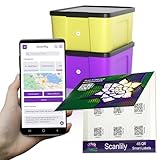
- EASILY CREATE A DATABASE OF YOUR BELONGINGS USING AI: Simply add a QR sticker to your item or container, take pictures, and optionally let AI do the work of adding names, descriptions and other fields for your items. Using this approach, you can very rapidly create an inventory of your belongings that you or others can reference later on the app or on a website. FREE EXPORT TO CSV. NO SUBSCRIPTION WILL EVER BE REQUIRED FOR FREE VERSION.
- GREAT FOR BUSINESSES. SIMPLE FOR CONSUMERS. PERFECT FOR MOVING AND STORAGE: If you’re not comfortable with apps or smart phones, this might not be the app for you. But it’s by far the best for tech–savvy people and businesses. With the help of AI image recognition and simple steps, Scanlily makes inventorying many items a fast and easy process.
- NO APP NEEDED FOR VIEWING: Our QR codes lead directly to URLs, so sharing is hassle-free. After you've used the app or website to add the items, others can view item details just by scanning with their camera—no app download needed. Simply click on the Public checkbox for the item to enable scanning without the app.
- OWN YOUR DATA - NO WALLED GARDEN: Free spreadsheet/CSV export of everything except images. Full backup with images requires just one month of a Business subscription. Your data stays yours.
- QUICKLY CATALOG YOUR ENTIRE BOOKSHELF WITH JUST A FEW PICTURES. Do you have a friend or relative who has lots of books, games or tools to organize? With Scanlily you can take a few pictures of your bookshelf and automatically create a catalog of all your books.
RLTHF is one example: Microsoft Research authors report reaching full-human annotation-level alignment on HH-RLHF and TL;DR with 6–7% of the human annotation effort. The figure is the authors’ result for their method and evaluated tasks, not a universal staffing or cost estimate. The paper also reports that models trained on its curated datasets outperformed models trained on fully human-annotated datasets for downstream tasks; that finding should likewise be read in the context of the study.
Google Research describes another selective approach in its August 7, 2025 account of active learning: iteratively select examples where expert annotation is considered most valuable. In the authors’ experiments, the amount of training data went from 100,000 examples to fewer than 500, while alignment with human experts increased by up to 65%. The article separately says production use with larger models has seen reductions of up to four orders of magnitude while maintaining or improving quality. The experimental figures and production statement have different scopes, and both are Google Research’s reported results—not independently established cross-industry benchmarks. Read Google Research’s account.
These examples suggest a practical principle: spend human effort where it is most likely to resolve ambiguity, correct a consequential error, or provide expertise a model cannot reliably supply. Whether selective review is effective still depends on how the workflow identifies those examples and checks the resulting labels.
Rank #3
How should teams handle synthetic data?
Synthetic data changes the workflow from collecting and labeling only human-produced examples to also generating candidate examples and deciding which ones are suitable. That makes generation, curation, and evaluation separate quality problems: a team must consider how examples were produced, whether they are relevant and accurate, and whether using them improves the intended system.
Microsoft’s December 2024 Phi-4 technical report describes a 14-billion-parameter model whose training recipe centrally focused on data quality and incorporated synthetic data throughout training. It is a model-specific example, not proof that the same recipe will work for every system. An ACL Findings of ACL 2024 survey organizes LLM-driven synthetic-data work around generation, curation, and evaluation, and discusses the tension between quantity and quality. For tool-using LLMs specifically, an EMNLP 2024 paper focuses on evaluating synthetic-data quality.
For a synthetic-data workflow, teams should be able to answer:
- What process or model generated each example, and for what intended task?
- What criteria were used to retain, revise, or reject generated material?
- How were factual or task-specific errors checked, and where was human review used?
- Was the resulting system evaluated on a separate set of examples rather than judged only on the data used to build it?
These checks do not make synthetic examples inherently reliable. They make the generation and curation process more inspectable and give the team a way to test whether the data serves its purpose.
Independent reader supportYour contribution helps us test, update, and keep practical guides available for everyone.How should teams choose between labeling approaches?
There is no universal winner among broad human annotation, selective expert review, model-generated labels, and hybrid methods. Compare them against the task and the evidence from the resulting evaluation, not simply against their raw example count.
| Approach | What it contributes | What to examine |
|---|---|---|
| Broad human annotation | Direct judgments or task-specific labels across a selected set of examples. | Whether instructions are clear, annotators are suitably qualified, and judgments are consistent for the target task. |
| Selective expert review | Human attention focused on examples considered especially valuable or difficult. RLTHF and Google Research’s active-learning account describe examples of targeted effort. | How uncertain or high-value cases are identified, what expertise is needed, and whether the reported savings hold in the team’s own setting. |
| Model-generated labels or synthetic examples | Candidate labels or data generated with model assistance, subject to selection and checking. | Whether generated material is accurate and relevant, what errors it may reproduce, and whether independent evaluation confirms its usefulness. |
| Hybrid workflow | Combines model assistance with human review or correction where it is most useful. | How responsibilities are divided, which cases receive human review, and how corrections and outcomes are recorded. |
Use these additional comparison axes when planning or reviewing a workflow:
Do these 3 things before closing this tab:
1Fix the driver behind crashes, sound loss and screen glitches2Clear out junk files and repair common Windows errors3Scan for outdated or missing drivers - takes under a minute- Coverage: Does the data address difficult, rare, multilingual, or underrepresented cases relevant to the intended use?
- Evaluation: Are outcomes checked against independent criteria or qualified expert references?
- Effort and throughput: Where does human review add value, and what work can be safely assisted or prioritized?
- Failure risk: What errors can annotators, models, or generation pipelines introduce, repeat, or amplify?
- Provenance and rights: Can the team trace where data came from, how it was generated, what licence applies, and whether the intended use is permitted?
The Uni-RLHF project, an ICLR 2024 platform and benchmark suite, describes varied human-feedback interfaces, sampling, and standardized feedback encoding. It is one example of organizing feedback workflows, not a single required pipeline. Across these approaches, make the evaluation conditions explicit; the available studies do not establish a universal method that wins across tasks.
What quality, provenance, and licensing checks matter?
Good labels are only one part of dataset quality. Teams also need to know where examples came from, what rights or restrictions apply, and how the labels or generated data were produced. Those records matter both for reviewing quality and for understanding whether a dataset is suitable for its intended use.
A 2024 Nature Machine Intelligence audit examined more than 1,800 text datasets, tracing sources, creators, licences, and use. In the popular dataset-hosting sites covered by that audit, the authors reported licence omission rates above 70% and licence error rates above 50%. These findings describe the audited landscape, not every AI dataset or hosting service, and they are not legal advice.
For each dataset or generated collection, keep records that make its history reviewable:
PC Slower Than It Used to Be?
A free scan shows the junk files, broken settings and background clutter dragging Windows down - then fixes them in one click.Free scan · Windows 10 & 11Outdated Drivers Are Slowing You Down
One free scan finds every outdated or missing driver and matches the right update for your exact hardware.Free scan · exact hardware match- Source, creator where known, and collection or generation method.
- Licence information and any restrictions relevant to the planned use.
- Label definitions, instructions, and the process used to produce or revise labels.
- Human-review scope, model assistance used, and checks applied to uncertain or rejected examples.
- Intended use, evaluation criteria, and the version or subset used in training and assessment.
Provenance also has a public-facing dimension. NIST’s 2024 report on synthetic-content transparency covers approaches to authentication, provenance, content labeling, detection, testing, and auditing. These methods address how synthetic content is identified or assessed; they should not be conflated with the training labels used to teach a model.
Quick Recap
Product prices and availability are accurate as of the date/time indicated and are subject to change. Any price and availability information displayed on Amazon at the time of purchase will apply.

