
Free tools Windows power users keep installed
One-click scans. No signup required.
A data center appliance is a preconfigured system that combines hardware and software for a defined IT function. Network, storage, backup, machine-learning, and hyperconverged appliances can reduce integration work and provide one support path. They are not magic boxes, however: you still need rack space, power, cooling, networking, security, and a plan for vendor dependence.
What a data center appliance is
An appliance is a ready-to-use device built around one well-defined function. The vendor selects and integrates the hardware, installs the operating system and application software, and normally validates the combination before shipment.
| # | Preview | Product | Price | |
|---|---|---|---|---|
| 1 |
|
server appliance Standard Requirements | $81.58 | Buy on Amazon |
| 2 |

|
CenterClick GPS Based NTP Server Appliance (NTP270) | $249.00 | Buy on Amazon |
| 3 |
|
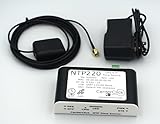
CenterClick GPS Based NTP Server Appliance (NTP220) | $199.00 | Buy on Amazon |
| 4 |
|
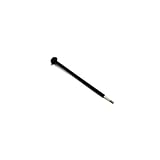
Server 82013 Piston 6.308 | $31.91 | Buy on Amazon |
The U.S. Environmental Protection Agency’s server-definition material describes a server appliance as a self-contained system with a preinstalled operating system and application software for a dedicated function or tightly coupled functions. SNIA’s broader definition likewise emphasizes an intelligent device whose software is customized and preloaded for a particular purpose.
The important distinction from an ordinary rackmount server is not the enclosure. A general-purpose server is usually a component that your team must select, configure, integrate, patch, and support. An appliance is sold as an integrated hardware-and-software solution with an intended workload and, often, coordinated support.
Do these 3 things before closing this tab:
1Fix the driver behind crashes, sound loss and screen glitches2Repair Windows errors before they cause bigger problems3Scan for outdated or missing drivers - takes under a minute#1 Best Overall
Common types of data center appliances
Network appliances
These systems are configured to perform functions such as routing traffic, load balancing, or inspecting network packets. Their value is in the tested combination of processing capacity, interfaces, operating software, and management tools.
Storage appliances
A storage appliance provides storage infrastructure as an integrated system. The package may include the storage controllers, drives, operating environment, data services, monitoring, and support needed for the specified role.
Backup and disaster-recovery appliances
These appliances are optimized to receive, retain, index, and restore backup data. A packaged system can simplify the relationship between backup software, storage capacity, deduplication or compression features, and recovery workflows.
Machine-learning appliances
Machine-learning appliances are built to host or run models. Depending on the product, the integrated stack can include accelerators, drivers, model-serving software, and management components that would otherwise require separate compatibility work.
Quick wins for a faster PC:
Scan for outdated or missing drivers - takes under a minuteDriver Scan →Repair Windows errors before they cause bigger problemsFix Now →Rank #2
- Stratum 1 NTP with GPS Source
- Embedded View-only Webserver with Status & Graphs
- Admin Console via USB and SSH
- Optional Dual Redundant Power Inputs - DC & PoE
- JSON Encoded Raw Data for Custom Integration
Hyperconverged infrastructure appliances
A hyperconverged appliance combines compute, storage, networking, and virtualization resources in one integrated system. Its components are certified to work together, and the customer may have one support contact for the combined platform. This is an integrated infrastructure model, not merely a server with extra software.
Who should consider one
An appliance is worth evaluating when all three conditions are present:
- The workload is clearly defined, such as backup, storage, traffic inspection, or a virtualized cluster.
- A suitable preconfigured product exists without forcing unacceptable compromises.
- Your organization values faster deployment, a coordinated support path, or a smaller integration burden more than maximum component-level freedom.
Small or bounded deployments
Appliances can be attractive for relatively small, self-contained deployments where a small infrastructure team cannot spend weeks validating hardware, firmware, drivers, and application versions. The benefit is reduced integration work, not a guaranteed installation time or a particular return on investment.
Teams seeking one accountable support path
When hardware and software ship together, the vendor may be able to investigate problems across the stack instead of requiring you to prove which supplier is at fault. Read the support contract carefully: facilities, third-party networks, operating procedures, and integrations may remain outside the vendor’s scope.
Rank #3
- Stratum 1 NTP with GPS Source
- Embedded View-only Webserver with Status & Graphs
- Admin Console via USB and SSH
- JSON Encoded Raw Data for Custom Integration
- I/O Connector
Organizations with repeatable requirements
If several sites need the same defined function, a standardized appliance can make deployments more consistent. Confirm that the model, software release, capacity, and support terms are available in every required region.
When a self-built system may be better
Unusual hardware or software requirements
An appliance is a poor fit when you need specialized interfaces, uncommon accelerators, a nonstandard operating environment, or software versions that the packaged product does not support.
Frequent component-level changes
Packaged systems constrain the choices that can be changed independently. If your team routinely swaps drives, controllers, processors, hypervisors, or management tools, a self-managed design may provide more useful flexibility.
Large or rapidly expanding workloads
At larger scales, designing and operating your own platform may produce better economics or a more suitable architecture. There is no universal size threshold; compare the appliance’s expansion model, licensing, support, and refresh cycle with an equivalent self-built design.
Rank #4
- Genuine Oem Replacement Part
- Server Is A Leading Global Provider Of Market-Driven Dispensing Solutions For The Food Service Industry
- Use Genuine Oem Parts For Safety Reliability And Performance
- Brand Name: Server
Strict control over lifecycle decisions
An appliance can tie upgrades, firmware, drivers, and hardware refreshes to the vendor’s compatibility matrix. That coordination reduces testing work, but it can also limit when and how you change individual components.
How to compare an appliance with a self-built alternative
| Decision axis | Questions to answer |
|---|---|
| Workload fit | Does it perform the required network, storage, backup, compute, or integrated role at the needed capacity? |
| Scale | Is the deployment small and bounded, or large enough that building and operating the platform could be more economical? |
| Configuration and upgrades | Can it accommodate required customization, integrations, capacity growth, and future software changes? |
| Support boundary | Does one vendor cover the shipped hardware and software, and what remains your responsibility? |
| Total cost | Compare purchase or subscription charges with equivalent hardware, software licenses, integration labor, maintenance, training, power, and support. |
| Site readiness | Can your facility provide rack space, power, network connectivity, cooling, and physical security? |
| Exit and portability | How can you migrate data or workloads if the product is discontinued, too expensive, or no longer fits? |
What deployment actually involves
A preconfigured appliance can remove much of the component-selection and compatibility work. As Christopher Tozzi wrote in Data Center Knowledge on June 30, 2025, appliances can include what is needed for a use case in one preconfigured box, leaving technicians largely to connect and initialize it. That description refers to reduced deployment effort, not a facility-free installation.
- Prepare the site: confirm rack dimensions, power circuits, electrical connectors, airflow, temperature limits, and physical access.
- Prepare the network: allocate management and production addresses, configure required switches, DNS, routing, firewalls, certificates, and time synchronization.
- Install and cable the unit: mount it according to the vendor’s instructions and connect redundant power and network links where required.
- Initialize the system: apply the supported software release, set administrative credentials, configure identity and logging, and register support or licensing.
- Validate the workload: test performance, failover, backups, restores, monitoring, alerting, and recovery procedures before placing production traffic or data on it.
- Operate the lifecycle: document approved upgrades, replacement procedures, capacity limits, support contacts, and an exit plan.
Questions to ask before buying
- What exact workload and capacity is the appliance designed to handle?
- Which hardware and software components are included, and which are excluded?
- What interfaces, protocols, hypervisors, operating systems, and integrations are supported?
- Can the system scale by adding resources, nodes, or licenses, and at what point is a different model required?
- Who supports firmware, drivers, the operating environment, and the application when a fault crosses component boundaries?
- How are patches tested and delivered, and can you defer or control upgrades?
- What happens to data, licenses, and support if you stop renewing or migrate away?
- What facility, network, staffing, and operational skills are still required?
Appliance or rackmount server?
A rackmount server is hardware that you configure for a workload. It is not automatically equivalent to a turnkey appliance. A self-managed rackmount design also requires operating software, application software, storage or networking components, rack compatibility, power, cooling, security, maintenance, and support arrangements.
Choose the appliance path when integration and coordinated support solve a real operational problem. Choose a self-built platform when control, unusual requirements, component choice, or large-scale economics matter more than a packaged deployment.
The Tool Desk
Outbyte PC Repair FREERepair Windows errors before they cause bigger problemsFix Now →Outbyte Driver Updater FREEFix the driver behind crashes, sound loss and screen glitchesFind Drivers →Quick Recap
Product prices and availability are accurate as of the date/time indicated and are subject to change. Any price and availability information displayed on Amazon at the time of purchase will apply.

