
Quick wins for a faster PC:
Fix the driver behind crashes, sound loss and screen glitchesFind Drivers →Repair Windows errors before they cause bigger problemsFix Now →For most Ryzen 9 9900X builds, start with a matched two-module DDR5-6000 CL30 kit with AMD EXPO. Choose 32GB (2×16GB) for gaming and general use, 64GB (2×32GB) for a premium all-round system, or 96GB (2×48GB) when your workload needs more memory. AMD’s official specification is DDR5-5600 with two modules, so DDR5-6000 EXPO is an enthusiast target—not a guaranteed speed for every CPU, board, BIOS, and kit.
Recommended DDR5 kits for the Ryzen 9 9900X
These recommendations are based on the kits’ published specifications and the 9900X’s memory guidance, not comparative hands-on testing. Check the exact kit against your motherboard’s memory support information before buying.
| Pick | Exact kit or configuration | Best for | Important qualification |
|---|---|---|---|
| Best overall starting point | G.Skill Trident Z5 NeoX RGB, F5-6000A3038F16GX2-TZ5NXRW; 32GB (2×16GB), DDR5-6000, CL30-38-38-96, 1.35V, AMD EXPO | Gaming and general enthusiast builds | This exact SKU is a 2×16GB kit; other Trident Z5 kits can have different capacities, timings, voltages, and profiles. G.Skill product specifications |
| Best high-capacity option | Corsair Vengeance CMK96GX5M2B6000Z30; 96GB (2×48GB), DDR5-6000, CL30-36-36-76, AMD EXPO and Intel XMP | Creators, developers, virtual machines, and large multitasking workloads | Check that your motherboard BIOS and QVL support this exact 48GB-module kit. Corsair product page and Corsair specification listing |
| Best premium all-round capacity | 2×32GB DDR5-6000 CL30 with AMD EXPO | Gaming plus streaming, editing, development, and heavy multitasking | No exact 2×32GB SKU is established here. Select a complete model number and verify it against your motherboard’s QVL rather than assuming every kit in a product family shares the same specification. |
| Best new-build four-DIMM example | Corsair Vengeance CMK64GX5M4B6000Z36; 64GB (4×16GB), DDR5-6000 CL36 with AMD EXPO | Builds that specifically need four modules | Four modules are more demanding on the memory controller than two; do not assume the advertised profile will be stable on every 9900X system. Corsair product page |
| Stability-first configuration | Two modules at DDR5-5600, or a faster EXPO kit operated at a lower speed if needed | Systems prioritizing conservative settings, troubleshooting simplicity, or unusual capacity configurations | DDR5-5600 is AMD’s published 9900X specification for two modules; it is not a guarantee covering every four-module arrangement. |
For 64GB, buy one matched 2×32GB kit when possible. The recommendation is about the configuration and profile, not an endorsement of an unverified exact model. For a lower-cost, non-RGB build, prioritize 2×16GB or 2×32GB, DDR5-6000, CL30 or similarly low primary latency, and AMD EXPO; compare exact kit numbers and QVL entries rather than shopping by heat-spreader name alone.
How much RAM should you buy?
32GB (2×16GB): gaming and everyday use
Choose 32GB for gaming, office work, general productivity, moderate streaming, and typical photo editing. Two modules preserve dual-channel operation; a single 32GB DIMM is not the equivalent configuration.
Do these 3 things before closing this tab:
1Fix the driver behind crashes, sound loss and screen glitches2Clear out junk files and repair common Windows errors3Scan for outdated or missing drivers - takes under a minute#1 Best Overall
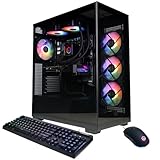
- System: AMD Ryzen 9 9900X 4.4GHz 12 Cores | AMD B850 Chipset | 32GB DDR5 | 1TB PCIe 4.0 NVMe SSD | Windows 11 Home
- Graphics: NVIDIA GeForce RTX 5070 12GB Graphics | 1x HDMI | 3x DisplayPort
- Connectivity: 2 x USB-C 3.2 | 4 x USB-A 3.2 | 2 x USB-A 2.0 | 1 x LAN | WiFi 6 | Bluetooth 5.3 | 7.1 Channel Audio
- Liquid Cool CPU | Tempered Side Case Panel | Custom RGB Lighting | Keyboard and Mouse
- 1 Year Parts & Labor Warranty, Free Lifetime Tech Support
64GB (2×32GB): the all-rounder
For a high-end 9900X PC that will handle gaming alongside streaming, editing, development tools, containers, large browser sessions, music production, or modded games, 64GB is the most versatile starting capacity. It costs more than 32GB, but avoids making a premium system depend on a workload staying within a smaller memory budget.
96GB (2×48GB): extra headroom without four DIMMs
Consider 96GB when your applications regularly exceed 64GB but do not require 128GB. Two 48GB modules keep the system to two DIMMs, but support for the exact kit depends on the motherboard and BIOS. It is not a better buy than 64GB when your software does not use the additional capacity.
Rank #2

- AMD Ryzen 9 9900X Processor (12-core)
- 32GB DDR5 6000MHz RAM, 2TB M.2 NVMe SSD
- NVIDIA GeForce RTX 5080 16GB Graphics Card
- Microsoft Windows 11 Pro (64-bit)
- Wi-Fi 7 and Bluetooth 5.3, 360mm Liquid Cooling
128GB or more: choose for a workload, not a CPU tier
Large virtual-machine hosts, datasets, professional editing, simulation, and unusually heavy creation workloads can justify 128GB or more. Check the board’s supported capacity and the QVL for the precise module configuration. At high capacities, do not assume DDR5-6000 operation; a lower memory speed or manual tuning may be needed.
Why two modules and DDR5-6000 CL30 are the practical target
AMD specifies the Ryzen 9 9900X for dual-channel DDR5 and lists up to DDR5-5600 with two single-rank or two dual-rank modules; its specification lists DDR5-3600 when all four slots are populated. The processor supports EXPO, but DDR5-6000 is above the published two-module memory speed. Treat it as a practical enthusiast target enabled through memory overclocking, not a universal guarantee. See AMD’s Ryzen 9 9900X specifications.
Outdated Drivers Are Slowing You Down
One free scan finds every outdated or missing driver and matches the right update for your exact hardware.Free scan · exact hardware matchWindows Errors? Fix Them Before They Spread
Repair common Windows errors and clear accumulated junk for a smoother, more stable PC - no reinstall needed.Free scan · no reinstallRank #3

- AMD Ryzen 9 9900X3D 4.4GHz (5.5GHz Turbo Boost) CPU Processor | 2TB Gen4 NVMe M.2 SSD – Up to 30x Faster Than Traditional HDD | 360mm AIO Liquid CPU Cooler with ARGB Fans, say goodbye to outdated and inefficient air coolers.
- NVIDIA Geforce RTX 5070 Ti 16GB GDDR7 Graphics Card (Brand may vary) | 32GB DDR5 RAM 6000 RGB Gaming Memory with Heat Spreader | Windows 11 Home 64-bit
- 802.11 AC | No Bloatware | Graphic output options include 1 x HDMI, and 1 x Display Port Promised, Additional Ports may vary | USB Ports Including 2.0, 3.0, and 3.2 Gen1 Ports | HD Audio and Mic | Free Gaming Keyboard and Mouse
- High-spec AIO liquid coolers used, delivering unmatched cooling performance for a perfect operational experience and unparalleled cooling performance. With hardware unrestricted by temperature limits, you can unleash its full potential. Whether gaming, creating, or working, you'll never suffer from thermal throttling again. | Showcase Your PC with the Stunning King 95 Case - White | 1 Year Warranty on Parts and Labor | Free Technical Support | Assembled in the USA
- This powerful gaming PC is capable of running all your favorite games such as Call of Duty, Fortnite, Escape from Tarkov, Grand Theft Auto V, Valorant, World of Warcraft, League of Legends, Apex Legends, PLAYERUNKNOWN’s Battlegrounds, Overwatch 2, Counter-Strike 2, Battlefield V, Minecraft, ELDEN RING Shadow of the Erdtree, Rocket League, Baldur’s Gate 3, Dota 2, HELLDIVERS 2, Monster Hunter, Terraria, Rainbow Six Siege, Dragon’s Dogma 2, Black Myth Wukong, Marvel Rivals, more at Ultra settings, detailed 1440p Quad HD resolution, and smooth 60+ FPS gameplay.
AMD’s EXPO material presents DDR5-6000 AM5 configurations, including CL28, CL30, and CL36 options. EXPO is AMD’s memory-overclocking technology for Socket AM5; it loads profile settings in firmware but cannot guarantee that every CPU memory controller, motherboard, BIOS, DIMM count, or capacity will sustain the rated profile. AMD EXPO overview.
Two matched DIMMs generally place less load on the memory controller and make high-speed operation and troubleshooting more straightforward than four. A motherboard having four slots does not mean filling all of them is the best way to reach 64GB. For a new 64GB build, prefer 2×32GB over 4×16GB unless capacity, existing hardware, or a validated board configuration gives you a reason to use four.
Rank #4

- Panoramic Perfection: The Nitro N85 removes the barrier between you and your build. Its specially curved glass panel flows from front to side, delivering a stunning panoramic view that makes components appear to float in mid-air. The result is a pure, uninterrupted showcase-bold and beautiful from every angle. It features Reverse-Ring ARGB fans that maintain a premium aesthetic by keeping vibrant light rings facing the glass rather than the brackets for a clean, high-end look
- Game Without Compromise: Powered by Zen 5, the AMD Ryzen 9 9900X delivers game changing performance that breaks limits and scales into the future-driving next level gaming, streaming, and content creation to help you level up
- Ignite Unstoppable Performance: AMD Radeon RX 9070 XT graphics cards deliver ultra-fast, AI powered gaming with next level visuals. Built on AMD RDNA 4, they feature advanced ray tracing, 1557 Peak INT4 Performance TOPS, 16GB of GDDR6 memory, enhanced streaming and editing quality, and ongoing performance optimizations through AMD Software
- Next-Gen AMD RDNA 4 Graphics - Built to Dominate: Powered by AMD's latest RDNA 4 architectures, this system delivers redesigned compute units with dramatically faster AI acceleration and 2x the ray tracing throughput of the previous generation - so your games look better, run smoother, and respond faster without compromise
- Stay Fast. Stay Connected: The Nitro 85 keeps you in the game with high-speed Realtek Wi-Fi 7 and 2.5GbE LAN for low-latency play and lightning-quick downloads. Front-mounted USB 3.2 Type-C and Type-A ports let you plug in on the fly, while nine rear USB ports handle all your connections and fast data transfers
Speed and CAS latency: how to compare kits
DDR5-5600 is the conservative reference point in AMD’s published two-module specification. DDR5-6000 CL30 EXPO is the balanced enthusiast choice in this guide. A higher advertised transfer rate is not automatically faster in practice: stability, timings beyond CAS, memory-controller behavior, capacity, and the application all affect results.
CAS latency can be compared approximately with this formula: latency in nanoseconds = CAS latency × 2000 ÷ data rate in MT/s.
Recommended Free Tools
Best Value

- The world's best gaming desktop processor that can deliver ultra-fast 100+ FPS performance in the world's most popular games
- 12 Cores and 24 processing threads, based on AMD "Zen 5" architecture
- 5.6 GHz Max Boost, unlocked for overclocking, 76 MB cache, DDR5-5600 support
- For the state-of-the-art Socket AM5 platform, can support PCIe 5.0 on select motherboards
- Cooler not included
| Configuration | Approximate CAS latency |
|---|---|
| DDR5-6000 CL30 | 10 ns |
| DDR5-6000 CL36 | 12 ns |
| DDR5-5600 CL28 | 10 ns |
| DDR5-6400 CL32 | 10 ns |
This is a comparison of first-word CAS latency, not a complete performance ranking. Secondary timings, rank layout, capacity, memory-controller settings, and workload still matter. A 96GB kit that fits a creator’s workload can be a better choice than a lower-latency 32GB kit that runs out of memory.
Quick Recap
Check motherboard compatibility before buying
- Identify the exact board and BIOS. Record the motherboard model and check its supported memory capacity and BIOS notes, especially for 48GB or larger modules.
- Search the motherboard memory QVL. Look for the exact kit model, module count, capacity, rated speed, and Ryzen 9000 support where listed. QVL inclusion is useful board-specific evidence, not an absolute guarantee for every CPU and BIOS combination; absence does not prove incompatibility.
- Check the memory maker’s configurator. G.Skill advises checking compatibility for the individual kit in its QVL and RAM Configurator. Its QVL pages also note BIOS requirements for some high-capacity modules; see the 64GB-module QVL example.
- Confirm physical clearance. Tall RGB heat spreaders may interfere with large air coolers. Check the cooler and case clearances before choosing a module design.
- Buy one factory-matched kit. Do not combine separate kits just because their labels show the same speed and capacity; separate kits are not validated as a single set.
Install and enable AMD EXPO
- Install the matched modules in the slots specified by the motherboard manual. Many two-DIMM configurations use A2 and B2, but follow the manual for your board rather than treating that slot pair as universal.
- Update the motherboard BIOS if necessary. This is particularly important if the board needs a newer firmware version for the memory capacity or modules you purchased.
- Enter UEFI/BIOS setup and find the memory profile setting. It may be under a memory-overclocking or DRAM profile section; exact labels and locations vary by manufacturer and BIOS version.
- Select the AMD EXPO profile, save, and reboot. First boot after changing memory settings can take longer while the board trains memory.
- Confirm the resulting memory speed and test stability. Check it in BIOS or the operating system, then run a memory stability test. A successful boot alone is not proof of error-free memory operation.
Troubleshoot EXPO instability methodically
- No boot or repeated memory training: Allow time for the board’s initial training. If it does not recover, clear CMOS or restore BIOS defaults, verify the module slots against the manual, update BIOS, and try EXPO again.
- Errors, crashes, or application instability after enabling EXPO: Return to defaults, then try DDR5-5800 or DDR5-5600 instead of the kit’s rated profile. Run a proper memory test after each change.
- One module is missing or a memory channel behaves abnormally: Reseat the DIMMs and test modules individually in the board-recommended slot. If the behavior persists, inspect CPU socket installation and cooler mounting as well as the board slots.
- Four-DIMM setup will not hold its rated speed: Reduce the memory speed and test stability. Four modules can require a lower setting than two, and separate kits are not guaranteed to work together even when their specifications look identical.
- 48GB or larger DIMMs are not recognized or stable: Check the board’s supported capacity, exact QVL listing, and BIOS requirements before concluding that the kit is defective.
- Problems continue at conservative defaults: Test modules and slots systematically before considering replacement or an RMA. Failure to run DDR5-6000 EXPO by itself does not establish that the RAM is defective.
Choose by workload
| Use case | Recommended starting configuration | Trade-off |
|---|---|---|
| Gaming-focused | 32GB (2×16GB), DDR5-6000 CL30 EXPO | Less headroom for future or heavier workloads |
| Premium all-rounder | 64GB (2×32GB), DDR5-6000 CL30 EXPO | Higher cost than 32GB; choose an exact QVL-checked kit |
| Creator or developer | 64GB (2×32GB); consider 96GB (2×48GB) if actual use exceeds 64GB | Even 96GB may be insufficient for some VM or high-resolution editing workloads |
| High-capacity workstation | 128GB or more in a board-supported configuration | May require reduced speed or tuning |
| Conservative or stability-first | Two modules at DDR5-5600, or a faster kit operated at a stable reduced speed | Lower profile speed than the DDR5-6000 enthusiast target |
| RGB build | An AMD EXPO RGB kit such as the specified Trident Z5 NeoX SKU | Potentially greater height, cost, and cooler-clearance demands |
| Low-profile build | A non-RGB EXPO kit selected by exact specification and QVL | Fewer lighting and styling options |
Product prices and availability are accurate as of the date/time indicated and are subject to change. Any price and availability information displayed on Amazon at the time of purchase will apply.

