
The Tool Desk
Outbyte Driver Updater FREEScan for outdated or missing drivers - takes under a minuteDriver Scan →Outbyte PC Repair FREEClear out junk files and repair common Windows errorsFree Scan →Yes—Cat6 can usually be installed through an insulated wall without removing the entire drywall panel. The reliable method is to expose the outlet location and an accessible end of the stud bay (attic, basement, crawlspace, or closet), then push a glow rod through the insulation and pull the cable with a string. Do not blindly shove Ethernet cable through a sealed cavity.
Fiberglass batts are usually manageable; mineral wool, blown-in insulation, fire blocking, exterior-wall layers, and especially spray foam can make a different route or a surface raceway the safer choice.
Decide whether the route is practical
Before cutting drywall, identify what is inside the wall and where the cable can enter and exit.
Check the wall and access
- Determine whether it is an interior or exterior wall. Exterior walls may contain sheathing, vapor-control layers, plumbing, wiring, and headers.
- Identify the insulation: fiberglass batt is the most forgiving; mineral wool is denser; blown-in material can collapse into an opening; spray foam may grip a rod and cable so tightly that blind fishing is impractical.
- Look for attic, basement, crawlspace, closet, or unfinished adjacent access. Opposite-side access is usually more valuable than a longer fish tape.
- Locate possible fire blocking, top and bottom plates, structural headers, plumbing, electrical cables, HVAC ducts and returns, and corner framing.
- Check whether the wall, floor/ceiling, shaft, or dwelling-unit separation is fire-rated. A rated penetration requires a listed firestop system, not ordinary expanding foam.
- If the route is in an air-handling plenum, select cable with the required jacket rating; ordinary CMR cable is not automatically acceptable there.
Use a stud finder, a small exploratory hole, an inspection camera, or access from above or below. Stop if you cannot establish what lies beyond a plate or obstruction.
Quick wins for a faster PC:
Fix the driver behind crashes, sound loss and screen glitchesFind Drivers →Repair Windows errors before they cause bigger problemsFix Now →Scan for outdated or missing drivers - takes under a minuteDriver Scan →#1 Best Overall
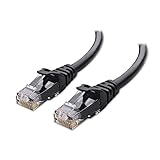
- High-Performance Connectivity: This Cat 6 ethernet cable is designed for superior performance, with a 24 AWG copper wire core. It provides universal connectivity as an ethernet cord for LAN network components such as PCs, servers, printers, routers, and more, ensuring reliable and fast network connections
- Advanced Cat6 Technology: Experience Cat6 performance with higher bandwidth at a Cat5e price. This network cable is future-proof, ready for 10-Gigabit Ethernet and backwards compatible with any existing Cat 5 cable network. It meets or exceeds Category 6 performance according to the TIA/EIA 568-C.2 standard
- Reliable Wired Network Solution: Known variously as a Cat6 network cable, ethernet cable Cat 6, or Cat 6 data/LAN cable, this RJ45 cable offers a more secure and reliable connection than wireless networks. It's ideal for internet connections that demand consistency and security
- Durable and Secure Design: The connectors of this ethernet cable feature gold-plated contacts and strain-relief boots for enhanced durability. Bare copper conductors not only improve cable performance but also comply with communication cable specifications
- High-Speed Data Transfer: With up to 550 MHz bandwidth, this ethernet cord is ideal for server applications, cloud computing, video surveillance, and streaming high-definition video. It also supports Power over Ethernet (PoE, PoE+, PoE++) for powering devices like IP cameras, VoIP phones, and wireless access points, ensuring fast and reliable network performance.
Choose cable that belongs in a wall
For a normal US residential concealed run, buy bulk, solid-copper Cat6 rather than a pre-made patch lead.
| Specification | Recommended choice | Why it matters |
|---|---|---|
| Conductors | Solid bare copper, 23 or 24 AWG | Designed for permanent cabling and reliable punch-down termination. |
| Pairs | Four twisted pairs (UTP for most homes) | Shielding is unnecessary for ordinary residential runs and adds bonding and termination requirements. |
| Listing | CMR/riser for ordinary concealed routes between rooms or floors | Use CMP/plenum only where the air-space classification and local rules require it. |
| Material to avoid | CCA (copper-clad aluminum) | It is a poor choice for permanent structured cabling and PoE-sensitive installations. |
Examples of current solid-copper CMR products include Ubiquiti UniFi Indoor Cat6 CMR, Monoprice Cat6 bulk cable, and StarTech Cat6 CMR cable. Verify the jacket marking and conductor construction on the exact spool you buy.
Tools and materials
Essential
- Stud finder, tape measure, pencil, labels, and a noncontact voltage tester (an additional check, not your only safety test)
- Drywall saw or oscillating tool
- Fiberglass glow rods, fish tape, or fish sticks
- Pull string and electrical tape
- Low-voltage old-work bracket or mud ring, wall plate, Cat6 keystone jacks, and a punch-down tool
- Cable-jacket stripper and a basic wire-map tester
Helpful for difficult cavities
- Borescope, flexible drill bit, right-angle drill, narrow-hose vacuum, access-hole patch kit, approved communications-cable lubricant, pulling grip, and conduit or ENT with a pull string
Do not use a staple gun directly on Ethernet cable, pull on individual conductors, bury a hidden coupler, or cut the ends off patch cables and punch them into jacks.
Step-by-step: fish Cat6 through fiberglass-batt insulation
- Plan the stud bay. Mark the outlet, identify the nearest studs, and measure the likely top or bottom plate. Estimate the complete route, including vertical drops, detours, and service loops.
- De-energize and inspect. Turn off nearby circuits where practical, verify conditions, and inspect through a small hole or from the attic/basement. Never assume a low-voltage route is clear of power, plumbing, or HVAC.
- Cut the outlet opening. Use a low-voltage old-work bracket or mud ring. A shallow bracket may be necessary where the cavity is narrow or obstructed.
- Create access at the other end. A small attic, basement, or closet opening is easier to patch than a large section of finished wall. Use a blank or brush plate where an access opening remains.
- Compress only what is necessary. Do not tear out a large section of batt. If the batt is stapled to the stud face, access from the unfinished side may be easier.
- Push a glow rod toward the access point. A rigid fiberglass rod generally tracks better than a floppy steel tape in insulation. Stop when resistance changes abruptly.
- Pull a string first. Attach the string to the rod so a failed cable pull does not require repeatedly dragging Cat6 through the batt.
- Make a smooth cable joint. Stagger the cable end, tape the connection so it has no bulky hook, and keep the pull aligned with the rod. Have one person feed while another pulls.
- Pull slowly. Do not yank, twist, crush, or kink the jacket. Maintain at least the cable maker’s bend-radius requirement; a common guideline is four times outside diameter. For example, Ubiquiti lists a 5.9 mm jacket and 24 mm minimum bend radius for one Cat6 CMR cable (specification).
- Leave service loops. Keep enough extra cable at both ends for termination and future retermination. Label both ends before closing the wall.
- Restore and protect. Return displaced insulation, install required nail plates or firestop systems, and patch exploratory openings only after testing.
What changes with other insulation
Mineral wool
Its density can defeat a flexible tape. Use a rigid glow rod, make a controlled access path, and avoid forcing cable through a compressed section.
Rank #2

- High Performance Cat6 Cable - The Cat6 ethernet cables 100ft supports frequencies of up to 500 MHz and high-speed 10GB internet connection for LAN network applications such as PCs,computer servers,printers,routers,switch boxes,network media players,NAS,VoIP phones and more, while remaining fully backward compatible with your existing network.
- Outdoor&Indoor Ethernet Cable - The cat 6 ethernet patch cable features 8 solid copper conductors 24 AWG. Each of the 4 unshielded twisted pairs (UTP) are separated by a PE cross insulation to isolates pairs and prevent crosstalk and covered by a 5.8mm PVC jacket with RJ45 connectors and gold-plated contacts. The molded strain relief boots help avoid snags that will damage your cables. They are molded for flexibility and resist common wear and tear.
- Lan Cable with RJ45 - UTP(Unshielded Twisted Pair) patch cable with RJ45 gold-plated Connectors, this cat6 cable support Cat8 and Cat7 network and provides performance of up to 500 MHz 10Gbps and is suitable for 10BASE-T, 100BASE-TX (Fast Ethernet), 1000BASE-T/1000BASE-TX (Gigabit Ethernet) and 10GBASE-T (10-Gigabit Ethernet)
- High Quality Control - are designed with extremely well-matched components for outstanding uniform impedance and very low return loss, providing lower crosstalk, and a higher signal-to-noise ratio. Each Cat 6 internet cable 6 ft goes through rigorous testing to ensure a secure wired internet connection with exceptional speed and reliability.
- Support – Cat6 Ethernet cable with CM grade PVC jacket complies with TIA/EIA 568-C.2, is ETL verified and RoHS compliant. If an item is defective or breaks within a year, we will issue a replacement. For questions or concerns please contact our friendly, USA-based customer Support team.
Blown-in cellulose or fiberglass
Material may fall into the outlet opening. Catch or vacuum it carefully, use a borescope and multiple small access points if needed, and restore insulation around the finished opening.
Spray foam
Spray foam is usually the worst candidate for blind fishing because it bonds around the cavity. Cutting large sections can affect air sealing, moisture control, and insulation performance. Prefer a surface raceway, trim route, attic/basement route, or a professional installer.
Exterior walls and HVAC spaces
Protect vapor and air-sealing layers in exterior walls. If the cable occupies an air-handling plenum, verify the required CMP or other listing with local code and the cable manufacturer.
Framing, power, and fire protection
Drilling and nail plates
Leviton’s residential installer guide summarizes the commonly used US rule that a bored hole should be at least 1¼ inches from the nearest framing edge. If that clearance cannot be maintained, install an approved steel nail plate or equivalent protection. A nail plate protects a safe, known route; it does not make blind drilling safe.
Rank #3

- Cat 6 performance at a Cat5e price but with higher bandwidth
- High Performance Cat6, 30 AWG, RJ45 Ethernet Patch Cable provides universal connectivity for LAN network components such as PCs,computer servers,printers,routers,switch boxes,network media players,NAS,VoIP phones
- Jadaol cat6 standard cable support Cat8 and Cat7 network and provides performance of up to 250 MHz 10Gbps and is suitable for 10BASE-T, 100BASE-TX (Fast Ethernet), 1000BASE-T/1000BASE-TX (Gigabit Ethernet) and 10GBASE-T (10-Gigabit Ethernet)
- UTP(Unshielded Twisted Pair) patch cable with RJ45 gold-plated Connectors and are made of 100% bare copper wire, ensure minimal noise and interference
- The unique flat cable shape allows for a cleaner and safer installation. You can easily and seamlessly make the cable run along walls, follow edges & corners or even make it completely invisible by sliding it under a carpet.
Do not drill structural beams, headers, engineered members, or trusses without understanding their limits. Locate utilities before drilling plates, especially near kitchens, bathrooms, electrical boxes, and HVAC runs. Local amendments and the adopted NEC/IRC edition control, and permit requirements vary by jurisdiction.
Keep data away from power
Leviton recommends keeping Category cable about six inches from electrical and speaker wiring where practical and crossing AC wiring at approximately 90 degrees. Do not share a hole, staple, electrical box, or raceway with branch-circuit wiring unless the applicable code and hardware specifically permit it.
Firestopping
Penetrations through rated walls, floors, ceilings, shafts, or unit separations require a compatible listed system installed as specified. For example, the STI UL system WL3435 lists Cat5/Cat6 cable as a permitted penetrant, but its assembly, sealant, annular-space limits, and instructions must be followed. Ordinary expanding foam is not a universal firestop.
Plan the network route correctly
Run each permanent cable directly from a central patch panel or network location to its wall outlet. Do not daisy-chain jacks or hide couplers in the wall. A common structured-cabling design allows up to 90 m (295 ft) for the permanent link, with patch cords bringing the channel to 100 m; treat this as a design target, not a guarantee at the limit. Measure the actual path, including plate crossings and service loops. See Elliott Electric’s installation reference.
Recommended Free Tools
Rank #4

- 40 Gbps 2000 Mhz High Speed: The Cat 8 ethernet cable support max. 40 Gbps data transfer and 2000 MHz Brandwith, ideal for gaming and streaming, greatly improving upload and download speed, sound, image and resolution quality
- Excellent Anti-interference: The ethernet cable comes with 4 shielded foiled twisted pairs (F/FTP), pure copper core and gold-plated RJ45 connector, reducing interference, noise and crosstalk, making network speed faster and more stable
- Marvelous Durability: Internet cable wrapped with quality cotton braided cord, which makes the LAN cable stronger and more durable. The test proves that this internet cable can be bent at least 10000 times without broken, very suitable for long-term use
- PoE Supported: All lengths of ethernet cord can support the PoE power supply function except 65ft. You don't need additional power supply when installing a PoE camera, which is very convenient and safe
- Wide Compatibility: With the RJ45 Connector, network cable can be perfectly compatible with computers, laptops, modems, routers, PS5, X-Box and other networking devices. It can also be fully backward compatible with Cat7, Cat6e, Cat6, Cat5e, Cat5
Terminate solid Cat6 at keystone jacks
- Bring the cable through the bracket and preserve the jacket as close to the jack as practical.
- Untwist each pair only as much as needed to seat it.
- Follow the color diagram printed on the jack. Use T568A or T568B consistently at both ends; T568B is common in US homes.
- Punch down solid cable into Cat6-rated keystone jacks or a patch panel. Use short factory-made patch cords from the wall jack to the switch, router, computer, camera, or access point.
- Add strain relief and a loose service loop; do not form a tight coil.
Ordinary modular plugs are intended for specific conductor sizes and constructions. Do not put permanent solid cable into a plug unless that plug is explicitly rated for it.
Independent reader supportYour contribution helps us test, update, and keep practical guides available for everyone.Test before closing the wall
Basic verification
Connect a wire-map tester to both ends and confirm all eight conductors are present in the correct order. Check for opens, shorts, reversals, and split pairs. A continuity tester does not certify Cat6 performance.
Link and PoE checks
Connect known-good patch cords and verify the expected link speed on the switch and device. For an access point, camera, or other PoE load, test with the intended switch or injector. Cat6 labeling alone does not promise 10 Gb/s; speed depends on length, components, installation quality, and equipment.
If the link is only 100 Mb/s
- One pair is open or poorly punched.
- A split pair is present despite apparent continuity.
- The cable or jacket was crushed or kinked.
- The jack, plug, patch cord, switch port, or endpoint is wrong or limited.
Re-terminate one end at a time, inspect the cable near openings and plate crossings, test with known-good patch cords, and replace badly damaged cable rather than burying a splice.
What’s actually slowing this PC down?
Pick the symptom - the matching free tool is one click away.
Best Value

- 👌 𝗠𝗜𝗟𝗜𝗧𝗔𝗥𝗬-𝗚𝗥𝗔𝗗𝗘 𝗤𝗨𝗔𝗟𝗜𝗧𝗬 -> 𝟭𝟬𝟬% 𝗚𝗨𝗔𝗥𝗔𝗡𝗧𝗘𝗘𝗗!: Each & every of our cable is individually tested with a 𝐃𝐒𝐗-𝟖𝟎𝟎𝟎 𝐂𝐀𝐁𝐋𝐄 𝐂𝐄𝐑𝐓𝐈𝐅𝐈𝐄𝐑 to ensure customer satisfaction, the most highest & consistent quality & compliance with 568.2C standards
- 💪 𝗛𝗘𝗔𝗩𝗬-𝗗𝗨𝗧𝗬 𝗖𝗢𝗡𝗦𝗧𝗥𝗨𝗖𝗧𝗜𝗢𝗡, 𝗥𝗘𝗠𝗔𝗥𝗞𝗔𝗕𝗟𝗘 𝗣𝗘𝗥𝗙𝗢𝗥𝗠𝗔𝗡𝗖𝗘 & 𝗦𝗨𝗣𝗘𝗥-𝗗𝗨𝗥𝗔𝗕𝗟𝗘: Our cable produces the strongest signal, along with the best conductivity, when compared to any other cable of the whole market | Our cable is an outstanding choice for 10 gigabit ethernet | RoHS certified | REACH certified | ISO 9001:2015 certified
- 🤝 𝗛𝗜𝗚𝗛𝗘𝗦𝗧 𝗖𝗢𝗣𝗣𝗘𝗥 𝗖𝗢𝗡𝗧𝗘𝗡𝗧 𝗢𝗙 𝗧𝗛𝗘 𝗪𝗛𝗢𝗟𝗘 𝗠𝗔𝗥𝗞𝗘𝗧: Copper & aluminium mix ensures the most perfect price-to-performance & durability ratio for customers | Monk Cables enable customers to reap the rewards of CCA through huge savings
- ❤️ 𝗕𝗥𝗜𝗧𝗧𝗟𝗘-𝗙𝗥𝗘𝗘, 𝗘𝗔𝗦𝗬-𝗧𝗢-𝗪𝗢𝗥𝗞-𝗪𝗜𝗧𝗛 & 𝗖𝗢𝗠𝗣𝗔𝗧𝗜𝗕𝗟𝗘 𝗪𝗜𝗧𝗛 𝗜𝗡𝗗𝗢𝗢𝗥 𝗨𝗦𝗔𝗚𝗘: Our cable comes packaged in a hassle-free & tangle-free easy-pull box | Running "ft" count after every foot makes measuring the cable extremely easy | Fire-retardant, sunlight-resistant & weather-proof plenum jacket fulfils rigorous fire protection safety standards for usage in plenum air spaces which typically are above drop ceilings or below raised floors
- ✅ 𝗧𝗛𝗘 𝗢𝗡𝗟𝗬 𝗖𝗔𝗧𝟲 𝗣𝗟𝗘𝗡𝗨𝗠 𝗖𝗔𝗕𝗟𝗘, 𝗬𝗢𝗨'𝗟𝗟 𝗘𝗩𝗘𝗥 𝗡𝗘𝗘𝗗 𝗧𝗢 𝗕𝗨𝗬!: Ridiculously easy 30 days return policy | 24/7 super-friendly customer support, with 100% satisfaction guarantee | If you ever face any issues while using our product, we will replace it right away, no questions asked!
When the pull fails
The rod stops halfway
Possible causes include a stud, folded insulation, a fire block, an offset cavity, or an existing cable. Stop pushing, mark the insertion depth, inspect with a borescope, try a stiffer rod or the opposite direction, and open a small exploratory hole instead of applying more force. Never blindly drill a suspected fire block or structural member.
The jacket is damaged
Do not bury visibly damaged cable. Cut back to undamaged cable and retest only if adequate length remains; replace a severely crushed or kinked run because continuity does not prove category performance.
No link appears
Check both jack pinouts, re-punch both ends, test all four pairs, try a known-good patch cord, and verify the switch port and device. A T568A-to-T568B combination is not a normal substitute for correct, consistent termination.
The cable is too short
Do not install a concealed splice. Pull a replacement with more slack, allowing for plate crossings, difficult bends, and both terminations.
Free tools Windows power users keep installed
One-click scans. No signup required.
The bracket or box will not fit
The cavity may be shallow or blocked. Try a low-profile bracket, shallow-rated enclosure, surface-mount box, or another outlet location.
Know when to use another method
| Situation | Practical choice |
|---|---|
| Fiberglass batt with attic or basement access | Glow rod and pull string. |
| One short run, difficult or spray-foamed wall | Surface raceway or baseboard/trim route. |
| Blown-in insulation | Borescope and multiple access points; change route if control is poor. |
| Several future cables | Conduit or ENT with a pull string. |
| Long run between floors | Accessible attic/basement backbone to a central patch panel. |
| Fire-rated assembly | Listed firestop system and, when uncertain, a qualified installer. |
| Outdoor segment | Outdoor/direct-burial-rated cable, not ordinary indoor Cat6. |
Wi-Fi, mesh, MoCA over suitable coax, and powerline adapters can avoid wall work, but their latency, coverage, and throughput vary. A wired run remains the predictable option for fixed workstations, access points, cameras, gaming systems, and PoE devices.
Safety checklist
- Map utilities and framing before drilling or fishing.
- Keep data separated from AC wiring and cross power at 90 degrees where paths intersect.
- Use the cable jacket rating required by the space.
- Protect holes that do not meet the framing-edge clearance with approved nail plates.
- Use listed firestop systems in rated assemblies.
- Do not crush cable with fasteners; use approved insulated low-voltage staples only where exposed support is needed.
- Test the complete run before patching drywall.
- Stop and change methods when the route requires blind drilling, repeated large openings, or damage to structural, moisture-control, or fire-rated construction.
The Bottom Line
The best insulated-wall “hack” is controlled access, not brute force: open the outlet, reach the attic or basement when possible, send a glow rod and pull string through the insulation, then pull solid-copper Cat6 gently. If spray foam, fire blocking, utilities, or a rated assembly defeats that plan, a raceway, alternate route, conduit, or professional installation is the safer solution.
Quick Recap
Product prices and availability are accurate as of the date/time indicated and are subject to change. Any price and availability information displayed on Amazon at the time of purchase will apply.
Do these 3 things before closing this tab:
1Repair Windows errors before they cause bigger problems2Fix the driver behind crashes, sound loss and screen glitches3Clear out junk files and repair common Windows errors
