
Recommended Free Tools
Yes. Two speakers without a subwoofer make a valid 2.0 stereo system. The speakers handle all the bass, so whether the setup satisfies you depends on their low-frequency capability, your room, listening distance and volume, and how much deep-bass impact you expect.
What does a two-speaker system without a subwoofer mean?
In a 2.0 system, the two main speakers reproduce both the left and right channels, including bass. A 2.1 system adds one subwoofer; “2.x” can describe two main speakers plus one or more subwoofers. A subwoofer is not a requirement for stereo. It is an option when the main speakers cannot produce the bass depth or output you want. Crutchfield’s stereo guide explains the left-right stereo arrangement and what a subwoofer can add.
Without a subwoofer, music and other audio do not become bass-free. However, very deep bass and the physical impact of explosions, synthesizers, or kick drums will usually be less pronounced than with a capable, properly integrated subwoofer. Dolby describes a subwoofer as a source of low-frequency impact and identifies larger, high-performance floorstanding speakers as an alternative for listeners who do not use one. Dolby’s overview of subwoofers and speakers provides more context.
When are two speakers enough?
A 2.0 setup can work especially well for music, TV, games, and general listening if you sit reasonably close, listen at moderate levels, and do not require powerful deep bass. It can also suit a small room or a home where strong bass would disturb other people. Judge the speakers by their performance and your use—not just by whether they are called bookshelf or tower speakers.
#1 Best Overall

- 2 x AUX INPUT - Convenient connection to any device that has a 3.5mm headphone output or dual RCA output. Connect to two devices via AUX at the same time, no plugging and switching needed.
- STUDIO SOUND QUALITY - Natural sound reproduction from 13mm silk dome tweeter and 4 inch full range unit
- REMOTE CONTROL - Adjust volume at your figure tips. Bass and treble control located on the side of main speaker.
- CLASSIC WOOD FINISH - High quality MDF wood build finished with wood effect vinyl serves as a great compliment to any home decor.
- SIDE PANEL CONTROLS - Use the side panel knobs to adjust the EQ to your liking. The controls are located on the active/powered speaker.
- Music: Often very satisfying, especially when balanced midrange and stereo imaging matter more than the deepest bass notes.
- TV and dialogue: Two symmetrical speakers can create a phantom center image for someone seated between them. Off-center listeners may hear dialogue pull toward the nearer speaker.
- Gaming: Stereo can handle general game audio, but it will not provide the same tactile low-frequency impact as a capable subwoofer.
- Movies: A stereo pair can play movie audio, but it is not equivalent to a surround system with discrete channels and a subwoofer for LFE impact. Exact downmixing and bass handling depend on the receiver, source format, and playback mode. Dolby’s home-theater setup guide outlines the role of 2.1 and subwoofers.
A pair that sounds full at a desk may sound thin several metres away, and compact speakers can run out of clean output at high volume. If you hear strain, distortion, or bass that disappears on some notes, first check settings and placement before buying anything.
Bookshelf or floorstanding speakers?
Bookshelf speakers can be sufficient without a subwoofer for near-field listening, smaller rooms, speech, acoustic music, and moderate playback levels. Their limitations depend on the model, room, placement, and volume; there is no universal frequency cutoff that applies to every bookshelf speaker. Smaller models are more likely to offer less output in the deepest bass and may be strained if asked to play those frequencies loudly.
Floorstanding speakers generally offer more cabinet volume and driver area, so they can make a subwoofer-free system easier to achieve, particularly in a medium or large room. But towers are not automatically better: they cost more, occupy more space, and can still produce uneven bass in a room. More extension does not guarantee smooth response at every seat.
For a specification example, KEF lists the Q11 Meta as a three-way floorstanding speaker with three 6.5-inch bass drivers and a frequency range of 37 Hz–20 kHz at -6 dB; its stated typical in-room bass response is 26 Hz. These are manufacturer figures, not a promise of flat response or identical results in every home. See KEF’s Q11 Meta specifications.
Rank #2
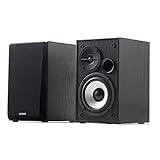
- 24 WATTS RMS POWER OUTPUT - Active bookshelf speaker system with 24W total power output with calibrated, flared bass reflex port in front.
- CLASSIC WOOD FINISH - 100% wooden enclosures to minimize acoustic resonance.
- CABLES INCLUDED - RCA and 3.5mm cables and speaker wire included. Universal 110V-240V power supply.
- 2 X AUX INPUT - Convenient connection to any device that has a 3.5mm headphone output or dual RCA output. Connect to two devices via AUX at the same time, no plugging and switching needed.
- IMMERSIVE SOUND - Fill your space with rich, immersive audio, creating a captivating listening environment for music, movies, and more.
When comparing speakers, distinguish frequency range from response tolerance, maximum output, sensitivity, distortion, and amplifier requirements. A frequency figure at -6 dB is not flat output at that frequency, and an in-room response depends on the room and placement as well as the speaker.
Set the amplifier or receiver for no subwoofer
If you use an AV receiver, configure it so bass is sent to the two speakers rather than to a subwoofer that is not connected. Menu names differ by manufacturer, so use the manual for your exact model. On many receivers, “Large” means full-range signal handling, not that a speaker is physically large. A Harman Kardon AVR manual, for example, defines full range in terms of frequency response and discusses using full-range front speakers when no subwoofer is present. Consult the AVR170 manual for its terminology and settings.
- In the speaker setup menu, set Subwoofer to No or None.
- Set the front left and right speakers to Large, Full Range, Full Band, or the equivalent option.
- Check that a front-speaker crossover is not diverting low frequencies to a nonexistent subwoofer.
- Begin in Stereo or Direct mode, then check the receiver manual to understand what processing each mode applies.
- Start with tone controls flat. Add bass or loudness enhancement only after confirming the configuration and placement.
Do not assume that setting the fronts to “Small” with a crossover is harmless when no subwoofer is connected. Depending on the receiver and mode, frequencies below that crossover may have nowhere to go. Labels such as LFE+Main, Double Bass, Bass Out, and Extra Bass are model-specific; do not change them based on the label alone.
A basic two-channel amplifier may have no speaker-size or crossover menu. Connect the source and speakers according to the amplifier’s instructions, and check that the speakers’ impedance and power requirements are compatible with the amplifier. A manufacturer’s recommended amplifier range is a compatibility guide, not a guarantee of sound quality.
Quick wins for a faster PC:
Repair Windows errors before they cause bigger problemsFix Now →Scan for outdated or missing drivers - takes under a minuteDriver Scan →Clear out junk files and repair common Windows errorsFree Scan →Rank #3
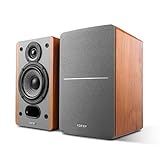
- RECEIVER OR AMPLIFIER REQUIRED – Connect an amplifier or receiver to power these speakers to your taste. Speaker wires included. Receive and Amplifier sold separately
- SILK DOME TWEETERS – High quality 19mm (3/4 inch) tweeters reproduces treble in every detail
- 4-INCH BASS DRIVERS – Balanced natural sound with the 4-inch driver and a bass reflex port to enhance bass. 6 ohm impedance
- WALL-MOUNT BRACKET BUILT-IN – Hang these speakers on the wall as rear surround speakers for your home theater
- IMMERSIVE SOUND - Fill your space with rich, immersive audio, creating a captivating listening environment for music, movies, and more.
What happens to movie bass without a subwoofer?
Receivers can handle multichannel movie sound in different ways when the subwoofer setting is “None.” Depending on the receiver and listening mode, surround channels may be downmixed to left and right, and low-frequency content may be redirected to the front speakers. LFE handling also depends on the receiver’s bass-management design. A stereo or direct mode may apply different processing from a surround mode.
Because behavior varies, check the exact receiver manual for what happens to LFE and redirected bass when no subwoofer is connected. Do not assume every receiver routes these signals identically or that every listening mode preserves them in the same way.
Place the speakers and listening seat carefully
Room position can change bass balance substantially. Reflections and room modes can create peaks and nulls, making some notes boomy and others faint. Moving a speaker or the listening seat can help more than changing electronics. Audioholics discusses speaker placement and room effects in its loudspeaker placement guide.
- Arrange the speakers symmetrically around the main seat, with similar distances to the side walls.
- Start with the speakers and listening position forming an approximately equal-sided triangle.
- Place tweeters near seated ear height, using stable stands for bookshelf speakers rather than leaving them loosely positioned on furniture.
- Angle the speakers toward the seat a little at a time and listen for a stable, centered image.
- Follow the speaker maker’s rear-wall clearance guidance, especially for rear-ported models. Move speakers forward or back in small increments to compare bass balance.
- Avoid putting one speaker in a corner while the other is in open space, and try not to sit exactly at the room’s center.
Near-wall placement often increases bass, but it can also make bass uneven or boomy. More clearance may help one speaker design and weaken bass in another room; adjust by listening from the normal seat rather than relying on a universal wall-distance rule.
Crashes, No Sound, or Screen Glitches?
Random freezes, missing sound and display glitches usually trace back to one bad driver. Find and replace yours safely.Free scan · under a minutePC Slower Than It Used to Be?
A free scan shows the junk files, broken settings and background clutter dragging Windows down - then fixes them in one click.Free scan · Windows 10 & 11Rank #4

- 𝐁𝐥𝐮𝐞𝐭𝐨𝐨𝐭𝐡 5.3 𝐁𝐨𝐨𝐤𝐬𝐡𝐞𝐥𝐟 𝐒𝐩𝐞𝐚𝐤𝐞𝐫𝐬: Pair the bookshelf speakers with your smartphone, tablet, Mac, or PC to play music wirelessly, no need to deal with messy wires. To use your turntable with our Bluetooth speakers: Your turntable must have Bluetooth transmitter/output(for connecting Bluetooth speakers and headphones). If your turntable only has a Bluetooth receiver/input (like most built-in speaker turntables for connecting mobile phones), it won’t work with our speakers. Check your turntable’s specs before ordering!
- 𝐌𝐮𝐥𝐭𝐢𝐩𝐥𝐞 𝐖𝐢𝐫𝐞𝐝 𝐈𝐧𝐩𝐮𝐭𝐬 : The speakers are built with Optical and coaxial inputs and Convenient connection to any device that has a 3.5 mm headphone output or dual RCA output; The Speakers can be Connected with Record Player Directly via LINE OUT, while a Preamplifier is Required if the Record Player has only PHONO output; Plug the speaker wire into "L SPK OUT" on the main to Connect the two speakers
- 𝐑𝐞𝐦𝐨𝐭𝐞 & 𝐁𝐮𝐭𝐭𝐨𝐧𝐬 𝐂𝐨𝐧𝐭𝐫𝐨𝐥: The active bookshelf speaker(𝐃𝐢𝐦𝐞𝐧𝐬𝐢𝐨𝐧 : 𝟓.𝟑 𝐖*𝟔.𝟑 𝐃*𝟖.𝟔𝐇 𝐢𝐧𝐜𝐡) comes with a remote control allowing you to adjust the volume and toggle inputs at your fingertips: mute/unmute, switch to OPT/COAX mode, line-in, and Bluetooth modes. Remote is replaceable lifetime. You can also control the speakers via buttons on top of it; Remote is compatible with Fire TV stick
- 𝐀𝐜𝐭𝐢𝐯𝐞 𝐁𝐨𝐨𝐤𝐬𝐡𝐞𝐥𝐟 𝐒𝐩𝐞𝐚𝐤𝐞𝐫𝐬: This is a pair of active and passive bookshelf speakers which do not require a pre amp, and also built with 0.5 inch silk dome HORN tweeter and 𝟑.𝟕𝟓 𝐢𝐧𝐜𝐡 𝐰𝐨𝐨𝐟𝐞𝐫, bringing you a surround home theater listening experience
- 𝐀𝐦𝐩𝐥𝐢𝐟𝐢𝐞𝐫 𝐨𝐫 𝐑𝐞𝐜𝐞𝐢𝐯𝐞𝐫 𝐢𝐬 𝐧𝐨𝐭 𝐫𝐞𝐪𝐮𝐢𝐫𝐞𝐝, and If you still want to use amplifier or receiver with the bookshelf speakers, please connect via Line Out of the amplifier or receiver.
Check whether your two speakers are sufficient
Use familiar material at your normal listening level, rather than judging the setup from one song or a single bass-heavy movie scene. Try speech, acoustic bass and kick drum, electronic music with sustained low notes, piano or organ, and a film scene with both dialogue and effects.
- Does bass vanish on certain notes, or is it consistently too quiet?
- Does it sound boomy or like the same note is emphasized repeatedly?
- Does bass seem adequate at low volume but collapse or distort when you turn it up?
- Does increasing bass mask voices?
- Does the soundstage shift because the speakers or seat are positioned asymmetrically?
A short low-frequency sweep can help reveal uneven response, but play it cautiously at moderate volume. Sustained low-frequency test tones can stress small woofers faster than ordinary music.
Independent reader supportYour contribution helps us test, update, and keep practical guides available for everyone.Troubleshoot common 2.0 problems
No bass
- Confirm the receiver says Subwoofer: None and the front speakers are set to full range or the equivalent.
- Check for a crossover that sends bass to an unconnected subwoofer and try Stereo mode to compare routing.
- Verify both speakers are connected, playing, and wired with matching polarity.
- Turn off night, dialogue, or other processing modes that may reduce bass.
Boomy or uneven bass
- Move the speakers away from corners or adjust their distance from the wall.
- Try a different listening-seat position.
- Reduce bass boost and check that an enhancement mode is not active.
Thin bass
- Try moving the speakers slightly closer to the front wall or the seat away from a room null.
- Confirm there is no unintended crossover, and check speaker polarity.
- If bass remains insufficient at your normal volume, consider speakers with more low-frequency output or adding a subwoofer.
Distortion at moderate volume
Small speakers pushed to reproduce deep bass, excessive bass boost, an amplifier driven into clipping, damaged drivers, or loose wiring can all cause distortion. Reduce volume and bass boost, inspect the connections, and test each speaker separately. Check the amplifier’s impedance requirements. Stop playing if a woofer scrapes, pops, or bottoms out.
Vague or off-center stereo image
Check equal speaker-to-seat distances, left-right wiring, symmetry, toe-in, and nearby reflections from walls or furniture. A speaker that is much closer or louder than the other can pull the apparent center to one side.
Free tools Windows power users keep installed
One-click scans. No signup required.
Best Value

- 2 x AUX INPUT - Convenient connection to any device that has a 3.5mm headphone output or dual RCA output. Connect to two devices via AUX at the same time, no plugging and switching needed.
- STUDIO SOUND QUALITY - Natural sound reproduction from 13mm silk dome tweeter and 4 inch full range unit
- REMOTE CONTROL - Adjust volume at your figure tips. Bass and treble control located on the side of main speaker.
- CLASSIC WOOD FINISH - High quality MDF wood build finished with wood effect vinyl serves as a great compliment to any home decor.
- SIDE PANEL CONTROLS - Use the side panel knobs to adjust the EQ to your liking.
When should you add a subwoofer?
Add one to solve a defined shortfall: missing deep bass, insufficient output, audible strain, or a desire for more movie impact. A subwoofer can play lower and louder than many main speakers, and correct bass management can reduce the low-frequency burden on those speakers. It also offers more flexibility in locating the bass source. It does not automatically improve a system: poor placement or integration can create boom, a crossover gap, excessive bass, localization, or timing problems.
Dolby notes that bass is generally difficult to localize around a typical 80 Hz crossover, but room interaction and setup still matter. Dolby’s subwoofer guide describes this in the context of subwoofer-equipped systems. An 80 Hz crossover is a common starting point for systems with a subwoofer, not a setting to apply to a 2.0 system with nowhere to send redirected bass. Audioholics likewise discusses crossover setup in its advice for upgraded home-theater systems.
- Stay with 2.0 if simplicity, moderate listening, limited bass disturbance, or a compact system matters more than maximum depth and impact.
- Consider bookshelf speakers plus a subwoofer when speakers need to stay compact but music and movie bass matter. This works best with an amplifier or receiver that supports appropriate bass management and a room where subwoofer placement can be adjusted.
- Consider floorstanding speakers without a subwoofer if you have the space, want a simple stereo system, and need more output from the main pair.
- Choose a surround system if discrete surround effects, a physical center channel for multiple seats, or strong movie LFE impact is a priority.
Buying checks before replacing anything
First verify your receiver settings and reposition your existing speakers; either change may address the problem at no cost. If you do shop, assess the complete system rather than choosing by cabinet size or a single frequency number.
- Look for bass-response measurements and note the stated tolerance and measurement conditions.
- Check sensitivity, nominal and minimum impedance, and amplifier requirements.
- Look for maximum-output or distortion information where available.
- Account for dimensions, stand requirements, port location, and the distance the speakers can sit from walls.
- Audition at your normal listening level and use the return policy or trial period to check performance in your room.
Room correction can help optimize frequency balance and imaging, but it cannot make a small speaker deliver unlimited deep bass or remove its physical output limits. Yamaha identifies YPAO room-acoustic adjustment as a feature of the R-N600A network receiver/integrated amplifier; consult Yamaha’s R-N600A specifications for model details.
The Tool Desk
Outbyte Driver Updater FREEFix the driver behind crashes, sound loss and screen glitchesFind Drivers →Outbyte PC Repair FREEClear out junk files and repair common Windows errorsFree Scan →Quick Recap
Product prices and availability are accurate as of the date/time indicated and are subject to change. Any price and availability information displayed on Amazon at the time of purchase will apply.

