
What’s actually slowing this PC down?
Pick the symptom - the matching free tool is one click away.
Arch Linux is learnable, but it is not the easiest first Linux distribution. A manual installation asks you to design and assemble the system instead of clicking through a conventional desktop wizard. The official archinstall program makes the first setup easier, but the larger challenge is understanding and maintaining what you install afterward.
If you are curious, patient, and willing to read documentation, Arch is a reasonable learning project—especially in a virtual machine or on a spare drive. If you need a dependable work computer with minimal troubleshooting, Ubuntu LTS, Linux Mint, or a similar beginner-focused distribution is a better starting point.
Why Arch feels harder than beginner Linux distributions
Arch’s default approach is deliberately do-it-yourself. The installation guide assumes that you will consult additional ArchWiki pages and the documentation for individual programs, rather than follow one universal desktop recipe. See the official installation guide.
A typical Ubuntu or Mint installation gives you a ready desktop, sensible defaults, common drivers, networking, audio, and basic applications. Arch starts much closer to an empty foundation. You choose the filesystem, boot method, kernel-related packages, network service, desktop environment, display manager, and applications.
Recommended Free Tools
#1 Best Overall
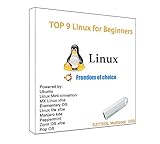
- 1. 9-in-1 Linux:32GB Bootable Linux USB Flash Drive for Ubuntu 24.04 LTS, Linux Mint cinnamon 22, MX Linux xfce 23, Elementary OS 8.0, Linux Lite xfce 7.0, Manjaro kde 24(Replaced by Fedora Workstation 43), Peppermint Debian 32bit (being replaced by MX Linux 32bit) for older PC, Pop OS 22, Zorin OS core xfce 17. The versions you received might be latest than above as we update them to latest/LTS when we think necessary.
- 2. Try or install:Before installing on your PC, you can try them one by one without touching your hard disks.
- 3. Easy to use: These distros are easy to use and built with beginners in mind. Most of them Come with a wide range of pre-bundled software that includes office productivity suite, Web browser, instant messaging, image editing, multimedia, and email. Ensure transition to Linux World without regrets for Windows users.
- 4. Support: Printed user guide on how to boot up and try or install Linux; please contact us for help if you have an issue. Please press "Enter" a couple of times if you see a black screen after selecting a Linux.
- 5. Compatibility: Except for MACs,Chromebooks and ARM-based devices, works with any brand's laptop and desktop PC, legacy BIOS or UEFI booting, Requires enabling USB boot in BIOS/UEFI configuration and disabling Secure Boot is necessary for UEFI boot mode. Packing: The bootable USB drive comes in a colored PET/CPP zipper bag with instructions on how to get started. The box pictured is not included.
There is no single “correct” Arch computer. A UEFI laptop with encrypted Btrfs storage has different instructions from a legacy-BIOS desktop, a Windows dual-boot system, or a simple virtual machine.
How difficult is the installation in practice?
Manual installation
The broad sequence looks like this:
- Boot the official ISO and establish a network connection.
- Confirm firmware mode and internet access.
- Identify the target disk and create partitions.
- Format the partitions and mount them under
/mnt. - Install the base system with
pacstrap. - Generate
/etc/fstab. - Enter the new system with
arch-chroot. - Set the timezone, locale, hostname, users, passwords, networking, initramfs, and bootloader.
- Install a kernel, firmware, desktop environment or window manager, graphics support, audio, and desired applications.
- Reboot, then diagnose anything that does not start.
These are separate decisions, not pages in one graphical wizard. Partitioning and boot configuration are the riskiest steps: formatting the wrong device can destroy Windows or another Linux installation, while an incorrect EFI mount or bootloader setup can leave a seemingly successful installation unable to start.
What the command sequence means
For illustration, the general early sequence may resemble the following. Replace device names with the ones that actually belong to your machine; disk-formatting commands are destructive.
timedatectl
lsblk
fdisk /dev/nvme0n1
mkfs.fat -F 32 /dev/nvme0n1p1
mkfs.ext4 /dev/nvme0n1p2
mount /dev/nvme0n1p2 /mnt
mount --mkdir /dev/nvme0n1p1 /mnt/boot
pacstrap -K /mnt base linux linux-firmware
genfstab -U /mnt >> /mnt/etc/fstab
arch-chroot /mnt
This is not a universal installation script. Encryption, swap, Btrfs subvolumes, CPU microcode, EFI layout, bootloader, networking, and desktop choice all change the required commands. Use the current ArchWiki guide as the authoritative procedure.
Using archinstall
archinstall is an official guided installer included in the Arch live environment, not a separate distribution. Start it with:
Rank #2

- ✅For beginners, refer image-7, its a video boot instruction, and image-6 is "boot menu Hot Key list"
- ✅16-IN-1, 64GB Bootable USB Drive 3.2 , Can Run Linux On USB Drive Without Install, All Latest versions.
- ✅Including Windows 11 64Bit & Linux Mint 22.3 (Cinnamon)、Kali 2026.02、Ubuntu 26.04、Zorin Pro 18、Tails 7.8.1、Debian 13.5.0、Garuda 2026.03、Fedora Workstation 44、Manjaro 25.06、Pop!_OS 22.04、Solus 2026.04、Archcraft 26.05、Neon 2026.06、Fossapup 9.5、Sparkylinux 8.3, All ISO has been Tested
- ✅Supported UEFI and Legacy, Compatibility any PC/Laptop, Any boot issue only needs to disable "Secure Boot"
archinstallIt reduces repetitive typing and presents choices for storage, bootloader, profile, networking, and users. It does not remove the need to understand which disk you are selecting, whether the machine boots with UEFI, how encryption works, or what components your chosen profile installs. Its defaults differ from a purely manual installation, so read the relevant sections of the Archinstall documentation before using it on a real disk. When asking for support, identify that the system was installed with archinstall.
What happens after the first reboot?
A successful boot may still leave you with only a command prompt. Arch does not automatically provide a complete graphical desktop. You normally assemble several layers:
- Base system and kernel.
- Firmware and CPU microcode appropriate to your hardware.
- A network manager and working connection.
- A text editor and basic command-line utilities.
- A desktop environment such as GNOME or KDE Plasma, or a window manager.
- Graphics support, audio, fonts, a browser, and optional services such as printing or Bluetooth.
- A display manager if you want a graphical login screen.
Exact package names and setup steps depend on your hardware and desktop. Avoid copying a large package list from an old article; follow the current ArchWiki pages for the components you choose.
The Tool Desk
Outbyte PC Repair FREEClear out junk files and repair common Windows errorsFree Scan →Outbyte Driver Updater FREEFix the driver behind crashes, sound loss and screen glitchesFind Drivers →Is Arch difficult to run and maintain?
Daily commands are straightforward:
sudo pacman -Syu
sudo pacman -S package-name
pacman -Ss search-term
sudo pacman -R package-name
The important difference is Arch’s rolling-release model. Updates arrive continuously instead of as occasional major-version upgrades. The ArchWiki maintenance guidance expects users to update regularly, read relevant announcements, keep backups, and perform manual intervention when a package or configuration change requires it.
Arch is not guaranteed to break, but it assigns you more responsibility than a conservative, beginner-oriented distribution. Long periods without updates can make a later upgrade more complicated. Graphics stacks, bootloaders, initramfs configuration, unusual hardware, and third-party packages are common places where an update may require investigation.
Rank #3

- Dual USB-A & USB-C Bootable Drive – works with almost any laptop or desktop (UEFI & Legacy BIOS). Boot Tails directly from the USB for secure, private sessions on any computer.
- Customizable Outside Tails – you may Add / Replace / Upgrade any other compatible bootable ISO app, installer, or utility on the USB without modifying Tails itself. You can also update Tails at any time by adding the latest Tails ISO.
- Designed for Privacy & Anonymity – Tails routes all internet traffic through Tor for maximum online privacy and protection against tracking or surveillance. Leave No Trace – your sessions run entirely from the USB and don’t touch the host system. When you shut down, no activity or data remains on the computer.
- Bypass Censorship & Access the Web Freely – browse and communicate securely from anywhere with built-in encryption and privacy tools. No Installation Required – run Tails LIVE directly from the USB. Perfect for journalists, researchers, or anyone who values freedom and security online.
- Premium Hardware & Reliable Support – built with high-quality flash chips for speed and longevity. TECH STORE ON provides responsive customer support within 24 hours.
Useful diagnostic commands
systemctl --failed
systemctl status service-name
journalctl -b
journalctl -p 3 -b
These commands expose failed services and boot errors; they do not replace reading the relevant documentation.
The Arch User Repository
The AUR contains user-maintained build instructions, not packages maintained in exactly the same way as Arch’s official repositories. Inspect a build script before using it. An AUR helper can be convenient, but it can also hide what is being built or installed. AUR packages may become outdated, fail after an update, conflict with official packages, or introduce trust and security concerns. Beginners should first become comfortable with the official repositories and treat the AUR as an advanced extension.
Common problems and what they usually mean
The installed system will not boot
Check firmware mode, the selected bootloader, EFI-partition mounting, kernel and root configuration, Secure Boot complications, and whether the computer is booting the intended disk. A usual recovery path is to boot the ISO, mount the installed system, enter it with arch-chroot, and repair the boot configuration.
No network after installation
The live ISO having internet access does not guarantee that the installed system has a network service enabled. Possible causes include missing firmware, an unconfigured NetworkManager service, Wi-Fi authentication, a changed interface name, or virtual-machine networking settings.
Black screen or no graphical login
Often the desktop or display manager was never installed or enabled. Other causes include GPU firmware or driver issues, Wayland/X11 configuration, or installing a window manager without its supporting components.
Rank #4

- 1. 3IN1: Multiboot USB flash drive includes Linux Mint Cinnamon 22 & 21.3 64bit and Linux Mint Cinnamon 19 32bit.It's suitable to both older PC and new computers.You can always try on USB before install. The versions you received might be latest than above as we update them when we think necessary.
- 2. What is Linux Mint: Linux Mint is designed to work 'out of the box' and comes fully equipped with the apps most people need, such as graphic design, office software, web browser, multimedia and gaming.
- 3. Why choose Linux Mint: works out of the box, easy to use, requires little maintenance, safe, fast and comfortable.
- 4. Compatibility: This Multiboot USB is compatible with any brands' PC such as HP,Dell,Lenovo,Samsung,Toshiba,Sony,Acer,Asus except for Apple computers, Chromebooks and ARM-based devices, and works with both legacy BIOS and UEFI booting modes. When using UEFI boot mode, secure boot needs to be disabled in BIOS settings.
- 5. User Guide & Support: Print user guide and support available. please contact us for help if you have an issue.
An update causes trouble
Read Arch announcements and the package or project notes for the affected component. Manual intervention, an AUR build failure, a changed graphics stack, or a stale boot configuration may be involved. “Arch always breaks” is inaccurate; “updates never need troubleshooting” is also inaccurate.
Quick wins for a faster PC:
Fix the driver behind crashes, sound loss and screen glitchesFind Drivers →Repair Windows errors before they cause bigger problemsFix Now →Scan for outdated or missing drivers - takes under a minuteDriver Scan →Hardware, media, and safe preparation
The installation guide updated July 23, 2026 lists x86_64 support, a stated minimum of 512 MiB RAM, and a basic installation requiring less than 2 GiB of disk space. Those are not comfortable desktop requirements: the live environment needs more memory in practice, and a graphical system needs considerably more storage.
The official download page listed release 2026.07.01, kernel 7.0.14, and a 1.5 GB ISO when checked August 18, 2026. These figures change; check the current download page before downloading. Verify the ISO using the BLAKE2b checksum or PGP instructions published there.
Before a physical installation, have:
- A current backup of important files.
- A reliable internet connection and a second device for documentation.
- A USB drive for the ISO.
- A spare computer, spare disk, or virtual machine for practice.
Why a virtual machine is the safest first attempt
A VM lets you practice booting an ISO, partitioning a disposable disk, creating users, installing a desktop, rebooting, and recovering from mistakes without risking your main installation. Oracle provides VirtualBox downloads for Windows, macOS, Linux, and Solaris; its base packages are listed as available under GPLv3 at the official download page.
A VM cannot reproduce laptop-specific problems such as GPU drivers, Wi-Fi, battery life, suspend and resume, touchpad gestures, Bluetooth, hybrid graphics, fingerprint readers, external displays, or Secure Boot. Treat it as installation practice, not a complete hardware-compatibility test.
Free tools Windows power users keep installed
One-click scans. No signup required.
Best Value

- Dual USB-A & USB-C Bootable Drive – works with almost any desktop or laptop computer (new and old). Boot directly from the USB or install Linux Mint Cinnamon to a hard drive for permanent use.
- Fully Customizable USB – easily Add, Replace, or Upgrade any compatible bootable ISO app, installer, or utility (clear step-by-step instructions included).
- Familiar yet better than Windows or macOS – enjoy a fast, secure, and privacy-friendly system with no forced updates, no online account requirement, and smooth, stable performance. Ready for Work & Play – includes office suite, web browser, email, image editing, and media apps for music and video. Supports Steam, Epic, and GOG gaming via Lutris or Heroic Launcher.
- Great for Reviving Older PCs – Mint’s lightweight Cinnamon desktop gives aging computers a smooth, modern experience. No Internet Required – run Live or install offline.
- Premium Hardware & Reliable Support – built with high-quality flash chips for speed and longevity. TECH STORE ON provides responsive customer support within 24 hours.
Arch, EndeavourOS, or Ubuntu LTS?
| Criterion | Arch | EndeavourOS | Ubuntu LTS |
|---|---|---|---|
| Initial setup | Manual or guided command-line installer | Graphical installer based on Calamares | Conventional graphical installer |
| Default desktop | You choose and configure it | Preselected desktop choices with project defaults | Ready-to-use desktop |
| Control | Highest | High | Moderate |
| Maintenance burden | Highest of the three | Moderate to high | Lower for beginners |
| Release model | Rolling | Arch-based rolling | LTS release model |
| Best fit | Learning, customization, and a minimal build | Arch ecosystem with an easier graphical setup | First Linux desktop and dependable everyday use |
EndeavourOS
EndeavourOS is Arch-based, not identical to vanilla Arch. Its development documentation describes a live ISO and Calamares-based graphical installation, while its official site positions the system as terminal-centric. It is a useful bridge if you want Arch-compatible software and a lighter initial setup, but it still follows the rolling, documentation-heavy model more closely than Ubuntu or Mint. See its development documentation and official site.
Ubuntu LTS
Ubuntu’s official desktop page described Ubuntu 26.04 LTS as the current LTS release when checked, with five years of free security and maintenance updates and longer coverage available through optional Ubuntu Pro. Release names and support terms change, so confirm the current details at Ubuntu’s official download page.
Does Arch run faster or offer better security?
Arch is not automatically faster because it is Arch. A minimal installation can use fewer resources than a distribution that ships many services, but desktop choice, drivers, startup services, browser workload, applications, hardware, and filesystem configuration usually matter more. You can create a lean system—or install a heavy desktop and many background services.
Arch is not inherently more secure either. Fewer installed services can reduce unnecessary exposure, but security depends on timely updates, trusted sources, permissions, firewall and network configuration, backups, appropriate encryption, and ordinary user behavior. Use an unprivileged account for normal work rather than remaining logged in as root, as recommended by the ArchWiki.
Who should try Arch?
- You are curious about how Linux fits together.
- You can follow technical documentation and type commands accurately.
- You have time to troubleshoot instead of needing instant recovery.
- You are willing to start in a VM or on spare hardware.
- You want control over every installed component.
Who should choose something else first?
- You are completely new to Linux and need a work-critical computer today.
- You want a ready desktop with minimal terminal use.
- You prefer conservative updates and a vendor-supported default configuration.
- You do not have a backup or a recoverable way to undo disk changes.
- You expect every hardware feature to work without researching drivers or services.
A low-risk path for a newcomer
- Download the current official Arch ISO and verify its checksum or signature.
- Install it in a VM such as VirtualBox, or use a spare disk.
- Read the current installation guide before launching any installer.
- Use manual installation if learning the system is the goal; use
archinstallif you want guided choices but still understand the consequences. - After rebooting, test networking, audio, graphics, suspend or reboot behavior, package installation, and a full update.
- Take a snapshot or make a backup before experimenting with the AUR, new drivers, or major configuration changes.
The Bottom Line
Arch is harder than Ubuntu, Mint, or Fedora for a first installation, but it is not beyond a motivated newcomer. Use a VM or spare hardware, read the ArchWiki, and choose archinstall only with a basic understanding of the decisions it presents. For the least frustrating first Linux experience, start with Ubuntu LTS or Mint; choose EndeavourOS if you want an Arch-based system with a graphical installer; choose vanilla Arch when learning and control matter more than convenience.
Quick Recap
Product prices and availability are accurate as of the date/time indicated and are subject to change. Any price and availability information displayed on Amazon at the time of purchase will apply.

