
The ODG R-7 was not simply a notification screen in eyeglass form. In a 2014 demonstration, it recognized a physical terrain map, built a three-dimensional representation, and placed a live UAV feed above it with the aircraft’s position shown relative to the model. That was an unusually ambitious example of spatial augmented reality for its time.
It was also an early-revision prototype aimed primarily at government and industrial work, not a finished consumer product. The hands-on report describes impressive AR concepts alongside front-heavy hardware, substantial heat, and unresolved questions about endurance, tracking, availability, and support. The original report is available at 6D Online.
What the ODG R-7 was
Osterhout Design Group’s R-7 was an optical-see-through augmented-reality glasses platform demonstrated in 2014. Its displays allowed the wearer to see the real environment directly while digital graphics were layered into that view. The device was associated with Qualcomm’s Vuforia for Digital Eyewear platform, which was intended to help developers register digital content against recognized real-world objects.
The demonstrated unit was explicitly described as an early revision and effectively a prototype. Consequently, its reported specifications and behavior should not be read as guaranteed final retail specifications. ODG’s primary focus was government and industrial use; consumer applications such as navigation and notifications were suggested possibilities rather than documented shipped features.
Free tools Windows power users keep installed
One-click scans. No signup required.
#1 Best Overall

- 【8MP HD Camera & 4K Ultra HD】Experience authentic first-person perspectives with an upgraded 8MP ultra HD camera. 4K resolution delivers clear, detailed imagery, while multi-frame noise reduction and advanced anti-shake technology help enhance image clarity for travel, cycling, outdoor sports, family gatherings and everyday adventures.
- 【AI Voice Assistant & Intelligent Object Recognition】Powered by the advanced ChatGPT model, the AI assistant supports real-time Q&A, daily planning and intelligent recommendations. These smart glasses also feature AI object recognition, which can instantly identify landmarks, plants, animals and everyday items, making them an ideal smart companion for travel, shopping, learning and exploring the world.
- 【139 Languages Real-Time AI Translation】Break down language barriers effortlessly with AI translation across 139 languages. Ideal for international travel, business communication, academic exchanges and cross-border socializing, these smart glasses help make multilingual conversations more natural, convenient and efficient.
- 【Open-Ear Hi-Fi Audio & Dual-Mic ENC Noise Cancellation】Enjoy immersive premium sound while staying fully aware of your surroundings with our open-ear headphone design. These bluetooth smart glasses are built with advanced dual-microphone ENC noise reduction technology, which effectively suppresses wind and ambient noise, ensuring crystal-clear hands-free calls and stable music playback even in noisy outdoor, cycling and commuting scenarios.
- 【Photochromic Lenses, Suitable for Any Scenes】Designed for all-day comfortable wear, AI glasses feature an ultra-lightweight frame and integrated photochromic lenses. The lenses automatically darken in sunlight for UV protection and return to a clear state indoors. A built-in 290mAh battery delivers long-lasting power for full-day use, fitting perfectly with all scenes of daily life, work and outdoor adventures.
What “augmented reality” meant on the R-7
Optical see-through, not video passthrough
The R-7 used see-through displays. The wearer looked through the optics at the physical world while the two display panels added imagery. That differs from a video-passthrough headset, in which cameras capture the environment and screens show a processed video reconstruction.
Spatially registered content
The important step was registration: the system detected a terrain map and generated a 3D model that could be viewed from different angles. Digital content was therefore related to a real object, rather than merely floating in a fixed corner of the wearer’s vision.
The available report does not establish that the R-7 used modern room-scale SLAM, depth sensing, or a particular visual-inertial tracking architecture. The reviewer observed that the demonstrated alignment did not appear to require a 3D camera, but that observation does not document the complete sensor suite.
Reported hardware specifications
The following figures come from the 2014 hands-on account and describe the demonstrated early unit. They are reported specifications, not independently verified final-production values.
Rank #2
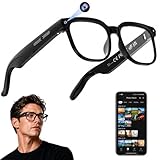
- 【AI Real-Time Translation & ChatGPT Assistant】AI glasses break language barriers instantly with AI real-time translation. The built-in ChatGPT voice assistant helps you communicate, learn, and handle travel or business conversations smoothly—ideal for conferences, overseas trips, and daily use.
- 【4K Ultra HD】 Smart glasses feature 4K resolution for clear, detailed visuals, making them suitable for travel, outdoor activities, everyday moments, and daily use.
- 【Bluetooth Music & Hands-Free Calls 】Smart glasses provide Bluetooth music and crystal-clear hands-free calls with an open-ear design. Stay aware of your surroundings while listening—comfortable for long wear and safer for commuting, cycling, and outdoor use.
- 【IP65 Waterproof & Long Battery Life】 AI glasses are designed for daily wear with IP65 waterproof protection against sweat, rain, and dust. The built-in 290mAh battery provides reliable performance for workdays and travel—no anxiety when you’re on the go.
- 【Smart App Control & Object Recognition】Smart glasses connect to the companion app for easy setup, file management, and feature control. They support AI object recognition to help identify items and improve your daily efficiency—perfect for travel exploration and a smart lifestyle.
| Component | Reported detail | Qualification |
|---|---|---|
| Processor | Qualcomm Snapdragon 805 at 2.7 GHz | Reported for the demonstration unit |
| RAM | 1–4 GB | Configuration range; the report does not identify one retail configuration |
| Storage | 16–128 GB | Configuration range |
| Displays | Two 720p LCoS displays | Optical-see-through system |
| Refresh rate | 100 Hz | Reported specification |
| Camera | Front-facing 5-megapixel camera | Its precise roles are not fully documented |
| Battery | 1,400 mAh total | Described as one battery on each side of the frame |
| Target market | Government and industrial | Consumer use was speculative |
The report does not establish the R-7’s exact weight, field of view, battery runtime, operating-system version, connectivity standards, IP rating, tracking latency, or production price.
What wearing the prototype was like
Front-heavy construction
Most of the electronics were concentrated around the front of the glasses, making the prototype noticeably front-heavy. A heat sink ran along the top. Those choices illustrate the central engineering problem of early standalone AR glasses: fitting a processor, display system, camera, batteries, and thermal hardware into something that still behaves like eyewear.
Heat was a practical limitation
The hands-on account says the device became noticeably hot during operation. The reviewer informally estimated the prototype’s surface temperature at approximately 50–60°C; that was a tactile estimate, not a controlled laboratory measurement, and it should not be generalized to a final product. Even without treating that number as an engineering specification, the observation matters: thermal comfort was part of the R-7 experience, not a minor detail.
There is no published runtime measurement in the available account, so it is not possible to say whether the 1,400 mAh battery could support a work shift. For field deployment, balance, skin temperature, runtime, and serviceability would be as important as the AR demo itself.
Rank #3

- 【AI Smart Translation Glasses】 - These smart glasses(No Camera) with built-in ChatGPT voice assistant, support real-time translation over 160 languages, simultaneous interpretation, meeting audio recording transcription. Helps you to suit any scenario and effortlessly break language barriers. Note: This model has no camera, all functions run via audio.
- 【Bluetooth Audio & Hands-Free Calling 】 - With Bluetooth 5.4 stable connection and open-ear design, our AI smart glasses features 3D surround sound music, delivering immersive audio directly to your ears. Built-in HD microphone ensures crystal-clear hands-free calls.
- 【Ultra-Lightweight Design with Gradient Lenses】 - Our smart glasses using medical-grade skin-friendly material, featured ergonomic design, 3D facial fitting, C-shaped wrap-around temples, and apple-arc nose pads that reduce pressure by 50% for all-day comfort up to 8 hours. The lenses will turn gray when exposed to sunlight, instantly transforming into stylish sunglasses, shielding eyes from harsh light and keeping us comfortable at all times.
- 【Extra-long Battery Life】 - AI bluetooth audio glasses equipped with 220mAh high-quality battery that takes only 1 hour to fully charge and can play continuously for up to 11 hours, solving battery anxiety. IP65 waterproof protection against sweat, rain, and dust, ideal for daily use and travel.
- 【Practical Flashlight & All-in-one Button】 - The integrated flashlight in AI glasses provides hands-free illumination, supports long-time walking and reading in dark. While the all-in-one button enables seamless control of power/flashlight/answering/hanging up/playing/pausing and wake-up the voice assistant —all with intuitive presses.
The terrain-map and UAV demonstration
The clearest evidence of what ODG wanted the R-7 to do came from one workflow:
- A physical terrain map was presented to the glasses.
- The system recognized the map.
- It converted the map into a three-dimensional model.
- The wearer could inspect that model from different viewpoints.
- A live UAV feed appeared above the map.
- A 3D indicator showed the UAV’s position in relation to the terrain model.
This combination is more meaningful than a generic floating notification. A conventional screen can show a map and a video feed, but the R-7 demonstration attempted to bind the feed to a spatial model while leaving the operator’s hands and direct view available. That appears well suited to mission planning, industrial visualization, or field situational awareness.
The demonstration does not prove autonomous UAV control, military-grade targeting, reliable outdoor navigation, or production-ready field performance. It shows the intended interaction concept, not a complete operational system.
Why the Vuforia connection mattered
Qualcomm’s Vuforia for Digital Eyewear was presented as a platform-level way to reduce the custom work required to align digital content with recognized physical objects. In principle, developers could concentrate on the application while the platform handled important parts of recognition and registration.
Rank #4
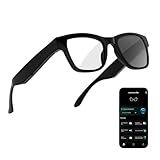
- 3-in-1 AI Glasses: Enjoy ① AI Voice Assistant (Powered by ChatGPT, Gemini & Deepseek), ② Stylish Photochromic Lenses Glasses, and ③ Bluetooth Open-Back Headphones, all in one.
- Free Talk Translation: Automatically detects and translates over 160 languages in real-time, allowing seamless work and translation without touching your phone or glasses.
- Voice, Video & Photo Translation: Supports over 98% of global languages, offering fast and accurate translations—ideal for international travel, business meetings, or cross-cultural communication.
- AI Meeting Assistant: Converts recordings from smart glasses into text and generates mind maps, making it easier to capture and organize meeting insights.
- Long Battery Life, Bluetooth 5.4 & Eye Protection: Up to 10 hours of music and 8 hours of talk time, with easy Type-C charging. Bluetooth 5.4 ensures stronger, stable connections, while photochromic lenses block UV rays and blue light, protecting your eyes in any environment.
That should not be interpreted as automatic, universally robust tracking. The available report does not provide SDK version information, API details, supported-device matrices, latency figures, accuracy measurements, or a complete development workflow. Vuforia made the proposition more approachable; it did not, by itself, guarantee stable alignment in every environment.
Where the R-7 made sense
Strong enterprise fit
Hands-free access to a spatial model and live operational data is a defensible reason to use glasses rather than a phone or tablet. Potential applications included terrain visualization, UAV operations, field maintenance, remote assistance, navigation, workflow information, and notifications. Only the terrain/UAV scenario was directly demonstrated; the others were suggested or logical extensions.
Ambitious self-contained design
A Snapdragon 805-class processor, dual displays, camera, and onboard battery represented a serious attempt to put substantial computing capability on the wearer. The reported 100 Hz refresh rate was also notable for a 2014 wearable, although the available material does not provide optical measurements such as brightness, contrast, field of view, or alignment quality.
What held it back
- Ergonomics: the prototype was front-heavy rather than balanced like ordinary glasses.
- Thermals: noticeable heat and a top-mounted heat sink exposed the cost of on-device processing.
- Endurance uncertainty: the battery capacity was reported, but runtime was not.
- Prototype maturity: the hands-on unit was an early revision, so behavior and specifications could change.
- Consumer mismatch: the industrial mission could justify bulk and complexity that would be unacceptable for all-day consumer wear.
- Evidence gaps: tracking reliability, optical performance, software breadth, retail availability, and support were not established.
How it compared with period wearables
| Dimension | ODG R-7 | Typical consumer smartwatch | Google Glass-era display |
|---|---|---|---|
| Primary interface | See-through AR glasses | Wrist display | Limited optical heads-up display |
| Spatial AR | Terrain-map registration was demonstrated | Generally absent | More limited AR ambition |
| Target market | Government and industrial | Consumer | Consumer and developer |
| Main advantage | Hands-free visual context tied to a physical model | Convenience and notifications | Glanceable information |
| Main weakness | Size, heat, weight, and prototype maturity | Small display and attention shift to the wrist | Narrower spatial-AR scope |
The R-7 was not universally superior. Its glasses form factor offered a larger opportunity for spatial context, while its physical compromises made it less attractive as an everyday consumer wearable.
Best Value

- Blue Light Filtering/Photochromic and Replaceable lenses: Bluetooth smart glasses with blue light blocking technology lens for computer reading, gaming. UV400 photochromic lenses change from clear and blue light resistant indoors to dark and UV protected outdoors. Bluetooth glasses can be replaced with your own lenses for short-sighted person, helping replace the lenses that are suitable for own degree according to our needs.
- Bluetooth Smart Glasses with Integrated AI Voice Control: Smart glasses with Bluetooth 6.0 with transmission range of up to 40m make call not be intermittent, and the sound quality is more delicate. Smart Bluetooth glasses with Integrated AI voice control give you access to navigation, phone calls, music without pulling out phone while outdoor hiking, cycling, driving, fishing or games, conference office. Just press the button three times to wake up smartphone’s voice assistant.
- One-Click Control Bluetooth Glasses with Dual-Mic Noise Reduction: Smart Bluetooth audio glasses with one-click control button free hands to answer/cut off calls. Press the physical button once to turn on/off, twice to play next song, and three times to wake up voice assistant. Smart glasses use algorithm active noise reduction, analyze and extract vocals from cluttered environments and increases vocal clarity.
- Open Ear Speaker Style Bluetooth Glasses: Bluetooth glasses with open ear speaker system let you enjoy music. Bluetooth glasses for man or woman with HD microphone offer sound while on calls. Smart blue light filter Bluetooth glass is perfect enjoying entertainment or working. Wireless Bluetooth audio glasses can help you enjoy music and calls when games.
- TR90 Material Frame, Ultra-Thin Design and Long Battery life: TR90 material frame of smart glasses with astounding strength, super lightweight comfort, shape integrity, and impact resistance. Exclusive US style design, unisex and super comfortable to wear. Our rechargeable Bluetooth smart glasses with up to 8 hours of music playback or 10 hours of calls of 80% sound volume on a full charge.
Historical significance and current status
The R-7 is best understood as an early attempt to combine optical see-through imagery, onboard processing, camera-assisted recognition, spatially anchored 3D data, and live operational feeds in one wearable. Its terrain-map demonstration showed why enterprise AR could justify specialized hardware: the value came from relating information to the physical scene, not merely displaying another notification panel.
It is not a current buying option. Later reference material reports that Osterhout Design Group ceased operations in 2019, although that status is not confirmed here by a current first-party ODG announcement. The R-7 should therefore be treated as a historical device rather than an actively supported platform. See Augmented Reality: Where We Will All Live for that later reference.
Verdict
For 2014, the ODG R-7 was technically ambitious and its terrain/UAV demonstration was a convincing illustration of spatially meaningful enterprise AR. The same hands-on account also exposes the gap between a compelling prototype and practical eyewear: front-heavy construction, heat, uncertain endurance, and limited evidence of a mature product ecosystem. The R-7 matters today as a historical AR milestone and prototype platform—not as a consumer product to seek out or deploy.
Quick Recap
Product prices and availability are accurate as of the date/time indicated and are subject to change. Any price and availability information displayed on Amazon at the time of purchase will apply.

