
There is no single BIOS problem affecting all PCs. “Major BIOS problem” describes separate issues—such as a failed firmware update, a model-specific boot-loop bug, a Secure Boot or BitLocker recovery prompt, or a CPU that needs newer firmware. The right response depends on the computer’s exact model, BIOS/UEFI version, and symptoms.
Is there a major BIOS problem affecting all PCs?
No. As of August 2026, there is no one cross-manufacturer BIOS crisis. Modern PCs generally use UEFI firmware, though “BIOS” remains the common name. Current incidents are specific to particular models, firmware versions, platforms, or operating-system configurations.
For example, Dell documents a boot loop affecting certain Latitude and Precision systems after specific BIOS updates, attributed to an Intel reference-code problem. Dell describes its recovery behavior and lists the affected models and versions; this is evidence of a serious issue on those systems, not a failure affecting all Dell PCs or all Intel processors. See Dell’s affected-model and recovery information.
A useful way to judge whether an issue is “major” is to look at its scope and consequences: does an official notice name your exact model or firmware version, prevent normal boot, put data access at risk, weaken platform security, or require repair?
Free tools Windows power users keep installed
One-click scans. No signup required.
#1 Best Overall

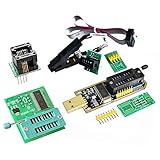
- This unit is suitable for amateur programmers of 24 and 25 series FLASH.
- Programming is faster than ordinary ATMEGA8 25 Series Programmer up to 2-3 times faster. Erasing speed is probably 2-3 Mbit check every minute.
- The programmer uses the specially produced CH341A USB chip USB/usb1.1 comms
- Usage: TV set memory ,desktop motherboard, LCD ,notebook router , card , DVD , set-top boxes ,unlocking software , backup, erasing, burning, checking,repair etc.
- Package : 1 x CH341A 24 25 Series for EEPROM Flash BIOS USB Programmer plus; 1 x 1.8V adapter for iPhone or motherboard 1.8V SPI Flash Memory SOP8 DIP8 plus; 1 x SOP8 SOIC8 to DIP8 EZ Programmer Adapter Socket Converter Module 150mil plus; 1 x SOIC8 SOP8 Flash Chip IC Test Clip socket adapter BIOS/ 24/ 25/ 93 Programmer
What kinds of BIOS/UEFI problems occur?
Failed or interrupted firmware updates
A failed flash can leave a PC unable to start normally or stuck in a firmware recovery process. A black screen during an update does not by itself prove the flash failed: the system may be restarting or training memory. Follow the manufacturer’s timing and recovery instructions rather than immediately cutting power.
Vendor-specific firmware regressions
A particular BIOS release may cause boot loops, instability, missing devices, or repeated update prompts on selected products. Check the support page for the complete computer or exact motherboard model, including board revision, to find affected and fixed versions.
Rank #2
- (User manual available if do as follow: click "AITRIP"(you can find "Sold by AITRIP" under Buy Now button), in the new page, click "Ask a question".)we will send you the manual asap)
- Test Clip Pin format: SOIC8 SOP8 matrix ,Programmer TL866 EZP2010 RT809H CH341A;Please confirm the chip voltage to avoid burning the chip.(This product only supports 3.3v 5V switching)
- SOIC8 SOP8 Clip DIP8 for in-circuit programming For EEPROM /25CXX/24CXX on ZIP USB;Serial port: Supports the USB to UART 12CSP port
- Test Clip Beryllium copper plating needle, without welding, can be directly inserted
- USB Programmer CH341A Series Burner Chip 24 EEPROM BIOS Writer 25 SPI Flash AE1185
Secure Boot changes and BitLocker recovery
Secure Boot, TPM, or boot-chain changes can alter measurements that BitLocker checks. A recovery-key prompt may therefore be a legitimate security response, not proof that firmware is corrupted. Microsoft documents recovery prompts associated with Secure Boot-related changes, and its Windows 2026 update guidance describes a BitLocker-policy issue involving Secure Boot. Microsoft’s Secure Boot and recovery guidance and the April 2026 update notes provide details.
Microsoft’s Secure Boot changes and vendor firmware requirements are not identical for every device. MSI, for example, says the original 2011 Secure Boot certificate is scheduled to expire in June 2026 and provides BIOS and certificate guidance for affected products, including a warning about recovery-media booting if certificates do not match. Follow instructions for your specific product rather than assuming every PC needs the same change. MSI’s Secure Boot certificate guidance.
Rank #3

- The read and write speed is faster. It only takes 3 seconds to read EN25T80 and 9 seconds to write EN25T80. It is currently the fastest BIOS chip programmer on the market.
- Automatically identify chip model (mainly for 25 series chips, 24/25/93/25/95 for EEPROM needs to be manually selected).
- Automatically detect whether the chip is placed;The chip supply voltage is automatically selected.
- It fully supports 25 SPI FLASH, 24 for EEPROM, 25 for EEPROM, 93 for EEPROM, 95 for EEPROM and other series of memory chips.
- EZP2023 USB SPI Programmer Full Set + 12 Adapter Support 24 25 93 95 for EEPROM Flash Bios for Windows Better Than EZP2019
CPU and motherboard compatibility
Sometimes the firmware is not damaged; it simply predates support for the installed processor. Intel says some motherboards with 600- and 700-series chipsets need BIOS updates to boot certain 13th- and 14th-generation Core processors. The required BIOS and any Intel Management Engine update sequence depend on the motherboard maker. Check Intel’s compatibility guidance and then use the board manufacturer’s support page.
For some new desktop systems with an unsupported Ryzen processor, AMD describes a temporary boot-kit process. Selected motherboards also support USB BIOS Flashback, which can update firmware without a currently supported CPU. Availability and steps vary by board; neither option applies to all AMD systems. AMD’s boot-kit and Flashback information.
Rank #4

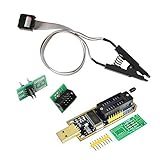
- [Comprehensive Kit] Includes the CH341A USB programmer, SOP8 clip, and various adapters for multiple applications.
- [Efficient Programming] Supports backup, erase, and programming of 24/25 series EEPROM and BIOS chips.
- [User-Friendly Design] No soldering required; simply clamp the chip with the test clip for easy operation.
- [Wide Compatibility] Compatible with CH341A and CH341B chips, supporting 1.8V, 3.3V, and 5V output voltages.
- [Reliable Performance] Designed for stable and efficient programming, compatible with USB 2.0 interface.
Firmware security vulnerabilities
A vulnerable BIOS or related platform component can work normally while still needing a security update. Intel publishes firmware and platform advisories, and Lenovo has documented vulnerabilities affecting specified Intel and AMD platforms. The fixes and affected products are identified by vendor and version, not by a universal BIOS update. Intel’s security advisory index and Lenovo’s advisory are examples. Intel also cautions that Management Engine firmware is customized by system and motherboard manufacturers, so a generic Intel package is not a substitute for the device maker’s update. Intel’s Management Engine guidance.
What do the symptoms suggest?
| Symptom | Possible explanations | First safe check |
|---|---|---|
| BitLocker recovery screen | A Secure Boot, TPM, firmware, or boot-chain measurement changed; it does not alone establish corrupted BIOS. | Retrieve the correct recovery key before changing firmware or clearing the TPM. |
| No display after flashing | An update or memory-training cycle may still be running; firmware failure or a RAM, GPU, cable, monitor, or power problem is also possible. | Wait for the vendor-specified interval and check the exact model’s recovery guidance. |
| BIOS sees no SSD | Storage failure or connection issue, or a changed storage-controller mode or boot configuration. | Check whether the drive appears in firmware setup before attempting Windows repairs. |
| A new CPU will not boot | The installed BIOS may not support that processor. | Check the motherboard’s CPU-support list and whether it supports Flashback or another recovery route. |
| PC repeatedly returns to a flash utility or restarts | A failed update, integrity check, or model-specific firmware regression. | Stop repeated flashing attempts and find the manufacturer’s procedure for the exact model. |
| Windows is unstable after an update | A firmware regression, driver or Windows problem, memory profile, or damaged operating-system files. | Review release notes and settings; distinguish a firmware issue from a Windows or hardware fault. |
| Long first start after updating | Memory training or another normal first-boot task may take longer than usual. | Allow the process the time specified by the manufacturer before interrupting it. |
What to check before updating BIOS
- Identify the exact device. Record the manufacturer, full computer model, current BIOS version, and CPU. For a custom desktop, record the motherboard model and hardware revision. A retail motherboard BIOS may not be appropriate for an OEM computer built around similar hardware.
- Find the BitLocker recovery key. A firmware, TPM, or Secure Boot change may prompt for it. Do not start an update until you know how to retrieve the key for your device.
- Back up important files if Windows starts. A BIOS update is not normally intended to erase personal files, but a failed update can make the computer temporarily unbootable.
- Record settings that matter. Photograph boot mode and order, Secure Boot, TPM, virtualization, RAID or storage-controller mode, XMP or EXPO memory profile, fan curves, and custom power settings.
- Read the exact release notes and prerequisites. Check whether the release is critical, security-related, beta, or optional, and whether an intermediate BIOS, Intel Management Engine, AMD PSP, embedded-controller, or other firmware update is required.
- Arrange stable power. Connect a laptop charger and follow its battery requirements. Avoid updating when power is unreliable or the computer is already unstable.
- Use the manufacturer’s file and procedure. Do not use a BIOS for a similar-looking model, another board revision, or a third-party download mirror.
How to recover after a BIOS update
Proceed from low-risk checks to model-specific recovery. The menu labels and button sequence are not universal; use the instructions for the exact computer or motherboard.
Do these 3 things before closing this tab:
1Repair Windows errors before they cause bigger problems2Scan for outdated or missing drivers - takes under a minute3Clear out junk files and repair common Windows errorsBest Value
- 1.The SOP8 clip enables in-circuit programming of for EEPROM without disassembling the chip, making flashing the BIOS simpler and more efficient.
- 2.The main purpose of the CH341A Programmer is to back up, erase, program, calibrate and other actions on various software.
- 3.SOIC8 SOP8 Test Clip For EEPROM 24CXX / 25CXX / 93CXX in-circuit programming
- 4.The CH341A Programmer support most 24 / 25 Series for EEPROM BIOS SOP8 SOP16 chip on the market. Note: Due to the characteristics of the CH341A chip, the ESMT SST class 25 chip can only be read and cannot be written.
- 5.5.Tips: Some chips are affected by peripheral circuits and cannot be clipped directly. Please check the chip location on the motherboard before purchasing!
- Disconnect nonessential devices. Remove docks, external USB devices, and other peripherals, then see whether the computer can start.
- Allow for an update or training cycle. If the screen is blank, use the manufacturer’s guidance to determine how long to wait. Do not force power off merely because the display has not returned immediately.
- Perform only the documented power reset. Fully power off and disconnect AC power where the manufacturer’s instructions call for it. Do not improvise a reset procedure for an unfamiliar model.
- Enter firmware setup if possible. Check whether the SSD is detected, then verify boot order, boot mode, and storage-controller mode. Loading defaults can change settings such as AHCI/RAID or boot mode, causing Windows not to start even when the firmware itself is intact.
- Use the device’s recovery feature if needed. Depending on the model, this may be called BIOS Recovery, Crisis Recovery, USB BIOS Flashback, or something else. Follow the specified firmware filename, USB filesystem, port, and key or button sequence exactly. A method that works on one model may be invalid on another.
- Stop if recovery fails. Repeatedly trying different firmware files can make diagnosis harder. Contact the computer or motherboard manufacturer, or a qualified repair provider, if the official procedure does not restore booting.
ASUS, for example, documents a BIOS-update screen-hang issue for specified NUC products and warns that interrupting the update can cause boot failure. That procedure is product-specific, not a general ASUS or PC-wide remedy. Read ASUS’s NUC guidance.
Independent reader supportYour contribution helps us test, update, and keep practical guides available for everyone.What to do if BitLocker asks for a recovery key
- Do not erase the drive. A recovery prompt is not a reason to reinstall Windows or clear the TPM.
- Retrieve and enter the correct recovery key. If you cannot find it, avoid changes that could remove access to the encrypted data; seek help from your organization’s IT administrator or the device manufacturer as appropriate.
- After Windows starts, check the firmware state. Confirm whether the update completed and whether the system is stable. Review the vendor’s guidance for Secure Boot, certificate updates, or the exact BIOS release.
- Avoid repeatedly clearing the TPM. Changing or clearing TPM state without understanding the consequences can make recovery more difficult.
Should you update BIOS now?
| Situation | Practical choice |
|---|---|
| The vendor names your exact model and current version as affected. | Follow the vendor’s mitigation or fixed-version instructions. |
| A release fixes a security issue relevant to your product, or enables the CPU or hardware you need. | Plan the update using the exact vendor procedure, prerequisites, backup, and recovery key. |
| The current system is stable and the release is optional or beta, with no relevant fix. | Waiting may be reasonable; the newest BIOS is not automatically the best choice for every system. |
| The model or board revision is uncertain, power is unstable, or the system is already failing. | Clarify the device and stabilize or diagnose it before attempting a flash. |
| You cannot access the BitLocker key or the vendor specifies an intermediate version. | Resolve that issue before updating. |
| A game, third-party utility, forum post, or generic alert recommends an update without matching your exact model. | Verify the recommendation against the manufacturer’s product page and release notes first. |
Which update or recovery method should you use?
| Method | Best fit | Limitation |
|---|---|---|
| Manufacturer’s Windows utility | A supported system that is stable in Windows and has a vendor-provided utility. | A Windows crash, background update, or power event can interfere. |
| Built-in BIOS/UEFI flash tool | A system that can enter setup and has the exact firmware file in the required format. | Requires the correct file, filesystem, and menu sequence. |
| USB BIOS Flashback | Selected boards that support firmware flashing without a successful boot or supported CPU. | Availability, filename, port, and button procedure are model-specific. |
| Manufacturer recovery mode | A device that supports recovery after a failed or interrupted flash. | May work only in particular failure states and requires exact product instructions. |
| Manufacturer or qualified repair service | Recovery is unavailable or unsuccessful, or firmware may need board-level service. | Repair may involve cost, shipping, or component replacement. |
Intel and AMD often provide platform guidance, but the complete computer or motherboard maker is normally the source for the usable customized BIOS. For Intel Management Engine firmware in particular, Intel says manufacturers customize the package. USB Flashback is available only on selected boards, according to AMD’s explanation.
When the cause may not be BIOS
Several failures that look like firmware trouble have another cause. A changed boot order after loading defaults can point the computer away from the Windows drive. A change in storage-controller mode can make Windows fail to boot. A failed SSD or damaged Windows boot files can also prevent startup even when firmware is working.
- No display: Check monitor input, cables, RAM seating, graphics card, and power before concluding the BIOS is corrupted.
- Windows crashes: Consider a driver or Windows update, unstable memory settings, or operating-system damage as well as a firmware regression.
- Devices disappear: Check firmware settings, device connections, and whether the drive or component is detected by the system.
- Firmware update history is unclear: Some updates arrive as UEFI capsules through Windows Update or a vendor utility. Check Windows Update history, vendor update logs, and the BIOS version rather than relying only on memory.
Some security-related firmware updates may block downgrading, so do not assume an earlier BIOS can always be restored. Firmware can address some compatibility or microcode problems, but it cannot reverse physical damage to a CPU or other component.
Manufacturer resources
- Dell’s Latitude and Precision boot-loop notice lists affected systems and recovery information.
- Intel’s processor and BIOS compatibility guidance explains selected 600- and 700-series motherboard requirements for certain 13th- and 14th-generation processors.
- AMD’s boot-kit and USB BIOS Flashback FAQ covers selected unsupported-CPU situations.
- MSI’s Secure Boot FAQ explains its certificate-transition guidance for affected products.
- Intel’s security-center index, Lenovo’s firmware advisory, and Gigabyte’s security advisories are starting points for security notices; verify the affected products and fixed versions in each notice.
For an actual update or recovery, use the support page for the complete computer or exact motherboard. Generic steps from another manufacturer—or even a similar model—may specify the wrong file, USB port, filename, or recovery sequence.
Quick Recap
Product prices and availability are accurate as of the date/time indicated and are subject to change. Any price and availability information displayed on Amazon at the time of purchase will apply.

