
Do these 3 things before closing this tab:
1Fix the driver behind crashes, sound loss and screen glitches2Repair Windows errors before they cause bigger problems3Scan for outdated or missing drivers - takes under a minuteThe APPA 97II is a legacy digital multimeter in APPA’s 90 Series II. Its historical datasheet lists a 3,400-count display, 70-segment bar graph, voltage measurement up to 1,000 V DC and 750 V AC, and CAT III 600 V/CAT II 1,000 V safety markings. It is easy to confuse with APPA’s related model 97, which has different published specifications. Use the model label and the documentation for the exact instrument—not a generic listing—to confirm ranges, safety, and features.
APPA 97II at a glance
- Manufacturer and family: APPA Technology Corporation, APPA 90 Series II.
- Display: Historical material identifies a 3,400-count digital display and a 70-segment analog bar graph.
- Commonly listed functions: AC/DC voltage and current, resistance, continuity, diode testing, and frequency. One distributor also lists RPM, but that function requires a suitable signal or pickup setup.
- Published maximums: 1,000 V DC, 750 V AC, and 10 A AC/DC in detailed 97II specifications.
- Historical safety markings: CAT III 600 V/CAT II 1,000 V; verify the markings on the particular meter and its leads.
- Model status: APPA’s current site prominently lists a related model named 97, while the 97II appears in historical APPA material. That does not by itself establish a formal discontinuation date.
The historical APPA 90 Series II datasheet groups the 97II with the 98II and 99II but specifies individual model differences. Marketplace descriptions can blur these models, so check the front-panel designation and do not transfer a 97, 98II, or 99II feature to a 97II without confirmation.
APPA 97II datasheet specifications
The table combines the historical series datasheet with detailed distributor specifications. Where detailed values come from a distributor rather than a manufacturer document, treat them as listing specifications and confirm them against the manual and instrument revision.
| Function or feature | APPA 97II specification |
|---|---|
| DC voltage | 300 mV, 3 V, 30 V, 300 V, 1,000 V; listed basic accuracy ±(0.25% of reading + 1 digit); maximum resolution 0.1 mV; input resistance 10 MΩ. |
| AC voltage | 3 V, 30 V, 300 V, 750 V; detailed listing gives an approximate 40 Hz–1 kHz frequency range. Consult the exact manual for accuracy conditions. |
| DC current | 30 µA, 300 µA, and 10 A ranges in the detailed listing. |
| AC current | 30 µA, 300 µA, and 10 A ranges in the detailed listing. |
| Resistance | 300 Ω, 3 kΩ, 30 kΩ, 300 kΩ, 3 MΩ, and 30 MΩ. |
| Frequency | 3 Hz–30 MHz, depending on range and input conditions; listed accuracy ±(0.01% + 1 digit). |
| RPM | One distributor lists ranges of 30–300,000 rpm. Confirm pickup, input, and setup requirements before relying on this function. |
| Continuity | Buzzer threshold is reported as approximately 30–50 Ω, depending on document or revision; it is a quick check, not a precision resistance reading. |
| Diode/P-N test | Approximately 3 V test voltage; one detailed listing gives maximum test current of 1.5 mA. |
| Display and bar graph | 3,400-count digital display; 70-segment analog bar graph. A detailed listing gives two digital readings per second and 12 bar-graph updates per second. |
| Power | Two AAA 1.5 V batteries are specified in historical 97II material. A distributor lists about 500 hours of battery life and auto power-off after about 30 minutes; verify the actual revision. |
| Dimensions and weight | Approximately 94 × 188 × 40 mm and 490 g in the detailed listing. |
| Safety marking | Historical datasheet: CAT III 600 V/CAT II 1,000 V. The actual meter, leads, fuses, and condition govern safe use. |
Detailed range and accuracy values are listed on the APPA 97II distributor specification page. A second regional APPA 97II listing is another reference, not a substitute for the instrument’s own documentation.
What’s actually slowing this PC down?
Pick the symptom - the matching free tool is one click away.
#1 Best Overall
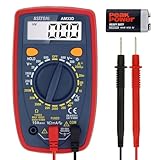
- Additional Tips - The following incorrect operations may cause the multimeter not to show results: Firstly, the plugs of test leads are not fully inserted or not inserted into the correct sockets. Secondly, the manual rotary switch is not placed in the correct position. In addition, this meter can not test all AC Current and below 100mV AC Voltage. Please check the user manual carefully before measurement.
- Versatile Digital Multimeter - Accurately measures AC/DC Voltage, DC Current, Resistance, and Diode. This Multimeter is a really useful tool for solving industrial and household electrical issues. Suitable for Household Outlets, Fuses, Batteries (including Vehicles), Automotive Circuit Troubleshooting, Charging Systems, Testing electronics in Cars etc.
- Troubleshooting with Accuracy - This Multimeter has a sampling speed of 2 times per second; Built-in a backlight LCD display with 3 ½ digits (1999 count) 0.6”, and high polarity including negative and positive readings.
- Ensures Safety - Double fuse is anti-burn and protects from overloading. The silicone cover can protect the multimeter from failing damage and prevent electric shocks. And low battery indication will be displayed when battery power is low.
- Ease of Use - Support Data Hold and Continuity Buzzer. Includes Convenient feature like LCD Backlit Screen makes it easy to use in dimly light areas. Batteries/Set of Test Leads/User Manual are Included.
How to interpret the accuracy figure
An accuracy notation such as ±(0.25% of reading + 1 digit) has two parts: a percentage of the measured value, plus an allowance based on the least significant displayed digit on the selected range. For example, at a 12.00 V reading on a 30 V DC range, the percentage component is 0.03 V. The additional digit allowance depends on that range’s display increment, so the complete tolerance must be calculated from the exact range resolution. This illustration is arithmetic, not a manufacturer-certified test result.
Counts describe the display’s maximum count, not accuracy. Resolution is the smallest increment shown on a range. Input resistance matters when measuring high-impedance circuits because the meter can load the circuit. AC frequency response and stated accuracy also depend on signal conditions; a frequency counter’s maximum listed frequency is not a guarantee of accurate measurement for every amplitude or waveform.
Rank #2
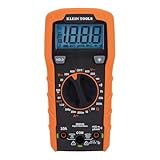
- VERSATILE FUNCTIONALITY: Measures AC/DC voltage up to 600V, 10A DC current, 2MΩ resistance; additional features include continuity, diode test and battery test
- LEAD-ALERT PROTECTION: LEDs on the meter illuminate to indicate proper test lead placement, enhancing accuracy and safety during measurements
- BACKLIT DISPLAY: LCD shows clear readings in low-light conditions for enhanced visibility
- BATTERY TEST: Battery test mode can be used for checking if batteries are working
- CONVENIENT FEATURES: Test lead holders on the back of the meter, kickstand and optional magnetic hanger (Cat. Nos. 69445 or 69417) for hands-free operation
Manual and datasheet downloads
- Historical APPA 90 Series II datasheet — family-level document with 97II information.
- APPA 97II instruction manual scan — a third-party mirror/scan; compare its revision and instructions with labels on your meter.
- Current APPA 97 product page — information for the related model 97, not proof that its specifications apply to the 97II.
- APPA measuring instruments catalog page — manufacturer catalog resource.
Is the APPA 97II True RMS?
Do not assume that every APPA 97II is True RMS. Historical 90 Series II material uses True RMS language in its family presentation, but a distributor clarification about the 97II distinguishes it from the 98II, which is described as capable of arbitrary-waveform RMS measurement. The APPA 98II product page likewise identifies True RMS capability for that model. The conflicting descriptions mean the individual meter’s label and applicable manual should settle the question; do not rely on a generic “RMS” marketplace field.
This distinction matters when measuring distorted or non-sinusoidal AC from variable-frequency drives, switched-mode power supplies, dimmers, and electronic ballasts. An average-responding meter may not report the same effective value as a True RMS meter on those waveforms. For that work, choose a meter whose manufacturer documentation clearly specifies True RMS and the relevant bandwidth and crest-factor limits.
Quick wins for a faster PC:
Clear out junk files and repair common Windows errorsFree Scan →Fix the driver behind crashes, sound loss and screen glitchesFind Drivers →Repair Windows errors before they cause bigger problemsFix Now →Rank #3

- Versatile Digital Multimeter - Accurately measures AC/DC Current, AC/DC Voltage, Capacitance, Frequency, Duty Cycle, Resistance, Diode, Continuity and Temperature.
- Thoughtful Design - Support Data Hold, Large LCD Backlit Screen, Auto Shut-off and Kickstand make the process of measurements easier. Professional level is reflected in some features include Auto-Ranging capability, and True RMS for measuring both AC Current and Voltage.
- Suitable For Many Occasions - This Multimeter is a golden partner to help to troubleshoot a variety of automotive and household electrical problems safely and accurately.
- Ensure Safety - Double ceramic fuse is anti-burn and protects from overloading,and it will be more secure and reliable; F400mA/600V and F10A/600V explosion-proof ceramic fuse tubes can protect the multimeter effectively.
- Additional Tips - Please take off the cap before using the test leads. Check the manual for more usage information.
APPA 97II versus the current APPA 97
APPA’s current product page describes a model called 97, not 97II. The published differences below show why the names should not be treated as interchangeable; this is not a claim that the 97 is a formally designated successor.
| Feature | APPA 97II, historical/detailed listings | APPA 97, current product page |
|---|---|---|
| Display | 3,400 counts; historical 90 Series II datasheet. | 3,200 counts; current APPA 97 page. |
| Bar graph | 70 segments; historical 90 Series II datasheet. | 65 segments; current APPA 97 page. |
| Maximum current | 10 A in detailed 97II listing. | 20 A AC/DC on current APPA 97 page. |
| Battery | Two AAA cells in historical 97II material. | One 9 V battery on current APPA 97 page. |
| Water resistance | Not stated in the historical 97II sources cited here. | IP64 listed on current APPA 97 page. |
| Safety marking | CAT III 600 V/CAT II 1,000 V in historical 97II datasheet. | CAT III 600 V on current APPA 97 page. |
The current model 97 page also lists 0.5% basic DC-current accuracy and 0.75% basic resistance accuracy. Do not transfer its 20 A range, IP64 rating, 9 V battery, or 3,200-count display to a 97II.
Rank #4

- Accurately Test Full Features: Accurately measures AC/DC voltage, DC current, resistance, continuity test, diode and batteries.
- High Quality & Safety :Our multimeter is designed to safely and accurately troubleshoot a variety of automotive and household electrical problems. Overload Protection on all ranges to ensure long-term service life,Low Battery Indication, Audible continuity sensor checks that the circuit or wires conduct electricity. Double insulation with a good angled stand for hand free use.
- EASY TO USE: 2.7"Large Backlit LCD Display, Data Hold, Easy to Read Large Back-light Screen forvisibility in dimly light areas. Our mutimeter tester is widely used in Car repair, Homeuse, Schools, laboratories, Families and factories, suitable for Car Drivers, Beginners,Professional Electricians, Housewives, Students Use.
- Nice Protective Orange Shell with Stand Built: Our digital multimeter can be hand held or stood using its fold out stand. Removable thick rubber cover is made of kind of non-slip slightly soft plastic that will help with drop protection & minor bumps protection.
- 2 YEARS Quality Guarantee & Included 9V Battery: The compartment lid at the back is easy to remove. Battery/Set of Test Leads/User Manual are Included.They guarantee against faulty materials and workmanship for 2 years-giving you total peace of mind. If there is any issue within24 months of your purchase, we will replace it for vou with no doubt.
What the 97II’s functions can—and cannot—tell you
- DC voltage: Useful for batteries, control circuits, power supplies, and industrial or automotive DC systems, within the range and accuracy limits.
- AC voltage: Useful for conventional AC measurements within the meter’s specified frequency response. Confirm the response and True RMS status for distorted waveforms.
- AC/DC current: Useful for current checks within the selected input’s range, fuse, and duty-cycle limits. The meter must be inserted in series; incorrect lead placement can create a short circuit.
- Resistance and continuity: Use only on de-energized circuits. Continuity is a rapid open/closed indication, not a calibrated low-resistance test.
- Diode test: Checks a semiconductor junction using the meter’s test voltage and current; in-circuit components can affect results.
- Frequency: Can help verify oscillators, controls, or signals, but usable frequency depends on input amplitude, waveform, and range.
- RPM: A distributor lists RPM ranges, but a rotating shaft generally requires an appropriate pickup or signal connection; do not assume the meter measures shaft speed by itself.
- Analog bar graph: Its faster visual updates can help reveal trends or fluctuating readings that are less apparent from a changing numeric display.
Capacitance appears in some third-party feature databases, but the detailed 97II range table does not establish a capacitance range, and other 90-series documentation associates that feature with higher models. Treat capacitance support as unverified unless the exact meter’s manual or front-panel marking confirms it. See the All About Circuits APPA 97II reference alongside the detailed listing, but resolve functions against the meter itself.
Independent reader supportYour contribution helps us test, update, and keep practical guides available for everyone.Is the APPA 97II safe for mains work?
The historical datasheet’s CAT III 600 V/CAT II 1,000 V markings are category-and-voltage ratings, not blanket permission to measure any circuit at those voltages. CAT category concerns the installation environment and expected transient energy; the suitable category depends on where in the electrical system the measurement is made. Use a meter and leads whose ratings are appropriate for that point in the installation.
The Tool Desk
Outbyte PC Repair FREEClear out junk files and repair common Windows errorsFree Scan →Outbyte Driver Updater FREEFix the driver behind crashes, sound loss and screen glitchesFind Drivers →Best Value

- VERSATILE FUNCTIONALITY: Measures AC/DC voltage up to 600V, 10A AC/DC current, 50MΩ resistance; additional features include continuity, temperature, capacitance, frequency/duty cycle and diode test
- LEAD-ALERT PROTECTION: LEDs on the meter illuminate to indicate proper test lead placement, enhancing accuracy and safety during measurements
- BACKLIT DISPLAY: LCD shows clear readings in low-light conditions for enhanced visibility
- ACCURATE MEASUREMENTS: Auto-ranging and True Root Mean Squared (TRMS) technology provides precise and accurate measurements
- CONVENIENT FEATURES: Test lead holders on the back of the meter, kickstand and optional magnetic hanger (Cat. Nos. 69445 or 69417) for hands-free operation
- Read the category and voltage markings on the actual meter and test leads. Do not rely on a web listing alone.
- Inspect lead insulation, probe guards, plugs, input jacks, and the case for damage before use.
- Check that the correct, intact fuses are installed, especially for current inputs; a fuse rating and interrupt capability must be suitable for the instrument.
- For current measurement, place the meter in series and use the correct current jack and range. Never connect across a voltage source with a lead still in a current terminal.
- Never measure resistance or continuity on an energized circuit.
With an older instrument, unknown fuse history, damaged leads, uncertain calibration, or illegible safety labels are reasons not to use it on hazardous circuits until it has been inspected by a qualified person. For safety-critical or regulated work, use an appropriately rated, maintained, and calibrated instrument.
Buying or keeping an APPA 97II today
A 97II may suit someone replacing an existing unit, or a buyer who has a verified used or old-stock meter and needs its particular functions. The evidence here does not establish broad current availability or a global price; listings and stock vary by region. A distributor page showed a regional price of 6,804 Ukrainian hryvnia when observed about one month before the research date, but that is a historical listing signal, not a current quote or U.S. price.
Inspect a used or old-stock unit
- Confirm the front panel says 97II; request clear photographs of front, rear, and serial/safety labels.
- Look for case cracks, damaged jacks, a loose selector, missing parts, or signs of impact or liquid exposure.
- Check test leads for cuts, exposed conductors, brittle insulation, and properly shrouded plugs.
- Verify the specified fuses and battery arrangement for that revision; inspect the battery compartment for corrosion.
- Test the display, bar graph, continuity buzzer, low-battery indicator, and auto power-off, then verify ranges against a safe known reference.
- Ask for calibration records when accuracy matters professionally. A working display does not establish calibration or safety.
- Confirm warranty, return terms, included leads and holster, and whether replacement fuses or parts are available in your region.
Do not buy on the strength of a seller’s title or one specification table alone. Incorrectly combined 97, 97II, 98II, and 99II descriptions are a documented risk in this product family.
Modern APPA alternatives
Choose an alternative by the job requirement rather than by model name. The following manufacturer pages describe different options; regional availability and suitability for a particular installation must still be checked.
| Model | Published features relevant to choosing | Consider it when |
|---|---|---|
| APPA 97 | 3,200 counts, IP64, 20 A AC/DC, CAT III 600 V. | You want a related APPA industrial meter with a current product page; do not assume it is identical to the 97II. |
| APPA M1 | Pocket-size True RMS meter; 6,000 counts; ACV True RMS, capacitance, frequency, diode test, CAT III 600 V. | You want a compact meter with clearly stated True RMS AC voltage, and its range and current capacity meet your needs. |
| APPA 106 | 4,000 counts, True RMS, 0.1% basic DC-voltage accuracy, capacitance, frequency, RPM, temperature, optical RS-232, CAT III 600 V/CAT II 1,000 V. | You need a broader measurement set, including temperature or RPM, and can accommodate a larger feature set. |
| APPA S1 | 6,000 counts; True RMS AC voltage/current; Bluetooth and data logging/manual storage up to 4,000 records; LoZ, AutoVolt, VoltSeek, capacitance, frequency; CAT IV 600 V/CAT III 1,000 V. | You need logging, connectivity, or the listed higher category ratings for suitable work. |
A modern True RMS meter is the more defensible choice for distorted AC if its specifications match the task. For any replacement, also check CAT rating, current range and input protection, required functions, calibration, and availability in your country; a feature list alone does not establish suitability.
Quick Recap
Product prices and availability are accurate as of the date/time indicated and are subject to change. Any price and availability information displayed on Amazon at the time of purchase will apply.

