
For a new Ryzen 5000 build, DDR4-3600 is the better performance target when it costs only a little more and runs stably. If you already have good DDR4-3200, keep it: the typical performance gain from moving to 3600 is small. DDR4-3200 is also the safer choice if you prioritize AMD’s published memory specification or have a setup that struggles with higher speeds.
DDR4-3200 vs. DDR4-3600 at a glance
| Comparison | DDR4-3200 | DDR4-3600 |
|---|---|---|
| Effective data rate | 3200 MT/s (commonly labeled 3200 MHz) | 3600 MT/s (commonly labeled 3600 MHz) |
| Physical memory clock | 1600 MHz | 1800 MHz |
| Typical synchronized FCLK target | About 1600 MHz | About 1800 MHz, if the CPU and board can run it stably |
| Theoretical bandwidth, dual-channel | 51.2 GB/s | 57.6 GB/s |
| Official-spec status for many Ryzen 5000 desktop CPUs | Common published memory specification; check the exact processor | Usually a memory overclock rather than a guaranteed specification |
| Best fit | Value, an existing stable kit, or a more conservative setup | A new build seeking the common Zen 3 performance target |
The bandwidth figures are theoretical aggregate rates for dual-channel operation, not predicted application gains. DDR memory transfers data twice per physical clock cycle, which is why the product names’ effective rates are higher than the physical clocks. Retailers commonly use “MHz” as shorthand for the effective rate; technically, the rates are expressed in MT/s.
Why 3600 is a common Ryzen 5000 target
Ryzen 5000 desktop processors use a memory clock, a memory-controller clock, and an Infinity Fabric clock. In a synchronized configuration, these are commonly described as MCLK, UCLK, and FCLK. DDR4-3200 typically corresponds to a 1600 MHz memory clock, while DDR4-3600 corresponds to 1800 MHz. Keeping the clocks in a 1:1:1 relationship can avoid the added latency associated with running them asynchronously. That is why DDR4-3600 paired with an 1800 MHz FCLK is often called a practical Zen 3 sweet spot—not an operating point every processor is guaranteed to reach. Tom’s Hardware’s Ryzen 5000 memory guide explains the relationship and the performance trade-offs.
Some CPUs can run a higher fabric clock; others may not be stable at 1800 MHz. The achievable result also depends on the motherboard, BIOS, DIMM count, capacity, and memory kit. AMD’s Ryzen Master documentation describes memory-clock and fabric-clock controls for supported systems, but the labels and available settings vary by platform.
Recommended Free Tools
#1 Best Overall
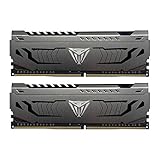
- Capacity: 16GB (2 x 8GB) DDR4 Kit
- Aluminum heat spreader with unique and specific design element
- Feature Overclock: XMP 2.0 Support for Automatic Overclocking
- Compatibility: Tested across the latest Intel and AMD platforms for reliable and fast performance
- Format: NON-ECC Unbuffered DIMM; Pin Out: 288-Pin
Is DDR4-3600 officially supported?
For many mainstream Ryzen 5000 desktop processors, AMD lists DDR4-3200 as the memory specification. DDR4-3600 is commonly enabled by a profile such as XMP, DOCP, or A-XMP, making it a memory overclock rather than a speed guaranteed for every CPU. Verify the specification for your exact processor on AMD’s processor specifications page; “Ryzen 5000” includes distinct desktop and G-Series products, so one model’s specification should not be generalized to every chip.
Stability at 3600 depends on the integrated memory controller, motherboard design and BIOS, module count and rank layout, kit timings and voltage, and whether the modules came together as a matched kit. A motherboard QVL (qualified vendor list) is useful evidence that a board maker tested a particular kit, but not being listed does not prove incompatibility, and a listing cannot guarantee every CPU and BIOS combination. AMD also provides Ryzen-compatible memory information.
How much faster is 3600?
In Tom’s Hardware’s application benchmark suite, DDR4-3600 was about 1.3% faster than DDR4-3200. That figure belongs to that test suite, not every Ryzen 5000 PC. The difference can be more noticeable in some CPU-limited games or memory-sensitive tasks, while a GPU-limited game may show little change. Resolution, graphics settings, frame-rate target, game engine, and graphics card all affect whether faster memory changes the result. Synthetic bandwidth tests can make the difference look larger than ordinary workloads do. Tom’s Hardware’s testing and methodology provide the directly relevant comparison.
Rank #2

- Requires overclocking/BIOS adjustments. Maximum speed and performance depends on system components, including motherboard and CPU.
- G.SKILL RipjawsV Series DDR4 U-DIMM Memory Kit, Model: F4-3600C18D-16GVK
- Non-ECC, DDR4 U-DIMM, 288-pin, for Desktop PC & Gaming
- Includes JEDEC default profile, and Intel XMP memory overclock profile
- Do not mix memory kits. Memory kits are sold in matched kits that are designed to run together as a set. Mixing memory kits will result in stability issues or system failure.
In practice, capacity, dual-channel operation, and stability usually matter more than the step from 3200 to 3600. A 32 GB matched kit at 3200 is often a better choice than an insufficient 16 GB kit at 3600.
Quick wins for a faster PC:
Scan for outdated or missing drivers - takes under a minuteDriver Scan →Clear out junk files and repair common Windows errorsFree Scan →Compare timings, not just the speed label
A higher data rate does not automatically mean lower CAS latency. A useful estimate of first-word CAS latency is:
CAS latency in nanoseconds = CL × 2000 ÷ data rate in MT/s
Rank #3

- Disclaimer: Maximum Speed requires overclocking/PC BIOS adjustments. Maximum speed and performance depend on system components, including motherboard and CPU
- Hand-sorted memory chips ensure high performance with generous overclocking headroom
- VENGEANCE LPX is optimized for wide compatibility with the latest Intel and AMD DDR4 motherboards
- A low-profile height of just 34mm ensures that VENGEANCE LPX even fits in most small-form-factor builds
- A solid aluminum heatspreader efficiently dissipates heat from each module so that they consistently run at high clock speeds
| Memory setting | Approximate CAS latency | What the comparison tells you |
|---|---|---|
| DDR4-3200 CL16 | 10.0 ns | Similar nominal CAS latency to 3600 CL18 |
| DDR4-3600 CL18 | 10.0 ns | More bandwidth and a possible 1800 MHz fabric target, but not lower nominal CAS latency than 3200 CL16 |
| DDR4-3200 CL14 | 8.75 ns | Lower nominal CAS latency than 3600 CL18 |
| DDR4-3600 CL16 | About 8.89 ns | A faster-rate option with low nominal CAS latency, if stable and reasonably priced |
These calculations describe CAS latency only, not total memory latency or real-world performance. Compare the complete primary timings (for example, CL16-18-18-38), capacity, voltage, module layout, and stability—not just the first CL number. A 3200 CL16 kit and a 3600 CL18 kit have the same estimated CAS latency; the 3600 kit’s potential advantage is higher bandwidth and the synchronized fabric target.
Which speed makes sense for your system?
You already own stable DDR4-3200
Keep it unless you have a specific CPU-limited workload and a clear reason to tune for a small gain. Replacing a stable kit just to move to 3600 is rarely a good use of money.
You are building or upgrading and prices are close
Choose a matched 2×16 GB DDR4-3600 kit with sensible timings—CL16 or reasonably priced CL18 is a practical starting point. Check the board’s memory guidance and buy from a seller with a return policy that lets you resolve compatibility issues.
Rank #4
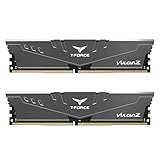
- Simple design to perfectly protect the cooling module with high thermal conductive adhesive
- Supports Intel & AMD motherboards
- Selected high-quality IC
- Supports XMP2.0
- Energy saving with ultra-low working voltage
You are choosing between 3200 CL16 and 3600 CL18
Do not expect a large difference: both are about 10 ns for nominal CAS latency. Pick 3600 if the premium is small and you want to try the 1800 MHz fabric target; choose 3200 if it is meaningfully cheaper or the simpler stability option.
You are considering 3200 CL14 or 3600 CL16
Compare the actual kit prices, full timings, capacity, and validated stability. The speed label alone cannot settle this comparison, and neither option is worth a large premium for a modest everyday performance gain.
You use a Ryzen 7 5800X3D
The 5800X3D’s extra cache can reduce memory-speed sensitivity in some games. DDR4-3600 remains reasonable when inexpensive and stable, but the case for replacing good 3200 solely to reach 3600 is weaker. Results vary by game and GPU limit; the cited Ryzen 5000 memory-scaling tests are not a universal 5800X3D result. AMD’s Ryzen desktop product listings distinguish processor models and families.
Best Value
- Requires overclocking/BIOS adjustments. Maximum speed and performance depends on system components, including motherboard and CPU.
- G.SKILL RipjawsV Series DDR4 U-DIMM Memory Kit, Model: F4-3600C16D-16GVKC
- Non-ECC, DDR4 U-DIMM, 288-pin, for Desktop PC & Gaming
- Includes JEDEC default profile, and Intel XMP memory overclock profile
- Do not mix memory kits. Memory kits are sold in matched kits that are designed to run together as a set. Mixing memory kits will result in stability issues or system failure.
You use a Ryzen 5000G with integrated graphics
Integrated graphics share system memory, so bandwidth may matter more than it does in a discrete-GPU system. DDR4-3600 can be more worthwhile if the CPU, board, and memory run it stably. Ryzen 5000G APUs are a distinct design from Ryzen 5000 desktop processors, so check the exact processor and motherboard rather than assuming the same memory behavior.
You need 64 GB or plan to use four DIMMs
Prioritize the capacity you need and a stable configuration. A kit that reaches 3600 with two modules may not do so with four, and higher capacity or a different rank layout can make the memory controller’s job harder. Check the board’s specifications and QVL, and be prepared to run at 3200 or another lower stable speed.
Independent reader supportYour contribution helps us test, update, and keep practical guides available for everyone.Set up and verify a memory profile
Memory usually starts at a conservative JEDEC setting. To run a kit at its advertised profile, enable it in UEFI/BIOS. Exact menu locations and names depend on the board manufacturer and BIOS version.
- Install the matched modules in the motherboard’s recommended paired slots, commonly A2 and B2. Consult the board manual for its slot layout.
- Enter UEFI/BIOS during startup and enable the kit’s profile: XMP on many boards, DOCP on many ASUS AMD boards, or A-XMP on many MSI boards. EXPO is the normal profile name for DDR5/AM5, not a Ryzen 5000 DDR4 kit.
- Select the DDR4-3600 profile. If the system needs manual clock settings, set FCLK to 1800 MHz only if the CPU and board can run it stably; keep the memory and controller clocks synchronized according to the board’s terminology.
- Save and reboot. Confirm the resulting memory speed in BIOS, Ryzen Master, CPU-Z, or a comparable monitoring utility. Some tools display the physical memory clock, so a reading near 1800 MHz corresponds to DDR4-3600 effective data rate.
- Run a recognized memory stress test and check for errors, crashes, or other instability. Any memory-test error means the configuration has not passed; no single test duration guarantees stability for every system.
AMD’s Ryzen Master RAM documentation describes the separate memory and fabric clock controls. Board firmware may use different names for those settings.
What’s actually slowing this PC down?
Pick the symptom - the matching free tool is one click away.
If DDR4-3600 does not boot or is unstable
- If the PC will not POST, use the motherboard’s documented clear-CMOS or safe-boot procedure, then load BIOS defaults.
- Re-enable the memory profile at DDR4-3200, or select a lower speed. Try FCLK at 1600 MHz or Auto if 1800 MHz is unstable.
- Check for a newer motherboard BIOS and follow the manufacturer’s update instructions. Recheck memory settings afterward because an update can change them.
- If you are using four DIMMs, test a matched pair first. Do not combine separately purchased kits—even kits with matching model numbers are not guaranteed to use identical memory chips or work together at their rated profile.
- If errors continue, test modules individually and consult the motherboard’s QVL and manual. Avoid aggressive voltage increases or universal timing recipes: suitable settings depend on the CPU, memory chips, board, and BIOS.
Memory instability can appear as failed boots, game exits, application crashes, blue screens, corrupted archives, or data errors. A profile that starts successfully is not necessarily stable under sustained use.
How to compare kits before buying
- Capacity: Choose enough memory for your workload before paying extra for speed. For many gaming systems, 32 GB in a matched 2×16 GB kit is a practical baseline.
- Channels and modules: Two matched DIMMs typically enable dual-channel operation. A single 32 GB DIMM is not equivalent in bandwidth to a matched 2×16 GB kit, assuming the platform supports both configurations.
- Timings and voltage: Compare the full timings and the profile voltage alongside the data rate. Many performance DDR4 profiles use about 1.35 V, but confirm the specific kit rather than treating that as universal.
- Compatibility and fit: Check the motherboard’s memory support, BIOS, DIMM count, module height, and clearance under a large air cooler. Use desktop UDIMMs for a desktop AM4 motherboard, not laptop SO-DIMMs.
- Price and returns: Prefer 3600 when the premium over a comparable 3200 kit is small. If it costs substantially more, put the difference toward capacity or another part; RGB and a premium heat spreader do not inherently improve CPU performance.
For a specific build, compare the exact kit specifications rather than a retailer’s “AMD optimized” label. Manufacturer pages can help confirm SKU details: Corsair Vengeance LPX 32 GB DDR4-3200 CL16, Corsair Vengeance RGB Pro 32 GB DDR4-3600 CL18, and Crucial Pro 32 GB DDR4-3200. These are product examples, not endorsements or current price comparisons; check the exact specifications and current terms before buying.
Quick Recap
Product prices and availability are accurate as of the date/time indicated and are subject to change. Any price and availability information displayed on Amazon at the time of purchase will apply.

