
The Tool Desk
Outbyte PC Repair FREEClear out junk files and repair common Windows errorsFree Scan →Outbyte Driver Updater FREEScan for outdated or missing drivers - takes under a minuteDriver Scan →The Space Shuttle’s “glass cockpit” was a late-life display upgrade, not a new spacecraft or an autonomous flight system. Called the Multifunction Electronic Display Subsystem (MEDS), it replaced much of the orbiters’ aging electromechanical and CRT instrumentation with color LCD screens while leaving the Shuttle’s core computers, flight controls and crew-centered operating model in place. Atlantis first flew with MEDS on STS-101 in May 2000.
What “glass cockpit” meant on the Space Shuttle
In aviation, a glass cockpit presents flight information primarily on electronic displays rather than on an array of mechanical or electromechanical instruments. For the Shuttle, the informal term refers to MEDS: the Multifunction Electronic Display Subsystem, also called the Multifunction Electronic Display System in some NASA material. The names describe the same upgrade, not separate systems. NASA’s STS-101 press kit describes the system and its first flight.
The screens were not consumer monitors or touchscreens. They displayed information produced by the orbiter’s flight-control, navigation, guidance and vehicle-management systems. MEDS changed how crews saw and accessed that information; it did not turn the Shuttle into a new or self-flying vehicle.
The original Shuttle flight deck was already digital underneath
The original flight deck combined dedicated gauges and indicators, CRT displays, warning lights, extensive switch panels and controllers. This dense interface suited a vehicle that had to handle launch, orbital operations, hypersonic atmospheric entry, approach and an unpowered runway landing. Its crews trained to use the instruments through phase-specific procedures and practiced responses to failures.
Do these 3 things before closing this tab:
1Clear out junk files and repair common Windows errors2Scan for outdated or missing drivers - takes under a minute3Repair Windows errors before they cause bigger problems#1 Best Overall

- Replica of the tile structure
- Detailed cockpit
- Cockpit canopy optionally removable
- 2 crew figures
- Opening cargo bay doors
Calling that cockpit simply “analog” is misleading. From its first flights, the Shuttle used digital computers and digital fly-by-wire control. The key distinction is between the digital avionics behind the panels and the largely electromechanical and CRT-based instruments through which crews viewed much of the information. NASA’s STS-1 technology overview and technical account of the Shuttle’s avionics architecture describe that underlying digital system.
Why NASA modernized the displays
Obsolete hardware and maintenance
The orbiters were designed in an earlier electronics era, but the Shuttle program continued operating into the 2000s. Aging electromechanical instruments and display components became harder to maintain and replace. MEDS reduced reliance on some of that legacy hardware, making the flight deck more supportable over the fleet’s extended service life. NASA places the upgrade among the Shuttle’s broader modernization efforts, rather than treating it as a cosmetic refresh (NASA’s Shuttle overview; Shuttle history resources).
More flexible information presentation
Fixed-purpose instruments show their assigned value; multifunction displays can group related data, use color and graphics, and present different formats for different tasks. That flexibility matters in a vehicle whose crew has to shift attention between ascent, orbit, entry and landing. NASA’s cockpit-display work focused on helping crews recognize and interpret information, including during abnormal conditions—not simply making the panel look newer (NASA cockpit-display design).
Weight and power
NASA’s engineering documentation reports that the MEDS installation reduced weight by about 75 pounds and power use by about 90 watts. Those figures describe the upgrade, not a per-screen saving (NASA engineering documentation on MEDS).
Rank #2

- Watch It Launch Before Your Eyes: This 3D puzzle isn't just a static model. Touch the sensor button to trigger a full vertical launch sequence: the track slowly lifts the shuttle into launch position, three-axis mechanical arms rotate 90° into closed position, and the rocket ignites with real flame effects. A mesmerizing, fully automated space launch you build yourself
- Gift for Space Lovers & Sci-Fi Fans: Perfect for anyone obsessed with space exploration, aerospace history, science fiction, collctors or mechanical puzzles. Makes an unforgettable birthday, Christmas, Father’s Day or graduation gift for teens and adults
- A Rewarding Build: The control tower flashes yellow 6 times to count down to ignition, then the rocket base bursts to life with vibrant orange and blue LED flames that mimic a real shuttle launch. 446 precision-cut wooden pieces come together over approximately 8 hours of focused, screen-free assembly. The finished model stands an impressive 9.8" × 7.72" × 10.71"
- Retro Sci-Fi Architecture: Faithfully recreated 1:420 scale space shuttle, paired with a rugged industrial launch tower featuring seven distinct levels for command and testing. it's a statement piece for any desk, shelf, office or space-themed room
- Step-by-step Manual: The warm tower lights glow through every window, creating an atmospheric display that looks incredible day or night. Powered by a standard Type-C connection (cable not included) ROKR provides replacement parts for manufacturing defects
What MEDS installed and how it worked
The commonly cited Shuttle configuration had 11 full-color, flat-panel LCD display units: nine in the forward cockpit arrangement and two in aft-cockpit locations. The forward and aft counts explain why accounts may refer to nine or 11 screens. The STS-101 press kit says the installation replaced about 32 gauges and electromechanical displays plus four CRT displays; it did not eliminate every conventional control or instrument.
| Feature | Before MEDS | With MEDS |
|---|---|---|
| Display approach | Dedicated electromechanical instruments, indicators and CRTs | Full-color flat-panel LCD multifunction displays |
| Forward display arrangement | Mixed instruments and CRTs | Nine multifunction display units |
| Aft display units | Dedicated display equipment | Two additional MEDS units |
| Hardware replaced | — | About 32 gauges/electromechanical displays and four CRTs, per NASA’s STS-101 press kit |
| Display-unit dimensions | Not applicable as one standardized MEDS unit | About 6.71 by 6.71 inches, per NASA’s engineering record |
| Viewing angle | Varied by instrument | About ±60 degrees horizontally and +45/−10 degrees vertically, per the engineering record |
| Display processing | Legacy display electronics and dedicated instruments | Four integrated display processors and four analog-to-digital converters, per the engineering record |
| Flight control | Digital fly-by-wire was already part of the Shuttle | MEDS modernized information presentation and interfaces; it did not replace the fundamental flight-control architecture |
The orbiters’ General Purpose Computers and flight-control and navigation software continued to supply relevant vehicle data. MEDS processors interfaced with the computer system, while analog-to-digital converters translated signals from legacy analog sources for use by the new displays. The new screens could show graphical versions of familiar instruments as well as more integrated formats. Engineering documentation notes that MEDS processors handled most original display-electronics functions, with an exception for rotational hand-controller operation. The Shuttle engineering record and NASA’s account of MEDS software and legacy interfaces detail the arrangement.
What crews could see on the displays
MEDS presented information for the tasks crews performed across a mission, including:
- Attitude, airspeed or Mach, altitude and vertical motion.
- Surface position, navigation, guidance and flight-control status.
- Reaction-control-system activity and vehicle-system data.
- Caution and warning information, along with head-up-display-related information.
- Formats used during ascent, orbital operations, entry, approach and landing.
The important change was not simply that information appeared in color. Display design determines which data are grouped, what receives visual emphasis, and how a crew member can recognize a developing condition. NASA later studied and redesigned display formats to support decisions under abnormal conditions (NASA cockpit-display design research).
What’s actually slowing this PC down?
Pick the symptom - the matching free tool is one click away.
Rank #3
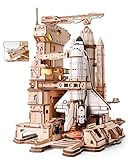
- RELIEVE THE HISTORIC MISSION - Experience the magic and majesty of the 1981 Space Shuttle launch. This isn't just a model; it's a time machine for your desk, capturing the awe and ambition of a defining moment in space exploration history.
- DYNAMIC, INTERACTIVE LAUNCH SEQUENCE - Be the mission commander! A simple touch activates the mesmerizing automated launch sequence. Watch the service structure move, see the shuttle tilt into position, follow the countdown lights, and feel the thrill as the rocket engines ignite with a brilliant orange and blue LED glow.
- PERFECT GIFT FOR EVERY DREAMER & OCCASION - Designed for display, engineered for wonder. This stunning wooden model becomes the centerpiece of any office, study, or living room. It’s the unforgettable gift for birthday, Christmas, Thanksgiving Day, Father’s Day, graduations, and retirements. Perfect for space enthusiasts, engineers, collectors, and anyone who dares to dream big.
- SATISFYING BUILD & PREMIUM MATERIALS - Enjoy a rewarding building experience with 446 precisely laser-cut wooden pieces that fit together smoothly. The assembly is an engaging 8-hour journey, resulting in an impressive display measuring 9.8" x 7.72" x 10.71". While this is a challenging project designed for enthusiasts, our clear, step-by-step instructions make the process achievable and deeply satisfying. All you need is patience to transform pieces into a functional masterpiece.
- COMPLETE READY-TO-BUILD KIT & WORRY-FREE SUPPORT - Everything you need to build and display is in the box. Note: Powered by a Type-C cable(not included) as part of our sustainability efforts but is commonly available. Our customer support proudly offers free replacement pieces for any missing or damaged wooden pieces, ensuring a smooth and enjoyable building experience.
How the upgrade reached the orbiters
MEDS arrived during separate orbiter maintenance and modification periods; it was not installed across the fleet at once. Dates below distinguish a first flight with the system from a maintenance-period installation where the supplied NASA records do not establish an exact first-flight date.
| Orbiter | MEDS history |
|---|---|
| Atlantis | First Shuttle to fly with MEDS, on STS-101 in May 2000, according to the mission press kit. |
| Columbia | Received the upgrade during its second Orbiter Maintenance Down Period (OMDP), begun in 1999; its first post-upgrade flight was STS-109 in March 2002, according to the Columbia vehicle history. |
| Discovery | Received MEDS during a later major modification period. The cited material does not establish an exact first-flight date. |
| Endeavour | MEDS was installed during OMDP-2, which began in December 2003; STS-118 in August 2007 was its first flight after the major modification period (NASA OMDP-2 documentation; STS-118 mission page). |
| Challenger | Lost in 1986 before MEDS was introduced. |
| Enterprise | An atmospheric test vehicle, not an operational orbital Shuttle; it was not part of the MEDS fleet rollout. |
NASA’s 2000 press material described an intention to upgrade the fleet by 2002, but that was a plan, not the completed schedule: Endeavour’s installation came later. A NASA chronology has also listed STS-103 as the first glass-cockpit flight, but the contemporaneous STS-101 press kit and Shuttle engineering record identify STS-101 as the first MEDS flight. The chronology document is inconsistent with those more specific records.
Independent reader supportYour contribution helps us test, update, and keep practical guides available for everyone.MEDS was not the proposed “smart cockpit”
NASA discussed a later “smart cockpit” concept that could use additional computing and display capability to reduce workload during critical periods. That proposal should not be confused with the MEDS hardware that flew. Contemporary NASA material stressed that enhanced displays would not fly the Shuttle themselves; their purpose was to help astronauts interpret conditions and respond to problems (NASA’s 2000 discussion of the smart-cockpit concept).
The Shuttle remained crewed and procedure-intensive, with the crew making operational decisions. MEDS did not replace the Shuttle’s flight computers, make it autonomous or substitute a screen for the pilot’s controls.
PC Slower Than It Used to Be?
A free scan shows the junk files, broken settings and background clutter dragging Windows down - then fixes them in one click.Free scan · Windows 10 & 11Crashes, No Sound, or Screen Glitches?
Random freezes, missing sound and display glitches usually trace back to one bad driver. Find and replace yours safely.Free scan · under a minuteRank #4

- HOBBY MODEL KIT – Unassembled model packed in an envelope with easy to follow instructions. Ideal for ages 14 and up.
- NO GLUE OR SOLDER NEEDED – Parts can be easily clipped from the metal sheets. Tweezers are the recommended tool for bending and twisting the connection tabs.
- PREMIUM SERIES SPACE SHUTTLE LAUNCH KIT - 3 Sheet Model with a moderate difficulty level. Once assembled, dimensions are 3.54 W x 4.13 L x 6.70 H inches. 1:342 Scale.
- FROM STEEL SHEETS TO 3D – Pop out the pieces and connect using tabs and holes. Includes illustrated instructions
- HIGHLY DETAILED ETCHED MODEL – Display your 3D model once completed - collect and build them all.
Human factors: flexibility has benefits and costs
A multifunction display can make related information easier to see together and allow formats to be revised without replacing a dedicated instrument. Color and graphical symbology can help distinguish information and focus attention. Those benefits depend on carefully designed formats and crew familiarity; a display that changes by page or mode can also make it harder to know what is currently shown or what a failure means.
For that reason, a glass cockpit is not automatically easier to use than a panel of dedicated instruments. New display formats require human-factors evaluation, robust hardware qualification and training in normal and off-nominal behavior. NASA’s display-design work illustrates that the challenge was to organize information for crew understanding, not merely to digitize it.
What the Shuttle glass cockpit changed—and what it did not
MEDS brought a 1970s spacecraft’s crew interface forward through color LCDs, more flexible information presentation and reduced dependence on aging display hardware. It also saved weight and power. Those are meaningful modernization gains, but the available evidence does not establish that MEDS by itself produced a measurable safety improvement or prevented a particular accident. It was one part of a broader program of Shuttle upgrades, and the vehicle’s risks involved systems and operations well beyond the flight-deck displays (NASA Shuttle overview; NASA MEDS engineering documentation).
Quick Recap
Product prices and availability are accurate as of the date/time indicated and are subject to change. Any price and availability information displayed on Amazon at the time of purchase will apply.
Quick wins for a faster PC:
Fix the driver behind crashes, sound loss and screen glitchesFind Drivers →Clear out junk files and repair common Windows errorsFree Scan →
