
“Laptop stuck key error” usually describes a symptom, not one standard Windows or macOS error code. The key may be physically jammed, or the computer may be treating input as held, delayed, or repeated because of an accessibility setting, software, or a keyboard fault. If liquid has entered the laptop, turn it off and disconnect power instead of testing or cleaning it.
Identify what kind of stuck-key problem you have
The symptom helps narrow the cause. A visibly low, tilted, or reluctant key points toward a mechanical problem; delayed input or beeps can also come from settings.

| What you notice | Possible cause | First check |
|---|---|---|
| One character repeats, such as “aaaa” | A held key, debris or a failing switch; a software or keyboard-matrix issue is also possible | Try another app, then test with an external keyboard |
| A key is visibly depressed, tilted, loose, or will not spring back | Debris, residue, or a damaged key mechanism | Shut down and inspect the key; do not pry it up while powered |
| Brief presses are ignored or typing is delayed | Filter Keys in Windows or Slow Keys in macOS may be enabled | Check the relevant Accessibility keyboard settings |
| The computer beeps or acts as if Ctrl, Shift, Alt, Fn, Windows, or Command is held | A modifier key may be stuck; Sticky Keys or Toggle Keys may also affect behavior | Check the key physically and review accessibility settings |
| The problem occurs in only one program | An app shortcut, macro, extension, or remote session may be involved | Test in a plain text editor and another application |
| Several keys in one area fail together | A keyboard connection, matrix, or board fault is possible | Test an external keyboard and run the laptop maker’s diagnostics |
For manufacturer-specific troubleshooting of dirt, connections, settings, and device tests, see Microsoft’s keyboard troubleshooting guidance, HP’s notebook keyboard guidance, and Dell’s keyboard troubleshooting guide.
What to do first
- Save work if you can. If repeated input makes that difficult, use the on-screen or an external keyboard.
- Disconnect accessories. Unplug USB keyboards, docks, hubs, and other unnecessary devices; turn off or disconnect Bluetooth keyboards if one may be sending input.
- Shut down before inspecting or cleaning. Do not keep forcing a key or remove a keycap while the laptop is on.
- If liquid was spilled, stop here. Turn the laptop off, disconnect the charger and peripherals, and arrange qualified service. Do not keep testing it.
Use an on-screen keyboard to regain control
In Windows 11, open Start > Settings > Accessibility > Keyboard > On-Screen Keyboard, or press Windows key + Ctrl + O. At the sign-in screen, use the Accessibility button to open it. Microsoft documents these options in its On-Screen Keyboard instructions. On a Mac, open the Accessibility Keyboard from Apple menu > System Settings > Accessibility > Keyboard; Apple describes the available controls in its accessibility keyboard settings.
Quick wins for a faster PC:
Repair Windows errors before they cause bigger problemsFix Now →Scan for outdated or missing drivers - takes under a minuteDriver Scan →Clear out junk files and repair common Windows errorsFree Scan →#1 Best Overall

- KEYBOARD: The keyboard works for Windows with hot keys that enable easy access to Media, My Computer, Mute, Volume up/down, and Calculator
- EASY SETUP: Experience simple installation with the USB wired connection
- VERSATILE COMPATIBILITY: This keyboard is designed to work with multiple Windows versions, including Vista, 7, 8, 10 offering broad compatibility across devices.
- SLEEK DESIGN: The elegant black color of the wired keyboard complements your tech and decor, adding a stylish and cohesive look to any setup without sacrificing function.
- FULL-SIZED CONVENIENCE: The standard QWERTY layout of this keyboard set offers a familiar typing experience, ideal for both professional tasks and personal use.
Check Windows settings that can mimic a stuck key
In Windows 11, open Start > Settings > Accessibility > Keyboard. Review Sticky Keys, Filter Keys, and Toggle Keys. Turn off any feature you do not need, then test the keyboard again. Check Mouse Keys if the numeric keypad is controlling the pointer. Windows 10 has similar controls under Start > Settings > Ease of Access > Keyboard; names and layout can vary by release.
- Filter Keys can ignore brief or repeated keystrokes, making a keyboard seem slow or unresponsive.
- Sticky Keys changes how multi-key shortcuts are entered.
- Toggle Keys can produce a sound when lock or modifier keys are pressed.
These shortcuts can be triggered accidentally: press Shift five times for Sticky Keys, hold Right Shift for eight seconds for Filter Keys, or hold Num Lock for five seconds for Toggle Keys. Windows key + U opens Accessibility settings. If behavior changed suddenly, check whether one of these features was enabled before assuming the keyboard has failed. Microsoft lists the settings and shortcut behavior in its keyboard accessibility guide and accessibility shortcut reference.
Test whether the problem is in an app, the operating system, or the keyboard
- Try another app. Type in a plain text editor and another application. If only one app is affected, check its shortcuts, macros, extensions, or remote-desktop session.
- Restart and test again. A restart can clear a temporary software state, but it cannot remove debris or repair a damaged key.
- Disconnect external input devices. Test without a dock, hub, or separate keyboard; a connected device may be the source of repeated input.
- Connect a known-good USB keyboard. If it works while the built-in keyboard does not, the built-in keyboard or its internal connection becomes the leading suspect.
- Test outside the operating system if possible. Use the maker’s pre-boot diagnostics or firmware/UEFI interface. A fault there points away from an ordinary app setting and toward hardware, though further diagnosis may still be needed.
Microsoft’s Surface guidance uses UEFI testing to help distinguish a Windows problem from a keyboard problem: see Troubleshoot a Surface Pro keyboard or Type Cover. On other laptops, follow the manufacturer’s instructions for entering diagnostics; the procedure varies by model.
Other possibilities include Fn Lock or Num Lock changing a key’s role, gaming or macro software remapping keys, a 2-in-1 changing keyboard behavior in tablet mode, or a remote host sending a held key. A single problem key can indicate local debris or mechanism damage; a group of nearby keys can suggest a broader connection or keyboard fault.
Free tools Windows power users keep installed
One-click scans. No signup required.
Rank #2
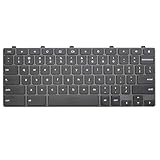
- Compatible With:Dell Chromebook 3100 2-in-1 Series keyboards;For Dell Chromebook 3110 2 in 1 keyboard is designed for those who demand a dynamic typing experience, offering enhanced responsiveness and comfort;For Chromebook 3100, our keyboard replacement ensures compatibility and durability, providing seamless integration with your device;Experience the convenience of the Chromebook 3100 keyboard lock key, ensuring your privacy and security with just one touch
- Keyboard P/N: 0RFXCF 0H06WJ TPN-136US001909, AE09U018, NSK-EJ1SW
- Compatible With:Dell Chromebook 11 3100 3110 3120 5190 keyboard keys replacement surface was UV-processed, make it still clear after being repeated 10 million times
- Upgrade your study routine:with our compatible replacement keyboard designed for Dell Chromebook 11 series—models 3100 2-in-1, 3110 2-in-1, and 5190; Engineered to seamlessly fit, this keyboard ensures uninterrupted productivity whether you're typing essays or coding projects; With its precise key alignment and sturdy construction, it's the solution for students seeking efficiency without compromising on the original typing experience; Don't let a worn keyboard slow you down
- Warranty: provide a 120-day warranty against any manufacturer defective such as dead-on arrival (DOA), lines, video failure, and outage
Clean a physically stuck key cautiously
For a dry laptop with loose dust or crumbs, start with the least invasive method. Check the laptop maker’s instructions for your model; keyboard layouts and mechanisms differ.
- Shut the laptop down completely and unplug the charger and accessories.
- Inspect the key and the gaps around it for loose debris or visible damage. Do not force the key through its travel.
- If the manufacturer recommends it, use short bursts of compressed air around the key, positioning the laptop as directed. Avoid blowing liquid into the keyboard.
- Brush away loose debris gently. For residue on an accessible surface, use a barely damp cotton swab with isopropyl alcohol; do not pour or spray liquid into the keyboard. Let the area dry fully before powering on.
- Test the key in a text editor and in another application.
Do not assume a keycap is removable. Thin keyboards, scissor mechanisms, and keys with stabilizer bars can break easily. HP says that on some out-of-warranty models with removable keys, a flat plastic tool may be inserted only shallowly—about 1/8 inch—and warns that long keys such as Space and Enter may have a support bar. That guidance is model-specific, not a general instruction for every laptop. HP recommends service rather than key removal when the laptop is under warranty or the keys are not designed to be removed; see its notebook keyboard troubleshooting instructions.
Rank #3

- All-day Comfort: The design of this standard keyboard creates a comfortable typing experience thanks to the deep-profile keys and full-size standard layout with F-keys and number pad
- Easy to Set-up and Use: Set-up couldn't be easier, you simply plug in this corded keyboard via USB on your desktop or laptop and start using right away without any software installation
- Compatibility: This full-size keyboard is compatible with Windows 7, 8, 10 or later, plus it's a reliable and durable partner for your desk at home, or at work
- Spill-proof: This durable keyboard features a spill-resistant design (1), anti-fade keys and sturdy tilt legs with adjustable height, meaning this keyboard is built to last
- Plastic parts in K120 include 51% certified post-consumer recycled plastic*
Check MacBook accessibility settings
On macOS, open Apple menu > System Settings > Accessibility > Keyboard. Review Sticky Keys, Slow Keys, and Accessibility Keyboard. Slow Keys introduces a delay before a press is accepted; Sticky Keys changes how modifier-key combinations work. Use the Accessibility Keyboard as a temporary input method if needed. Shut down before cleaning a physical key.
Apple’s compressed-air procedure applies to specified MacBook and MacBook Pro models, not every MacBook generation or other laptop. Follow the model-specific directions in Apple’s keyboard-cleaning instructions.
What’s actually slowing this PC down?
Pick the symptom - the matching free tool is one click away.
When updates and diagnostics are worth trying
Do not start with drivers when a key is visibly jammed. If the keyboard is detected incorrectly, stopped working after an update, or has a function-key problem, restart first, then install available operating-system updates and the laptop maker’s applicable keyboard, hotkey, chipset, or firmware updates. Use the maker’s support site or diagnostics, not random third-party driver-updater software. HP’s wired keyboard guidance discusses updates and keyboard settings, while Dell’s troubleshooting guide points to diagnostics and support tools.
Rank #4

- Brand new E key for Macbook pro Retine Display A1425 A1502 A1398 Macbook air A1466
- It will make your mac back to work without replacing the entire keyboard.
- Good choice for borken lost missing sticky keys on your macbook pro keyboard.
- Package including a key cap,a white hinge piece and a rubber silicone cup button(free)
- If the hinge is ok,you don't have to replace it,just need to clean the base of key then follow the instrctions to install the keycap.
Liquid spills and a raised keyboard need a different response
If liquid entered the keyboard deck, turn the laptop off immediately, disconnect the charger and peripherals, and do not power it on to test whether it recovered. Do not use a household hair dryer or high heat, and do not assume that drying will prevent corrosion or restore damaged components. Have the laptop inspected by the manufacturer or a qualified repair provider. A few drops on a keycap are not the same as liquid entering the keyboard, but if you cannot tell whether it penetrated, treat the situation cautiously.
If the keyboard deck or trackpad is lifting, or the chassis is bulging, stop using the laptop and seek service. A swollen battery can press against the case and should not be handled as a stuck-key cleaning problem.
Best Value
When to arrange repair or replacement
- Liquid reached the keyboard or laptop interior.
- A key remains stuck after careful, non-invasive cleaning, or its cap, hinge, scissor mechanism, or stabilizer is broken.
- Several keys fail together, the problem returns, or the key acts incorrectly in pre-boot diagnostics.
- The laptop is under warranty, uses a sealed or difficult-to-disassemble keyboard, or the case appears swollen.
A replacement keycap may be enough only when the cap itself is damaged and the underlying mechanism still works. A failed switch, membrane, keyboard matrix, cable, or liquid-damaged board may require a full keyboard or top-case assembly instead. The exact repair depends on the model, region, part availability, and warranty terms; contact the manufacturer or a qualified technician before ordering parts or opening the laptop.
Quick Recap
Product prices and availability are accurate as of the date/time indicated and are subject to change. Any price and availability information displayed on Amazon at the time of purchase will apply.

