
Free tools Windows power users keep installed
One-click scans. No signup required.
When an application slows down, a user cannot log in, or a video call drops, someone often asks whether the network is down. The network engineer then has to establish what is failing, where, and who owns the next step—sometimes while monitoring tools disagree and the documentation is out of date.
That is why the hardest part of network engineering is often not a protocol or configuration. It is being accountable for reliability across systems you cannot fully see or control, while preventive work competes with incidents, limited staffing, and expanding responsibilities. The details differ between a small business, a NOC, an MSP, and a large enterprise, but many frustrations come from the way operations are organized rather than from networking itself.
Why does everyone blame the network first?
Network engineers often become the default investigators when a service fails because connectivity sits between users and applications. A failed login could involve DNS, identity, a firewall rule, an endpoint, the application, a cloud dependency, or the network path. From the user’s perspective, those distinctions are invisible: the service does not work.
The engineer is then asked to prove whether the network is responsible, even when they lack visibility into the application, endpoint, identity provider, wireless environment, internet service provider, or cloud platform involved. This is usually an ownership and observability problem, not evidence that another team is acting in bad faith. Without shared telemetry and a clear incident process, each group sees only part of the service.
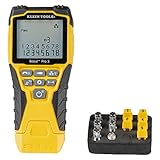
#1 Best Overall

- VERSATILE CABLE TESTING: Cable tester for data (RJ45) terminated cables and patch cords, ensuring comprehensive testing capabilities
- LARGE BACKLIT LCD: Backlit LCD display enables easy reading of pin-to-pin wiremap results, even in low-lit areas
- COMPREHENSIVE FAULT DETECTION: Test for Open, Short, Miswire, Split-Pair faults, Cross-over, and Shield, providing thorough fault detection
- INTUITIVE USER INTERFACE: User-friendly interface with three buttons and simple, easy-to-identify test responses, ensuring a smooth testing experience
- MULTIPLE TONE GENERATOR STYLES: Tone on a single wire, wire pair, or all 8 conductor wires using the multiple style tone generator (solid/warble); requires probe Cat. No. VDV500-123 (sold separately)
A useful response is to establish scope before changing anything: who is affected, which locations and services are involved, when it began, and what changed recently. Then compare evidence across network and service layers. A successful ping does not prove an application works; a failed ping does not prove it is unreachable, because ICMP may be filtered.
Why does good network work go unnoticed?
A reliable network can look like nothing happened. Capacity planning, redundancy tests, configuration reviews, firmware planning, routing-policy checks, certificate and address management, alert tuning, change review, vendor escalations, documentation, and recovery tests all reduce the chance or impact of an outage. When they work, users may never know they were needed.
An outage, by contrast, is visible immediately. That creates an uncomfortable asymmetry: months of preventive work may receive little attention, while one failure dominates incident calls and performance discussions. It also encourages a poor operating model in which heroic recovery is celebrated more than the routine work that makes heroics less necessary.
How missing documentation turns routine work into forensics
Documentation can be absent, stale, or technically accurate but useless without context. A diagram may not match production; device names may be inconsistent; IP address management may be incomplete; or nobody may know why a route, ACL, NAT rule, or firewall exception exists. A former employee may be the only person who understands a dependency, and a temporary workaround may have quietly become permanent.
Change records have the same weakness when they record what someone typed but not why the change was needed, what it depends on, or how to reverse it. If no one knows which inventory or diagram is authoritative, every investigation starts by questioning the records.
This is not a new complaint, though old figures should not be mistaken for current benchmarks. A 2017 NetBrain survey reported that 71% of respondents primarily used CLI for troubleshooting, 43% said CLI troubleshooting took too much time, and 40% said a typical issue took more than four hours to troubleshoot and resolve. Those are historical survey findings, not a measure of today’s entire profession. Read the 2017 NetBrain survey.
Automation does not erase documentation debt. It makes the debt consequential: safe automation needs a trustworthy inventory, consistent naming, known ownership, dependencies, and an agreed intended state. If those are unknown, automation can turn an uncertain process into a faster uncertain process.
Rank #2
- VERSATILE CABLE TESTING: Cable tester tests voice (RJ11/12), data (RJ45), and video (coax F-connector) terminated cables, providing clear results for comprehensive testing on unenergized Ethernet cables (not designed to test PoE)
- EXTENDED CABLE LENGTH MEASUREMENT: Measure cable length up to 2000 feet (610 m), allowing for precise cable length determination
- COMPREHENSIVE FAULT DETECTION: Test for Open, Short, Miswire, or Split-Pair faults, ensuring thorough fault detection and identification
- BACKLIT LCD DISPLAY: Backlit LCD screen displays cable length, wiremap, cable ID, and test results, ensuring easy readability in various lighting conditions
- EFFICIENT CABLE TRACING: Trace cables, wire pairs, and individual conductor wires using the multiple style tone generator (requires analog probe Cat. No. VDV500-123, sold separately), simplifying cable tracing tasks
Why alerts and on-call can become a second job
Being on call is not inherently unhealthy. It becomes a serious burden when pages are frequent, low-quality, poorly staffed, outside the engineer’s control, or followed by no recovery time. A page about a third-party provider may arrive with incomplete symptoms, no safe rollback, and unclear severity. After resolving an incident, an engineer may return directly to ordinary work, only to see the same failure recur because the postmortem led to no operational change.
The Tool Desk
Outbyte Driver Updater FREEScan for outdated or missing drivers - takes under a minuteDriver Scan →Outbyte PC Repair FREEClear out junk files and repair common Windows errorsFree Scan →Monitoring should support a sequence of decisions, not merely report that something changed:
- Detect: identify a meaningful change.
- Diagnose: locate what changed and where.
- Assess impact: determine which users or services are affected.
- Remediate: choose an action that is safe for the conditions.
- Verify: confirm the service recovered.
- Learn: reduce the chance or impact of recurrence.
A dashboard full of red indicators can fail at every step after detection. Duplicate alerts from separate systems, overly sensitive thresholds, unowned events, late detection, disagreement between monitoring platforms, and alerts without dependency context create noise rather than a useful incident picture. Suppressing everything is no better if it hides a real failure.
A 2026 production-reliability survey ranked alert fatigue as its leading operational challenge, followed by insufficient automation, knowledge silos and documentation gaps, root-cause analysis, and tool integration. The survey covered SRE, DevOps, and IT-operations professionals—not network engineers alone—so it is evidence of a broader operations concern, not a universal ranking for this career. See the 2026 production-reliability report.
To make alerting useful, give every page an owner, distinguish paging from dashboard information, remove duplicates, account for maintenance and dependencies, and attach a runbook to recurring pages. Track whether alerts lead to action. Review noisy or suppressed alerts after incidents instead of treating them as harmless background.
Do these 3 things before closing this tab:
1Repair Windows errors before they cause bigger problems2Fix the driver behind crashes, sound loss and screen glitches3Clear out junk files and repair common Windows errorsWhy troubleshooting feels like an investigation
Symptoms often appear far from the fault. Intermittent packet loss may disappear before evidence is collected. A route can be valid but still send traffic along an undesirable path. A firewall can permit a flow while the application fails. DNS, MTU, asymmetric routing, congestion, authentication, and endpoint behavior can produce similar complaints. Logs may use different clocks, identifiers, and severity conventions, and the relevant systems may be controlled by several teams.
That is why a short checklist such as “try pinging it” is not a diagnosis. Troubleshooting means collecting evidence across the path, establishing the scope and timing, checking recent changes, and comparing what each layer reports. It also means resisting disruptive fixes until there is enough information to judge their risk.
Rank #3

- Multifunctional NOYAFA NF-8508 Network Cable Tester: There are nine features to meet your needs. Continuity Testing, Cable Scan, Port Flash, Length Measurement, POE Power Supply Test, QC testing, Optical Power Meter, VFL and NVC function.It is perfectly suited for various engineering cabling projects, network troubleshooting, network equipment maintenance and testing scenarios. Its precise cable scanning and fault localization capabilities help you effortlessly pinpoint the root cause of issues.
- 7 WAVELENGTHS OPTICAL POWER METER: NF-8508 network cable tester can measure 7 standard wavelengths, 850/1300/1310/1490/1550/1625/1650, power detecting range(dBm): -70 ~ +10. Its power detection range spans from -70 dBm to +10 dBm, supporting FC/SC/ST connectors. It enables precise fiber optic power measurement, helping users efficiently assess fiber signal strength and ensure healthy fiber link operation. It effortlessly detects attenuation issues within fibers, thereby safeguarding fiber network stability.
- High Efficiency Visual Fault Locator: Easy identification of fiber breakpoints, poor connections, bending or cracking. Excellent for finding the right fiber to splice or quickly finding a break. Emmiting Energy: standard wavelenth: 650nm. Fast flashing, slow flashing, high precison.The built-in self-calibration ensures stable long-term performance, and Class IIIa laser (output<5mW) ensures safe daily operation.
- PORT FLASHING:The indicator light on the connection port in the NF-8508 device flashes to help accurately locate the cable. Displays port information, including operating speed, duplex mode, and negotiation settings. Port lights flash on the same screen to show the port's operating speed, making it easy to pinpoint lines and ports.
- PoE Testing and Cable Length Test: PoE testing can check cable mapping polarity and voltage of PoE network switches, withstand 60VDC. Automatically detects and switches between 10M/100M/1000M modes, Includes cable tracking, short circuit test, interruption of circuit test and etc The RJ45 cable tester can quickly measure the length of the cable with a range of 200m. Not only network cables, but also phone lines and BNC cables.
The boundary-crossing work can be as frustrating as the technical fault. A network engineer may need application, security, cloud, endpoint, ISP, or vendor teams to share data or take action. When severity, ownership, and escalation paths are unclear, the incident becomes a debate about responsibility instead of a coordinated investigation.
How vendors and tool sprawl add friction
Multi-vendor networks can improve procurement options, resilience, or access to specialized capabilities. They also raise the cost of training, integration, testing, and troubleshooting. Vendors may differ in command syntax, telemetry formats, upgrade procedures, licensing, support portals, or how features behave across hardware and software versions. A bug can depend on a particular combination of firmware, optics, transceivers, and controllers.
Windows Errors? Fix Them Before They Spread
Repair common Windows errors and clear accumulated junk for a smoother, more stable PC - no reinstall needed.Free scan · no reinstallCrashes, No Sound, or Screen Glitches?
Random freezes, missing sound and display glitches usually trace back to one bad driver. Find and replace yours safely.Free scan · under a minuteNot every difference is a vendor failure. Product differentiation, legacy behavior, and differing standards interpretations all contribute. But internal standardization matters: an environment with clear patterns is easier to operate than one where each device is configured as a special case.
Tool sprawl compounds the problem. A team may use separate systems for monitoring, flow data, packet capture, configuration backup, compliance, IP address management, access control, vulnerabilities, tickets, cloud networking, asset inventory, automation, and documentation. Each can add useful capability, but also creates administration, licensing, training, integration, and alert-routing work. 2026 network-management research discusses staffing, automation, hybrid and multicloud infrastructure, and observability as connected operational concerns; its findings should be understood in the context of the surveyed professionals and research sponsors. See the EMA research summary.
Before adding a tool, identify the bottleneck it is meant to remove. Compare device and cloud coverage, alert quality, topology awareness, integration with inventory and ticketing, deployment model, data export, licensing basis, implementation effort, and total cost. A platform cannot repair unclear ownership or inaccurate source data by itself.
Why automation is both a promise and another responsibility
Automation can reduce repetitive work, but production-safe automation depends on reliable inventory, consistent configurations, tested templates, credential handling, permissions, approvals, version control, rollback, staging, and exception handling. It also needs monitoring of the automation itself. These foundations take time to build and maintain.
That creates the automation paradox: engineers are urged to automate repetitive tasks while being given little uninterrupted time to standardize the process those tasks depend on. Starting with read-only discovery or reporting is often safer than immediately automating changes. For a narrow workflow, define inputs, pre-checks, approval gates, post-checks, rollback, and success measures; test it against representative conditions and use peer review. Keep human approval for high-impact changes until the workflow has demonstrated that it behaves safely.
Rank #4

- Automatically runs all tests and checks for continuity, open, shorted and crossed wire pairs. Visible LED status display.
- Cable state testing (2-wire): Line DC detecting, anode and cathode determination,Ringing signal detecting open, short and cross circuit testing
- Cable Type: RJ11 Telephone cable and RJ45 LAN cable
- Connectors: Ethernet Cat 5, Ethernet Cat 5e, Ethernet Cat 6, Ethernet Cat 7, RJ11 6P and RJ45 8P
- Power Source: DC9V Battery Required (not included)
Automation changes the work rather than making engineering disappear. Less time may go to manual execution; more goes to designing systems, validating data, reviewing changes, handling exceptions, and improving policies. A 2026 Network World report on EMA research said 79% of 352 IT professionals considered Day 2 automation a high or very high priority. That is a reported survey result, not proof that automation is easy to implement or appropriate for every task. Read the Network World coverage.
AI adds a similar caveat. Its usefulness depends on trustworthy topology, configuration, telemetry, and change context. Broadcom’s 2026 NetOps coverage says 47% of users frequently encountered false or mistaken AI insights requiring human oversight; this describes IT and network operations broadly, not network engineers alone. Human review is especially important when a recommendation could change production. See the AI-driven NetOps discussion.
When the role keeps expanding
Network engineers may be expected to cover public-cloud networking, infrastructure as code, Kubernetes networking, zero-trust architecture, identity, security, observability, APIs, CI/CD, SD-WAN, wireless, SASE, compliance, and cost management. Learning adjacent disciplines can broaden a career and improve design decisions. The frustration is not skill growth itself; it is being asked to absorb each new specialty without training time, reduced operational duties, or clear priorities.
There is a real difference between a supported learning plan and role overload. An organization that allocates time, training, and ownership boundaries can help an engineer grow. One that adds every new platform to a permanent on-call workload is treating capacity as unlimited.
Why production changes can feel frightening
A small network error can affect many users, so caution is not automatically resistance to progress. It may be a rational response to a short maintenance window, incomplete pre-change checks, configuration drift, weak redundancy, or the absence of a tested rollback. Change control fails when approvals take too long, technical review lacks business context, or a change is blamed on the engineer even though the risk was understood and accepted.
Emergency changes becoming routine are a warning sign. So are changes performed under pressure without a clear owner, impact assessment, validation plan, and recovery path. Better change practice does not mean adding paperwork for its own sake; it means matching review and safeguards to the potential blast radius.
Independent reader supportYour contribution helps us test, update, and keep practical guides available for everyone.What makes the job frustrating in some environments more than others?
Network engineering is not one job. The dominant pain points depend on the size, structure, and purpose of the environment.
What’s actually slowing this PC down?
Pick the symptom - the matching free tool is one click away.
Best Value

- Multi-Function Network Cable Tester: Supports RJ45 (CAT5, CAT5e, CAT6, CAT6A, CAT7) and RJ11 telephone cables. Quickly detects continuity, short circuits, open wires, miswiring, and cable shielding status, ensuring your LAN or phone lines are correctly wired and ready to use.
- Fast/Slow Mode with LED Indicators: Switch between fast and slow scan speeds to identify wiring issues more precisely. LED lights on both master and remote units show wire order, making it easy to spot errors like open pairs or misaligned pins at a glance.
- Split-Type Design for Long-Distance Testing: Master and remote units can be detached and used separately, allowing you to test both ends of a long cable run, ideal for wall-mounted ports, long runs, or structured cabling. Perfect for home, office, or professional IT setups.
- Compact, Lightweight & Durable: Ergonomically designed with sturdy ABS housing, this pocket-sized tester is ideal for on-the-go network engineers, DIYers, and electricians. It’s your go-to toolkit for cable maintenance, upgrades, or new installations.
- Safe & Easy to Use: Simple one-button operation makes testing quick and hassle-free. LED indicators clearly show wiring status, while the G light instantly identifies shielded (FTP/STP) or unshielded (UTP) cables. Supports safe testing of telephone lines with typical voltages under 48-72V, ideal for both home and professional use.
| Environment | Frustrations that may dominate |
|---|---|
| Small business | Isolation, limited budget, broad responsibilities, and weak redundancy. |
| Enterprise | Change bureaucracy, tool sprawl, internal coordination, and complex dependencies. |
| Managed service provider | Context switching, customer pressure, multiple standards, and utilization targets. |
| Data center | Maintenance windows, hardware lifecycle, cabling, and high blast radius. |
| Cloud networking | Abstraction, rapidly changing services, cost visibility, and provider dependencies. |
| NOC | Alert volume, repetitive incidents, shift work, and limited authority to fix causes. |
| Network security | Policy conflicts, compliance pressure, and emergency exceptions. |
| Research or education | Legacy systems, constrained budgets, and unusual requirements. |
| Large cloud provider | Scale, internal tooling, automation complexity, and high incident consequence. |
Some frustrations are inherent: networks are interdependent, failures can have a broad impact, evidence is sometimes incomplete, technology changes, and critical environments need some form of on-call coverage. Others usually point to organizational problems: stale diagrams, unclear ownership, repeated emergency changes, unactionable alerts, no protected maintenance time, chronic understaffing, tool purchases without integration plans, blame-oriented postmortems, or no training for expanded duties.
That distinction can help answer a career question: do you dislike networking, or are you working in an operations model that makes sound engineering difficult?
What can teams improve first?
This week: make recurring pain visible
- Review the most disruptive pages and remove obvious duplicates or non-actionable events.
- Write a short runbook for one recurring incident, including owner, evidence to collect, and escalation path.
- Record unknown dependencies as unknown rather than letting guesses become the accepted diagram.
- For the next incident, capture scope, timestamps, symptoms, and recent changes before making disruptive fixes.
This quarter: create a usable operating foundation
- Choose one authoritative inventory and assign responsibility for verifying its contents.
- Record ownership, purpose, dependencies, and last verification date for key systems.
- Add documentation updates to the change workflow and schedule periodic checks against production.
- Review on-call load, page ownership, recovery time, severity definitions, and vendor or ISP escalation details.
- Standardize one narrow workflow before scaling automation; use version control, peer review, tests, and rollback.
This year: fund the conditions for reliability
- Protect time for maintenance, alert cleanup, training, documentation, and automation instead of expecting it to fit around continuous incident work.
- Improve end-to-end observability and ownership across network, application, identity, cloud, and endpoint teams.
- Measure preventive work and recurring toil alongside incident response, and track whether postmortem actions are completed.
- Evaluate new tools against a defined operational gap, including integration and ongoing staffing costs.
Staffing and automation challenges are connected in current operations reporting, but survey findings should not be stretched into a universal description of every network team. For example, Network World’s coverage of EMA research reported personnel shortages as a top challenge for 43% of IT professionals and difficulty hiring for 52%; those figures belong to that survey context, not to all network engineers everywhere. See the report’s survey coverage.
When is frustration a reason to leave?
A difficult outage or a demanding period does not necessarily mean the career is wrong for you. It is more concerning when harmful conditions have become the normal operating model and there is no credible plan to change them.
Recommended Free Tools
- Chronic sleep disruption continues without a staffing or on-call improvement plan.
- Blame follows every outage, while recurring causes remain outside the team’s authority to fix.
- Responsibilities keep expanding without training, time, or explicit priorities.
- Management rewards emergency heroics but does not protect preventive work.
- There is no realistic route to learn, specialize, or advance.
Those conditions are different from the unavoidable complexity of networks. A role can be technically challenging and still be sustainable if the team has clear ownership, reasonable incident practices, and enough capacity to improve the systems it operates.
What still makes network engineering worthwhile?
The same complexity that makes the work difficult can make it satisfying. There is real craft in solving an ambiguous failure, designing a resilient architecture, finding a fault before users notice, making a recurring task safe and automatic, teaching a colleague, or turning undocumented infrastructure into a system people can understand.
Network engineering has tangible impact: when the network works, people can do their jobs. The frustration is often not networking itself, but trying to provide quiet, dependable service without the visibility, time, tools, staffing, or authority that good engineering requires.
Quick Recap
Product prices and availability are accurate as of the date/time indicated and are subject to change. Any price and availability information displayed on Amazon at the time of purchase will apply.

