
AVX-512 is not a universal speed switch. It is a family of SIMD (single-instruction, multiple-data) extensions that can substantially improve a well-vectorized, compute-bound workload, while making little or no difference to software that is branch-heavy, memory-bound, GPU-bound, or limited to scalar and AVX2 code. The right buying question is not “Does this CPU support AVX-512?” but “Does my software execute the subset efficiently, for long enough to justify the platform cost?”
This guide also explains the AnandTech forum discussion “The AVX-512 thread”, which began on February 28, 2025 and had reached four pages in the available 2026 crawl.

What AVX-512 actually adds
Scalar code processes one value per instruction. SSE introduced 128-bit vector registers, AVX expanded them to 256 bits, and AVX-512 defines 512-bit vector registers and instructions. A 512-bit register can hold sixteen 32-bit values or eight 64-bit values, but width alone does not guarantee twice the throughput of AVX2: execution ports, loads and stores, cache behavior, frequency, and the processor’s internal implementation all matter.
AVX-512 is a collection of extensions, not one indivisible feature. Intel’s Intrinsics Guide lists subsets including AVX-512F, BW, DQ, VL, VNNI, BF16, FP16, VBMI and VPOPCNTDQ. A program requiring AVX-512 VNNI or BF16 needs those capabilities in addition to the foundational AVX-512F support.
Quick wins for a faster PC:
Repair Windows errors before they cause bigger problemsFix Now →Scan for outdated or missing drivers - takes under a minuteDriver Scan →Clear out junk files and repair common Windows errorsFree Scan →Masks and the expanded register set
Mask registers allow an instruction to update only selected lanes, reducing the need for scalar cleanup code when loop lengths or conditions are irregular. AVX-512 also adds more vector registers, gather and scatter operations, conflict detection, and specialized integer and floating-point instructions. In some algorithms, these features matter more than simply doubling the register width.
Backward compatibility
AVX-512-capable processors remain able to run AVX and AVX2 software; support is additive rather than a replacement. The practical issue is selecting the correct path at runtime, not converting every operation in an application to 512-bit instructions.
Workloads that can benefit
Intel identifies AI, analytics, scientific and financial simulation, networking, compression, cryptography and media processing as AVX-512 targets (Intel overview). Real gains require a vectorizable hot loop and a library or compiler path that actually uses the relevant subset.
| Workload | When AVX-512 is useful | Typical limitation |
|---|---|---|
| Scientific computing and BLAS | Dense arithmetic can use wide floating-point vectors and tuned libraries. | Memory bandwidth, reductions and synchronization can dominate. |
| Compression and decompression | Byte and bit operations can process many symbols per instruction. | Formats with branches or serial dependencies may scale poorly. |
| Cryptography and hashing | Parallel independent blocks and specialized integer operations are strong candidates. | Protocol overhead and latency may limit end-to-end gains. |
| Video and image processing | Pixel transforms, filters and color conversion often have regular data parallelism. | Codec decisions, memory traffic and I/O remain significant. |
| Networking and packet processing | Headers, checksums and batches of packets can be handled in vectors. | Queueing, cache misses and tail latency matter. |
| Search, parsing and analytics | Comparisons, filtering and columnar operations can use masks and gathers. | Irregular branches and random memory access reduce utilization. |
| Machine-learning inference | VNNI, BF16 or FP16 paths can accelerate suitable integer or reduced-precision models. | The model may already be better served by a GPU or another accelerator. |
| Software rendering and specialized compute | Raster, physics, procedural or prime-search kernels may expose explicit vector paths. | This is application-specific, not a general gaming benefit. |
Why the same instruction set produces different results
Subset and implementation
AVX-512F alone is not equivalent to AVX-512F plus VNNI, BF16 or FP16. Some processors execute 512-bit operations with full-width hardware; others split them into narrower internal operations. A CPU can therefore support the instruction encoding without delivering the same per-cycle throughput as another CPU.
Free tools Windows power users keep installed
One-click scans. No signup required.
Rank #2
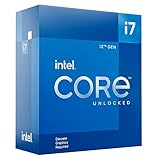
- Intel Core i7 3.60 GHz processor offers more cache space and the hyper-threading architecture delivers high performance for demanding applications with better onboard graphics and faster turbo boost
- The Socket LGA-1700 socket allows processor to be placed on the PCB without soldering
- 11 MB L2 and 25 MB L3 cache offers supreme performance for computation intensive apps
- Intel 7 Architecture enables improved performance per watt and micro architecture makes it power-efficient
Ports, caches and memory
Wide arithmetic cannot compensate for insufficient load/store, shuffle or gather resources. If the working set misses cache or saturates memory bandwidth, reducing the arithmetic instruction count may barely change completion time.
Compilers and dispatch
Auto-vectorizers may choose 256-bit code for portability or because it schedules better. Optimized libraries commonly contain scalar, SSE, AVX2 and AVX-512 implementations and select among them at runtime. Intel’s compiler documentation describes processor-specific target options and dispatch considerations (compiler guide).
Power, frequency and thread count
Sustained wide-vector work can increase package power and temperature and may alter operating frequency. There is no fixed AVX-512 clock penalty: the result depends on microarchitecture, instruction mix, active cores and power limits. A single-thread gain can shrink in an all-core run competing for power or memory bandwidth.
AMD and Intel support in current systems
| Platform | What is established | Qualification |
|---|---|---|
| AMD Zen 4 | Supports AVX-512 and AMD’s AOCL documents optimized AVX-512 paths for Zen 4 and later. | Many operations use narrower internal execution than Zen 5; product and workload results differ. See AOCL hardware features. |
| AMD Zen 5 | Moves toward native full-width AVX-512 execution in the core design. | Frequency and sustained behavior should be measured on the exact model; forum interpretation is not a specification. |
| Ryzen Threadripper PRO 9975WX | AMD lists AVX512, 32 cores, 64 threads, eight memory channels, DDR5 RDIMM support and a 350 W TDP; launch date was July 23, 2025. | Requires an sTR5 workstation platform. See official specifications. |
| Intel Xeon, including P-core Xeon 6 | Intel positions AVX-512 as a vector accelerator for Xeon server and workstation workloads. | Compare exact subsets, clocks, memory system and software validation rather than brand labels. See Intel’s overview. |
| Intel Alder Lake hybrid client systems | Shipping consumer systems did not expose AVX-512 as a normal, dependable feature. | Unofficial E-core-disabling workarounds were not a production strategy; hybrid scheduling creates feature-consistency issues. |
AMD’s Threadripper family includes Zen 5 products up to 64 cores and 128 threads (family page). Claims about unannounced designs such as “Nova Lake” remain speculation in the forum and should not be treated as Intel product documentation.
Rank #3

- Game and multitask without compromise powered by Intel’s performance hybrid architecture on an unlocked processor.
- Discrete graphics required
- Compatible with Intel 600 series and 700 series chipset-based motherboards
- Intel and reg; Core and reg; i5 processor offers hyper-threading architecture that delivers high performance for demanding applications with improved onboard graphics and turbo boost
- The processor features Socket LGA-1700 socket for installation on the PCB
How to check AVX-512 support
Linux
- Run
lscpu | grep -i avxfor a quick feature check. - Alternatively run
grep -m1 -oE 'avx512[^ ]*' /proc/cpuinfo. - Use
lscpufor the complete flag list and look for entries such asavx512f,avx512bw,avx512dq,avx512vl,avx512vnni,avx512_bf16andavx512_fp16.
The presence of avx512f does not imply every subset. BIOS policy, microcode, virtualization and the operating system can also hide a feature present in silicon.
Windows and applications
Use the processor manufacturer’s specification page, a current CPU-identification utility whose version is documented, or a CPUID-based diagnostic. Application code should use CPUID feature detection or a vetted dispatch library, never a model-name assumption. AMD’s AOCL documentation discusses runtime detection and recommends checking BIOS configuration on Zen 4 and Zen 5 systems (AOCL dynamic dispatch).
Compiling and using AVX-512
Auto-vectorization
For a local, known CPU, a compiler may be allowed to target the host:
gcc -O3 -march=native program.c -o program
A controlled baseline can request AVX-512F:
gcc -O3 -mavx512f program.c -o program
That second command may be insufficient for code requiring BW, DQ, VL, VNNI, BF16 or FP16. Inspect assembly or an optimization report to confirm what the compiler emitted.
Do these 3 things before closing this tab:
1Fix the driver behind crashes, sound loss and screen glitches2Repair Windows errors before they cause bigger problems3Scan for outdated or missing drivers - takes under a minuteRank #4
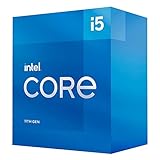
- Compatible with Intel 500 series & select Intel 400 series chipset based motherboards
- Intel Optane Memory Support
- PCIe Gen 4.0 Support
- Thermal solution included
Intrinsics
Intrinsics expose specific operations while leaving register allocation and scheduling to the compiler. The Intrinsics Guide identifies required subsets and performance data, but notes that an intrinsic can expand into a sequence rather than one native instruction.
Hand-written assembly
Assembly is justified only after profiling shows a material compiler gap. It adds maintenance, portability, correctness and dispatch costs. Intel’s packet-processing guide describes both intrinsics and compiler vector extensions for GCC and Clang (guide PDF).
Runtime dispatch is essential for portable software
A production binary normally needs a scalar baseline, an SSE or AVX2 path, an AVX-512 path, and possibly separate VNNI, BF16 or FP16 paths. Compile-time targeting alone can produce an illegal-instruction crash on an older CPU. Libraries may dispatch differently from the application’s own compiler, and cloud virtual machines may expose only a restricted feature set.
AOCL documents portable AVX-512 paths and runtime selection independent of AMD-specific implementations (documentation). A feature must be both supported and exposed by the running platform before it is safe to execute.
What’s actually slowing this PC down?
Pick the symptom - the matching free tool is one click away.
Best Value

- Processor Type - Intel Celeron D 430
- CPU Speed - 1.80GHz
- Bus Speed - 800 MHz
- L2 Cache Size - 512 KB
- L2 Cache Speed - 1.80GHz
How to benchmark AVX-512 correctly
- Keep the binary, compiler, input, thread count, memory configuration and power limits constant.
- Compare explicitly controlled scalar, AVX2 and AVX-512 paths rather than unrelated CPUs and software versions.
- Verify execution with disassembly, compiler reports, library logs or profiling counters.
- Record task throughput or latency, sustained clock, temperature, package power and energy per task.
- Separate single-thread, all-core and memory-bandwidth-limited tests.
- Run enough repetitions to characterize noise and thermal behavior.
- Identify the subset used: AVX-512F, VNNI, BF16, FP16 or another extension.
The AnandTech thread includes discussion of Time Spy modes, x265 and HandBrake, Prime95, memory bandwidth and older Skylake-X comparisons (page 2; page 4). Those are testing leads, not standardized benchmark evidence.
HandBrake and x265: verify the real encoder path
A HandBrake checkbox or front-end option does not prove that x265 executed AVX-512. HandBrake GUI settings, HandBrakeCLI options, FFmpeg options and native x265 parameters are different layers. The front end must pass an encoder-specific parameter, and the exact build must contain the desired assembly path.
Inspect the encode log, confirm CPU detection and build configuration, and compare a controlled AVX2 run with an AVX-512 run. The forum proposes --encopts asm=avx512, but that is a discussion suggestion, not a universally validated command; syntax and behavior depend on the HandBrake, FFmpeg and x265 versions.
Does AVX-512 improve gaming?
Usually, no. Most games are dominated by scalar or AVX2-level engine code, GPU execution, memory behavior, scheduling and API overhead. AVX-512 can matter in a specific software renderer, physics routine, decompressor, animation system or procedural-generation path only when the game ships and selects an optimized implementation. CPU support by itself does not raise frame rates.
The thread’s Pixomatic and software-rendering discussion is best understood as an example of specialized software, not evidence that modern GPU-bound games broadly benefit (thread).
Should you buy AVX-512 hardware?
It is a sensible priority when
- Your application has a tested AVX-512 path and your workload runs long enough for throughput or energy efficiency to matter.
- You perform scientific computing, media encoding, compression, cryptography, analytics, networking or specialized search.
- You can sustain the required memory bandwidth, cooling, BIOS configuration and power limits.
- The measured reduction in task time justifies the complete platform cost.
It is usually the wrong priority when
- Your main workload is gaming or ordinary desktop software.
- Your applications expose only scalar or AVX2 paths.
- You are I/O-bound, branch-heavy, latency-sensitive or memory-capacity-limited.
- You need compatibility across unknown consumer systems and cannot provide runtime dispatch.
Platform considerations
Threadripper PRO systems suit professional workloads requiring many cores, ECC memory and multiple memory channels, but the motherboard, registered memory, cooling, power supply and chassis add substantial cost. Xeon platforms can be appropriate for validated enterprise and HPC stacks. A mainstream desktop CPU may be better value when it already completes the workload, while a GPU or cloud instance may be the better accelerator for software designed around CUDA, ROCm or another dedicated platform.
Official pages cited here do not establish a reliable current street price for Threadripper PRO 9975WX, Xeon 6 platforms, oneAPI or AOCL. Price a complete regional system on the publication date rather than treating an instruction-set feature as a standalone product.
Quick Recap
The practical decision tree
- Identify the actual application and its hottest loop.
- Confirm that the software has an AVX-512 path, not merely a CPU-support checkbox.
- Identify the required subset and whether your operating system exposes it.
- Determine whether the processor executes that subset efficiently and at sustained clocks.
- Measure single-thread and all-core performance with controlled AVX2 and AVX-512 paths.
- Compare the measured time, energy and platform cost with a mainstream CPU, GPU or cloud alternative.
Product prices and availability are accurate as of the date/time indicated and are subject to change. Any price and availability information displayed on Amazon at the time of purchase will apply.

