
Zigbee and ESP32 solve different problems. Zigbee is a low-power wireless networking standard; ESP32 is a family of programmable microcontrollers and wireless chips. For most home-automation systems, use Zigbee for ready-made battery sensors, buttons, switches, and lights, then use ESP32 for custom sensors, displays, relays, and other devices you want to program. They can coexist through Home Assistant, ESPHome, MQTT, ZHA, or Zigbee2MQTT. One important exception: some newer ESP32 chips, including ESP32-C6 and ESP32-H2, can run Zigbee; the original ESP32 cannot.
Zigbee vs. ESP32 at a glance
| Question | Zigbee | ESP32 |
|---|---|---|
| What is it? | A wireless networking standard and protocol stack built around IEEE 802.15.4. | A family of microcontrollers and wireless systems-on-chip; capabilities depend on the exact model. |
| Typical connection | Low-power network managed by a coordinator, often with powered routers extending coverage. | Usually Wi-Fi to a home router, or Bluetooth LE; some models also support IEEE 802.15.4. |
| Battery sensors | Usually the better default for occasional, small messages. | Possible with careful hardware and firmware design, but board-level power can be much higher than chip sleep figures. |
| Custom hardware | Depends on the device; the network standard does not provide the same general-purpose programming flexibility as a microcontroller. | Strong fit for custom sensors, displays, actuators, and firmware. |
| Throughput | Designed for small control and sensor messages. | Wi-Fi is a better fit for larger payloads, frequent telemetry, and direct LAN services. |
| Typical Home Assistant integration | ZHA or Zigbee2MQTT, using a Zigbee coordinator. | ESPHome, MQTT, or custom firmware and an integration. |
| Best default | Commercial, low-power devices from a multi-vendor ecosystem. | Devices you want to build and control in software. |
The practical question is usually not “which technology wins?” but “which one fits this device?” A Zigbee sensor is typically a finished product that joins a coordinator. An ESP32 board is hardware on which you build or configure a device. If a supported ESP32 model runs Zigbee, the network protocol is still Zigbee; the ESP32 is the hardware platform.
What Zigbee provides
Zigbee is a low-power networking stack that includes network formation, joining, routing, security, and application-level mechanisms. Its specification supports star and mesh topologies. The Connectivity Standards Alliance describes it as a low-power mesh technology with a long-established smart-home ecosystem. Zigbee specification; Connectivity Standards Alliance security and privacy overview.
Coordinator, routers, and end devices
- Coordinator: Forms and manages the network. In a Home Assistant setup, it is commonly a USB adapter.
- Router: Usually a mains-powered device, such as a compatible plug, bulb, or in-wall switch, that can relay network traffic.
- End device: Often a battery sensor or remote that sleeps between messages and generally does not route traffic.
This is why a collection of battery sensors does not automatically create a strong mesh: you need powered routers in useful locations. Home Assistant’s ZHA documentation describes coordinator choices and notes that some behavior and limitations arise from the Zigbee specifications themselves.
Recommended Free Tools
#1 Best Overall

- 2.4GHz Dual Mode WiFi + Bluetooth Development Board
- Support LWIP protocol, Freertos
- SupportThree Modes: AP, STA, and AP+STA
- Ultra-Low power consumption, Compatible with Arduino IDE
- ESP32 is a safe, reliable, and scalable to a variety of applications
Compatibility is more than the Zigbee label
Before buying a device, check three things: whether it uses a compatible Zigbee profile or version, whether your coordinator supports it, and whether your chosen platform exposes the features you need. A device that joins a Zigbee network may not expose every button action, calibration option, firmware update, or power metric in every controller.
What an ESP32 provides
ESP32 is a broad Espressif product family, not one fixed set of radios or features. The original ESP32 supports 2.4-GHz Wi-Fi and Bluetooth Classic and Bluetooth LE. Its documented peripherals include GPIO, ADC, DAC, touch sensing, SPI, I²C, I²S, UART, PWM, Ethernet MAC, and TWAI/CAN-compatible support, with availability depending on the specific chip and package. Original ESP32 datasheet.
A typical ESP32 automation device combines the chip with sensors or actuators, firmware, a power supply, and a network connection. ESPHome can make Home Assistant integration relatively approachable; custom ESP-IDF or Arduino firmware gives you more control but also makes you responsible for more of the device’s behavior.
Rank #2
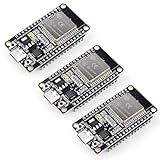
- Dual-Core Performance Up to 240 MHz: Run sensor processing, wireless communication, automation logic and connected-device tasks on a 32-bit dual-core ESP32 platform designed for responsive embedded and IoT projects
- Built-in Wi-Fi and Bluetooth 4.2: Connect to 2.4 GHz Wi-Fi networks or use Bluetooth Classic and BLE for wireless sensors, smart devices, remote controls, home automation and other connected projects
- Flexible Power-Saving Modes: ESP32 power-management features support dynamic clock scaling and low-power operating modes, helping developers reduce energy use in compatible sensing, monitoring and connected-device applications, suitable for battery-powered Internet of Things (IoT) devices.
- USB-C Programming with CP2102: Connect through USB-C for power, sketch uploads and serial monitoring, while GPIO, UART, SPI and I2C interfaces support sensors, displays, motor drivers and other modules (USB-C cable not included)
- Over-the-Air Update Support: Configure OTA functionality through a compatible ESP-32 software framework to update deployed firmware over Wi-Fi without reconnecting the board by USB for every revision
ESP32 models are not interchangeable
- Original ESP32: Wi-Fi and Bluetooth; no built-in Zigbee radio support.
- ESP32-C6: Wi-Fi 6, Bluetooth LE, and IEEE 802.15.4, including Zigbee 3.0 and Thread support.
- ESP32-H2: Bluetooth LE and IEEE 802.15.4, including Zigbee 3.0 and Thread, but no Wi-Fi.
- ESP32-C5: Espressif’s datasheet lists dual-band Wi-Fi 6, Bluetooth LE, and Zigbee 3.0 capabilities.
Check the exact chip and board datasheet before choosing hardware: product-family radios, memory, peripherals, and power behavior differ. Sources: ESP32-C6 datasheet, ESP32-H2 datasheet, and ESP32-C5 datasheet.
What’s actually slowing this PC down?
Pick the symptom - the matching free tool is one click away.
When an ESP32 itself runs Zigbee
An ESP32-C6 or ESP32-H2 can serve as the hardware for a custom Zigbee device when paired with suitable firmware. From the network’s perspective, that device communicates using Zigbee; it still needs to join a compatible Zigbee network. Espressif provides an ESP Zigbee SDK for development on supported chips. This is product-development work, not an automatic way to turn any ESP32 board into a Zigbee device.
Which is better for battery-powered automation?
Zigbee is generally the safer starting point for a coin-cell door sensor, motion sensor, button, or remote that sends small, occasional messages. Sleepy Zigbee end devices can remain inactive much of the time and wake to communicate, which suits low-power control traffic. Actual battery life still depends on the device design, sensor load, reporting schedule, battery chemistry, radio conditions, and firmware; the protocol alone cannot promise a number.
Rank #3

- Powerful ESP-32 Board: Unlock the world of Internet of Things (IoT) and advanced electronics with the heart of this kit: the ESP-32 board. It features a powerful dual-core processor, integrated Wi-Fi and Bluetooth 4.2, making it perfect for building connected, smart devices that communicate with your phone or the cloud. It's fully compatible with the Arduino IDE for easy programming.
- Super Starter Kit: This kit contains over 35 different modules and electronic components, including sensors, displays, motors, and input devices. From LEDs and buttons to an OLED screen, servo motor, and keypad, you have everything needed to explore a vast range of projects in one box.
- Step by Step Online Tutorial: Jump right in with our detailed, beginner-friendly tutorial. Access 30+ projects with complete code, clear circuit diagrams, and step-by-step instructions. Learn the fundamentals of electronics, coding, and how to utilize the ESP-32's unique capabilities without any prior experience.
- Hands-on Learning for All Skill Levels: Perfect for students, makers, engineers, and hobbyists. Start with basic circuits and coding, then progress to intermediate and advanced IoT applications. Build practical projects like weather stations, smart home controllers, remote-controlled devices, and interactive gadgets. The skills you learn are the foundation for real-world innovation.
- Quality & Great Support: Elegoo is committed to quality. We provide a clear, detailed tutorial guide, refined code, and a well-organized component kit. All modules are carefully selected for reliability and ease of use. Our dedicated technical support team and active online community are ready to help you succeed in your learning journey.
ESP32 can work in battery-powered projects when the design is built around low power: use suitable hardware, sleep aggressively, limit radio activity, and account for the sensor and regulator draw. Espressif lists 10 µA deep-sleep current for the original ESP32 chip under specified conditions, but that is not a finished-board or finished-product measurement. Regulators, USB interfaces, LEDs, sensors, flash, and external components can dominate standby consumption. See the datasheet conditions and specifications.
- Choose Zigbee first for an off-the-shelf coin-cell sensor that reports occasional events.
- Consider ESP32 for a custom battery device only after estimating current in sleep, sensing, wake-up, transmission, and recovery states on the actual hardware.
- Prefer ESP32 for permanently powered devices such as displays, LED controllers, relays, or environmental stations when you need custom logic or interfaces.
How network scale and reliability differ
Zigbee mesh coverage
Powered Zigbee routers can relay traffic, which can help cover a building without putting every sensor directly on Wi-Fi. But mesh coverage depends on router placement, device compatibility, coordinator location, and radio conditions. Place the coordinator away from noisy electronics and metal enclosures; a USB extension cable can help separate it from a host computer or USB 3 equipment. Add powered routers before placing distant battery devices, then test at the final locations.
Free tools Windows power users keep installed
One-click scans. No signup required.
Zigbee shares the 2.4-GHz band with Wi-Fi and other devices, so channel selection is environment-dependent. Avoid treating any one channel or advertised range as universally best: building materials, antenna design, interference, routes, and placement all matter. Home Assistant also cautions that physical conditions affect wireless range on its Connect ZBT-2 page.
Rank #4

- 2.4GHz Dual Mode WiFi + Bluetooth Development Board
- Support LWIP protocol, Freertos;ESP32 is a safe, reliable, and scalable to a variety of applications
- SupportThree Modes: AP, STA, and AP+STA
- Ultra-Low power consumption, Compatible with Arduino IDE
- 1PCS 30Pin ESP32 Development Board 2.4GHz WiFi Dual Cores Microcontroller Integrated with Antenna RF Low Noise Amplifiers Filters
ESP32 over Wi-Fi
A conventional Wi-Fi ESP32 normally connects directly to the household access point; it does not automatically create a Zigbee-style relay mesh. Its reliability depends on coverage, congestion, router configuration, credentials, firmware reconnect behavior, and whether the device remains connected. Wi-Fi can work very well in a well-designed network, especially when a custom device needs direct LAN access. As the number of always-connected devices grows, however, network management and airtime become system-design considerations. There is no universal maximum device count that applies across access points, firmware, and traffic patterns.
Bandwidth and responsiveness
Wi-Fi is the better fit for larger payloads, frequent telemetry, firmware downloads, web interfaces, and LAN services. Zigbee is intended for smaller messages such as button presses, contact changes, readings, and light commands. Neither is universally “faster” for automation: latency depends on sleeping behavior, routing, retries, interference, coordinator load, firmware, and the automation platform.
Which should you choose for common projects?
| Project | Better starting point | Reason |
|---|---|---|
| Battery door, motion, leak, or temperature sensor | Zigbee | Ready-made devices and low-power network behavior suit occasional reports. |
| Battery button or remote | Zigbee | Typically simpler than designing for continuous Wi-Fi connectivity. |
| Custom sensor with unusual components | ESP32 | GPIO, ADC, I²C, SPI, UART, and custom firmware allow more hardware choices. |
| Display, motor, LED effect, or local web interface | ESP32 | Programmable control and Wi-Fi suit richer interactions and larger data needs. |
| Commercial lights, switches, and sensors from different brands | Zigbee | A mature consumer device ecosystem can be joined through a coordinator. |
| Custom device that must join Zigbee | ESP32-C6 or ESP32-H2, where suitable | These models add IEEE 802.15.4; the original ESP32 does not. |
| Mains switching | Finished, appropriately rated product or professionally engineered design | A development board alone is not a safe mains controller; isolation, fusing, enclosure, and applicable certification matter. |
Using Zigbee and ESP32 with Home Assistant
Zigbee: ZHA or Zigbee2MQTT
A typical setup needs a coordinator connected to or accessible by the Home Assistant host, plus either ZHA or Zigbee2MQTT to manage the network. The essential sequence is to choose the coordinator and integration, place the coordinator well, permit joining, put each device into pairing mode, and test it where it will live. A practical network plan adds compatible mains-powered routers before distant battery devices. Keep a record of your coordinator and network configuration; do not assume replacing a coordinator automatically preserves every device, entity, route, or binding. See Home Assistant’s ZHA integration documentation for its supported hardware and implementation considerations.
Quick wins for a faster PC:
Repair Windows errors before they cause bigger problemsFix Now →Fix the driver behind crashes, sound loss and screen glitchesFind Drivers →Clear out junk files and repair common Windows errorsFree Scan →Best Value

- 2.4GHz Dual Mode WiFi + Bluetooth Development Board
- Ultra-Low power consumption, works perfectly with the Arduino IDE
- Support LWIP protocol, Freertos
- SupportThree Modes: AP, STA, and AP+STA
- ESP32 is a safe, reliable, and scalable to a variety of applications
ESP32: ESPHome, MQTT, or custom firmware
For a typical ESPHome build, select the exact board, confirm pin assignments and voltage levels, wire the components, configure Wi-Fi and the Home Assistant connection, then flash and verify logs and sensor values. Configure OTA updates only after you have a recovery path. Robust firmware should also handle access-point restarts, sensor failures, safe boot behavior, and power loss.
ESPHome documents Zigbee separately from its ordinary Wi-Fi use. Its Zigbee component supports the Home Automation profile; do not assume the feature set is identical to a normal ESPHome Wi-Fi device. For lower-level custom Zigbee development, use Espressif’s ESP Zigbee SDK on a supported chip.
Quick Recap
Maintenance responsibility
- Zigbee: The platform and device maker provide much of the product behavior, but you still manage pairing, coordinator placement, compatibility, network backups or migration, and device batteries.
- ESP32: You control the firmware and can implement unusual behavior, but also own provisioning, authentication, updates, rollback or recovery, reconnect logic, and long-term maintenance.
Other technologies worth distinguishing
- Thread: A low-power mesh technology relevant to IP-based smart-home devices. It does not make Zigbee obsolete. Home Assistant’s Connect ZBT-2 can operate as a Zigbee or Thread adapter, but it must be dedicated to one protocol at a time. Product details; Home Assistant announcement.
- Matter: An application-layer standard that can run over Wi-Fi, Ethernet, or Thread; it is not a radio that directly replaces Zigbee or ESP32 hardware.
- Bluetooth LE: Useful for nearby peripherals, commissioning, and some sensors, but not automatically equivalent to a Zigbee mesh. Support depends on the ESP32 model.
- Z-Wave: Another established home-automation option, with its own compatible hardware, device ecosystem, and regional radio frequencies.
- Wired links: Ethernet, RS-485, Modbus, CAN, or direct wiring can be a better fit for fixed devices when power, predictable communication, or reliability outweigh wireless convenience.
A simple decision path
- Is it a battery device sending occasional, small messages? Start with a ready-made Zigbee device.
- Are you building custom hardware with unusual sensors, a display, or an actuator? Start with ESP32 and choose firmware that matches your skill and maintenance budget.
- Does it need high bandwidth or direct LAN services? Choose a Wi-Fi-equipped ESP32 model, subject to the device’s power needs.
- Must your custom device join a Zigbee network? Consider ESP32-C6 or ESP32-H2 and confirm the firmware and platform support your intended device.
- Are you automating a whole home with both bought and custom devices? Use Zigbee for routine commercial sensors and controls, and ESP32 for specialized projects.
Common mistakes to avoid
- Calling ESP32 a protocol or assuming all ESP32 chips support the same radios.
- Using the original ESP32 chip’s deep-sleep figure as a battery-life estimate for a development board or finished device.
- Assuming Zigbee mesh works without strategically placed powered routers.
- Expecting every Zigbee product’s features to appear identically in every controller.
- Assuming an ESP32 Wi-Fi device is local just because it uses Wi-Fi; check whether its firmware depends on a cloud service.
- Putting a hobby board on mains switching without proper electrical design, isolation, enclosure, and applicable safety approval.
Product prices and availability are accurate as of the date/time indicated and are subject to change. Any price and availability information displayed on Amazon at the time of purchase will apply.

