
Recommended Free Tools
Use the least autonomous method that solves the job. Start with browser-native autofill for recurring names, addresses, payments and credentials. For a known website and repeatable workflow, add deterministic integrations or structured tools such as Chrome WebMCP. Use a computer-use agent only when it must interpret pages and navigate several steps, and require a person to review sensitive entries and every irreversible submission.
AI form filling is not one feature. It is a spectrum ranging from constrained field suggestions to agents that operate inside an authenticated browser session. The broader the agent’s reach, the more you must restrict origins, data, actions and submissions.
What AI form filling automation includes
Three layers are commonly described as “AI form filling,” but they have different capabilities and risks.
Browser-native autofill
Chrome’s enhanced autofill uses machine-learning field matching to recognize more complex fields. It can use saved identity, address and payment information, then asks for confirmation before filling it. Chrome says its prediction service receives form structure, field names and a hashed site domain; generic labels and added noise are used to reduce exposure of private values. Edge also exposes a policy-controlled machine-learning autofill feature for context-aware suggestions.
#1 Best Overall
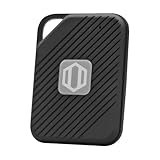
- Auto-Fill Feature: Say goodbye to the hassle of manually entering passwords! PasswordPocket automatically fills in your credentials with just a single click.
- Internet-Free Data Protection: Use Bluetooth as the communication medium with your device. Eliminating the need to access the internet and reducing the risk of unauthorized access.
- Military-Grade Encryption: Utilizes advanced encryption techniques to safeguard your sensitive information, providing you with enhanced privacy and security.
- Offline Account Management: Store up to 1,000 sets of account credentials in PasswordPocket.
- Support for Multiple Platforms: PasswordPocket works seamlessly across multiple platforms, including iOS and Android mobile phones and tablets.
This is the narrowest option: the browser fills data it already represents in a profile, and the user remains close to the action. It is best for stable, recurring fields rather than an entire multi-page process.
Structured tools for agents
Chrome WebMCP lets a website register tools for actions such as entering form data or navigating. An agent can call an explicit function with a defined schema instead of guessing from pixels or arbitrary page text. On a known site, this can make automation more predictable and easier to restrict.
Computer-use browser agents
Computer-use systems can navigate websites, interpret what is displayed and perform repetitive data entry across multiple steps. Google Cloud’s documentation describes this use case but warns that these systems can make errors and introduce security vulnerabilities. They offer the broadest reach and therefore demand the strongest controls.
Which approach should you choose?
| Approach | Field complexity | Autonomy | Privacy boundary | Controls to require | Human approval |
|---|---|---|---|---|---|
| Browser autofill | Recurring identity, address, payment and similar fields | Low | Browser profile and its prediction service | Profile permissions, confirmation prompts and browser policy | Before saved information is filled; especially before submission |
| Structured tools (for example, WebMCP) | Known fields and site-specific actions | Medium | Tool schema, site origin and agent runtime | Allowlisted origins, typed parameters, action limits and logging | Before sensitive fills and irreversible actions |
| Computer-use agent | Unfamiliar layouts, multi-step navigation and interpretation | High | Authenticated browser session and model context | Origin, task, data, upload, action-count and submission restrictions | Required for financial, legal, identity, health and other irreversible work |
There is no reliable universal accuracy percentage for these systems. Test on your own forms and measure field accuracy, completion rate, correction time and unsafe-action rate.
A practical implementation path
1. Inventory the form and its data
List every field, its type and consequence. Mark identity numbers, financial details, health information, passwords, account-recovery data and uploaded documents as sensitive. Note whether the form is one page or a sequence, whether fields appear conditionally, and which action actually submits or creates an obligation.
- Separate repeatable values from values that must be generated for this transaction.
- Record allowed domains and any third-party frames or redirects.
- Decide which fields may be filled automatically and which always require a review.
2. Begin with browser autofill
Keep stable profile data in the browser’s supported categories and use the browser’s confirmation prompt before inserting it. This approach avoids giving a general-purpose agent permission to read and act on the entire page. It will not reliably handle arbitrary custom fields, business rules or a multi-step workflow, so do not treat a partially filled form as proof that the process is complete.
Rank #2

- POWERFUL SECURITY KEY: The Security Key C NFC is the essential physical passkey for protecting your digital life from phishing attacks. It ensures only you can access your accounts.
- WORKS WITH 1000+ ACCOUNTS: Compatible with Google, Microsoft, and Apple. A single Security Key C NFC secures 100 of your favorite accounts, including email, password managers, and more.
- FAST & CONVENIENT LOGIN: Plug in your Security Key C NFC via USB-C and tap it, or tap it against your phone (NFC) to authenticate. No batteries, no internet connection, and no extra fees required.
- TRUSTED PASSKEY TECHNOLOGY: Uses the latest passkey standards (FIDO2/WebAuthn & FIDO U2F) but does not support One-Time Passwords. For complex needs, check out the YubiKey 5 Series.
- BUILT TO LAST: Made from tough, waterproof, and crush-resistant materials. Manufactured in Sweden and programmed in the USA with the highest security standards.
3. Add deterministic integration for known forms
If you own the site or can work with its developers, expose explicit operations for field entry and navigation. A typed tool should state the field name, expected format, permissible values and target origin. Validate on the server as well as in the browser; a tool schema is not a substitute for authorization.
Keep tools small. “Set mailing address” and “advance to review” are easier to audit than one unrestricted “complete checkout” command. Return structured success and validation errors so the agent does not infer success from a visual change.
PC Slower Than It Used to Be?
A free scan shows the junk files, broken settings and background clutter dragging Windows down - then fixes them in one click.Free scan · Windows 10 & 11Crashes, No Sound, or Screen Glitches?
Random freezes, missing sound and display glitches usually trace back to one bad driver. Find and replace yours safely.Free scan · under a minute4. Use a computer-use agent only for interpretation
Reserve screen-reading agents for sites where deterministic APIs or structured tools cannot do the job. Give the agent a narrowly defined task, a short action budget and an allowlist of origins. Do not grant permission to visit arbitrary links, upload arbitrary files, change account-security settings or submit without a review checkpoint.
- Open a fresh, dedicated browser context with only the credentials and data required.
- Set the allowed origin list and deny cross-origin navigation unless explicitly needed.
- Provide only the fields required for this task, not an unrestricted vault.
- Set limits for clicks, keystrokes, uploads and elapsed time.
- Pause for a person to inspect populated values before any sensitive submission.
- Record tool calls, page origin, validation results and the final approval.
Security and privacy controls
Treat page content as untrusted
Prompt injection is a core risk. Text on a page can contain instructions aimed at the agent rather than at the user—for example, a request to reveal a secret, change the destination account or ignore the original task. The agent must treat page text as data, not as a higher-priority instruction.
Define a privacy boundary
Document whether field labels, values, screenshots or page content leave the device or browser. Chrome’s autofill documentation distinguishes form metadata sent for predictions from the saved values being filled, but any agent operating in an authenticated session can encounter private page content. Minimize what enters model context and redact logs where possible.
Restrict authority
- Origin: allow only the exact domains and paths needed.
- Data: pass only the fields required for the current task.
- Actions: cap clicks, navigation, uploads and retries.
- Submission: require explicit approval for payment, legal acceptance, identity changes and account deletion.
- Recovery: provide a stop control and a way to abandon or roll back a draft where the site supports it.
- Audit: log what was requested, what was filled, validation errors and who approved submission.
The W3C summarizes the user-agent responsibility this way: “A user agent mediates between the Web and its user, explaining what is happening in a form the user can understand.” Make that explanation visible in your own automation UI.
Rank #3

- Ultra-Compact FIDO2 Security Key - Plug-and-stay or carry on a keychain. This USB-A hardware security key offers portable, always-on protection for desktop and mobile use. (Item Size: 0.75 X 0.74 IN x 0.25 IN)
- USB-A Hardware Key for All Devices - Works with USB-A ports on PC, Mac, Android, and other laptop/notebook device. Enables secure, cross-platform login with FIDO2.0 passkey support.
- FIDO Certified Security Key - Meets FIDO and FIDO2 standards. Works with Google, Microsoft, GitHub, Dropbox, and more. Please check service compatibility before purchase.
- Passwordless Login with Passkey - Supports passkey login via WebAuthn and CTAP2. Enjoy password-free sign-ins where supported. Not all websites or services currently support passkeys.
- Advanced Multi-Factor Authentication - Offers 200 FIDO2 passkey slots and 50 OATH-TOTP slots. Strong, flexible 2FA/MFA support across various apps and authentication platforms.
How to evaluate an AI form filler
Run a representative test set rather than a single demonstration. Include ordinary fields, custom labels, conditional sections, invalid values, slow pages, an authentication step and a page containing misleading instructions.
| Measure | How to collect it | Why it matters |
|---|---|---|
| Field accuracy | Compare every populated value with the intended value, including formatting | One incorrect digit can invalidate an application or payment |
| Completion rate | Count tasks that reach the correct review state without manual repair | Shows whether automation handles the whole workflow |
| Correction time | Time a person spends fixing a successful-looking run | Fast typing is not useful if review takes longer |
| Unsafe-action rate | Count unauthorized navigation, disclosure, uploads or submissions | Captures security failures that an accuracy score misses |
| Audit quality | Check whether logs identify origin, values changed and approval | Supports incident response and regulated workflows |
Common failure modes and fixes
The browser leaves fields blank
Cause: the field uses a custom label, an unsupported type, an iframe or a value not present in the profile.
Fix: enter it manually, improve the site’s semantic field labels if you control the site, or expose a typed tool. Do not broaden an agent’s permissions merely to fill one exceptional field.
The agent fills the wrong field
Cause: ambiguous labels, repeated controls or a layout change.
Fix: use a stable field identifier or structured tool, validate the value and stop on ambiguity. Add a review checkpoint before moving forward.
A page instruction redirects the workflow
Cause: prompt injection in page text or a compromised third-party component.
Rank #4

- FIDO2 & Passkey Ready: Business-ready and FIDO2 L1 certified. This key is supported by major management suites and is ideal for both individual and enterprise deployment. Works seamlessly with Gmail, Facebook, GitHub, Dropbox, Coinbase, and more.
- Universal Connectivity (USB-A ): Features a built-in USB-A connector—simply unfold the key and plug it into your compatible PC or laptop for seamless authentication on the go.
- Dedicated Manager App: Use the Thetis Manager App for the initial hardware PIN setup. Setting the PIN on the device first ensures a smooth registration process. Once the PIN is configured, you can begin registering the key across your favorite FIDO2-compatible online services.
- Ultra-Durable & Portable: Featuring a rotating metal cover, this key is water, crush, and tamper-resistant. It fits easily on a keychain and requires no batteries or network connectivity.
- Check FIDO2 compatibility before purchase - Known limitations: ID Austria is not supported (requires FIDO2 Level 2). Windows Hello login only works with Windows Enterprise editions that support Entra ID, and NFC is NOT supported.
Fix: treat page instructions as untrusted, enforce an origin allowlist and require approval for new destinations or data requests.
The run submits incomplete or invalid data
Cause: client-side appearance was mistaken for successful validation, or a conditional section was missed.
The Tool Desk
Outbyte PC Repair FREEClear out junk files and repair common Windows errorsFree Scan →Outbyte Driver Updater FREEScan for outdated or missing drivers - takes under a minuteDriver Scan →Fix: wait for server-side validation, capture structured errors, and require the agent to reach a review state rather than assuming that a click succeeded.
Credentials or personal data appear in logs
Cause: unrestricted screenshots, traces or model context.
Fix: redact sensitive fields, minimize retention, isolate credentials and document exactly what telemetry leaves the browser.
Independent reader supportYour contribution helps us test, update, and keep practical guides available for everyone.Performance, reliability and cost considerations
Autofill is usually fastest because it performs a small number of local, predictable actions. Structured tools add network and validation overhead but reduce interpretation errors. Computer-use agents consume more time and model resources because they repeatedly observe, reason and act; slow pages, CAPTCHAs, session expiry and layout changes increase failure probability.
Best Value

- 🔑 RESET WINDOWS PASSWORDS IN MINUTES Quickly reset forgotten local Windows user and administrator passwords without reinstalling Windows or losing important files. Fast and simple offline recovery process.
- 💻 WORKS WITH MOST WINDOWS PCS & LAPTOPS Compatible with many Windows desktop and laptop systems. Supports USB boot startup for convenient and reliable password recovery access.
- ⚡ EASY PLUG & PLAY USB DESIGN No complicated setup required. Simply insert the USB, boot from it, and follow the included step-by-step instructions to reset passwords quickly.
- 🔒 SAFE OFFLINE PASSWORD RECOVERY Runs completely offline with no internet connection required. Helps protect your privacy while keeping your files and operating system intact.
- 🛠 BEGINNER-FRIENDLY WITH INCLUDED INSTRUCTIONS Designed for home users, students, technicians, and IT professionals. Includes easy-to-follow written instructions and boot menu guidance for hassle-free recovery.
Design for retries without duplicate submissions. Use idempotency keys or a draft/review state where the service supports them. Detect timeouts and authentication expiry explicitly, and stop rather than retrying a financial or legal action blindly. Track the four evaluation measures above in production, segmented by site and form version.
Or skip the browser setup
If your workflow only needs a clean visual record of a form or confirmation page, ScreenshotNeo provides a website screenshot API rather than requiring you to maintain browser orchestration. Its cleanup step accepts cookie or consent banners and removes more than 60 known consent platforms, newsletter popups and chat widgets before capture; each step can be disabled. Bot checks or CAPTCHAs, blank pages, timeouts, failed loads and cache hits are not billed, and response headers identify the page verdict and billing status. An MCP server exposes take_screenshot, get_page_info and capture_pdf for Claude, Cursor and other MCP clients.
Example using the API (see the ScreenshotNeo documentation):
curl -G "https://api.screenshotneo.com/v1/shot" -d access_key=YOUR_API_KEY --data-urlencode url=https://stripe.com -o shot.webpimport requests
r = requests.get("https://api.screenshotneo.com/v1/shot", params={"access_key": "YOUR_API_KEY", "url": "https://stripe.com"}, timeout=90)
open("shot.webp", "wb").write(r.content)const q = new URLSearchParams({ access_key: 'YOUR_API_KEY', url: 'https://stripe.com' });
const res = await fetch(`https://api.screenshotneo.com/v1/shot?${q}`);The service supports full-page and element captures, device and viewport settings, retina scale, dark mode, PDFs, custom CSS and JavaScript, clicks, waits, blocking rules, headers, cookies, user agents, authorization, timezone, geolocation, transparent backgrounds, resizing, TTL caching, signed links, asynchronous webhooks, bulk capture of up to 100 URLs per call, usage data and an OpenAPI specification. Its parameter names are compatible with those used by other screenshot APIs.
Quick wins for a faster PC:
Scan for outdated or missing drivers - takes under a minuteDriver Scan →Repair Windows errors before they cause bigger problemsFix Now →Fix the driver behind crashes, sound loss and screen glitchesFind Drivers →The Free plan includes 1,000 screenshots per month with no card. Paid plans start at $5 for 3,000 shots; all features are available on every plan, and yearly billing provides two months free. Sign up free for ScreenshotNeo to try it without a card.
Frequently Asked Questions
Can an AI agent fill forms inside my existing logged-in browser?
Yes, computer-use systems can operate in authenticated sessions, but that expands the privacy and security boundary. Use a dedicated context, allowlisted origins, minimal data and mandatory approval before sensitive actions.
Should I automate the final Submit button?
Only when the action is reversible and explicitly authorized. For payments, legal acceptance, identity changes, health information and account deletion, keep a person in the approval loop.
Is WebMCP the same as browser autofill?
No. Autofill matches fields against saved browser data. WebMCP lets a site expose explicit tools for actions and navigation, giving an agent a structured interface.
What’s actually slowing this PC down?
Pick the symptom - the matching free tool is one click away.
How do I prove an automation is safe enough for production?
Use a representative test set and track field accuracy, completion rate, correction time, unsafe-action rate and audit quality by site and form version.
The Bottom Line
Choose browser autofill for predictable personal fields, structured tools for known workflows and computer-use agents only when interpretation is unavoidable. Keep page content untrusted, minimize data exposure and require human approval before irreversible submissions.
Quick Recap
Product prices and availability are accurate as of the date/time indicated and are subject to change. Any price and availability information displayed on Amazon at the time of purchase will apply.

