
Do these 3 things before closing this tab:
1Repair Windows errors before they cause bigger problems2Fix the driver behind crashes, sound loss and screen glitches3Clear out junk files and repair common Windows errorsFor a Facebook News Feed link preview in 2026, create a landscape Open Graph image at 1200 × 630 pixels (about 1.91:1). Put its public URL in the destination page’s og:image tag. This is the best-supported 2026 recommendation from current reference guides, not a currently verified Meta specification, so validate the rendered card with Facebook’s Object Debugger before publishing.
The recommended Facebook link-preview size
Use a 1200 × 630 px image for a URL shared to the Facebook News Feed. The canvas is landscape, with an aspect ratio of approximately 1.91:1. Current 2026 guidance pages converge on this working size for a destination page’s Open Graph image.
This recommendation applies to a shared link card: someone pastes an article, product, video or other URL and Facebook builds a preview from that page’s metadata. It does not describe a Facebook Page cover, profile image or an ordinary photo uploaded directly to a post. Those surfaces have different layouts and cropping behavior.
Meta’s exact 2026 minimum dimensions, file-size limit and guaranteed crop rules could not be verified from accessible primary documentation. Treat 1200 × 630 as a practical production canvas rather than a promise that Facebook will display every pixel identically on every device.
#1 Best Overall
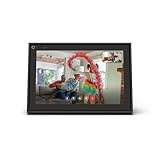
- A more natural connection. Smart Camera adjusts automatically so you can move freely and stay in frame, while Smart Sound ensures you can easily be heard.
- Call anyone, anywhere. Use apps like Messenger and WhatsApp to connect with friends and family—even if they don’t have a Meta Portal.
- Designed for the home. With a sleek picture frame design, quick setup and intuitive voice and touchscreen controls, Portal fits easily and seamlessly into your home.
- Privacy by design. Easily disable the camera and microphone, or block the lens with the camera cover.
Know which Facebook image you are designing
| Surface | Image source | How to handle it |
|---|---|---|
| Shared URL in the News Feed | The destination page’s og:image |
Design at 1200 × 630 px and test the generated card. |
| Facebook Page cover | Cover-photo upload in the Page settings | Use the cover guidance for that surface; do not substitute it for a link-preview image. |
| Ordinary photo post | An image uploaded in the composer | Choose dimensions for the post format, not for Open Graph metadata. |
A cover image can look correct on a Page and still be badly cropped when used as a shared-link image. Keep a dedicated share-card asset so the headline and branding remain legible in the narrower preview treatment.
How Facebook obtains the preview image
Facebook reads Open Graph metadata from the HTML document at the URL being shared. The basic graph object requires og:title, og:type, og:image and og:url. The image value should be an absolute, publicly reachable URL, not a path that only works inside your development environment.
Open Graph also defines optional image properties: og:image:width, og:image:height, og:image:type, og:image:secure_url and og:image:alt. Declare the dimensions and MIME type when they are known, and provide concise alternative text describing the image. If several og:image declarations exist, the first value has preference when parsers encounter a conflict.
Minimal head markup
Place the tags in the destination document’s <head>. Replace every example value with data for the page being shared:
Rank #2

- Scale up your greatest conversations. Smart video calling on your TV brings your favorite people, larger-than-life, into your living room.
- Share the room. Perfect for group calls. Meta Portal TV captures your whole room so everyone is in view without jostling for position.
- Call anyone, anywhere. Use apps like Messenger and WhatsApp to connect with friends and family—even if they don’t have a Meta Portal.
- A more natural connection. Smart Camera adjusts automatically so you can move freely and stay in frame, while Smart Sound ensures you can be heard clearly.
- Privacy by design. Easily disable the camera and microphone, or block the lens with the camera cover.
<meta property="og:title" content="Article title">
<meta property="og:type" content="article">
<meta property="og:url" content="https://example.com/article">
<meta property="og:image" content="https://example.com/share-image.jpg">
<meta property="og:image:width" content="1200">
<meta property="og:image:height" content="630">
<meta property="og:image:type" content="image/jpeg">
<meta property="og:image:alt" content="Concise description of the share image">
The 1200 and 630 values describe the recommended asset canvas. They are metadata about the source image; they do not force Facebook to display a fixed-size rectangle or prevent responsive cropping.
Design the 1200 × 630 asset for cropping
Keep critical content inside a safe area
Place the title, logo and essential subject toward the center of the canvas. Leave breathing room near every edge because the card may be rendered at different widths and may crop differently in feed, mobile and desktop contexts.
Use readable contrast and hierarchy
Use a short headline, a strong contrast between type and background, and one obvious focal point. A detailed screenshot or a long paragraph of text becomes difficult to read after the image is reduced in the feed. Check the image at the approximate size a reader will see, not only at 100% in an editor.
Export a real web asset
Serve the same file referenced by og:image. Ensure the URL returns an image response rather than an HTML error page, redirect loop or access-controlled resource. The declared og:image:type should match the file actually delivered. Keep the filename and URL stable when possible; changing the URL is a reliable way to distinguish a replacement asset from an older cached one.
PC Slower Than It Used to Be?
A free scan shows the junk files, broken settings and background clutter dragging Windows down - then fixes them in one click.Free scan · Windows 10 & 11Crashes, No Sound, or Screen Glitches?
Random freezes, missing sound and display glitches usually trace back to one bad driver. Find and replace yours safely.Free scan · under a minuteRank #3

- Move and talk freely with Smart Camera: With Smart Camera, you don’t have to worry about being out of frame. Whether you’re moving around the kitchen, prepping dinner or chasing the kids through the living room, Smart Camera adjusts to follow the action. And as more people enter a room, Smart Camera automatically widens to keep everyone in view, so you don’t miss a moment
- Private by design: Facebook doesn't listen to, view or keep the contents of your Portal video calls. Calls on Portal are encrypted, so conversations stay between you and those you're calling. You can also completely disable the camera and microphone with a single tap, or block the camera lens with the camera cover provided
- Connect with friends, even if they don't have Portal: Easily call friends and family on Messenger — calls can be made seamlessly to and from smartphones and tablets. And you can bring up to six other people into a group call
- Alexa built-in: Portal has Alexa built-in, so you can ask a question, set a timer, add items to your shopping list, control your smart home or more. Just ask
- Experience more together: With Portal, story time will never be the same. With music, animation and augmented reality effects, Portal lets you become some of your children’s favorite characters as you read along to well-loved stories. And if friends or family also have Portal, you can listen to your favorite music together as if you were in the same room, without delays or feedback
Implement it in a CMS or static site
- Create the image: make a 1200 × 630 px composition and export it in the format your hosting stack serves consistently.
- Upload it to a public, HTTPS location: copy the complete absolute URL.
- Set page-specific metadata: add the title, canonical page URL and image URL in the template or SEO field used by your CMS.
- Add structured image fields: include width, height, MIME type and descriptive alt text when your system supports them.
- Inspect the generated HTML: view source or use your framework’s production build to confirm the tags are in the document head and contain the intended values.
- Test the live URL: run the final, publicly accessible URL through Facebook’s Object Debugger before distributing it.
Single-page applications need particular care: metadata generated only after client-side JavaScript runs may not be available to a crawler that reads the initial response. Render the Open Graph tags in the server response or use your platform’s server-side rendering feature.
Check the result with Facebook’s Object Debugger
The Open Graph protocol site identifies Facebook’s Object Debugger as Facebook’s official parser and debugger. Enter the exact live URL, inspect the parsed og:image, and review the preview that Facebook generates. If you changed the image or metadata, scrape the URL again in the debugger so you can see whether the parser has picked up the new values.
Use the debugger as a rendering check, not as proof of a permanent display contract. Facebook can adjust the card treatment by placement, device or product version, while the source metadata remains the same.
Why a preview is cropped, missing or stale
The wrong image appears
- Check that the intended
og:imageis the first image declaration when several are present. - Confirm that the shared URL resolves to the page whose head contains the tags; a redirect may lead to a different document.
- Look for a CMS or SEO plugin that inserts its own image tag after your manual tag.
The image is blank or replaced by a fallback
- Open the image URL directly without logging in. If it fails there, Facebook’s crawler cannot reliably fetch it.
- Check HTTPS certificates, robots or firewall rules, hotlink protection and accidental authorization requirements.
- Verify that the server returns the image itself and a matching content type rather than an error document.
The headline or logo is cut off
- Rework the composition with larger margins and move important elements away from the edges.
- Keep the source at the recommended 1200 × 630 canvas instead of adapting a portrait or cover-photo layout.
- Use the Object Debugger to inspect the actual card rather than judging only the original file.
Facebook still shows an older version
Open the live page source to make sure the new URL is present, then submit that URL again in the Object Debugger. If you replaced the file at the same URL, a previously fetched copy may remain visible until Facebook refreshes it; using a new, versioned image URL can make the change unambiguous.
The Tool Desk
Outbyte PC Repair FREEClear out junk files and repair common Windows errorsFree Scan →Outbyte Driver Updater FREEScan for outdated or missing drivers - takes under a minuteDriver Scan →Rank #4

- Feel close, wherever you roam. With the best of Meta Portal smart video calling made portable, you can take the conversation anywhere in your home.
- Designed for calls on the go. A long-lasting battery and integrated handle make it easy to move from room to room.
- Call anyone, anywhere. Use apps like Messenger and WhatsApp to connect with friends and family—even if they don’t have a Meta Portal.
- A more natural connection. Smart Camera adjusts automatically so you can move freely and stay in frame, while Smart Sound ensures you can always be heard.
- Great sound anywhere. Listen to music with a speaker that can fill any room. Doubles as a portable Bluetooth speaker around the home.
Performance, accessibility and maintenance
Keep the page and image fetchable
The preview depends on Facebook retrieving both the HTML document and the image. Avoid requiring a user session, a consent interaction or client-side action before the image can be downloaded. If your site uses a CDN, verify that the public image URL works from outside your network.
Write useful image alt text
og:image:alt should describe the visual content in a short phrase, not repeat a keyword list. It supplements the visual preview for systems and users that cannot see the image.
Maintain one canonical share image per page
Generate page-specific values rather than putting one global image on every article. Keep the title, URL and image aligned so a shared card does not combine the headline from one page with artwork from another.
Independent reader supportYour contribution helps us test, update, and keep practical guides available for everyone.Or skip the browser setup
If you need to inspect how your destination page renders before sharing it, ScreenshotNeo can capture the live page through one request. It is useful for checking your own page’s layout and share-card artwork; it does not replace Facebook’s Object Debugger or guarantee the exact feed treatment.
Best Value

- Build relationships at work and home. Messenger and WhatsApp put you just one tap away from friends and family—even if they don’t have a Meta Portal.
- A more natural connection. Smart Camera adjusts automatically so you can move freely and stay in frame, while Smart Sound ensures you can always be heard.
- Call anyone, anywhere. Use apps like Messenger and WhatsApp to connect with friends and family—even if they don’t have a Meta Portal.
- Bigger screen, bigger sound. A brilliant 14” HD tilting display and a room-filling stereo speaker means you’ll never miss a detail.
- Privacy by design. Easily disable the camera and microphone, or block the lens with the integrated camera cover.
See the ScreenshotNeo documentation for all parameters. A basic request is:
cURL
curl -G "https://api.screenshotneo.com/v1/shot" -d access_key=YOUR_API_KEY --data-urlencode url=https://example.com/article -o shot.webpPython
import requests
r = requests.get("https://api.screenshotneo.com/v1/shot", params={"access_key": "YOUR_API_KEY", "url": "https://example.com/article"}, timeout=90)
open("shot.webp", "wb").write(r.content)
Node.js
const q = new URLSearchParams({ access_key: 'YOUR_API_KEY', url: 'https://example.com/article' });
const res = await fetch(`https://api.screenshotneo.com/v1/shot?${q}`);
Before capture, ScreenshotNeo accepts cookie or consent banners and removes more than 60 known consent platforms, newsletter popups and chat widgets; each cleanup step can be disabled. Only clean shots are billed: bot checks or CAPTCHAs, blank pages, timeouts, failed loads and cache hits cost nothing, and response headers identify the page verdict and whether it was billed. Its MCP server provides take_screenshot, get_page_info and capture_pdf tools for Claude, Cursor and other MCP clients. Every plan includes the features; 1,000 screenshots per month are free with no card, Starter is $5 for 3,000, and paid tiers continue through Growth ($15/15,000), Pro ($39/60,000), Scale ($99/250,000) and Business ($249/1,000,000). Create a free ScreenshotNeo account to start.
FAQ
Frequently Asked Questions
Does adding og:image:width and og:image:height resize my file?
No. Those properties describe the source image for parsers. Resize or crop the actual 1200 × 630 file in your image editor or build pipeline.
Should og:image:alt contain the article headline?
Only if the headline accurately describes the visual. Prefer a concise description of what the image shows; the page title belongs in og:title.
Can I guarantee the same card appearance in every Facebook placement?
No. The source metadata is consistent, but Facebook may render different treatments by device, placement or product version. Test the live URL with the Object Debugger.
Quick Recap
Product prices and availability are accurate as of the date/time indicated and are subject to change. Any price and availability information displayed on Amazon at the time of purchase will apply.

