
A signed URL makes a render link tamper-resistant by letting a trusted signer attach a cryptographic signature and an expiry or policy to a request. The serving layer must verify that signature on every request. If a covered part of the request is changed, verification should fail. A signed link is still a bearer credential: anyone who gets it can use it while it remains valid.
How signed URLs work
A signed URL carries authentication data in its query string, commonly a signature plus an expiry time or policy. A trusted server creates the signature from the request components the platform requires. When someone uses the link, the CDN, storage service, or origin checks the signature and the policy before serving the resource.
For a render link, the protected resource might be one image or PDF. The signature is not encryption: it does not conceal the URL or its parameters. “Tamper-proof” means that a change to a component covered by the signature should make verification fail. It does not mean the URL cannot be copied, forwarded, or used by someone else.
The parts that make the link work
- Resource: the particular file or render being requested.
- Policy: constraints such as an expiry time, and on some platforms a not-before time or IP address condition.
- Signature: authentication data that the serving layer checks against the request and policy.
- Verifier: the CDN, storage provider, or origin that decides whether to serve the content.
Correct signing is only one part of the control. The serving layer must actually validate the signature, and all security-relevant parameters must be covered or otherwise validated. If the origin serves a file without checking the signed request, the signature does not protect it.
Quick wins for a faster PC:
Clear out junk files and repair common Windows errorsFree Scan →Scan for outdated or missing drivers - takes under a minuteDriver Scan →#1 Best Overall

- FIDO2 & Passkey Ready: Business-ready and FIDO2 L1 certified. This key is supported by major management suites and is ideal for both individual and enterprise deployment. Works seamlessly with Gmail, Facebook, GitHub, Dropbox, Coinbase, and more.
- Universal Connectivity (USB-A ): Features a built-in USB-A connector—simply unfold the key and plug it into your compatible PC or laptop for seamless authentication on the go.
- Dedicated Manager App: Use the Thetis Manager App for the initial hardware PIN setup. Setting the PIN on the device first ensures a smooth registration process. Once the PIN is configured, you can begin registering the key across your favorite FIDO2-compatible online services.
- Ultra-Durable & Portable: Featuring a rotating metal cover, this key is water, crush, and tamper-resistant. It fits easily on a keychain and requires no batteries or network connectivity.
- Check FIDO2 compatibility before purchase - Known limitations: ID Austria is not supported (requires FIDO2 Level 2). Windows Hello login only works with Windows Enterprise editions that support Entra ID, and NFC is NOT supported.
Where to create and verify a signed render link
Generate it on a trusted server
Keep the signing key on a server-side system you control or in the provider’s designated secure configuration. Do not put it in browser JavaScript, a mobile app, a public repository, or a URL. Client code can request a link from your server, but should not receive the signing key itself. Cloudflare’s private-image guidance specifically calls for generating signed URLs server-side to protect that key.
Have the server authorize the user and resource before signing. A valid signature proves that the request matches a signature made with the key; it does not by itself prove that the person asking your application for a link was entitled to receive one.
Verify every request at the serving layer
Configure the serving layer to validate each signed request before it returns the render. Google Cloud CDN explicitly says origin web servers must validate signatures on every signed request they serve, and accept or reject unsigned requests. The verifier and the signer must agree on the exact request representation and policy. Treat parameter names, encoding, case sensitivity, and query-string handling as provider-specific details rather than assuming that one platform’s signing format works on another.
Rank #2

- A FIDO security key with PUF technology provides a unique, hardware-rooted trust anchor that resists tampering and cyber attacks, offering stronger security than conventional designs.
- FIDO2 Certified Protection – Enjoy phishing-resistant security with FIDO2 certification, ensuring top-tier account safety across Windows, macOS, Linux, iOS iOS, Android and more.
- Easy to use & Portable – Designed with a compact USB-C interface, Clife key fits easily on your keychain for secure access anywhere. Simply plug in and authenticate with ease.
- Universal Compatibility – Works seamlessly with hundreds of FIDO2/U2F compliant services, including popular cloud, email, and social platforms.
- Backup recommended – To ensure continuous access, register a backup Clife security key as a spare in case your primary key is lost.
Use HTTPS and minimize the exposure window
Use HTTPS for signed links. Google recommends HTTPS to reduce the chance that a signature is intercepted, and recommends choosing the shortest practical validity period. Avoid placing signed URLs in public pages, analytics events, logs, or support messages where possible; anyone who obtains an active link may be able to use it.
Recommended Free Tools
How to issue a render link safely
- Choose the protected resource. Decide whether the link grants access to one render or whether a client needs a collection of restricted files.
- Choose the verifier. Determine whether the CDN, storage provider, or your origin will verify the signature. Confirm that it checks every request before content is served.
- Define the signed request and policy. Follow the selected platform’s signing format. Include the resource and every security-relevant parameter that affects what is delivered. Set an expiry and, if available and useful, other policy constraints such as a not-before time or IP condition.
- Generate the link server-side. Authorize the requesting user, sign with a protected key, and return only the resulting link. Never expose the signing key to the client.
- Deliver the link over HTTPS. Treat it as a secret while it is active: avoid unnecessary sharing and keep its lifetime as short as the recipient’s workflow permits.
- Test both allowed and denied cases. Confirm the intended link works, then test an expired link, a modified signed component, and a request missing required signature data. Each should be rejected by the verifier.
- Plan key rotation and incident response. Know whether rotating or revoking a key invalidates outstanding links. Google Cloud Storage documents that access via its signed URLs ends when the URL expires or the signing key is rotated.
There is no universal signing command or query-string format: use the exact instructions for the platform doing the verification. The platform-specific distinctions below are important when setting expiry, choosing a policy, or changing a URL after it has been signed.
How long should a render URL stay valid?
Set the shortest expiry that still accommodates the recipient’s expected use, including the time needed to open or retrieve the render. Longer validity makes a leaked or forwarded bearer link useful for longer. Expiry is not a substitute for authorization at link-creation time or signature validation at request time.
Rank #3

- Protect accounts with USB-C & NFC 2FA security key. Hardware-based authentication blocks phishing, credential theft & unauthorized access across cloud, enterprise & personal platforms.
- FIDO2 Level 2 certified Security Key. Works with Apple ID, Microsoft Azure/Entra ID, AWS, Google, Facebook, Salesforce, DUO & more. Compatible with Chrome, Safari & Edge on all major OS.
- Plug & play USB-C Security Key with NFC tap login. No software, drivers or batteries required. Works with Windows PC, MacBook, iPhone, Android & Chromebook for fast, secure authentication.
- Built with FIPS 140-2 Level 3 secure element for advanced encryption. Trusted by IT teams, healthcare, education & government for secure authentication & identity protection.
- IP68 waterproof, dustproof & crush-resistant design. Supports FIDO2, U2F, OTP, PIV, Mini Driver & smart card login. Durable USB security key for long-term enterprise & daily use.
| Platform | Documented expiry behavior | Implementation detail to check |
|---|---|---|
| Google Cloud Storage V4 | Maximum documented duration: 604,800 seconds (7 days). | The URL grants temporary access to a specific resource to anyone who knows it. Access ends at expiry or when the signing key is rotated. |
| Google Cloud CDN | Use the shortest practical lifetime; no maximum duration is stated in the material summarized here. | The documented URL includes expiry, key name, and signature. Relevant parameters are case-sensitive, and the origin must validate every signed request. |
| AWS CloudFront | Expiry is checked when a request is made. No maximum duration is stated in the material summarized here. | Signed URLs can use canned or custom policies. Custom policies can add a not-before time and IP address condition. |
| Cloudflare Images | The documentation example uses a one-day expiry; that example is not a universal recommendation or stated maximum. | Private-image tokens should be generated server-side to protect the signing key. |
These are provider-specific behaviors, not interchangeable defaults. In particular, CloudFront’s request-time expiry check means a request made after expiry is rejected; it does not make a link secret before then.
Should you use a signed URL or a signed cookie?
Choose based on what the recipient needs to access and what the client can send. AWS CloudFront recommends signed URLs for individual files or clients that do not support cookies. It recommends signed cookies for access to multiple restricted files or when changing URLs is undesirable.
What’s actually slowing this PC down?
Pick the symptom - the matching free tool is one click away.
| Use case | Usually the better fit | Why |
|---|---|---|
| One render or individual file | Signed URL | The permission travels with the specific link. |
| Several restricted files for one client or session | Signed cookie | Access can be granted without issuing a separate signed URL for every file. |
| Client does not support cookies | Signed URL | The client can present the signed link directly. |
| URLs must remain unchanged | Signed cookie | Authorization can be carried separately from the resource URL. |
Cookies are not automatically safer: their scope, lifetime, transport, and verification still need to be configured correctly. Likewise, a URL is not automatically unsuitable because it contains a token; its bearer nature simply needs to fit the way it will be distributed.
Rank #4
![FIDO U2F Security Key, Thetis [Aluminum Folding Design] Universal Two Factor Authentication USB (Type A) for Extra Protection in Windows/Linux/Mac OS, Gmail, Facebook, Dropbox, SalesForce, GitHub](https://m.media-amazon.com/images/I/414cv-4SxrL._SL160_.jpg)
- Protect Online Account - Offer a strong factor authentication to your online account. Never lose your accounts through password theft, phishing, hacking or keylogging scams.
- Universal Compatibility - The Thetis U2F key can be used on any websites which support U2F protocol with the latest Chrome installed on your Windows, Mac OS or Linux. (Important Note: Not compatible with any email clients including Apple Mail, Mozilla Thunderbird or Microsoft Outlook)
- FIDO-U2f-Certified - Safety is our priority. Certified by world's largest Ecosystem for Standards-based, interoperable Authentication. Only support U2F protocol (No UAF or OTP). Provide low-cost and simple solution with high security.
- Extremly Durable - Designed with a 360° rotating metal cover that shields the USB connector when not in use. Also, crafted from a durable aluminum alloy to protect the Key from drops, bumps and scratches.
- Portable Design - Compact, ultra-portable design allows you to take your FIDO key anywhere you need it.
What happens if the URL query string changes after signing?
Do not assume that a query-string edit is harmless. If a changed parameter is part of the signed request, the signature should no longer validate. If an added parameter changes what the server delivers but is not covered by the signature, it can undermine the intended restriction. Follow the provider’s rules for which parameters are signed and how URLs are encoded.
CloudFront documents that query-string parameters added after signing can lead to HTTP 403. Avoid appending tracking values, changing parameter order or encoding, or modifying the URL in a redirect or proxy unless the platform explicitly supports that transformation. When a recipient needs different query parameters, generate a new link using the provider’s signing process.
Platform-specific checks
Google Cloud CDN
The documented signed URL format includes an expiry, key name, and signature. Its relevant parameters are case-sensitive. Google advises signing only HTTPS URLs, using the shortest practical lifetime, and configuring the origin to validate each signed request. Make sure the actual origin path enforces that check; signing alone does not cause an unconfigured origin to reject access.
Do these 3 things before closing this tab:
1Repair Windows errors before they cause bigger problems2Fix the driver behind crashes, sound loss and screen glitches3Clear out junk files and repair common Windows errorsBest Value
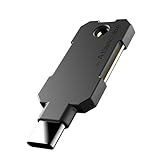
- PHISHING-RESISTANT 2FA: Cryptographically binds to real domains, making phishing attacks impossible unlike SMS codes or authenticator apps.
- 3-SIDE CAPACITIVE TOUCH: Tap the end, left, or right side to authenticate, so it works in any orientation or crowded USB port.
- MULTI-COLOR LED INDICATOR: Blue means ready, blinking blue means tap now, green means success, and red means error for instant status feedback.
- IP68 WATERPROOF & BATTERY-FREE: Crush-resistant one-piece construction survives daily carry on a keychain or in a bag for years without any batteries.
- UNIVERSAL COMPATIBILITY: Works with Google, Microsoft, Apple, GitHub, AWS, and any FIDO2 / U2F / WebAuthn service, storing up to 100 passkeys.
Google Cloud Storage
A Cloud Storage signed URL gives anyone who knows it temporary access to the specified resource. For V4 signed URLs, the documented maximum expiry duration is 604,800 seconds (7 days). Access can also end when the signing key is rotated, so key rotation may invalidate links that recipients still expect to use.
AWS CloudFront
CloudFront supports canned and custom policies. Both can define expiry; custom policies can also specify a not-before time and an IP address condition. CloudFront validates the signature and policy before delivery, and checks expiry at request time. Keep the signed query string intact: parameters added after signing can cause HTTP 403.
Cloudflare Images
Private images use signed URL tokens. Generate those tokens on your server so the signing key is not exposed to clients. The documentation’s one-day example is an example, not a required lifetime or generally appropriate default; set a duration that matches your access need and the platform’s current limits.
Independent reader supportYour contribution helps us test, update, and keep practical guides available for everyone.Common failures and how to troubleshoot them
- The valid link returns an authorization error. Check that the verifier is using the expected key and policy, that the link has not expired, and that the request reaches the layer configured to verify it.
- A link stops working after a redirect, proxy, or client rewrite. Compare the final request URL with the one that was signed. Restore the original signed URL or generate a fresh link after the required transformation.
- CloudFront returns HTTP 403 after a query-string change. Remove parameters added after signing or create a new signed URL containing the intended request values.
- Some URLs fail while similarly named ones work. Check exact parameter spelling and case. Google Cloud CDN documents case-sensitive relevant parameters; also confirm that encoding and path handling match the platform’s signing instructions.
- An expired link remains accessible. Check the actual serving path. The verifier may not be enforcing expiry, or another public route may expose the same render without verification.
- A key rotation unexpectedly invalidates active links. This is documented behavior for Google Cloud Storage signed URLs. Issue new links after rotation and account for outstanding links in the rotation plan.
- The key may have reached client code or logs. Treat it as exposed: follow the provider’s key rotation or revocation process, then issue new links. Do not assume that shortening URL expiry fixes a leaked signing key.
Or skip the browser setup
If by “render link” you mean producing a website screenshot or PDF, ScreenshotNeo can capture the page through one API request; it does not replace the separate signing and access-control layer for a link you distribute. ScreenshotNeo is a website screenshot API and MCP server from Yorker Media. Its capture flow can remove cookie/consent banners, newsletter popups, and chat widgets before the shot, and failed loads, bot checks, blank pages, and cache hits are not billed.
Free tools Windows power users keep installed
One-click scans. No signup required.
curl -G "https://api.screenshotneo.com/v1/shot" -d access_key=YOUR_API_KEY --data-urlencode url=https://stripe.com -o shot.webpSee the ScreenshotNeo API documentation for request options. An MCP server also lets AI agents using Claude, Cursor, or another MCP client call screenshot tools. The free plan includes 1,000 screenshots a month with no card; paid plans start at $5 for 3,000. To create screenshots, then add your own signed-link delivery controls where needed, sign up for ScreenshotNeo free.
Security checklist for production
- Keep signing keys off clients and protect them as credentials.
- Authorize each link request before signing it.
- Use HTTPS and the shortest practical validity window.
- Sign or validate every parameter that can change access or the returned render.
- Verify every request at the CDN, storage provider, or origin that serves the file.
- Test tampering, expiry, missing signatures, redirects, and key rotation before relying on the link.
- Choose signed cookies rather than many individual URLs when a client needs a collection of files and supports cookies.
Frequently Asked Questions
Can a signed URL be reused?
Yes. It is generally usable by anyone who has it while its signature and policy remain valid; signing does not make a link single-use.
Does a signed URL encrypt the render or its query string?
No. A signature authenticates covered request data; it does not conceal the URL or encrypt the resource.
Quick Recap
Product prices and availability are accurate as of the date/time indicated and are subject to change. Any price and availability information displayed on Amazon at the time of purchase will apply.

