
Quick wins for a faster PC:
Repair Windows errors before they cause bigger problemsFix Now →Scan for outdated or missing drivers - takes under a minuteDriver Scan →Clear out junk files and repair common Windows errorsFree Scan →Use a 1200 × 630 pixel PNG for the broadest Open Graph (OG) compatibility. Keep the title and logo inside a central safe area, host the file at a stable absolute HTTPS URL, and add the required OG and Twitter metadata. A browser editor is fastest for one-off graphics; an API is better when your CMS or build process must generate an image for every page.
What an OG image PNG generator does
An OG image is the preview graphic that appears when someone shares a URL in a social network or messaging app. An OG image PNG generator combines a template editor with an export step: you enter a page title, description and site name, choose colors and a background, preview the result, and download a PNG.




Browser-based tools such as og-image.org are designed for occasional posts, launches and landing pages. Its editor runs in the browser and states that “Your data never leaves your device.” That can matter when the artwork contains unpublished copy or private screenshots.
For automated publishing, the same category also includes URL-based rendering APIs. og-image.org documents a GET /api/og endpoint that accepts template parameters, text, backgrounds and an output format; PNG is the default and SVG is available. An API lets a CMS, static-site build or edge function create a predictable image without a manual download.
Recommended PNG dimensions and design rules
Start at 1200 × 630 pixels
1200 × 630 px is the broadly compatible baseline for Facebook, X/Twitter, LinkedIn, Slack, Discord, WhatsApp, iMessage and similar preview contexts. It has a 1.91:1 aspect ratio, so do not export a square image and expect every client to display it without cropping.
Choose PNG for text and flat graphics
PNG preserves sharp type, logos, interface screenshots and simple illustrations. JPEG can be smaller when the background is a photograph, but compression may soften small text. If a generator offers both, export PNG first for a text-led card and compare file size before switching to JPEG.
Keep a safe central area
Place essential text and logos inside roughly the central 87% of the canvas—about 60 px from each edge on a 1200 × 630 image. Some clients crop or reframe previews, so treat edge decoration as optional and keep the headline, brand mark and key data away from the perimeter.
- Use one short headline that remains legible on a phone.
- Use strong contrast between text and its background.
- Reserve a consistent area for the site name or logo.
- Check the smallest text at the actual preview size, not only while zoomed in.
Create an OG PNG in a browser generator
- Choose a template. Select a layout with a clear text hierarchy and enough contrast for your brand colors.
- Enter content. Add the page title, a concise description and the site name. Rewrite long titles rather than allowing automatic line wrapping to create tiny type.
- Adjust visual settings. Set colors, typography and the background. Keep the important elements inside the central safe area.
- Check the live preview. Inspect line breaks, logo proportions, contrast and any crop shown by the tool.
- Export PNG. Confirm the downloaded file is 1200 × 630 px and opens correctly in an image viewer.
- Host the file. Put it at a stable, publicly reachable HTTPS address such as
https://example.com/images/article-og.png. Do not use a path that requires a login, a temporary local URL or a robots rule that blocks the crawler. - Add metadata. Insert the tags below in the document’s
<head>. - Share-test and recrawl. Paste the page URL into each target platform. If an old image appears, use that platform’s refresh or debugger action and wait for its cache to update.
Metadata that makes the PNG appear
Use an absolute HTTPS image URL and declare its dimensions. The Twitter card tag helps X and other consumers select a large preview.
<meta property="og:type" content="website">
<meta property="og:title" content="Your page title">
<meta property="og:description" content="A concise description of the page.">
<meta property="og:url" content="https://example.com/article">
<meta property="og:image" content="https://example.com/images/article-og.png">
<meta property="og:image:width" content="1200">
<meta property="og:image:height" content="630">
<meta name="twitter:card" content="summary_large_image">
<meta name="twitter:image" content="https://example.com/images/article-og.png">
Use the final canonical page URL in og:url, and make sure the image URL returns the image itself rather than an HTML page or a redirect loop. The metadata describes the page; it does not replace a correctly hosted file.
Manual generator or API?
| Need | Better choice | Reason |
|---|---|---|
| One blog post or campaign | Browser generator | Quick template editing, visual preview and a direct PNG download. |
| One image per CMS page | Rendering API | Generation can run whenever a page is published or updated. |
| Build-time static site images | Rendering API | The build can request deterministic assets and store them with the site. |
| Private draft artwork | Client-side editor | og-image.org says its editor processes data in the browser. |
With an API, define a template contract first: which fields are required, the maximum title length, the fallback background and the output format. Cache the resulting image under a stable URL so social crawlers do not request a new render on every visit. If a provider supports SVG as well as PNG, use PNG when broad client compatibility and crisp raster text are the priority.
Why an existing og:image may not show
The tag is missing or malformed
View the delivered HTML, not only your template source, and verify that og:image appears in the <head> with a complete HTTPS URL. Check spelling, quotation marks and duplicate tags generated by plugins.
The crawler cannot fetch the file
Open the image URL in a private browser window. It should return a 200 response without authentication, hotlink protection or a JavaScript challenge. Confirm your server sends an image content type and does not block the platform’s crawler.
The dimensions or content are wrong
Inspect the actual file properties. A 1200 × 630 design exported at another size, or an image whose important text touches the edges, can be cropped or rejected by a client.
A cached preview is being displayed
Social services cache link previews. After replacing the file, use the target service’s share debugger or refresh control, then test again. A cache refresh is separate from changing your HTML.
Competing metadata wins
SEO plugins, theme code and server-side layouts can emit multiple OG images. Keep one intentional set of tags and place the preferred image first when a platform chooses among duplicates.
Automate image production safely
- Validate inputs: escape titles and descriptions before placing them in a URL parameter or template.
- Set length limits: a maximum character count prevents overflow and makes templates predictable.
- Use deterministic names: derive a versioned filename from the page identifier so a changed image can be invalidated deliberately.
- Handle failures: retain the previous valid image when a render times out, and alert the publishing job instead of emitting a broken URL.
- Test representative text: include long words, accented characters, right-to-left text and titles with punctuation.
- Separate accessibility from the graphic: supply meaningful page metadata and image context; text embedded in an OG image is not a substitute for accessible HTML.
For a generator API, also decide whether the request is synchronous or queued, how long generated URLs remain valid, and whether a cache hit returns the same bytes. These operational details determine whether a social crawler receives a file reliably during a launch.
PC Slower Than It Used to Be?
A free scan shows the junk files, broken settings and background clutter dragging Windows down - then fixes them in one click.Free scan · Windows 10 & 11Crashes, No Sound, or Screen Glitches?
Random freezes, missing sound and display glitches usually trace back to one bad driver. Find and replace yours safely.Free scan · under a minuteOr skip the browser setup
ScreenshotNeo is useful when you need a rendered, share-ready view of a page or want to validate how a published OG image appears. One GET request returns a PNG, JPEG, WebP or PDF. Before capture it accepts cookie and consent banners and removes more than 60 known consent platforms, newsletter popups and chat widgets; each step can be disabled. Bot checks and CAPTCHAs, blank pages, timeouts, failed loads and cache hits are not billed, and the response reports the result with X-Page-Verdict and X-Billed headers.
Use the documented parameters and integrations in the ScreenshotNeo API documentation:
curl -G "https://api.screenshotneo.com/v1/shot" -d access_key=YOUR_API_KEY --data-urlencode url=https://stripe.com -o shot.webpimport requests
r = requests.get("https://api.screenshotneo.com/v1/shot", params={"access_key": "YOUR_API_KEY", "url": "https://stripe.com"}, timeout=90)
open("shot.webp", "wb").write(r.content)const q = new URLSearchParams({ access_key: 'YOUR_API_KEY', url: 'https://stripe.com' });
const res = await fetch(`https://api.screenshotneo.com/v1/shot?${q}`);It also provides an MCP server with take_screenshot, get_page_info and capture_pdf for Claude, Cursor and other MCP clients. Features include full-page and selector capture, device presets, custom CSS and JavaScript, waiting for selectors or network idle, request blocking, signed links, asynchronous webhooks, bulk capture of 100 URLs per call and a usage API.
The Free plan includes 1,000 shots each month with no card. Paid plans start at $5 for 3,000 shots; yearly billing gives two months free. Create a free ScreenshotNeo account to begin.
Do these 3 things before closing this tab:
1Fix the driver behind crashes, sound loss and screen glitches2Repair Windows errors before they cause bigger problems3Scan for outdated or missing drivers - takes under a minuteFAQ
Frequently Asked Questions
Can an OG image be larger than 1200 × 630?
Yes, but 1200 × 630 remains the broadly compatible baseline. Larger files increase transfer and processing cost and may still be cropped by a platform.
Best Value
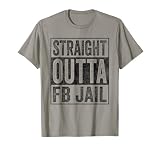
- Facebook addiction humor design. The Straight Outta FB Jail design is a fun gift for all the social media addicts in your life.
- You know someone who only looks at their smartphone and addicted to FB and Co. . Then this graphic is the perfect gift!
- Lightweight, Classic fit, Double-needle sleeve and bottom hem
Should I use the same image for Open Graph and Twitter?
Usually. Set both og:image and twitter:image to the same absolute HTTPS PNG, and use twitter:card=summary_large_image.
Does changing the PNG always update an existing share?
No. Platforms cache previews independently. Replace the file, then request a recrawl with the platform’s debugger or refresh tool.
Is an API necessary for a small site?
Not if you create images occasionally. A browser editor is simpler for one-off pages; an API becomes valuable when publishing should generate an image automatically.
Free tools Windows power users keep installed
One-click scans. No signup required.
Quick Recap
Product prices and availability are accurate as of the date/time indicated and are subject to change. Any price and availability information displayed on Amazon at the time of purchase will apply.

