
Free tools Windows power users keep installed
One-click scans. No signup required.
A free image search API lets your application find photos or videos without paying an API fee at the default tier. The practical workflow is: register an application, keep the key on your server, send an authenticated search request, retain each result’s author and source metadata, render the provider-approved URL, and follow the provider’s attribution, download-event, quota, and license rules.
“Free” does not mean unrestricted. Unsplash, Pexels, and Pixabay impose different limits and product restrictions, and those terms can change. Confirm the current provider documentation before deploying.
Choose the provider that fits your feature
Pick based on media type, result quality, authentication, quota, and how much attribution or product-behavior compliance your application can support.
| Provider | Best fit | Default or documented limits | Important compliance rules |
|---|---|---|---|
| Unsplash | High-quality photo search and a mature JSON API | Demo applications: 50 requests per hour. Approved production applications: 1,000 requests per hour. | Use the hotlinked URL in photo.urls. For download-like actions, call photo.links.download_location. Credit the photographer and Unsplash, and do not compile the images into a competing service. |
| Pexels | Photo and video search with straightforward API access | 200 requests per hour and 20,000 per month by default. Higher limits may be requested free when requirements are met. | Credit photographers when possible and link to the photo page or a Pexels text link. Do not copy or replicate Pexels core functionality, including a wallpaper app. |
| Pixabay | REST search for images and video | 100 requests per 60 seconds by default | Show users where results came from whenever search results are displayed and follow the Pixabay Content License. |
Unsplash’s developer page reported 8.8 million photos and 429.7 thousand photographers in 2026; collection counts change, so treat those figures as date-specific rather than a permanent specification.
Quick wins for a faster PC:
Clear out junk files and repair common Windows errorsFree Scan →Fix the driver behind crashes, sound loss and screen glitchesFind Drivers →#1 Best Overall

- 16MP Sensor: Captures detailed photos with a CMOS sensor for everyday shooting
- Optical Zoom: 4x optical zoom with a 27mm wide angle lens for flexible framing indoors or outdoors
- Full HD Video: Records 1080p video for travel clips, family moments, or simple vlogging
- Memory Support: Works with Class 10 SD, SDHC, or SDXC cards up to 512GB
- LCD Screen and Battery: 2.7in LCD screen with 2 AA alkaline batteries for convenient on-the-go use
Get an API key without exposing it
- Create a developer account with the provider and register an application. Unsplash requires a registered application; Pexels and Pixabay issue keys through their developer flows.
- Store the key in a server-side environment variable, secret manager, or backend proxy. Do not put a secret key in a public JavaScript bundle unless the provider explicitly supports that design.
- Give your frontend only the search parameters it needs. Your server should add authentication, call the provider, enforce pagination and quotas, and return a reduced response.
For example, configure a server variable named IMAGE_API_KEY and read it at runtime. Never log the complete value or include it in error messages.
Build the search request
Every provider’s request has the same conceptual inputs: a query, page number, results per page, and authentication. The exact endpoint and parameter names come from that provider’s current documentation. The examples below deliberately read the endpoint from an environment variable so you do not accidentally hard-code an outdated URL or send a key to the wrong service.
cURL smoke test
curl -G "$IMAGE_SEARCH_ENDPOINT"
  -H "Authorization: Bearer $IMAGE_API_KEY"
  --data-urlencode "query=mountain lake"
  --data-urlencode "page=1"
  --data-urlencode "per_page=20"
Use the authentication form required by your provider. Unsplash accepts Authorization: Client-ID YOUR_ACCESS_KEY or a client_id query parameter; do not substitute a bearer token unless its documentation says to.
Python server function
import os
import requests

ENDPOINT = os.environ["IMAGE_SEARCH_ENDPOINT"]
API_KEY = os.environ["IMAGE_API_KEY"]

def search_images(query: str, page: int = 1, per_page: int = 20) -> dict:
    response = requests.get(
        ENDPOINT,
        headers={"Authorization": f"Bearer {API_KEY}"},
        params={"query": query, "page": page, "per_page": per_page},
        timeout=20,
    )
    if response.status_code == 429:
        raise RuntimeError("Image provider rate limit reached")
    response.raise_for_status()
    return response.json()

result = search_images("mountain lake")
for item in result.get("results", []):
    print(item)
Change the header and parameter names to the provider’s documented format. For Unsplash, use the client-ID header and its search parameter names; for Pexels or Pixabay, use the key mechanism specified by their API.
Do these 3 things before closing this tab:
1Fix the driver behind crashes, sound loss and screen glitches2Clear out junk files and repair common Windows errors3Scan for outdated or missing drivers - takes under a minuteNode.js server function
const endpoint = process.env.IMAGE_SEARCH_ENDPOINT;
const key = process.env.IMAGE_API_KEY;

export async function searchImages(query, page = 1, perPage = 20) {
  const url = new URL(endpoint);
  url.searchParams.set('query', query);
  url.searchParams.set('page', String(page));
  url.searchParams.set('per_page', String(perPage));

  const response = await fetch(url, {
    headers: { Authorization: `Bearer ${key}` }
  });
  if (response.status === 429) throw new Error('Image provider rate limit reached');
  if (!response.ok) throw new Error(`Image search failed: ${response.status}`);
  return response.json();
}
For a browser-only prototype, use a provider-approved public-key pattern instead of exposing a secret. A backend proxy is safer for production because it lets you enforce your own limits and revoke one credential without rebuilding the client.
Rank #2
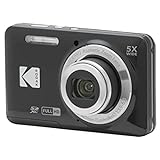
- 16MP Sensor: Captures detailed photos with a CMOS sensor for everyday shooting
- Optical Zoom: 5x optical zoom with a 28mm wide angle lens for flexible framing indoors or outdoors
- Full HD Video: Records 1080p video for travel clips, family moments, or simple vlogging
- Memory Support: Works with Class 10 SD, SDHC, or SDXC cards up to 512GB
- Rechargeable Battery: Included LB-012 lithium-ion battery charges in the camera over USB with the supplied adapter in about 2 hours; charge it for at least 4 hours before first use to maximize battery life
Normalize and retain the fields you need
Do not pass an opaque provider response directly into your UI. Convert each result to a small internal object and keep attribution metadata beside the image URL from the moment you fetch it.
- Identifier: the provider’s photo or video ID.
- Display URL: the provider-approved URL intended for rendering. Unsplash requires the hotlinked value returned in
photo.urls. - Landing-page URL: where users can view the original item.
- Author: photographer name and profile link when supplied.
- Dimensions and media type: useful for layout, responsive sizes, and video handling.
- Download-event URL: for providers that require an event when a user performs a download-like action. Unsplash supplies
photo.links.download_location.
Store the source and author with your database record or UI model. If you save only the image URL, a later redesign can easily lose required credit.
Render images and attribution correctly
Unsplash
Use the URL in photo.urls; Unsplash’s API guidelines require hotlinked image URLs. Display the photographer’s name and an Unsplash attribution link. When a user chooses an image for a blog post, header, or another action that resembles a download, send a request to the returned photo.links.download_location endpoint before completing that action.
Pexels
Credit the photographer when possible and provide a link to the photo page or a Pexels text link. Keep your product distinct: Pexels prohibits copying or replicating its core functionality, including making Pexels content available as a wallpaper app.
Pixabay
When search results are displayed, show users where the images or videos came from. Follow the Pixabay Content License for the use you make of each asset.
Rank #3
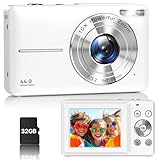
- Latest Digital Camera Built-in Fill Light : This compact digital camera is paired with a powerful CMOS processor and image stabilization to help you take & record the most exciting moments in 44 MP quality images & FHD 1080P quality videos anywhere, anytime. Plus, there is also a built-in fill light to help you take high quality pictures even in low light&dark settings, making this the perfect camera for all indoors/outdoors situations.
- Long-Lasting Battery Life & 16X Digital Zoom :This point and shoot camera will retain its battery charge even after long use. The controls and functions are easy to operate making this the perfect choice for children, teens and younger. This kids camera supports 16x digital zoom, you can zoom in or out the subject by pressing the W/T button for taking still photos to zoom in or out on distant objects and capture all the details you need.
- Multifunctional & Portable Digital Camera: This cheap digital camera is slim enough to fit in your pocket. You'll easily be able to take it with you on all your indoor/outdoor activities and adventures and ideal for beginners, children and teenagers. This kids digital camera is equipped with 20 filters, anti-shaking, self-timer, continuous shooting, date stamp, time-lapse recording, smile capture, internal MIC and speaker (recording sound videos), great for your daily photography needs.
- WEBCAM & PAUSE FUNCTION : More than just a FHD 1080p digital camera, it also works as a webcam for video calls and vlogging. Connect the camera to the computer, press shutter and power button at the same time and the camera will automatically turn on webcam mode for all your video calling and live streaming needs. The pause function allows you to pause when seeing playback videos.
- A Must Have Photography Device : This digital camera with SD card made from high-quality materials, this retro camera is safe and durable. Perfect for all ages to develop & improve their photographic abilities and observation skills. Our dedicated and experienced 24/7 support team is available for all after purchase troubleshooting, questions and technical help.
Attribution is not a substitute for checking a license. Review model and property releases, trademark concerns, editorial-only restrictions, and the terms that apply to redistribution or commercial use before publishing.
Pagination, caching, and quota control
Paginate deliberately
Start with a modest page size, such as 20, and expose a “Load more” action instead of requesting hundreds of results at once. Stop when the provider reports no next page or when your own maximum result count is reached. Preserve the query and page together so a refresh cannot mix results from different searches.
Outdated Drivers Are Slowing You Down
One free scan finds every outdated or missing driver and matches the right update for your exact hardware.Free scan · exact hardware matchPC Slower Than It Used to Be?
A free scan shows the junk files, broken settings and background clutter dragging Windows down - then fixes them in one click.Free scan · Windows 10 & 11Cache safely
Cache identical searches for a short, documented period to reduce duplicate requests, but retain attribution and source fields in every cached record. A cache does not remove license obligations, and it must not become a bulk-download archive when a provider’s terms prohibit that behavior.
Respect limits
Current documented defaults differ materially: Unsplash demo applications allow 50 requests per hour and approved production applications 1,000 per hour; Pexels allows 200 per hour and 20,000 per month by default; Pixabay allows 100 per 60 seconds. Treat these as provider-specific quotas, not a universal free allowance. Inspect rate-limit headers when available, throttle retries, and ask for higher limits through the provider’s process rather than rotating keys.
Errors and recovery
| Symptom | Likely cause | Fix |
|---|---|---|
| 401 or 403 | Missing, revoked, or incorrectly formatted key | Verify the application is active, use the required header or query key, and keep the credential server-side. |
| 429 | Hourly, per-minute, or monthly quota exceeded | Honor retry timing, reduce page size, cache repeated searches, and display a useful temporary-unavailable message. |
| Empty results | Overly specific query, unsupported language, or exhausted page | Tell the user no matches were found, offer broader terms, and stop requesting pages after the provider’s reported total. |
| Images disappear later | Stored URL was not retained or provider URL rules were ignored | Store the complete result metadata and use the provider-approved display URL rather than inventing a CDN URL. |
| Attribution missing | Author fields were discarded during normalization | Make credit fields required in your internal result type and test the rendered card before release. |
| Search works locally but leaks the key in production | Secret embedded in client code or source map | Move the request to a backend proxy, rotate the exposed key, and remove it from logs and bundles. |
Design for failure and changing terms
- Set a finite connection timeout and return a retryable error rather than hanging the page.
- Use exponential backoff for transient 5xx responses, with a maximum retry count.
- Validate provider JSON before rendering; a changed or missing field should produce a safe fallback card, not a broken page.
- Lazy-load thumbnails and reserve their aspect-ratio space to prevent layout shifts.
- Provide an accessible alt-text policy. Photographer credit does not describe the image; use meaningful alt text when the image conveys information.
- Monitor quota consumption and error rates per provider, without recording secret values.
- Recheck documentation before launch and whenever you change caching, downloads, bulk processing, or the user-facing product. Limits, licenses, attribution rules, and collection counts are volatile.
Or skip the browser setup
If your goal is to capture a page containing image-search results rather than build the search integration itself, ScreenshotNeo provides a website screenshot API and MCP server. Its clean-shot process accepts cookie or consent banners like a visitor and removes more than 60 known consent platforms, newsletter popups, and chat widgets before capture; each step can be disabled. Bot checks, CAPTCHAs, blank pages, timeouts, failed loads, and cache hits are not billed, and response headers report the page verdict and billing status.
One GET request returns PNG, JPEG, WebP, or PDF. The API supports full-page captures with lazy images loaded, CSS-selector element capture, dark mode, device presets, custom viewport and retina scale, PDF paper settings and page ranges, custom CSS or JavaScript, clicks, selector or network-idle waits, request and resource blocking, headers, cookies, user agents, authorization, timezone, geolocation, transparent backgrounds, resizing, chosen-TTL caching, signed image links, asynchronous webhooks, bulk capture of up to 100 URLs per call, usage reporting, and an OpenAPI specification.
What’s actually slowing this PC down?
Pick the symptom - the matching free tool is one click away.
Rank #4

- 16MP Sensor: Captures detailed photos with a CMOS sensor for everyday shooting
- Optical Zoom: 5x optical zoom with a 28mm wide angle lens for flexible framing indoors or outdoors
- Full HD Video: Records 1080p video for travel clips, family moments, or simple vlogging
- Memory Support: Works with Class 10 SD, SDHC, or SDXC cards up to 512GB
- Rechargeable Battery: Included LB-012 lithium-ion battery charges in the camera over USB with the supplied adapter in about 2 hours; charge it for at least 4 hours before first use to maximize battery life
curl -G "https://api.screenshotneo.com/v1/shot" -d access_key=YOUR_API_KEY --data-urlencode url=https://stripe.com -o shot.webpSee the ScreenshotNeo documentation for options and response headers. An MCP server exposes take_screenshot, get_page_info, and capture_pdf to Claude, Cursor, and other MCP clients.
The Free plan includes 1,000 shots per month with no card; paid plans start at $5 for 3,000 shots. Create a free ScreenshotNeo account.
Frequently Asked Questions
Can I use a free image API in a commercial website?
Usually, but commercial permission depends on the provider’s current license and the specific image. Check attribution, download, model/property, and redistribution terms before publishing.
Should image API requests come from my frontend?
Use a backend proxy for secret keys. A public-client pattern is appropriate only when the provider explicitly documents it and the exposed credential has deliberately limited scope.
Which provider has the largest quota?
The documented defaults are not directly comparable: Unsplash lists 50 requests per hour for demo apps and 1,000 per hour for approved production apps; Pexels lists 200 per hour plus 20,000 per month; Pixabay lists 100 per 60 seconds.
Do I need to download images to display them?
Not necessarily. Unsplash requires hotlinking the URL in its returned photo.urls object. Follow each provider’s display and download-event rules rather than copying files by default.
Quick Recap
Product prices and availability are accurate as of the date/time indicated and are subject to change. Any price and availability information displayed on Amazon at the time of purchase will apply.

