
Quick wins for a faster PC:
Repair Windows errors before they cause bigger problemsFix Now →Scan for outdated or missing drivers - takes under a minuteDriver Scan →Clear out junk files and repair common Windows errorsFree Scan →The 6 Best Free Git Hosting Services in 2026 are GitHub Free for most developers, GitLab.com Free for integrated DevOps, Bitbucket Cloud for Jira teams, Codeberg for public free/libre software, SourceForge for software distribution, and Gitea or Forgejo for self-hosting and control. The right choice depends on privacy, collaborators, CI/CD, storage, and operations.
Research note: This comparison uses plan and documentation signals available on August 18, 2026. The original topic referenced April 2026; free-tier limits can change, so confirm the provider’s current pricing and quota pages before moving a production project.
Key takeaways
- GitHub Free is the safest general-purpose choice because personal accounts can create unlimited public and private repositories, although private repositories and hosted products still have feature and usage limits.
- GitLab.com Free is the strongest integrated DevOps option, but newly created private top-level namespaces are limited to five users and free namespaces have a 10 GiB storage limit.
- Bitbucket Cloud Free supports teams of up to five users and unlimited private repositories, but its free Pipelines allowance is only 50 build minutes per month.
- Codeberg is a strong nonprofit, open-source-oriented host for public free/libre software, but Codeberg’s FAQ says the service does not offer private hosting.
- Gitea or Forgejo can provide the most control through self-hosting, but free software does not mean free infrastructure, backups, maintenance, or uptime.
Quick comparison: which free Git host is best?
Here is the short version of the six best free Git hosting services in 2026. The figures are plan signals checked on August 18, 2026, not permanent guarantees.
| Service | Best for | Private repositories | Free collaboration signal | CI/CD signal | Main warning |
|---|---|---|---|---|---|
| GitHub Free | Most individuals, portfolios, and public projects | Yes, for personal accounts | Unlimited repositories; private features are limited on Free | 2,000 GitHub Actions minutes per month included | Actions, Packages, Codespaces, and LFS have separate quotas |
| GitLab.com Free | Integrated DevOps and built-in CI/CD | Yes | Five users for newly created private top-level namespaces | Built-in pipelines, subject to quotas | Namespace, group, user, and storage rules are complex |
| Bitbucket Cloud Free | Small Jira or Trello teams | Yes | Up to five users | 50 Pipelines build minutes per month | Very restrictive team and CI limits |
| Codeberg | Public free/libre software | No ordinary private hosting | Public, community-oriented projects | Forgejo-based automation; verify current limits | Not suitable for confidential source code |
| SourceForge | Open-source downloads and releases | Verify current policy | Project directory and distribution model | Not its main differentiator | Current Git quotas and workflow need verification |
| Gitea or Forgejo | Self-hosting, internal code, and control | Yes when configured or offered by the host | Depends on deployment or cloud plan | Gitea Actions and related Forgejo tooling | You operate the server, security, and backups |
What is Git hosting?
Git hosting means storing remote Git repositories on a server and adding web-based tools for collaboration. Git itself is distributed: developers can clone a repository, make commits locally, create branches, and retain complete Git history without being connected to a hosting provider.
What’s actually slowing this PC down?
Pick the symptom - the matching free tool is one click away.
#1 Best Overall

- What You Get - 2 pack 64GB genuine USB 2.0 flash drives, 12-month warranty and lifetime friendly customer service
- Great for All Ages and Purposes – the thumb drives are suitable for storing digital data for school, business or daily usage. Apply to data storage of music, photos, movies and other files
- Easy to Use - Plug and play USB memory stick, no need to install any software. Support Windows 7 / 8 / 10 / Vista / XP / Unix / 2000 / ME / NT Linux and Mac OS, compatible with USB 2.0 and 1.1 ports
- Convenient Design - 360°metal swivel cap with matt surface and ring designed zip drive can protect USB connector, avoid to leave your fingerprint and easily attach to your key chain to avoid from losing and for easy carrying
- Brand Yourself - Brand the flash drive with your company's name and provide company's overview, policies, etc. to the newly joined employees or your customers
A hosted forge adds services that Git alone does not provide conveniently, including:
- Browser-based repository browsing and file history
- Authentication, permissions, teams, and access control
- Pull requests or merge requests and code review
- Issues, milestones, project boards, and discussions
- Release pages and downloadable files
- Wikis and project documentation
- CI/CD pipelines and hosted runners
- Package and container registries
- APIs, webhooks, and third-party integrations
- Static site hosting and project pages on some platforms
GitHub, GitLab, and Bitbucket are commercial developer platforms with free tiers. Codeberg is a nonprofit, open-source-oriented forge. SourceForge emphasizes open-source distribution. Gitea and Forgejo are open-source forge software that can be self-hosted or used through a hosted provider. Those models are related, but they are not interchangeable.
What does “free” mean for Git hosting?
“Free Git hosting” describes several different arrangements. A free plan may remove the repository fee while still limiting storage, users, bandwidth, builds, packages, or advanced permissions. Free software may eliminate a license fee while leaving you responsible for a server and its maintenance.
| Free-tier phrase | What it usually means | What it does not guarantee |
|---|---|---|
| Unlimited repositories | You can create many repositories under the plan | Unlimited storage, bandwidth, Git LFS, packages, or build artifacts |
| Unlimited private repositories | Private repository count is not capped in the advertised plan | Unlimited collaborators, groups, permissions, CI/CD, or storage |
| Free CI/CD | A monthly number of build minutes or runner capacity is included | Unlimited builds or unlimited artifact storage |
| Free hosting software | The forge software can be used without a license fee | Free servers, backups, domains, TLS, monitoring, or administration |
| Free for open source | Eligibility may depend on public access or project type | Free private hosting for proprietary or client code |
| Free student or academic plan | Eligible students or educators receive a separate benefit | The same benefit for every user or commercial project |
The practical question is therefore not “How many repositories can I create?” The practical question is “Can this plan support my collaborators, source-code privacy, build workload, large files, releases, and required integrations without an unexpected upgrade?”
How were these services ranked?
The ranking is editorial judgment rather than an industry-standard benchmark. The comparison weighs repository and collaboration capabilities at 25%, free-tier practicality at 20%, CI/CD and automation at 15%, ecosystem and integrations at 15%, privacy and hosting control at 10%, open-source and public-project suitability at 10%, and migration flexibility at 5%.
That weighting explains why GitHub ranks first overall even though GitLab is stronger for some DevOps workflows and Gitea is stronger for infrastructure control. A public open-source maintainer, a private five-person Jira team, and a privacy-focused self-hoster are solving different problems.
1. GitHub Free: best overall
GitHub Free is the best default for most individual developers, students, public portfolios, and open-source maintainers. GitHub provides the largest mainstream developer network, strong public-project discoverability, a broad integration marketplace, and a mature set of repository, review, automation, package, site, and security tools.
According to GitHub’s plan documentation, the Free personal plan supports unlimited public repositories with the full feature set and unlimited private repositories with a limited feature set. Repository count is therefore not the main constraint.
What does GitHub Free include?
GitHub Free is a strong fit for code browsing, issues, pull requests, code review, public project visibility, integrations, GitHub Pages, and moderate GitHub Actions usage. The ecosystem also includes Packages, Codespaces, hosted runners, security tooling, and many third-party deployment services.
According to GitHub’s included product-usage table, GitHub Free lists these monthly allowances: 2,000 GitHub Actions minutes, 500 MB of Actions storage, 120 Codespaces core hours with 15 GB-month storage, 500 MB of Packages storage with 1 GB of data transfer, and 10 GB each of Git LFS storage and bandwidth. These are included quotas, not unlimited product usage, and account type or product conditions can affect how usage is applied.
Rank #2

- High-speed USB 3.0 performance of up to 150MB/s(1) [(1) Write to drive up to 15x faster than standard USB 2.0 drives (4MB/s); varies by drive capacity. Up to 150MB/s read speed. USB 3.0 port required. Based on internal testing; performance may be lower depending on host device, usage conditions, and other factors; 1MB=1,000,000 bytes]
- Transfer a full-length movie in less than 30 seconds(2) [(2) Based on 1.2GB MPEG-4 video transfer with USB 3.0 host device. Results may vary based on host device, file attributes and other factors]
- Transfer to drive up to 15 times faster than standard USB 2.0 drives(1)
- Sleek, durable metal casing
- Easy-to-use password protection for your private files(3) [(3)Password protection uses 128-bit AES encryption and is supported by Windows 7, Windows 8, Windows 10, and Mac OS X v10.9+; Software download required for Mac, visit the SanDisk SecureAccess support page]
| GitHub Free strength | Why it matters | Free-tier caution |
|---|---|---|
| Public visibility | Excellent for portfolios, tutorials, libraries, and community projects | Public discoverability does not solve private-code governance needs |
| Private repositories | Useful for personal projects and small private work | Private repositories have a limited Free feature set |
| Actions | Convenient repository-native automation | 2,000 included minutes per month can be consumed quickly by matrix builds |
| Large files | Git LFS is available | 10 GB storage and 10 GB bandwidth per month are separate allowances |
| Packages and Codespaces | Convenient integrated development and distribution tools | Both have separate storage or usage allowances |
Who should choose GitHub Free?
Choose GitHub Free if you want the safest general-purpose choice, the broadest integration ecosystem, public project exposure, or straightforward access to Actions, Pages, Packages, and Codespaces.
GitHub Free is a weaker fit for very large binary repositories, CI-heavy workloads that exceed included Actions usage, advanced organization governance without a paid plan, or users who specifically want a nonprofit or fully open-source hosting provider.
Do these 3 things before closing this tab:
1Fix the driver behind crashes, sound loss and screen glitches2Repair Windows errors before they cause bigger problems3Scan for outdated or missing drivers - takes under a minute2. GitLab.com Free: best for integrated DevOps
GitLab.com Free is the best choice when repositories, planning, CI/CD, registries, security, and deployment should live in one DevOps platform. GitLab’s integrated model is more substantial than simple remote repository hosting and is attractive to DevOps learners, small engineering teams, and organizations that may eventually self-host.
What are GitLab Free’s current limits?
GitLab’s free hosted tier has meaningful namespace and storage restrictions. According to GitLab’s free-user-limit documentation, newly created private top-level namespaces are limited to five users. Accounts created after January 27, 2026, are also limited to three top-level groups; the personal namespace does not count toward that three-group limit.
According to GitLab’s storage quota documentation, free GitLab.com namespaces have a 10 GiB storage limit. The limit concerns namespace storage rather than only the visible Git repository, so Git LFS objects, packages, and container registries matter. A private namespace that exceeds the applicable user limit can be placed into a read-only state, preventing new writes to repositories, LFS, packages, and registries.
| GitLab Free advantage | Best use | Risk to monitor |
|---|---|---|
| Merge requests and issues | Structured team review and planning | More features can mean more administrative complexity |
| Built-in CI/CD | Build, test, and deployment pipelines | Pipeline minutes, runners, artifacts, and dependencies consume resources |
| Registries | Packages and container images alongside source | Registry data counts toward storage considerations |
| Self-managed path | Organizations that may later operate GitLab themselves | Self-managed deployment creates infrastructure responsibilities |
| Private namespaces | Small private teams | New private top-level namespaces have a five-user limit |
Choose GitLab.com Free if CI/CD and an all-in-one DevOps workflow are central. GitLab Free is less suitable for a solo developer who only needs a simple remote repository, a team that will quickly exceed namespace limits, or a project with large binary and registry requirements.
The Tool Desk
Outbyte Driver Updater FREEScan for outdated or missing drivers - takes under a minuteDriver Scan →Outbyte PC Repair FREEClear out junk files and repair common Windows errorsFree Scan →3. Bitbucket Cloud Free: best for Jira-based teams
Bitbucket Cloud Free is the best fit for a small team already using Jira, Trello, or another Atlassian workflow. Bitbucket combines Git repositories, pull requests, branch permissions, APIs, projects, and Pipelines with native Atlassian integration.
According to Bitbucket’s product information, the Free subscription supports teams of up to five users. Bitbucket also advertises unlimited private repositories on its version-control product page.
Is Bitbucket’s free CI/CD allowance enough?
Bitbucket Cloud Free includes only 50 Pipelines build minutes per month, according to Bitbucket’s Pipelines page. Fifty minutes is enough for light automation but restrictive for frequent tests, multi-version matrices, container builds, or large dependency installations.
The five-user limit applies to the ordinary free subscription. Bitbucket describes a separate academic exception for eligible students and teachers through its education program, which can provide unlimited private repositories and unlimited academic collaborators subject to eligibility.
Rank #3

- Lightweight and convenient: Lexar JumpDrive A30E (USB Type-A) boasts a slim, portable design for easy device compatibility; lightweight at 7.41 g
- Transfer speeds up to 100 MB/s: 10x faster than standard USB 2.0 drives; Based on internal testing, performance may vary depending upon the host device, interface, and usage conditions
- Wide compatibility: Compatible with tablets, laptops, Macs, and traditional Type-A devices, no software installation required; Reliably stores photos, videos & files
- Compact: Features a push-button retractor and a lanyard loop for on-the-go use
- Enhanced security: Lexar DataShield protects files, easily creates a password-protected safe with auto-encryption; Files deleted from the safe are securely erased and can't be recovered
| Bitbucket Free advantage | Best use | Limitation |
|---|---|---|
| Private repositories | Small business and client projects | Ordinary Free teams are limited to five users |
| Jira and Trello integration | Teams already tracking work in Atlassian tools | Less valuable if the team does not use Atlassian products |
| Pipelines | Small test and deployment jobs | Only 50 free build minutes per month |
| Git LFS | Repositories with larger assets | LFS still requires checking storage, bandwidth, and plan limits |
Choose Bitbucket Cloud Free if your team has five or fewer users, depends on Jira or Trello, and has light CI needs. Bitbucket is a poor default for public projects seeking maximum developer discovery or for CI-heavy teams.
4. Codeberg: best for public free/libre software
Codeberg is the strongest choice in this list for public free/libre software when nonprofit, community-oriented, and open-source infrastructure matters more than a commercial ecosystem. Codeberg runs Forgejo, an open-source Git forge, and provides public repositories, issues, pull requests, and related collaboration features.
Can Codeberg host private repositories?
Codeberg is not a general-purpose private-code alternative to GitHub or GitLab. Codeberg’s official FAQ explicitly says that Codeberg does not offer private hosting. That makes Codeberg unsuitable for confidential source code, proprietary client work, and repositories requiring strict private access control.
Codeberg is better understood as a public-project forge with a free/libre-software-oriented community. Its smaller ecosystem can be an advantage for users seeking an alternative to large commercial platforms, but GitHub-specific marketplace applications and integrations may not transfer directly.
Recommended Free Tools
| Codeberg is strong at | Codeberg is weak at |
|---|---|
| Public free/libre software | Private proprietary repositories |
| Open-source forge infrastructure | Large commercial integration ecosystems |
| Nonprofit and community-oriented hosting | Workflows dependent on GitHub-specific services |
| Public issues, pull requests, and project collaboration | Confidential client or internal code |
Choose Codeberg if your project is public, free/libre, and compatible with its community expectations. Do not choose Codeberg when private hosting is a requirement.
5. SourceForge: best for open-source distribution
SourceForge is best when downloadable releases, project discovery, mirrors, and long-running open-source distribution matter more than a modern pull-request-and-CI workflow. SourceForge remains relevant for software projects that publish installers, archives, binaries, and release downloads to a broad open-source audience.
SourceForge should not be treated as a feature-for-feature equivalent to GitHub, GitLab, or Bitbucket. Its historical strength is project distribution and downloads, while GitHub and GitLab are more naturally centered on collaborative code review, integrated automation, and modern developer workflows.
What should you verify before choosing SourceForge?
Current SourceForge Git repository capabilities, storage quotas, bandwidth rules, release limits, and project-management features should be checked directly on SourceForge’s official service before publication or migration. The available research does not establish reliable current figures for those limits, so this comparison deliberately does not invent them.
PC Slower Than It Used to Be?
A free scan shows the junk files, broken settings and background clutter dragging Windows down - then fixes them in one click.Free scan · Windows 10 & 11Crashes, No Sound, or Screen Glitches?
Random freezes, missing sound and display glitches usually trace back to one bad driver. Find and replace yours safely.Free scan · under a minuteChoose SourceForge if your mature open-source project already benefits from its directory, mirrors, downloads, or release audience. SourceForge is a weaker fit for private repositories, CI/CD-first development, advanced code review, or a small team seeking the most polished general-purpose Git host.
6. Gitea or Forgejo: best for control and self-hosting
Gitea or Forgejo is the best option when you want control over infrastructure, authentication, backups, data location, and retention rather than the largest hosted developer network. Gitea and Forgejo are open-source Git forge software that can run on a server, home lab, internal network, or hosted service.
Rank #4

- The durable, light-weight design of the Turbo Attaché 3 USB 3.0 Flash Drive is the essential mobile storage solution
- Perfect for transferring large files such as movies, videos, photos, music & documents
- Transfer speeds up to 10 times faster than standard USB 2.0 flash drives
- Convenient sliding collar, and cap-less design protects your content when not in use
- Compatible with most PC and Mac laptop and desktop computers with USB 3.0 ports
Is Gitea free to host?
Gitea is free and open-source software, but self-hosting is not automatically zero-cost. Gitea’s comparison documentation describes its open-source model and repository features, while the Gitea pricing page distinguishes self-hosted software from hosted cloud offerings.
A self-hosted installation requires a server or home lab, storage, backups, network access, TLS, updates, security maintenance, monitoring, and disaster recovery. Hosted Gitea Cloud removes much of the administration but has its own plan and capacity limits, which should be checked on the current pricing page.
Forgejo is a related open-source alternative rather than another name for every Gitea deployment. Codeberg uses Forgejo, but Codeberg, Forgejo, Gitea, and Gitea Cloud are separate products or services with different operators and limits. The Codeberg FAQ identifies Forgejo as the software Codeberg runs.
| Deployment choice | What you gain | What you must handle |
|---|---|---|
| Self-hosted Gitea | Control, private repositories, internal access, configurable retention | Server, updates, backups, authentication, monitoring, recovery |
| Self-hosted Forgejo | Open-source forge with control over deployment and data | The same operational duties as other self-hosted services |
| Hosted Gitea Cloud | Less administration and managed availability | Provider plan limits, recurring cost beyond free capacity, and vendor dependence |
Choose Gitea or Forgejo if you can operate a server or already have reliable infrastructure. Choose a commercial hosted service instead if zero administration, maximum public discoverability, and managed recovery are more important than control.
Independent reader supportYour contribution helps us test, update, and keep practical guides available for everyone.Which service should you choose for your situation?
| Your situation | Best starting point | Why |
|---|---|---|
| Solo developer or student building a portfolio | GitHub Free | Public visibility, integrations, and a familiar ecosystem |
| Public free/libre software project | Codeberg or GitHub Free | Codeberg emphasizes nonprofit open-source hosting; GitHub offers broader reach |
| Small team already using Jira | Bitbucket Cloud Free | Native Atlassian workflow integration, if five users or fewer |
| DevOps learner or CI/CD-focused team | GitLab.com Free | Repositories, merge requests, pipelines, registries, and planning in one platform |
| Private internal repository with infrastructure expertise | Gitea or Forgejo | Control over network, authentication, storage, and data location |
| Open-source project focused on downloads | SourceForge | Distribution, release downloads, mirrors, and project discovery |
| Large binary or media-heavy project | Any host only after quota review | Git LFS, artifacts, release bandwidth, and external object storage may be necessary |
For most readers, start with GitHub Free. Select GitLab instead when integrated CI/CD is the deciding factor, Bitbucket when Jira is central, Codeberg when the project is public free/libre software, SourceForge when distribution is the priority, and Gitea or Forgejo when operational control is worth the maintenance work.
What free Git hosting limits are easiest to overlook?
“Unlimited” repository counts
Unlimited repository counts do not imply unlimited collaborators, organization controls, storage, bandwidth, packages, LFS, or builds. GitHub, GitLab, and Bitbucket each demonstrate a different version of this distinction: GitHub separates repositories from product allowances, GitLab applies namespace and storage rules, and Bitbucket combines unlimited private repositories with a five-user cap.
Free tools Windows power users keep installed
One-click scans. No signup required.
CI/CD minutes and overages
Free CI/CD can become a paid service when tests run on every branch, matrix builds multiply jobs, dependencies download repeatedly, or release workflows upload large artifacts. Set budgets, cache dependencies, restrict workflows to relevant branches, and monitor usage. GitHub documents included usage and billing controls at its product-usage page; Bitbucket documents its free Pipelines allowance at its Pipelines page.
Large files and generated assets
Git repositories are poor storage for large binaries, videos, generated output, frequently changing game assets, and other files that create substantial history. Compare Git LFS quotas, package and artifact storage, release-download limits, bandwidth, and external object storage before selecting a host. GitHub lists separate LFS storage and bandwidth allowances, while Bitbucket promotes Git LFS for large assets.
Namespace and account eligibility rules
GitLab’s rules for accounts created after January 27, 2026, are especially important for new users comparing an April 2026 plan snapshot. Existing accounts and newly created accounts may not encounter exactly the same group restrictions, so check the current GitLab account and namespace rules.
Free software versus free hosting
Gitea and Forgejo can remove software licensing fees, but the operator still pays in time or infrastructure for updates, authentication, monitoring, backups, and recovery. Self-hosting is a control decision, not merely a pricing trick.
Best Value
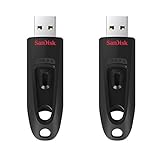
- Transfer speeds up to 10x faster than standard USB 2.0 drives (4MB/s); up to 130MB/s read speed; USB 3.0 port required. Based on internal testing; performance may be lower depending upon host device. 1MB=1,000,000 bytes
- Backward compatible with USB 2.0
- Secure file encryption and password protection(2)
How should you protect a repository and migrate between hosts?
A hosted repository should not be your only backup. Keep an independent mirror or second remote, especially before changing providers, reorganizing an account, or relying on a free-tier service for important work.
Mirror the complete Git repository
git clone --mirror https://example.com/owner/repository.git
cd repository.git
git remote add backup ssh://git@example.net/backup/repository.git
git push --mirror backup
A mirror clone preserves Git references more comprehensively than an ordinary working clone. Run the mirror operation again after important changes, and store the backup on separate infrastructure from the primary host.
Synchronize a normal working repository
git remote -v
git fetch --all --prune
git push --all origin
git push --tags origin
Ordinary Git pushes do not automatically export every hosting-provider feature. Repository history may survive while pull-request discussions, issues, wikis, release assets, project boards, secrets, webhooks, package data, and CI settings do not. Before migrating, use the provider’s export tools where available and separately archive non-Git metadata.
Maintaining two remotes can also reduce lock-in. A public project might publish to GitHub and Codeberg, while a private project might maintain a hosted primary repository and an independently administered mirror. Verify that licenses, access controls, secrets, release files, and automation configurations remain correct on every destination.
Quick wins for a faster PC:
Scan for outdated or missing drivers - takes under a minuteDriver Scan →Clear out junk files and repair common Windows errorsFree Scan →Fix the driver behind crashes, sound loss and screen glitchesFind Drivers →When should you pay for a Git hosting plan?
Upgrade when the free plan creates a measurable operational problem rather than because a comparison table labels a paid tier as “better.” GitHub becomes a candidate when Actions, LFS, Packages, Codespaces, or organization controls exceed Free allowances; GitLab becomes a candidate when namespace users, storage, or advanced DevSecOps controls exceed Free; Bitbucket becomes a candidate when a team exceeds five users or needs more Pipelines minutes.
For Gitea, paid managed hosting can make sense when server administration, updates, backups, and uptime cost more time than the hosting fee. Codeberg is not a conventional free-to-paid upsell funnel, and readers should not be promised a private paid tier when its FAQ says Codeberg does not offer private hosting. SourceForge’s current commercial or promotional offerings should be checked directly rather than assumed.
Review the official GitHub pricing, GitLab pricing, Bitbucket pricing, and Gitea pricing pages immediately before purchasing because hosted limits and prices are volatile.
Frequently Asked Questions
Which is the best free Git hosting service overall?
GitHub Free is the best overall free Git hosting service for most individual developers, students, public portfolios, and open-source projects because it combines unlimited public and private repositories for personal accounts with broad discoverability and integrations. GitHub Free still has separate quotas for Actions, Packages, Codespaces, and Git LFS.
What’s actually slowing this PC down?
Pick the symptom - the matching free tool is one click away.
Which free Git hosting services offer private repositories?
GitHub Free, GitLab.com Free, Bitbucket Cloud Free, and Gitea or Forgejo deployments can support private repositories, subject to plan or deployment limits. Codeberg’s official FAQ says Codeberg does not offer private hosting, while SourceForge’s current private-repository policy should be verified before relying on it.
Is GitLab better than GitHub for CI/CD?
GitLab.com Free is often the better fit when repositories, merge requests, pipelines, registries, planning, and DevOps tooling should be integrated in one application. GitHub Free has strong Actions integration and lists 2,000 included Actions minutes per month, but the better choice depends on workflow, ecosystem, namespace limits, and storage requirements.
Is Bitbucket free for more than five users?
The ordinary Bitbucket Cloud Free subscription supports teams of up to five users. Eligible students and teachers may qualify for a separate academic program with different collaboration benefits, but ordinary business teams above five users generally need a paid plan.
Is Gitea free to host?
Gitea is free and open-source software, but self-hosting Gitea is not automatically free because the operator must provide infrastructure, storage, backups, TLS, updates, monitoring, and disaster recovery. Gitea Cloud is managed hosting with its own plan limits and should be evaluated separately.
The Bottom Line
Bottom line: Choose GitHub Free unless a specific requirement points elsewhere. Choose GitLab for integrated DevOps, Bitbucket for a small Jira-centered team, Codeberg for public free/libre software, SourceForge for open-source distribution, and Gitea or Forgejo for self-hosting and control. Before migrating, check user, namespace, storage, LFS, package, bandwidth, and CI/CD limits—and keep an independent backup of both Git history and hosting metadata.
Quick Recap
Product prices and availability are accurate as of the date/time indicated and are subject to change. Any price and availability information displayed on Amazon at the time of purchase will apply.

