
The best remote desktop access software in 2026 depends on the job: choose Splashtop for value, TeamViewer for broad professional support, AnyDesk for lightweight control, Zoho Assist for help desks, and Chrome Remote Desktop for free personal access. RustDesk, Microsoft RDP, RemotePC, RealVNC Connect, and Apache Guacamole serve more specialized needs.
Remote desktop software is not one category. Accessing your own home computer, helping an employee who is present, connecting to an unattended workstation, administering Windows servers, and managing an enterprise fleet require different controls and pricing models.
Key takeaways
- Splashtop is the strongest general-purpose value choice for personal access, home offices, and small businesses.
- TeamViewer is the broadest mainstream choice for remote support, mixed operating systems, integrations, auditability, and enterprise administration.
- Chrome Remote Desktop is the simplest free option for accessing your own computers, but it lacks the help-desk controls required by most professional support teams.
- Unattended access is more convenient than attended support but requires MFA, device approval, least-privilege roles, alerts, and regular removal of unused agents.
- RustDesk and Apache Guacamole can provide self-hosted control, but self-hosting transfers patching, monitoring, backups, certificates, and incident response to the operator.
- Microsoft Remote Desktop is appropriate for Windows-native administration only when the host edition, identity, gateway, firewall, and network security are properly configured.
Which remote desktop software is best for each use case?
There is no universal best remote desktop application. The correct choice depends first on whether the connection is personal access, attended support, unattended access, remote administration, or a self-hosted deployment.
| Reader or use case | Best starting choices | Why |
|---|---|---|
| Access one home PC for free | Chrome Remote Desktop | Free personal access with a simple browser-based setup. |
| Access several personal computers | Splashtop, RemotePC, AnyDesk | Designed around repeated or unattended access to multiple devices. |
| Help family or friends occasionally | Chrome Remote Desktop, TeamViewer, Zoho Assist | Supports either simple personal access or temporary attended support. |
| Small-business unattended access | Splashtop, AnyDesk, RemotePC | Useful for repeatedly reaching known computers without someone present. |
| Professional IT support | Zoho Assist, TeamViewer, Splashtop | Technician workflows, attended sessions, file transfer, and business controls. |
| Broad device and operating-system coverage | TeamViewer, AnyDesk, Zoho Assist | These products advertise broad cross-platform support, subject to feature differences by platform. |
| Lowest software cost | Chrome Remote Desktop, RustDesk self-hosted, native RDP | Low licensing cost, although self-hosting and Windows infrastructure still require labor and security work. |
| Open-source or self-hosted deployment | RustDesk, Apache Guacamole | Both suit technically capable teams that want more infrastructure control. |
| Windows-only administration | Microsoft Remote Desktop / Windows App | Best fit when secure Windows and Remote Desktop Services infrastructure already exists. |
| Large-scale enterprise support | TeamViewer enterprise products, Zoho Assist, Splashtop Enterprise, or an RMM platform | Large fleets need policy enforcement, logs, roles, integrations, and often scripting beyond basic remote control. |
What is remote desktop access software?
Remote desktop software transmits the display of one computer to another device and sends keyboard and mouse input back across a network. Depending on the product and plan, the same session may also provide file transfer, clipboard synchronization, audio, multi-monitor control, remote printing, chat, annotation, session recording, Wake-on-LAN, scripting, ticketing integrations, audit logs, and device management.
The Tool Desk
Outbyte Driver Updater FREEFix the driver behind crashes, sound loss and screen glitchesFind Drivers →Outbyte PC Repair FREERepair Windows errors before they cause bigger problemsFix Now →#1 Best Overall

- Reliable Plug and Play: The USB receiver provides a reliable wireless connection up to 33 ft (1), so you can forget about drop-outs and delays and you can take it wherever you use your computer
- Type in Comfort: The design of this keyboard creates a comfortable typing experience thanks to the low-profile, quiet keys and standard layout with full-size F-keys, number pad, and arrow keys
- Durable and Resilient: This full-size wireless keyboard features a spill-resistant design (2), durable keys and sturdy tilt legs with adjustable height
- Long Battery Life: MK270 combo features a 36-month keyboard and 12-month mouse battery life (3), along with on/off switches allowing you to go months without the hassle of changing batteries
- Easy to Use: This wireless keyboard and mouse combo features 8 multimedia hotkeys for instant access to the Internet, email, play/pause, and volume so you can easily check out your favorite sites
The phrase “remote desktop” is used loosely. Microsoft RDP, browser-based gateways, consumer remote-access utilities, remote-support products, and full remote-management platforms are not interchangeable. A free personal-access tool can be excellent for reaching your own laptop while being unsuitable for a help desk that needs session recording, technician controls, audit trails, integrations, and policy enforcement.
Quick comparison of the 10 leading choices
| Product | Best for | Platform position | Unattended access | Free or price signal | Main drawback |
|---|---|---|---|---|---|
| Splashtop | Overall value | Cross-platform access; verify host/client feature combinations | Available on appropriate plans | Splashtop Solo was reported at about $6/month billed annually in June 2026 | Access and support products are separate families |
| TeamViewer | Broad support and enterprise features | Windows, macOS, Linux, iOS, Android, ChromeOS, and Raspberry Pi advertised | Yes, with plan and deployment distinctions | Annual subscription; June 2026 comparison reported about $18.90/month equivalent for Remote Access | Complex and potentially expensive pricing |
| AnyDesk | Lightweight remote control | Broad cross-platform access advertised | Available on appropriate plans | AnyDesk Solo was reported at about $14.90/month billed annually in June 2026 | Tier limits and commercial-use rules require careful review |
| Zoho Assist | Help desks and attended support | Cross-platform support advertised | Yes, alongside attended support | Free and paid editions | Plan limits and support features vary |
| Chrome Remote Desktop | Free personal access | Windows, macOS, Linux, and ChromeOS-oriented use | Yes, for configured personal devices | Free personal service | Few fleet, audit, and technician controls |
| RustDesk | Open-source self-hosting | Cross-platform client and self-hosted server model | Supported, depending on deployment | Open-source client; commercial self-hosted server plans | Operations and security become the customer’s responsibility |
| Microsoft Remote Desktop / Windows App | Windows-native administration | Dependent on Windows edition and Remote Desktop Services design | Yes, when the Windows infrastructure supports it | No separate consumer-style license claim; infrastructure and Windows licensing may apply | Not a simple one-click support tool |
| RemotePC | Budget multi-computer access | Cross-platform access is offered; verify current plan details | Core use case | Current official pricing was not verified in this research pass | Exact endpoint and feature limits need confirmation |
| RealVNC Connect | Established VNC workflows | Cross-platform VNC-oriented access | Plan and deployment dependent | Current device and user limits require plan verification | Fewer modern help-desk workflows than some competitors |
| Apache Guacamole | Browser-based technical gateway | Browser viewer for RDP, VNC, and SSH | Depends on connected infrastructure | Open-source project; hosting and operations are not free | Requires technical deployment and hardening |
This is an editorial shortlist, not a laboratory performance ranking. The research available for this comparison did not include a controlled hands-on benchmark, standardized latency test, independent security audit, or standardized price audit. Claims such as “fastest” or “most secure” would therefore be too broad.
How should you evaluate remote desktop software?
Evaluate the host and the viewer separately. The host is the computer being controlled; the viewer or client is the device used to connect. A product may support Windows, macOS, Linux, Android, iOS, ChromeOS, or Raspberry Pi in different combinations, and mobile clients may omit administration, file transfer, or unattended-access configuration. TeamViewer’s comparison material advertises support across Windows, macOS, Linux, iOS, Android, ChromeOS, and Raspberry Pi, but readers should still verify the exact feature matrix for the selected plan.
Personal access, attended support, and unattended access
Personal remote access means reaching your own computers. Attended support means helping another person who is present and authorizes the session. Unattended access means connecting to a device without someone at the remote keyboard, normally through an installed agent, saved authorization, or configured credential.
Free tools Windows power users keep installed
One-click scans. No signup required.
One-time support generally uses a temporary code or approval prompt. Permanent access keeps a device available for repeated connections. Permanent access is convenient for home offices and business administration, but a stolen credential or unauthorized device enrollment can affect the endpoint without anyone present to intervene.
Which security controls matter?
Encryption is necessary but not sufficient. Compare transport encryption, key exchange and identity verification, MFA, SSO, role-based access control, device approval, session prompts, audit logs, session recording, screen blanking, remote-input blocking, IP allowlists, update practices, vulnerability disclosure, data residency, and retention.
TeamViewer’s business materials list AES-256 encryption, two-factor authentication, SSO, auditability, and enterprise integrations. AnyDesk describes TLS encryption, RSA key exchange, and two-factor authentication. Those are vendor claims, not an independent security ranking. A poorly protected unattended endpoint remains dangerous even when the underlying service uses strong encryption.
How does pricing differ between remote desktop products?
Remote-access vendors bill by different units: named technicians, concurrent connection channels, simultaneous sessions, managed endpoints, devices per license, users, features, or add-ons. Annual and monthly billing can also produce very different apparent prices.
According to a June 2026 comparison, Splashtop Solo was approximately $6 per month and AnyDesk Solo approximately $14.90 per month when billed annually; the same comparison reported approximately $18.90 per month for TeamViewer Remote Access. These are dated comparison signals rather than permanent prices. Region, currency, taxes, promotions, annual commitment, plan changes, and add-ons can change the checkout total.
TeamViewer’s official pricing material describes annual subscription renewal and distinguishes licensed users, concurrent connections, managed devices, and endpoints. Before purchasing, check the number of technicians, endpoints, simultaneous sessions, unattended devices, mobile clients, recordings, integrations, audit logs, automatic renewal, and notice requirements.
What determines remote-control performance?
Perceived performance depends on distance between endpoints, relay versus direct connection, host upload bandwidth, latency, packet loss, resolution, frame rate, hardware acceleration, video workload, monitor count, image-quality settings, VPN routing, and firewall behavior.
For office applications and troubleshooting, responsiveness is usually more useful than maximum image quality. Video editing, 3D work, gaming, and CAD require products and network designs intended for high-frame-rate or color-sensitive workloads; a general remote-support utility should not be assumed to deliver professional workstation performance.
Outdated Drivers Are Slowing You Down
One free scan finds every outdated or missing driver and matches the right update for your exact hardware.Free scan · exact hardware matchWindows Errors? Fix Them Before They Spread
Repair common Windows errors and clear accumulated junk for a smoother, more stable PC - no reinstall needed.Free scan · no reinstallWhat privacy and consent rules should you plan for?
Obtain consent before attended support, show a visible active-session indicator, disclose recording, and define who can access recordings. Remote sessions can expose screens, clipboard contents, transferred files, local storage, employee activity, and regulated data. Review retention, vendor support access, subprocessors, cross-border transfers, and shared-account practices.
Rank #2

- Dependable wireless connection: Enjoy the reliability and convenience of 2.4 GHz connectivity with your logitech wireless keyboard and mouse combo, wireless range up to 10 meters away at home, or work.
- Full-Size Wireless Keyboard: Comfortable, quiet typing on a familiar keyboard layout with palm rest, spill-resistant design, and media keys. This wireless keyboard and mouse logitech has easy-access to media keys
- Plug and Play: MK345 works seamlessly with Windows, macOS, and ChromeOS. Experience hassle-free setup with the logitech mk345 wireless combo and wireless keyboard mouse combo for various operating systems.
- Long-lasting Battery: The MK345 combo offers a full size keyboard battery life of up to 3 years and a mouse battery life of 18 months (1); batteries included
- Comfortable Right-handed Mouse: This wireless USB mouse with dongle works well for this wireless mouse and keyboard combo, featuring a contoured shape for all-day comfort and smooth, precise tracking and scrolling for easier navigation.
Remote assistance is not covert surveillance. Do not use remote-control software to access another person’s computer without authorization. Healthcare, financial, education, and government environments should verify the exact plan, region, contract, data residency, recording retention, subprocessors, and any required business-associate or equivalent agreement rather than relying on a general compliance page.
What decision weighting should you use?
Use the following as evaluation criteria, not measured scores. Adjust the weighting if your organization has an unusual priority such as self-hosting, Linux support, or session recording.
| Criterion | Suggested weight | What to assess |
|---|---|---|
| Ease of setup | 15% | Installation, account creation, invitations, permissions, and recovery |
| Host and client compatibility | 15% | Operating systems, mobile viewers, ChromeOS, Raspberry Pi, and feature parity |
| Unattended access | 15% | Enrollment, reliability, permissions, Wake-on-LAN, and offboarding |
| Security and administration | 20% | MFA, SSO, RBAC, logs, device approval, encryption claims, and policy controls |
| Performance and reliability | 15% | Responsiveness, reconnect behavior, low-bandwidth operation, and firewall compatibility |
| Support features | 10% | File transfer, chat, recording, annotations, technician tools, and integrations |
| Price transparency and value | 10% | Billing unit, endpoint limits, annual commitment, free-plan terms, and add-ons |
Which remote desktop software should you choose?
1. Splashtop: best overall value
Splashtop is the best default for individuals, home offices, small businesses, and cost-conscious professional users who want reliable access without buying the broadest enterprise ecosystem.
Splashtop separates remote-access, remote-support, and enterprise offerings. That separation is important: Business Access is aimed at accessing managed computers, while SOS-style products address attended support. Appropriate plans provide cross-platform access, unattended access, multi-monitor support, and file transfer.
A June 2026 comparison reported a Splashtop Solo entry signal of approximately $6 per month when billed annually. Verify the current region, billing cycle, endpoint limit, renewal price, and included features before purchase. Higher-end administration and support capabilities may require enterprise tiers or add-ons.
Choose Splashtop if: you need ordinary personal or small-business access and value matters more than a large integration catalog. Look elsewhere if: you need extensive self-hosting or a highly customized enterprise control plane.
2. TeamViewer: best for broad support capabilities
TeamViewer is the strongest mainstream choice for organizations that need remote support, unattended access, broad client coverage, reporting, integrations, and enterprise controls.
Quick wins for a faster PC:
Clear out junk files and repair common Windows errorsFree Scan →Scan for outdated or missing drivers - takes under a minuteDriver Scan →TeamViewer supports remote support, file transfer, session recording, unattended access, and a broad range of operating systems. Its business materials also describe MFA, SSO, auditability, bulk deployment, and enterprise integrations. TeamViewer’s official pricing page explains annual subscriptions, renewal, concurrent connections, managed devices, enterprise Tensor licensing, and paid add-ons.
The trade-off is complexity. Personal or free use is not a substitute for a commercial support license, and enterprise features may require add-ons or a custom quote. The June 2026 comparison signal for TeamViewer Remote Access was approximately $18.90 per month when billed annually, but the official checkout should be treated as authoritative for the buyer’s region and plan.
Choose TeamViewer if: mixed devices, integrations, auditability, or professional support workflows matter. Look elsewhere if: you only need free access to one home computer.
3. AnyDesk: best lightweight alternative
AnyDesk is a good fit for individuals, freelancers, and small support operations that value a lightweight client and straightforward remote control.
AnyDesk advertises cross-platform access, unattended access on appropriate plans, file transfer, TLS encryption, RSA key exchange, and two-factor authentication. The official pricing page should be checked for current commercial-use terms, device limits, security controls, and administration features because capabilities vary by tier.
A June 2026 comparison reported approximately $14.90 per month for an AnyDesk Solo plan when billed annually. The figure is a dated signal, not a guarantee. Low apparent resource use does not prove that AnyDesk will deliver the best performance on every network.
Rank #3

- 【Ergonomic Wireless Keyboard Mouse 】: Wireless ergonomic keyboard is equipped with adjustable height tilt legs to increase comfort and prevent your wrists injury when typing for a long time. The full size wireless keyboard with numeric keypad and 12 multimedia shortcut keys, such as play/ pause, volume increase and decrease, and email, to help you improve work efficiency
- 【Stable & Reliable Wireless Connection】: This wireless keyboard and mouse combo share the same USB receiver(stored in the mouse), and they can also be used separately. Plug & play, no need to download any software, 2.4 GHz wireless provides a powerful and reliable connection up to 33 feet(10m) without any delays.You can enjoy the convenience and freedom of wireless connection at home or at work
- 【Comfortable Optical Mouse】: This compact lightweight wireless mouse features a hand-friendly contoured shape for all-day comfort, and smooth, precise tracking.1600 DPI to meet your daily needs. Perfect for home & office work and entertainment
- 【Long Battery Life】: Up to 365 Days of battery life for keyboard and mouse wireless, say goodbye to the hassle of charging cables and replacing batteries. After 10 minutes of inactivity, the wireless keyboard mouse combo will automatically go into sleep mode to save energy. The wireless keyboard requires one AAA battery, and the wireless mouse requires one AA battery.
- 【Less Noise, More Quiet Keys】: Soft membrane keys provide a quiet and comfortable typing experience, So you can type with confidence on a wireless keyboard crafted for comfort, precision and fluidity. The wireless mouse adopts silent micro-motion technology, which is almost completely silent when clicked. No more concerns about disturbing others.
Choose AnyDesk if: quick setup and responsive-feeling remote control are your main priorities. Look elsewhere if: your organization needs independently verified platform-level certifications or extensive enterprise governance not demonstrated in this research.
4. Zoho Assist: best for help desks
Zoho Assist is particularly suitable for consultants, technicians, and small help desks that need attended support alongside unattended access.
Do these 3 things before closing this tab:
1Repair Windows errors before they cause bigger problems2Scan for outdated or missing drivers - takes under a minute3Clear out junk files and repair common Windows errorsZoho Assist offers attended and unattended support, file transfer, cross-platform operation, technician-oriented workflows, free and paid editions, and integration potential within the Zoho ecosystem. Zoho’s pricing page lists the available editions. Free plans may omit features such as file transfer or remote screen blanking, so compare technician, session, and endpoint limits directly.
Choose Zoho Assist if: the support workflow matters more than a minimalist personal-access experience. Look elsewhere if: you only need to reach your own computer and do not want account or technician administration.
5. Chrome Remote Desktop: best free personal option
Chrome Remote Desktop is the best free starting point for simple personal access and occasional family assistance.
Google provides Chrome Remote Desktop as a browser-accessible remote desktop service. Configured personal access is useful for reaching Windows, macOS, Linux, and ChromeOS-oriented computers, while Remote Support can use a temporary code for an assistance session.
Recommended Free Tools
The limitations are substantial for business use: Chrome Remote Desktop has fewer help-desk, technician, auditing, recording, policy, and fleet-management controls than paid support platforms. Free also does not mean anonymous or risk-free; the service depends on account security and Google-related infrastructure, and commercial-use terms must be respected.
Choose Chrome Remote Desktop if: you want free access to your own computer or occasional authorized help. Look elsewhere if: you need session recording, detailed audit trails, technician queues, or granular business policy enforcement.
6. RustDesk: best open-source and self-hosted alternative
RustDesk is the strongest choice for technically capable teams that want an open-source client and control over relay and rendezvous infrastructure.
RustDesk presents an open-source remote-desktop model and self-hosted server plans. Self-hosting can improve infrastructure control and support privacy requirements, but it does not eliminate cost. The operator remains responsible for updates, certificates, access control, backups, monitoring, availability, and incident response.
RustDesk is a poor fit for nontechnical users who want a fully managed service. A badly configured self-hosted deployment can be less secure than a well-managed cloud service.
Choose RustDesk if: infrastructure control, homelab use, or open-source deployment is a primary requirement. Look elsewhere if: you need mature vendor-managed support with minimal administration.
7. Microsoft Remote Desktop / Windows App: best native Windows route
Microsoft Remote Desktop is best when an organization already operates suitable Windows hosts, Remote Desktop Services, centralized identity, and a secure gateway or equivalent access layer.
Rank #4
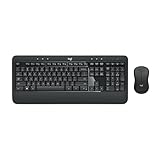
- Precision Typing: An instantly familiar experience, type with ease and comfort on this full-size wireless keyboard, featuring reduced noise, palm rest, spill-resistant design (1), adjustable tilt legs
- Built For Comfort: The sleek combo's wireless mouse features an ambidextrous shape and soft rubber side grips that fit comfortably in your palm, as well as enhanced tracking and precise cursor control
- Long-Lasting Autonomy: The wireless keyboard and mouse set come with long-lasting battery life, with the keyboard lasting up to 36 months and the wireless mouse for up to 18 months (3)
- Customized Control: Enhanced productivity at your fingertips, the computer keyboard comes built with convenient, essential hotkeys providing direct access to media, calculator, battery check functions
- Wireless Freedom: Plug-and-play your keyboard and mouse with the mini Logitech Unifying USB receiver, for a reliable wireless connection up to 33 ft away from your PC or laptop (2)
Native RDP fits server administration and managed corporate desktops without necessarily adding a third-party remote-control agent. Microsoft documents Remote Desktop clients separately from Remote Desktop Services, so host capability depends on Windows edition and deployment architecture.
What’s actually slowing this PC down?
Pick the symptom - the matching free tool is one click away.
Do not expose RDP directly to the public internet as a casual shortcut. Use a VPN, secure Remote Desktop Gateway, zero-trust access layer, or another approved control. RDP is also more complex for helping a nontechnical user than TeamViewer or Zoho Assist.
Choose Microsoft RDP if: your Windows infrastructure and security controls already exist. Look elsewhere if: you need instant, one-time attended support.
8. RemotePC: best budget multi-computer access
RemotePC is worth considering when the main requirement is basic unattended access to several computers at a lower budget than a large support suite.
RemotePC is positioned as a mainstream budget alternative, but the exact endpoint count, mobile access, file transfer, recording, collaboration, and support limits must be checked against the selected plan. The official pricing page did not render reliably during this research pass, so no current price is stated here. Use the official RemotePC site to verify current pricing and limits before making a purchase.
What’s actually slowing this PC down?
Pick the symptom - the matching free tool is one click away.
Choose RemotePC if: endpoint count and basic access matter more than advanced enterprise integrations. Look elsewhere if: you need independently documented security controls or a highly mature enterprise support ecosystem.
9. RealVNC Connect: best for established VNC workflows
RealVNC Connect suits organizations that already use VNC or want a mature VNC-oriented remote-access ecosystem.
RealVNC Connect’s official product page should be used to verify current device, user, and plan limits. Readers should distinguish direct VNC deployment from the vendor’s cloud-mediated product and assess authentication, network architecture, encryption, and access controls rather than assuming that every VNC deployment has the same security profile.
RealVNC Connect may provide fewer modern help-desk workflows than TeamViewer or Zoho Assist. It is not the natural choice for one-off family support or a zero-configuration consumer setup.
Quick wins for a faster PC:
Clear out junk files and repair common Windows errorsFree Scan →Scan for outdated or missing drivers - takes under a minuteDriver Scan →Choose RealVNC Connect if: VNC compatibility and granular deployment requirements are central. Look elsewhere if: you need a turnkey attended-support workflow.
10. Apache Guacamole: best browser-based gateway for technical teams
Apache Guacamole is a clientless browser gateway for technically capable teams that need centralized access to RDP, VNC, or SSH connections.
The Apache project describes Guacamole as a clientless remote-desktop gateway, and the comparison research identifies support for RDP, VNC, and SSH. The viewer needs a browser rather than a native remote client, but the target systems and gateway still require careful deployment.
Guacamole is not a turnkey consumer support app. Operators must handle authentication, reverse-proxy configuration, TLS, logging, network segmentation, updates, backups, and hardening. The user experience also depends on the underlying RDP, VNC, or SSH configuration.
Windows Errors? Fix Them Before They Spread
Repair common Windows errors and clear accumulated junk for a smoother, more stable PC - no reinstall needed.Free scan · no reinstallOutdated Drivers Are Slowing You Down
One free scan finds every outdated or missing driver and matches the right update for your exact hardware.Free scan · exact hardware matchBest Value

- The things you do most are right at your fingertips with one-touch controls for instant access to play/pause, volume, mute and the Internet.
- Comfortable low-profile keys: Enjoy fast, fluid quiet typing on a familiar standard layout, including number pad.
- High-definition optical mouse: Smooth, responsive cursor control from a comfortable sculpted mouse.
- Sleek and durable design: Thin profile, spill-resistant design, durable keys and sturdy adjustable tilt legs. Tested under limited conditions (maximum of 60 ml liquid spillage). Do not immerse keyboard in liquid.
- Plug-and-play PC compatibility: Simple USB connection. Works with Windows XP, Windows Vista, Windows 7, Windows 8 or later or Linux kernel 2.6 or later.
Choose Guacamole if: browser access and infrastructure control are more important than a managed vendor workflow. Look elsewhere if: you need instant attended support with no server administration.
Independent reader supportYour contribution helps us test, update, and keep practical guides available for everyone.When should you use native RDP instead of a third-party tool?
Use native Microsoft RDP when the host is a suitable Windows edition, the organization already operates Remote Desktop Services or a secure gateway, centralized identity and policies are available, and consumer-friendly one-click support is unnecessary.
Native RDP can be efficient for Windows administration, but Windows editions do not all provide the same host capability. Network reachability, authentication, firewall rules, gateway design, and hardening determine whether RDP is practical. Microsoft’s Remote Desktop Services documentation should be consulted for the deployment architecture.
What should you do when a remote session fails?
Start with the physical and account state before reinstalling software. Most failures come from a sleeping computer, a stopped agent, missing platform permissions, a blocked network path, a wrong device identifier, or an authorization problem.
Recommended Free Tools
- Confirm that the host is powered on, connected, and not asleep.
- Check the host agent’s local status and verify that the service is running.
- Confirm the device identifier, account, authorization state, and target computer.
- On macOS, verify the user granted Screen Recording and Accessibility permissions.
- Check Windows Firewall, proxy authentication, DNS filtering, TLS inspection, endpoint security, VPN routing, and egress rules with the network administrator.
- Update the viewer and host to compatible supported versions.
- Test through the organization’s approved gateway or, where policy permits, without the VPN to isolate routing problems.
- Use an alternate administrative path such as console access, RDP, SSH, or local support.
- Remove and re-enroll the device if its authorization state is corrupted.
- Check the vendor status page before performing a full reinstall.
Additional edge cases include black screens after a monitor is disconnected, secure UAC or secure-desktop prompts that require a system service or elevated configuration, and Wake-on-LAN that needs compatible hardware, BIOS/UEFI settings, network support, and sometimes an always-on device on the same network.
How can you deploy remote desktop software safely?
- Enable MFA and use unique credentials for every administrator.
- Restrict unattended access to known devices and approved users.
- Use device allowlists, least-privilege roles, login alerts, and session approval where available.
- Keep agents, clients, operating systems, gateways, and plugins updated.
- Remove former employees, old devices, temporary support codes, and unused agents during offboarding.
- Disclose session recording and obtain consent before attended support.
- Review clipboard, file-transfer, printing, screen-blanking, and remote-input settings.
- Do not expose RDP directly to the public internet; use a VPN, Remote Desktop Gateway, zero-trust layer, or another approved control.
- Document emergency access and test a recovery path before an outage.
- Review vendor retention, data residency, subprocessors, renewal, and automatic-renewal terms.
Unattended access deserves particular attention. The feature that lets a technician repair a computer at night also lets anyone who obtains the relevant credential or enrollment authority reach that computer without a person present.
Final recommendations
| If your priority is… | Choose… | Reason |
|---|---|---|
| Value for ordinary personal or small-business access | Splashtop | Good balance of access features, performance expectations, and cost positioning. |
| The broadest professional support feature set | TeamViewer | Broad platforms, integrations, unattended access, reporting, and enterprise controls. |
| Lightweight remote control | AnyDesk | Simple workflow and a lightweight positioning. |
| Help-desk and technician workflows | Zoho Assist | Attended and unattended support with business-oriented features. |
| Free personal access | Chrome Remote Desktop | Simple and free for the basic use case. |
| Open-source infrastructure control | RustDesk | Self-hosted model for technically capable operators. |
| Browser-based access to RDP, VNC, and SSH | Apache Guacamole | Clientless gateway with substantial deployment responsibility. |
| Existing secure Windows administration | Microsoft Remote Desktop | Native fit when Windows host and gateway infrastructure are already available. |
| Budget access to several unattended machines | RemotePC | Worth comparing when endpoint count and price are primary factors. |
| Established VNC deployment | RealVNC Connect | Familiar VNC-oriented ecosystem and cross-platform access. |
The most defensible 2026 choice is use-case specific: start with Chrome Remote Desktop for simple free personal access, Splashtop for value, TeamViewer for broad professional capability, Zoho Assist for help desks, and RustDesk, Guacamole, or Microsoft RDP only when the organization is prepared to own the additional infrastructure and security decisions.
Frequently Asked Questions
Is free remote desktop software suitable for business use?
Free remote desktop software can be suitable for personal access, but free plans often restrict commercial use and omit audit logs, technician management, recording, advanced permissions, fleet reporting, or vendor support. Check the current license terms before using a free personal tier for a business.
What is the safest way to enable unattended remote access?
The safest practical setup combines MFA, unique administrator credentials, device allowlists, least-privilege roles, login and enrollment alerts, current software, and a documented offboarding process. Unattended access should not be enabled broadly or left on unused devices.
Can I expose Microsoft RDP directly to the internet?
Directly exposing Microsoft RDP to the public internet is not a safe default. Use a VPN, secure Remote Desktop Gateway, zero-trust access layer, or another organization-approved control, and configure identity, firewall, patching, and monitoring appropriately.
Is self-hosted remote desktop software automatically more secure?
Self-hosted remote desktop software is not automatically more secure. RustDesk and Apache Guacamole can provide more infrastructure control, but the operator must patch, configure TLS and authentication, restrict access, monitor logs, maintain backups, and respond to incidents.
The Bottom Line
Bottom line: Choose Splashtop for value, TeamViewer for broad professional and enterprise support, AnyDesk for lightweight control, Zoho Assist for help desks, and Chrome Remote Desktop for free personal access. Choose RustDesk or Apache Guacamole when self-hosting is worth the operational burden, and choose Microsoft RDP when secure Windows infrastructure already exists.
Quick Recap
Product prices and availability are accurate as of the date/time indicated and are subject to change. Any price and availability information displayed on Amazon at the time of purchase will apply.

