
There is no single best college ERP for every Indian institution. For a public university or government college, SAMARTH ERP is the strongest first option because of its higher-education and government-ecosystem alignment. Large private universities and multi-campus groups should begin with Academia by Serosoft or MasterSoft. Affiliated colleges can shortlist MasterSoft, ACADMiN, and EduSys, while smaller institutions may prefer Campus 360 for its trial-led evaluation process.
This ranking is an editorial shortlist based on official product documentation and government material, not hands-on testing, independently measured uptime, verified customer satisfaction, or a laboratory benchmark. Vendor-reported customer counts, awards, AI capabilities, and implementation claims are identified as such wherever they matter.


Quick comparison
| Rank | Platform | Best fit | Primary strength | Main diligence question |
|---|---|---|---|---|
| 1 | SAMARTH ERP | Public universities, government colleges, and affiliated-college networks | Government-supported higher-education governance and student lifecycle management | What onboarding, modules, support, hosting, and integrations are available to your institution? |
| 2 | Academia by Serosoft | Large private universities and multi-campus institutions | Broad lifecycle coverage, analytics, mobile access, and enterprise positioning | Can it demonstrate Indian statutory, affiliation, payment, and examination workflows? |
| 3 | MasterSoft College and University ERP | Affiliated colleges, autonomous colleges, and universities | Accreditation, OBE, CBCS, fees, affiliation, examinations, and reporting | What is included in implementation, customisation, migration, and support? |
| 4 | EduSys College ERP | Private, professional, junior, diploma, and autonomous colleges | Cloud-based administration and admissions across varied institution types | How deep are its university-level examination, research, and multi-campus functions? |
| 5 | ACADMiN | Small and mid-sized affiliated colleges | Conventional cloud campus management with academic, administrative, LMS, and communication functions | Can the vendor provide detailed security, integration, scale, and reference evidence? |
| 6 | Campus 360 ERP | Smaller and growing colleges | Web and mobile access, interactive sandbox, and advertised one-month trial | Does the production system handle realistic examination, migration, reporting, and recovery scenarios? |
| 7 | RexoCampus | AI-oriented institutions and expanding private groups | AI-assisted workflows, analytics, and multi-campus positioning | Are predictive features accurate, explainable, privacy-conscious, and subject to human approval? |
What a college ERP should actually cover
A college ERP should be more than an attendance and fee application. The useful test is whether it creates a connected record of the student journey from enquiry and admission through course registration, attendance, fees, examinations, results, certificates, graduation, and alumni engagement.
For a conventional college, the minimum functional scope usually includes:
#1 Best Overall
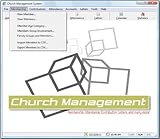
- Church Management All in One Software
- Church Management Membership Management
- Church Management Finance Management
- Enquiry, application, admission, document verification, and onboarding
- Student information, programmes, departments, batches, subjects, sections, and academic calendars
- Course registration, timetable, attendance, leave, and faculty workload
- Fee structures, invoices, online payments, receipts, refunds, concessions, and outstanding balances
- Examination scheduling, internal assessment, hall tickets, marks, moderation, results, revaluation, and transcripts
- Certificates, notifications, student and parent communication, grievances, and approvals
- Faculty and staff administration, reports, dashboards, and role-based access
- Graduation, alumni, and institutional reporting workflows
University-level or multi-campus deployments may additionally need affiliation management, centralised admissions and examinations, finance, recruitment, research grants, hostel, library, transport, payroll, multi-campus governance, and integration with national academic-credit services. Government higher-education material positions SAMARTH as an ERP for universities and higher-education institutions, while commercial platforms generally sell these capabilities as modular student, academic, administrative, finance, communication, and analytics functions.
Indian procurement teams should also test support for NAAC and IQAC evidence, outcome-based education, choice-based credit structures, academic-credit workflows, audit trails, backups, APIs, payment integration, and data-retention controls. NAAC is the UGC-established body responsible for assessment and accreditation of universities and colleges, so an ERP that cannot produce reliable, traceable institutional records may create considerable reporting work later.
1. SAMARTH ERP — best for public universities and government colleges
SAMARTH is the best starting point for a public-sector higher-education institution. It is a Ministry of Education-supported university ERP initiative developed with the University of Delhi and positioned around university and HEI governance, student lifecycle management, operational automation, and data-driven monitoring.
Why it ranks first
SAMARTH has a higher-education-specific and public-sector orientation rather than being a generic school or business management package. Government material also states that Academic Bank of Credits has been integrated with SAMARTH and describes use across multiple categories of Indian higher-education institutions.
Do these 3 things before closing this tab:
1Fix the driver behind crashes, sound loss and screen glitches2Repair Windows errors before they cause bigger problems3Scan for outdated or missing drivers - takes under a minuteGovernment publications report different adoption figures at different points: one Ministry annual report described adoption across more than 2,800 institutions, while a later Ministry document reported 5,417 universities and HEIs adopting SAMARTH. These figures come from separate publications and should not be treated as a like-for-like current market-share count.
Best fit
- Central and state universities
- Government colleges
- Affiliated-college networks
- Institutions that prioritise alignment with government digital-education initiatives
Strengths
- Purpose-built positioning for higher education
- Public-sector governance orientation
- Broad student-lifecycle scope
- Potential alignment with Academic Bank of Credits and other national initiatives
- Suitability for centralised or multi-institution administration
Important limitations
National adoption does not guarantee a frictionless deployment at every college. Onboarding may depend on the relevant state, ministry, university, or institutional arrangement. Confirm the exact modules, hosting model, support channel, data migration process, integration availability, implementation timetable, and responsibility for local configuration before treating SAMARTH as ready to deploy.
Verdict: Make SAMARTH the default first evaluation for public higher education. Compare it with a commercial platform when you need custom workflows, faster procurement flexibility, or a support model not covered by the local onboarding arrangement.
2. Academia by Serosoft — best for large, complex, analytics-led institutions
Academia is a strong enterprise shortlist candidate for large private universities and multi-campus groups. Serosoft presents it as an AI-powered, cloud-native, mobile-ready higher-education ERP covering processes from admissions through alumni management.
What’s actually slowing this PC down?
Pick the symptom - the matching free tool is one click away.
Why it ranks highly
The platform is positioned around extensive lifecycle coverage, analytics, role-based stakeholder access, mobile applications, and institutional standardisation. These characteristics make it more relevant to a university group managing multiple campuses, programmes, departments, and reporting structures than to a small college seeking only fees and attendance.
Rank #2
Serosoft reports more than 400 customers, presence in 32 countries, and more than one million learners and educators benefited. These are company-reported figures, not independently verified counts. The vendor also refers to analyst and industry recognition; buyers should verify the scope, date, category, and relevance of each recognition rather than treating it as proof of product quality.
Best fit
- Large private universities
- Multi-campus education groups
- Institutions with international-facing operations
- Colleges that need analytics, mobile access, and enterprise-level workflow coverage
Strengths
- Broad student lifecycle from admission to alumni
- Cloud-native and mobile-ready positioning
- Analytics and AI emphasis
- Role-based access for different institutional stakeholders
- Potentially useful for multi-campus reporting and standardisation
Important limitations
AI branding should not replace workflow testing. Ask the vendor to demonstrate data quality controls, explainability, human review, administrative overrides, and auditability for each AI-assisted function. Also validate Indian statutory reports, university-affiliation workflows, examination rules, local payment methods, data residency, API availability, and implementation references from institutions of a similar size.
Verdict: Include Academia when scale, analytics, mobile access, and lifecycle breadth are more important than the smallest possible deployment.
Recommended Free Tools
3. MasterSoft College and University ERP — best all-round fit for Indian college administration
MasterSoft is one of the most practical options for colleges that need conventional administration plus accreditation and academic-structure workflows. The vendor markets separate college and university ERP offerings rather than presenting one generic product for every education segment.
Why it ranks highly
The college offering describes student, faculty, administration, accounting, fee collection, accreditation-data management, outcome-based education, choice-based credit system support, and reporting. The university offering adds centralised admissions, affiliation management, examination and results workflows, role-based access, backups, and centralised data.
Best fit
- Affiliated colleges
- Autonomous colleges
- Universities and university departments
- Institutions needing OBE, CBCS, accreditation, and reporting support
Strengths
- Clear Indian higher-education orientation
- Dedicated college and university product positioning
- Accreditation-data functionality
- Outcome-based education and choice-based credit support
- Online fee collection and accounting-related workflows
- Affiliation, examination, results, backups, and reporting capabilities described for university deployments
Important limitations
Feature pages describe intended capabilities; they do not establish implementation quality, service levels, pricing, migration success, or the quality of a particular deployment. Request a module-by-module scope, sample NAAC/IQAC reports, integration architecture, migration plan, escalation process, and references from colleges in the same state or university ecosystem.
Verdict: MasterSoft is a particularly sensible comparison point for affiliated and autonomous colleges that need more than basic attendance, fees, and notices.
4. EduSys College ERP — best broad cloud option for varied college types
EduSys is a reasonable shortlist option for private and professional institutions seeking a broad cloud-based system. Its college management software is described as bringing management, professors, staff, parents, and students into one platform.
Why it ranks highly
EduSys specifically describes support for intermediate and junior colleges, polytechnics, diploma institutions, pharmacy, engineering, medical, management, and autonomous colleges. Its admissions and onboarding workflow includes enquiries, follow-up, enrolment, document verification, and fee collection.
Rank #3
Best fit
- Private colleges
- Professional institutions
- Junior and intermediate colleges
- Polytechnic and diploma institutions
- Pharmacy, engineering, medical, and management colleges
- Autonomous colleges seeking a standardised cloud rollout
Strengths
- Wide institution-type coverage
- Cloud accessibility
- Admissions and onboarding workflow
- Stakeholder-facing design for staff, faculty, students, parents, and management
- Potentially suitable for varied academic formats
Important limitations
The available product material does not establish the depth of university-level examination governance, complex affiliation management, research administration, or large multi-campus controls. If any of those are mandatory, require a live demonstration using your own examination rules and approval paths. Do not infer enterprise depth from the phrase all-in-one.
Verdict: A sensible option for private and professional colleges that want broad day-to-day administration without starting with a heavily specialised university platform.
The Tool Desk
Outbyte PC Repair FREERepair Windows errors before they cause bigger problemsFix Now →Outbyte Driver Updater FREEScan for outdated or missing drivers - takes under a minuteDriver Scan →5. ACADMiN — best conventional cloud campus management for affiliated colleges
ACADMiN is worth considering when a small or mid-sized college wants an accessible, conventional campus-management suite. The platform describes itself as an integrated cloud-based system covering administrative, academic, learning-management, communication, and productivity functions.
Best fit
- Small and mid-sized affiliated colleges
- Arts, commerce, and science institutions
- Institutions with limited internal IT resources
- Buyers seeking cloud deployment and conventional campus administration
Strengths
- Explicit positioning for universities and affiliated colleges
- Cloud deployment
- Academic and administrative functions in one system
- LMS, communication, and productivity features
- Potentially accessible for institutions that do not want to manage local infrastructure
Important limitations
Public documentation is less detailed than that of some competitors on customer scale, security architecture, integrations, accreditation reporting, pricing, and service levels. Those are procurement questions, not assumptions to make from the product description. Ask for an architecture overview, security documentation, API list, data-export demonstration, and comparable customer references.
Verdict: A practical mid-market candidate for affiliated colleges that value straightforward campus administration and cloud access.
6. Campus 360 ERP — best for smaller colleges wanting a quick web-and-mobile evaluation
Campus 360 stands out for its evaluation-friendly approach. It markets a school and college ERP with administration, academic-process automation, native iOS and Android applications, an interactive system sandbox, and an advertised one-month free trial. Its demo environment identifies a 2026–27 system session.
Quick wins for a faster PC:
Scan for outdated or missing drivers - takes under a minuteDriver Scan →Clear out junk files and repair common Windows errorsFree Scan →Best fit
- Smaller private colleges
- Growing institutions
- Institutions prioritising web and mobile access
- Buying teams that want to inspect a live-style interface before a formal rollout
Strengths
- Interactive demo or sandbox orientation
- Native mobile access advertised for iOS and Android
- Focus on administration and academic automation
- Lower initial evaluation friction through the advertised trial
Important limitations
A sandbox or one-month trial does not prove production scalability, security, migration quality, uptime, or support responsiveness. During evaluation, use realistic student records and test examination processing, fee reversals, attendance corrections, approval workflows, reports, data export, role permissions, and backup recovery. Also confirm whether the trial includes the modules your institution would actually purchase.
Verdict: Campus 360 is worth inspecting for smaller and mid-sized colleges that prioritise usability, mobile access, and a rapid evaluation cycle.
7. RexoCampus — best for AI-assisted workflows and multi-campus ambitions
RexoCampus is the most innovation-oriented option on this list, but it also requires the most careful AI and privacy validation. It positions itself as an AI-powered education ERP for schools, colleges, and universities in India.
Rank #4

- Manage Project and Schedule status: Not Started, In Progress, Cancelled, Completed, Next Action, Pending, Waiting, Deferred, Requested, Approved, Reopened, Reviewed, Testing, Verified and Resolved.
- Manage Priority of Project: Lowest, Low, Medium, High, Highest
- Manage impact: Trivial, Minor, Moderate, Major, Critical, Extreme
- Easily Customize and control schedule summaries, types, progress and attributes.
- Easily Customize and control Start date, End date, Due Date and notify date.
Best fit
- Private institutions interested in AI-assisted admissions
- Colleges considering predictive student-risk or performance analytics
- Degree, junior, and autonomous colleges
- Groups planning future multi-campus expansion
Strengths
- Explicit AI and analytics positioning
- College-specific positioning for degree, junior, and autonomous institutions
- Admissions, attendance, fee collection, examinations, and communication workflows described
- Wider positioning that includes predicted student performance, research grants, and high-volume multi-campus operations
Important limitations
Separate production ERP functions from newer predictive or generative features. Ask what data each AI function uses, how often it is evaluated, whether staff can inspect the reason for a recommendation, how errors are corrected, whether decisions require human approval, and how personal data is retained or deleted. Request references from institutions comparable in size and academic complexity.
PC Slower Than It Used to Be?
A free scan shows the junk files, broken settings and background clutter dragging Windows down - then fixes them in one click.Free scan · Windows 10 & 11Outdated Drivers Are Slowing You Down
One free scan finds every outdated or missing driver and matches the right update for your exact hardware.Free scan · exact hardware matchVerdict: Include RexoCampus when AI-assisted operations and expansion are strategic priorities, but do not select it on AI claims alone.
Which ERP should your institution choose?
| Institution type | Start with | Why |
|---|---|---|
| Government university or public college | SAMARTH, then MasterSoft | SAMARTH offers government ecosystem alignment; MasterSoft may provide commercial flexibility or custom workflows. |
| Large private university or multi-campus group | Academia and MasterSoft | Both are relevant to broad lifecycle coverage and institutional standardisation. Add RexoCampus if AI and predictive analytics are strategic. |
| Affiliated arts, commerce, or science college | MasterSoft, ACADMiN, and EduSys | These platforms are positioned for mainstream college administration and affiliated-college scenarios. |
| Professional, junior, diploma, or autonomous college | EduSys, MasterSoft, and RexoCampus | They describe support for varied professional or autonomous institution types; verify the exact academic and examination configuration. |
| Smaller college seeking rapid evaluation | Campus 360 and ACADMiN | Campus 360 advertises a sandbox and one-month trial, while ACADMiN offers a conventional cloud campus-management approach. |
How to evaluate college ERP software before buying
1. Define the institution model
State whether you are an affiliated college, autonomous college, university department, professional college, or multi-campus group. The same product can be suitable for one model and unsuitable for another because affiliation, examination authority, credit structures, and reporting responsibilities differ.
2. Create a mandatory workflow map
List every process that must work on day one: admissions, student records, attendance, timetable, course registration, fees, examinations, results, certificates, grievance handling, hostel, library, transport, payroll, research, alumni, and accreditation evidence. Separate mandatory functions from desirable features so an attractive demo cannot hide a critical gap.
3. Run the same scripted demonstration for every vendor
Give each vendor one scenario: an enquiry becomes an applicant, the applicant uploads documents and pays a fee, receives admission, registers for subjects, records attendance, sits an examination, receives results, requests a correction, and obtains a certificate. Require the vendor to show the audit trail, approvals, notifications, reports, and data export. This exposes differences that a feature checklist often misses.
4. Test integrations rather than accepting promises
Check the payment gateway, SMS or WhatsApp provider, biometric or attendance devices, LMS, accounting software, identity systems, Academic Bank of Credits or other government interfaces, and existing university systems. Ask for API documentation, authentication methods, rate limits, ownership of integration code, failure handling, and the cost of maintaining each connection.
5. Verify privacy, security, and recovery controls
Student and staff records are sensitive digital personal data. The Digital Personal Data Protection Act, 2023 provides India’s statutory framework for processing digital personal data, but commencement and operational requirements should be checked against current government notifications and the institution’s legal advice.
At minimum, ask for:
- Role-based access with least-privilege permissions
- Encryption in transit and at rest, with an explanation of key management
- Audit logs for marks, fees, attendance, permissions, and personal-data access
- Backup frequency, retention periods, restore testing, and disaster-recovery procedures
- Recovery time and recovery point objectives
- Data export in a usable, documented format before contract termination
- Data deletion and retention procedures
- Incident notification timelines and response responsibilities
- Details of hosting locations, subprocessors, and support access
- Contractual allocation of responsibilities between the institution and the provider
A neutral ERP implementation checklist should include these questions before the request for proposal is issued. If the institution lacks internal expertise, it may also evaluate an independent implementation, migration, and integration consultancy; any such provider should be assessed separately from the ERP vendor.
6. Pilot with real-world complexity
Do not pilot only a clean new-admission record. Import a representative sample containing transfers, arrears, concessions, subject changes, attendance corrections, revaluation, duplicate records, inactive students, and staff with different permissions. Measure whether the system preserves history and produces the reports your registrar, accounts team, examination cell, IQAC, and department heads actually use.
Best Value
7. Request comparable references
Ask for two or three institutions with a similar student count, academic model, examination process, and deployment scope. Discuss migration duration, training effort, support response, customisation costs, report accuracy, outages, and what the institution would choose differently. A reference from a school or a very different university may not answer the questions that matter to your college.
8. Calculate total cost of ownership
Compare the complete five-year cost, not just a monthly or annual licence figure. Include:
- Subscription or licence fees
- Implementation and configuration
- Data cleaning and migration
- Custom reports and workflow changes
- Payment, SMS, WhatsApp, biometric, LMS, and accounting integrations
- Training, travel, and change-management support
- Support and service-level charges
- Storage, backups, and additional users or campuses
- Hardware or devices that remain necessary
- Taxes, renewal increases, and exit or data-export costs
Pricing: why published starting prices are difficult to compare
Publicly visible pages for the principal college ERP products in this shortlist generally direct institutions toward a demo or tailored commercial discussion instead of publishing comparable, standardised 2026 pricing. That is common for institution-level software because student count, campuses, modules, implementation complexity, integrations, and support requirements vary widely.
Do not rank a platform by an advertised starting price unless the quote clearly states the assumed student count, included modules, implementation work, migration, taxes, integrations, support, storage, renewal terms, and charges for additional campuses or users. A low subscription can become expensive when essential reports, integrations, training, or customisations are excluded.
Free tools Windows power users keep installed
One-click scans. No signup required.
Evidence and ranking limitations
This list is based primarily on official vendor documentation and government material. It does not claim hands-on product testing, independently verified customer satisfaction, measured uptime, verified implementation outcomes, or negotiated pricing. Customer counts, awards, AI capabilities, security claims, and adoption figures should be treated as vendor-reported or source-reported unless independently corroborated.
The rankings therefore express structured editorial fit, not an objective league table. Before signing, confirm the exact product edition, modules, implementation scope, hosting arrangement, service levels, integrations, security controls, data ownership, and exit terms for your institution.
Frequently Asked Questions
Which college ERP is best for a government college in India?
SAMARTH ERP is the strongest first option because it is positioned as a Ministry of Education-supported higher-education ERP and is aligned with public-sector university and HEI governance. The college should still confirm local onboarding, module availability, support, hosting, migration, and integration arrangements. MasterSoft is a useful commercial comparison where additional flexibility is required.
Is this an independently tested ranking?
No. The shortlist is based mainly on official product documentation and government material. It does not represent hands-on testing, independently measured uptime, verified customer satisfaction, or a customer-review average. Vendor-reported scale, AI, awards, and implementation claims should be verified during procurement.
What should be included in a college ERP quote?
The quote should state student and campus assumptions, modules, implementation, data cleaning and migration, integrations, training, support SLAs, storage, backups, taxes, renewal increases, customisation charges, data-export terms, and exit costs. Comparing only the subscription or licence price can produce a misleading result.
Should a college choose an ERP because it offers AI?
Not by itself. Require a demonstration of the underlying workflow, data used, accuracy controls, explainability, human approval, audit trail, privacy safeguards, and error-correction process. Established functions such as admissions, fees, examinations, attendance, reporting, and data export should remain the primary selection criteria.
The Bottom Line
Bottom line: Choose SAMARTH first for public-sector higher education, Academia or MasterSoft for large and complex institutions, and MasterSoft, EduSys, or ACADMiN for most affiliated and private colleges. Consider Campus 360 when a trial-led evaluation is important and RexoCampus when AI is a genuine strategic requirement. In every case, select the platform that can prove your examination, accreditation, integration, security, migration, and reporting workflows—not the one with the longest feature list.
Quick Recap
Product prices and availability are accurate as of the date/time indicated and are subject to change. Any price and availability information displayed on Amazon at the time of purchase will apply.

