
Short answer: For a conventional Windows firewall, start with ZoneAlarm, TinyWall, or GlassWire. Choose simplewall or Comodo Firewall if you want more technical application control. On macOS, LuLu is the specialist choice; on Linux, look at OpenSnitch or Portmaster.
Two entries in this list—OPNsense Community Edition and pfSense Community Edition—belong to a different category. They are complete firewall and router platforms normally installed on a dedicated computer, virtual machine, or network appliance. They are not one-click desktop utilities for a single Windows or Mac computer.
This is an editorial selection based on documented features, platform fit, transparency, and use case—not a laboratory ranking. No independent performance, leak, malware-blocking, or usability testing was performed for this roundup.
Quick picks
| Program or platform | Platform | Best fit | Free model |
|---|---|---|---|
| ZoneAlarm Free | Windows | A guided security-suite experience with network zones | Free product bundle; paid tiers also exist |
| TinyWall | Windows | A lightweight management layer for Windows Firewall | Free software |
| GlassWire | Windows | Visual traffic history and easy per-application blocking | Free tier with feature and history limits |
| simplewall | Windows | Advanced users who want a small WFP-based filter | Free and open source |
| Comodo Firewall | Windows | Application control with default-deny and sandboxing features | Free product; check current installer compatibility |
| Portmaster | Windows and Linux | Application-level visibility with tracker blocking and privacy controls | Free core features with premium boundaries |
| LuLu | macOS | Outbound connection alerts and blocking | Free and open source |
| OpenSnitch | Linux | Interactive outbound filtering for technically confident users | Free and GPL-3.0 licensed |
| OPNsense Community Edition | Dedicated gateway or virtual machine | Home labs, small offices, multi-WAN, and VPN routing | Free community edition; paid Business Edition also exists |
| pfSense Community Edition | Dedicated gateway or virtual machine | Web-managed network firewall and router deployments | Free community edition; premium pfSense Plus features also exist |
Free does not mean the same thing in every row. It may mean fully free software, a limited free tier, or a free community edition supported by paid services, hardware, or premium features.
Quick wins for a faster PC:
Clear out junk files and repair common Windows errorsFree Scan →Scan for outdated or missing drivers - takes under a minuteDriver Scan →#1 Best Overall

- 【Up to 1100 Mbps VPN Speed 】 Hardware-accelerated WireGuard and OpenVPN-DCO deliver up to 1100 Mbps VPN throughput, over 3× faster than Brume 2 for smooth remote access and file transfers.
- 【Three 2.5G Ports & Multi-WAN】Tri-port 2.5GbE design with flexible WAN LAN configuration supports multi-gigabit wired setups, dual-ISP Multi-WAN and failover to keep home and SOHO networks online.
- 【Stealth VPN Obfuscation】VPN obfuscation disguises VPN traffic as regular HTTPS, helping you evade blocking, bypass restrictive networks and maintain stable, private connections.
- 【DPI protection】Deep Packet Inspection with visual dashboards blocks adult/gambling/malicious sites, while SQM and QoS prioritize gaming, calls, and video when bandwidth is tight
- 【OpenWrt & USB 3.0 Expansion】OpenWrt with 1GB DDR4 and 8GB eMMC lets you install plugins and build VPN, ad-blocking or NAS, while USB 3.0 Type‑C connects high-speed storage or 4G/5G dongles
Our 10 favorite free firewall programs and platforms
1. Comodo Firewall
Best for: Windows users who want a feature-heavy third-party firewall and are comfortable responding to application decisions.
Comodo takes a more assertive approach than a firewall that simply allows most familiar programs. Its advertised feature set includes inbound and outbound traffic management, application monitoring, Default Deny Protection, sandboxing, cloud-based behavior analysis, a trusted-application list, training mode, and game mode.
That combination makes Comodo attractive to users who want to know which programs are communicating and who are willing to approve, deny, or refine rules. Training mode can be useful while establishing a normal baseline, while a default-deny approach can produce more prompts and more troubleshooting than a permissive configuration.
Important limitation: Comodo’s public system-requirements information has included older Windows versions. Before installing it on Windows 10 or Windows 11, check the current installer and product documentation rather than assuming that legacy compatibility text is current. Comodo’s broad security claims should also be understood as vendor claims, not as independent test results. A firewall remains only one layer of protection; it does not replace antivirus protection, updates, safe browsing, or backups.
Outdated Drivers Are Slowing You Down
One free scan finds every outdated or missing driver and matches the right update for your exact hardware.Free scan · exact hardware matchWindows Errors? Fix Them Before They Spread
Repair common Windows errors and clear accumulated junk for a smoother, more stable PC - no reinstall needed.Free scan · no reinstall2. ZoneAlarm Free Firewall or ZoneAlarm Free Antivirus
Best for: Windows users who prefer a conventional security-suite interface instead of a standalone rule editor.
ZoneAlarm’s current free offering is presented alongside antivirus and anti-spyware capabilities, with a personal firewall intended to help prevent unauthorized access and malicious programs from communicating. The precise contents of the free bundle can change, so check the current product page during installation rather than relying on descriptions of older free editions.
One of ZoneAlarm’s clearest concepts is its network-zone model:
- Trusted: networks or devices you have decided can receive more permissive treatment.
- Public: networks such as hotel, café, airport, or other shared Wi-Fi where stricter behavior is appropriate.
- Blocked: networks that should not be allowed to communicate with the computer.
ZoneAlarm’s support documentation says the firewall is enabled by default after installation. The zone approach is easier to understand than manually creating every rule, although it still requires care when deciding whether a network is genuinely trusted. Paid ZoneAlarm tiers may add features that are not part of the free product, so do not treat historical feature lists as a promise about the current free version.
3. GlassWire
Best for: Users who want an understandable visual record of network activity and simple per-application blocking.
GlassWire stands out because it presents traffic through graphs, alerts, and application-oriented history rather than making users start with technical firewall terminology. Its free version includes a built-in firewall, traffic monitoring, network-activity graphs, alerts, and the ability to block applications.
The quick-start controls include click-to-block, an Ask to connect behavior, a block-all option, and separate inbound and outbound controls. That makes it useful when the immediate question is, “Which application is using the network, and how do I stop it?”
Rank #2

- Compact and Efficient Design: The FortiGate 40F is designed for small to mid-sized businesses and enterprise branch offices, featuring a compact, fanless desktop form factor that ensures quiet operation and minimizes space usage.
- Robust Connectivity Options: Equipped with 5 GE RJ45 ports, including 1 WAN port and 4 internal ports, this model provides essential connectivity and flexibility for various network configurations in a small-scale environment.
- High-Performance Security: Offers up to 1 Gbps IPS throughput and 600 Mbps threat protection throughput, using Fortinet’s purpose-built security processor technology to deliver industry-leading performance and protection for SSL encrypted traffic.
- Advanced Threat Protection: Integrated with Fortinet’s AI-powered FortiGuard Labs, the FortiGate 40F offers comprehensive cybersecurity, identifying and mitigating both known and unknown threats to maintain robust security across your network.
- Simplified Management and Deployment: Features a user-friendly management console that provides comprehensive network automation and visibility, coupled with Zero Touch Integration with Fortinet’s Security Fabric for easy deployment.
The free edition is not equivalent to the paid plans. GlassWire’s pricing comparison identifies restrictions such as limited history and limited bandwidth-monitoring periods. Features including firewall profiles and bidirectional controls are presented in the comparison table, so confirm which edition includes a particular control before relying on it.
The Tool Desk
Outbyte Driver Updater FREEScan for outdated or missing drivers - takes under a minuteDriver Scan →Outbyte PC Repair FREEClear out junk files and repair common Windows errorsFree Scan →GlassWire is best viewed as a friendly visibility and control layer. It is not a substitute for every other security measure, and a graph showing traffic does not by itself prove that traffic is safe or malicious.
4. simplewall
Best for: Advanced Windows users who want a compact, open-source application-filtering utility.
simplewall uses Microsoft’s Windows Filtering Platform, or WFP, to control network activity. Its official feature set includes installer and portable builds, application allow/block controls, connection information, and a telemetry blocklist. The project states that it does not inject drivers or modify system files, which is a meaningful distinction for readers who want a focused filtering tool rather than a large security suite.
Its small footprint and technical control are strengths, but they also define the audience. Users need to understand application rules, recognize legitimate Windows processes, and troubleshoot what happens when a necessary service is blocked. A prompt or connection entry is not automatically suspicious simply because it is unfamiliar.
What’s actually slowing this PC down?
Pick the symptom - the matching free tool is one click away.
simplewall’s release and Windows-support details can change. Check the current project download page for the latest version and compatibility before installing; do not treat a version number seen in an older article as permanent.
5. TinyWall
Best for: Windows users who find the built-in Windows Firewall difficult to manage but do not need a full security suite.
TinyWall is a management layer around the Windows Firewall engine rather than a replacement packet-filtering engine. Its design goal is to make Windows Firewall easier to use while staying lightweight and avoiding an additional driver or kernel component.
The documented feature set includes tamper protection, blocklists, temporary rules, support for UWP applications, and filtering during the boot process. Temporary rules are particularly useful when testing an application without creating a permanent exception that might be forgotten later.
TinyWall can be a sensible choice when the operating system’s underlying firewall is acceptable but its interface is frustrating. It does not turn Windows into a complete endpoint-security system: it is not an antivirus replacement, and “free” does not mean it automatically detects every malicious file or unsafe website.
The download information observed for this selection listed TinyWall version 3.4, released April 6, 2025. Because this article is for 2026 and software changes, check the project’s current download page for a newer release before installation.
Rank #3

- 【Processor & OS】Firewall Mini PC with Intel J3710 CPU up to 2.64GHz, 4Cores 4threads 2MB L2 Cache, TDP 6.5w, supports AES-NI. It tested with pf-sens/opn-sense linux ubuntu and other popular open source os. ("DEL" key to enter BIOS)
- 【Interfaces】The firewall pc has 4 * Intel I226 lan ports, 2 * USB3.0 ports, 1 * RS232COM port, 2 * HD port, 1 * DC port. Equipped with VESA mount, you can install the micro pc behind the monitor to save space.
- 【Fanless Design】only 6.5W; fanless heat dissipation design, aluminum alloy shell, efficient and fast heat dissipation, which can withstand temperatures up to 60°C. support 24/7 hours working, no noise.
- 【RAM & Storage】The firewall router equipped with 8G DDR3 RAM, max support 8GB; 128GB mSATA SSD, up to 512GB. Not support HDD. Size:5.27 * 4.98 * 1.43 inches, Weigh:500g, small but powerful.
- 【12 Months Service】You will get a firewall pc and accessories,If you encounter any problems during the use, please contact us through Amazon, we have a professional and efficient team dedicated to serving you.
6. Portmaster
Best for: Windows and Linux users who want application-level network visibility, tracker blocking, and privacy-oriented controls.
Safing describes Portmaster as a free, open-source application firewall for Windows and Linux. Its documented controls include real-time network monitoring, per-application and global settings, tracker and malware blocking, secure DNS through DNS-over-HTTPS or DNS-over-TLS, and configurable connection restrictions.
Free tools Windows power users keep installed
One-click scans. No signup required.
This gives Portmaster a broader privacy focus than a minimal allow-or-block rule editor. It can help users investigate which applications are making connections and reduce unwanted tracking at the network-policy level. The trade-off is that Portmaster is a more substantial service to understand and configure than a simple front end for an existing firewall.
Portmaster’s free-versus-paid boundary matters. Extended network-history features, per-application bandwidth usage, and the Safing Privacy Network are listed among paid or premium capabilities. The free firewall and privacy controls should therefore be evaluated on their own, without assuming that every feature shown in product comparisons is included at no cost.
7. LuLu
Best for: Mac users who want alerts when applications or processes attempt to make outbound connections.
Objective-See describes LuLu as a free, open-source macOS firewall focused on blocking unknown outgoing connections and protecting privacy. Its central behavior is to notify you when an application or process tries to contact the internet, giving you an opportunity to allow or block that connection.
That outbound emphasis is the reason to choose LuLu. It is not a criticism that it does not present itself as a complete replacement for macOS’s built-in incoming-connection firewall, nor should it be treated as a complete antivirus product. Users seeking both inbound and outbound controls should understand how LuLu works alongside macOS’s existing firewall features and other security tools.
The product information observed for this roundup listed LuLu version 4.3.2 and macOS 10.15 or later, along with a changelog and source code. Check the current release information before installing because macOS support and version numbers may have changed.
8. OpenSnitch
Best for: Linux users who want interactive, application-based outbound filtering and are comfortable administering packages and services.
OpenSnitch is a GNU/Linux application firewall inspired by Little Snitch. Its documented capabilities include interactive outbound-connection filtering, system-wide blocking of advertising, tracker, and malware domains, GUI configuration of nftables, inbound-service rules, centralized management of multiple nodes, and SIEM integration.
Do these 3 things before closing this tab:
1Fix the driver behind crashes, sound loss and screen glitches2Clear out junk files and repair common Windows errors3Scan for outdated or missing drivers - takes under a minuteFor a Linux desktop, the interactive prompt model can make previously invisible outbound behavior easier to investigate. The ability to create inbound-service rules also makes OpenSnitch more than a one-direction-only notification tool, although the amount of administration depends on the distribution and the services running on the machine.
Rank #4

- Entry-Level Privacy Gateway: Designed for users who want simple online privacy protection at an affordable level—ideal for basic home networking and daily internet use.
- Secure Browsing for Everyday Needs: Perfect for email, social media, online shopping, and standard streaming—protecting your connection while keeping setup and operation easy.
- Lightweight Protection Against Common Online Threats: Helps reduce exposure to unwanted ads, trackers, and risky websites, improving online safety for your household.
- Simple Setup, No Technical Skills Required: Plug it in, follow the quick steps, and start using—an excellent choice for beginners who don’t want complicated network configurations.
- Decentralized VPN (DPN) Included – No Monthly Payments: Get built-in decentralized VPN access with lifetime free usage, helping you stay private without paying recurring subscription fees
Installation is not universally plug and play. Linux distributions differ in package formats, service management, desktop integration, and nftables configuration. Use the project’s current releases and documentation for your distribution, and be prepared to troubleshoot a service or package rather than expecting a Windows-style installer.
9. OPNsense Community Edition
Best for: Home labs, small offices, and technically confident users who need a dedicated firewall and router for multiple devices.
OPNsense is an open-source, FreeBSD-based firewall and routing platform. It provides stateful IPv4 and IPv6 firewalling, multi-WAN support, and VPN technologies including IPsec, OpenVPN, and WireGuard. Administration is performed as a network gateway, not as a small desktop utility that asks whether one application may connect.
Recommended Free Tools
A typical deployment uses compatible hardware or a virtual machine positioned between the internet connection and the local network. The platform can then apply policy to many devices centrally. That is the right model when you want network-wide segmentation, routing, VPN access, or multi-WAN behavior; it is unnecessary complexity if all you want is an outbound prompt for one Windows application.
OPNsense Community Edition is distinct from the paid Business Edition. Release identifiers also change frequently. The documentation snapshot used for this selection listed a 26.7.1 release in the 26.7 series, but readers should check the current Community Edition documentation and release notes before downloading.
If you are building a gateway rather than buying a finished appliance, a fanless mini PC for firewall can be a practical low-power starting point. It is not automatically certified for every OPNsense release: check the processor architecture, storage, number and type of network interfaces, NIC support, virtualization plan, and the current OPNsense hardware requirements before purchasing.
10. pfSense Community Edition
Best for: Readers who want a mature, web-managed firewall and router for a home lab, small network, or virtualized gateway.
pfSense Community Edition is a free, open-source customized FreeBSD distribution designed specifically for firewall and router use. It is managed through a web interface and includes a package system for additional functionality. Like OPNsense, it is intended to sit at the network edge and protect or route traffic for multiple devices rather than act as a conventional endpoint utility.
pfSense makes sense when you want centralized policies, a dedicated gateway, VPN services, network segmentation, or a lab environment in which to learn routing and firewall administration. It involves more planning than installing a desktop program: you need compatible hardware or virtualization, a network topology you understand, and a recovery plan if a rule change cuts off access.
The free Community Edition should not be confused with premium pfSense Plus capabilities, support, or commercial appliance offerings. Check the current documentation for the exact feature and licensing boundaries before choosing an edition.
Independent reader supportYour contribution helps us test, update, and keep practical guides available for everyone.How to choose the right free firewall
Choose a desktop firewall or a network gateway?
Choose a desktop application firewall when you want to control traffic generated by one computer. These tools are useful for outbound prompts, application rules, local visibility, and—in some cases—inbound protection.
Recommended Free Tools
Choose a gateway platform such as OPNsense or pfSense when you want one device to route and filter traffic for a home, lab, or office network. A gateway can protect multiple computers, phones, consoles, and IoT devices, but it requires compatible hardware or a virtual machine, network planning, and more administration.
Best Value
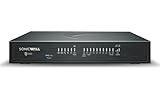
- APPLIANCE ONLY: Hardware unit sold without a service subscription — security services, firmware updates and support are NOT included and must be purchased separately to activate protection.
- PERFORMANCE: Up to 3.5 Gbps firewall inspection, 1.5 Gbps threat prevention and 1.6 Gbps IPSec VPN throughput driven by SonicWall's patented Reassembly-Free Deep Packet Inspection (RFDPI) engine.
- CONNECTIVITY: 8x1GbE + 2x1G SFP in a desktop form factor; zero-touch deploy and manage on-box or via cloud Network Security Manager (NSM).
- THREAT PROTECTION: SonicOS 8 delivers intrusion prevention, gateway anti-malware, application control, TLS/SSL decryption, Capture ATP multi-engine sandboxing (RTDMI) and reputation-based content & DNS filtering with an active service subscription.
- BUILT FOR GROWING SMALL BUSINESS: Secure SD-WAN, IPSec and SSL VPN plus Zero-Trust Network Access through Cloud Secure Edge keep distributed sites and remote workers protected.
Do you need inbound control, outbound control, or both?
- Inbound control governs attempts to reach services on your computer from another device or network.
- Outbound control governs programs on your computer attempting to reach the internet or another network.
- Both can provide a more complete policy model, but it can also mean more prompts and more rules to maintain.
LuLu is particularly focused on outbound connections. GlassWire exposes both directions in its documented controls, while desktop tools such as Comodo, simplewall, TinyWall, Portmaster, and ZoneAlarm have different interfaces and policy models. Read the product documentation for the behavior you actually need instead of assuming that every product called a firewall provides identical controls.
How much guidance do you want?
| If you want… | Start with… | Why |
|---|---|---|
| A guided Windows security-suite experience | ZoneAlarm | Network zones and an integrated free-product model |
| A simpler interface for Windows Firewall | TinyWall | It manages the existing Windows Firewall engine |
| Graphs and understandable traffic history | GlassWire | Visual monitoring and click-to-block controls |
| A small technical Windows filter | simplewall | Open-source WFP-based application filtering |
| More aggressive application decisions | Comodo | Default-deny, monitoring, and sandboxing features |
| Privacy-oriented cross-platform controls | Portmaster | Application policies, tracker blocking, and secure DNS options |
| Mac outbound prompts | LuLu | Free, open-source outbound connection control |
| Linux interactive filtering | OpenSnitch | Outbound prompts with nftables and service-level controls |
| Network-wide routing and filtering | OPNsense or pfSense | Dedicated gateway platforms for multiple devices |
Safe installation and setup checklist
- Identify what is already installed. Windows and macOS include built-in firewall capabilities, and security suites may also install network-filtering components. Read the vendor documentation before adding another product.
- Do not stack competing firewalls casually. Two products trying to control the same traffic can create conflicts, duplicate prompts, confusing rules, or connectivity failures. If you replace a third-party firewall, follow its documented removal process and restart when requested.
- Create a recovery path first. On a desktop, create a restore point or other appropriate backup and note how to boot into recovery or uninstall the product. For OPNsense or pfSense, back up the configuration and keep local console or recovery access available.
- Start with the default policy. Avoid importing a large collection of rules before you know what normal traffic looks like. Add narrow exceptions for specific applications or services.
- Inspect prompts carefully. Verify the executable name, file location, publisher, and the action being requested. An unfamiliar process is a reason to investigate, not automatic proof of malware.
- Use temporary permissions while testing. A temporary allow rule is safer than creating a permanent broad exception just to get an application working.
- Test ordinary tasks. Check web browsing, software updates, email, printing, file sharing, VPN access, and any application that needs network connectivity. If something fails, review the firewall log and recent rules before disabling protection completely.
- For a gateway, map the network first. Confirm the WAN and LAN interfaces, the intended DHCP and DNS behavior, the management address, and how you will regain access after a mistake. Hardware requirements vary by platform, release, NIC chipset, storage, and virtualization method.
What a firewall does—and what it does not do
A firewall applies rules to network traffic. Depending on the product, it can block unsolicited inbound connections, restrict a particular application, alert you to outbound activity, filter domains, or route and segment an entire network.
It does not automatically remove every malicious file, identify every phishing page, repair an unpatched operating system, or make unsafe downloads harmless. Keep the operating system and applications updated, use appropriate antivirus or endpoint protection, avoid opening unexpected attachments, use strong authentication, and maintain backups that ransomware cannot easily overwrite.
Quick wins for a faster PC:
Fix the driver behind crashes, sound loss and screen glitchesFind Drivers →Repair Windows errors before they cause bigger problemsFix Now →Also remember that a firewall can block legitimate traffic. A broad block-all setting may stop updates, VPNs, printers, games, cloud synchronization, or accessibility tools. Change one rule at a time and keep track of what you changed.
Free-tier and version checks before you install
Software in this category changes quickly. Before downloading, verify:
- the current Windows, macOS, or Linux distribution requirements;
- whether the product is fully free, freemium, or a free community edition;
- which features are limited by history, bandwidth, profiles, bidirectional controls, or premium services;
- whether the installer adds an antivirus, DNS service, driver, kernel component, or other network service;
- how to export rules and uninstall or recover from a broken configuration;
- for gateway platforms, whether your processor, storage, network adapters, and virtualization setup are supported.
In particular, recheck Comodo’s current Windows compatibility, TinyWall’s latest release beyond the version observed in 2025, LuLu’s current macOS support, the current OPNsense Community Edition release, and the current pfSense Community Edition versus Plus feature boundaries.
Our verdict
There is no single objectively best free firewall for every reader. ZoneAlarm is the most natural conventional Windows suite choice, TinyWall is appealing if you want to keep Windows Firewall underneath a simpler interface, and GlassWire is the clearest visual choice. Technical Windows users should compare simplewall and Comodo; privacy-focused Windows and Linux users should investigate Portmaster.
On a Mac, choose LuLu when outbound visibility is the priority. On Linux, OpenSnitch offers interactive filtering for users willing to manage packages and services. For network-wide protection, choose between OPNsense Community Edition and pfSense Community Edition based on documentation, interface preference, hardware support, and the features you actually need.
Frequently Asked Questions
Can I run two third-party firewalls at the same time?
Usually, you should not install multiple products that actively control the same traffic without checking their documentation first. They can create conflicting rules, duplicate prompts, or connectivity problems. Keep one primary firewall policy and use the product’s documented migration or uninstall procedure when switching.
Are free firewalls also antivirus programs?
No. A firewall controls network traffic, while antivirus and endpoint-security tools inspect files, processes, or behavior. Some free products, such as the current ZoneAlarm offering, may be presented as a bundle with antivirus features, but do not assume that every firewall on this list includes antivirus protection.
Are OPNsense and pfSense desktop firewall programs?
No. OPNsense Community Edition and pfSense Community Edition are firewall and router platforms for a dedicated computer, virtual machine, or network appliance. They are designed to protect and route traffic for a network, not simply to show outbound prompts for one desktop application.
What’s actually slowing this PC down?
Pick the symptom - the matching free tool is one click away.
Which option is easiest for a Windows beginner?
ZoneAlarm is the most conventional suite-style choice in this list. TinyWall may be preferable if you want a lightweight interface around the existing Windows Firewall. GlassWire is a good starting point when visual traffic graphs and simple blocking matter more than extensive policy customization.
The Bottom Line
Bottom line: Pick the firewall that matches the job. Use ZoneAlarm, TinyWall, GlassWire, simplewall, Comodo, or Portmaster for desktop application control; use LuLu for Mac outbound alerts; use OpenSnitch for Linux; and choose OPNsense or pfSense only when you want a dedicated network gateway. Confirm current compatibility and free-tier limits before installation, and keep backups and other security layers in place.
Quick Recap
Product prices and availability are accurate as of the date/time indicated and are subject to change. Any price and availability information displayed on Amazon at the time of purchase will apply.

