
Do these 3 things before closing this tab:
1Fix the driver behind crashes, sound loss and screen glitches2Clear out junk files and repair common Windows errors3Scan for outdated or missing drivers - takes under a minutemacOS began as a new operating system, not simply the next update to classic Mac OS. Since Mac OS X shipped in 2001, its history has been shaped by a succession of major transitions: a new Unix-based foundation, two processor-architecture changes, a shift to free major upgrades, and growing integration with Apple’s other devices.
What is the history of macOS?
The story starts with Apple replacing the older Mac OS foundation. Mac OS X combined a Unix-based core called Darwin with a redesigned interface called Aqua. Later, Apple adapted the operating system to new processor platforms and expanded its storage, media, graphics, and continuity capabilities.
“Mac OS X” eventually became “OS X,” then “macOS.” The name changed, but the operating system’s development continued through substantial changes to the platform beneath the interface.
How did Mac OS X replace classic Mac OS?
From announcement to launch
Apple unveiled Mac OS X on January 5, 2000, describing it as a new implementation of the Macintosh operating system. Its foundation, Darwin, was Unix-based; its new Aqua interface included the Dock and a redesigned Finder. Apple also highlighted Quartz, its 2D graphics system, along with memory protection and preemptive multitasking. These were foundational changes, not just a visual refresh. Apple’s announcement captured the ambition: the system was intended to combine simplicity for consumers with power for professionals.
PC Slower Than It Used to Be?
A free scan shows the junk files, broken settings and background clutter dragging Windows down - then fixes them in one click.Free scan · Windows 10 & 11Outdated Drivers Are Slowing You Down
One free scan finds every outdated or missing driver and matches the right update for your exact hardware.Free scan · exact hardware match#1 Best Overall

- AN AMAZING MAC AT A SURPRISING PRICE — With an incredibly portable and durable aluminum design, up to 16 hours of battery life,* and the A18 Pro chip, MacBook Neo is ready to go wherever school takes you.
- FOUR STUNNING COLORS. ONE DURABLE DESIGN — Choose from four beautiful colors — Silver, Blush, Citrus, or Indigo — each with a color-coordinated keyboard. And MacBook Neo is made with a durable recycled aluminum enclosure that helps it reach 60 percent recycled content by weight — the most ever in any Apple product.*
- FLY THROUGH EVERYDAY ASSIGNMENTS — Whether you’re cramming for finals, using Apple Intelligence* to summarize class notes, creating presentations, or even playing the latest Apple Arcade game,* MacBook Neo delivers the performance and AI capabilities you need to get things done.
- UP TO 16 HOURS OF BATTERY LIFE — MacBook Neo delivers all day battery life, so you can power through from early morning classes to late night study sessions without worrying about plugging in.
- A VIBRANT 13-INCH DISPLAY* — The gorgeous Liquid Retina display on MacBook Neo supports 1 billion colors, so photos and videos pop and text is crisp for easy reading.
The commercial release followed on March 24, 2001. Apple’s launch announcement described a system built around Darwin, Quartz, OpenGL, and QuickTime. It also laid out how developers and users could move into the new environment without every existing application being rewritten at once.
A staged transition for applications
Apple described three routes into the new system: Classic compatibility for many existing applications, Carbon APIs for applications adapted to Mac OS X, and Cocoa for newer object-oriented applications. They served different purposes; together, they gave developers and users a bridge from the old environment while encouraging software built for the new one.
Rank #2

- BUILT FOR COLLEGE. AND BEYOND — MacBook Air with the M5 chip packs blazing speed and powerful AI capabilities into an incredibly portable design. And with up to 18 hours of battery life,* this thin and light powerhouse is ready to take on almost any major, just about anywhere.
- TEAR THROUGH TOUGH ASSIGNMENTS — With its faster CPU and unified memory, the M5 chip delivers even more performance and fluidity across apps, making multitasking and creative workflows smooth and responsive. A powerful Neural Engine and next-generation GPU with Neural Accelerators give you a powerful platform for AI.
- MAKE QUICK WORK OF YOUR TO-DO LIST — Apple Intelligence helps you write, express yourself, and get things done effortlessly — whether it’s for school or everyday life. With groundbreaking privacy protections, it gives you peace of mind that no one else can access your data — not even Apple.*
- UP TO 18 HOURS OF BATTERY LIFE — MacBook Air delivers incredible battery life with amazing performance, so you can power through a full day of classes without worrying about plugging in.
- A BRILLIANT 13.6-INCH DISPLAY* — The gorgeous Liquid Retina display on MacBook Air supports 1 billion colors, making photos and videos pop with rich contrast and sharp detail, and text appears supercrisp. So everything — from class presentations to movies to games — looks truly stunning.
In January 2002, Apple made Mac OS X the default operating system on new Macs. The company reported that more than 2,500 native applications were available at that point. That figure is Apple’s count in its announcement, not an independent measurement of adoption. Apple’s 2002 announcement marked a practical turning point: the new system was no longer just an option for early adopters.
Why did Apple move from PowerPC to Intel?
Apple announced in June 2005 that Macs would transition from PowerPC processors to Intel processors, with the company planning to complete the move by the end of 2007. It was a change to the hardware platform as well as a challenge for software developers, who needed to prepare applications for the new architecture. Apple said developer transition kits would help prepare software for both PowerPC and Intel Macs. Apple’s announcement set out the plan; it does not, by itself, establish every detail of how individual applications handled compatibility.
Rank #3

- AN AMAZING MAC AT A SURPRISING PRICE — With an incredibly portable and durable aluminum design, up to 16 hours of battery life,* and the A18 Pro chip, MacBook Neo is ready to go wherever school takes you.
- FOUR STUNNING COLORS. ONE DURABLE DESIGN — Choose from four beautiful colors — Silver, Blush, Citrus, or Indigo — each with a color-coordinated keyboard. And MacBook Neo is made with a durable recycled aluminum enclosure that helps it reach 60 percent recycled content by weight — the most ever in any Apple product.*
- FLY THROUGH EVERYDAY ASSIGNMENTS — Whether you’re cramming for finals, using Apple Intelligence* to summarize class notes, creating presentations, or even playing the latest Apple Arcade game,* MacBook Neo delivers the performance and AI capabilities you need to get things done.
- UP TO 16 HOURS OF BATTERY LIFE — MacBook Neo delivers all day battery life, so you can power through from early morning classes to late night study sessions without worrying about plugging in.
- A VIBRANT 13-INCH DISPLAY* — The gorgeous Liquid Retina display on MacBook Neo supports 1 billion colors, so photos and videos pop and text is crisp for easy reading.
The move was one of two major processor transitions in macOS history. The later change—from Intel to Apple-designed silicon—again required software to work across architectures, but Apple used different tools for that transition.
| Transition | What changed | How Apple described the software bridge |
|---|---|---|
| PowerPC to Intel, announced 2005 | Apple planned to move Mac processors from PowerPC to Intel, completing the change by the end of 2007, according to its announcement. | Developer transition kits were intended to help developers prepare applications for both platforms. Apple, June 2005 |
| Intel to Apple silicon, announced 2020 | Apple announced a transition to its own silicon and said it expected the change to take about two years. | Universal 2 let developers build apps for Apple silicon and Intel Macs; Rosetta 2 translated existing Intel apps for Apple silicon. Apple, June 2020 |
These approaches belong to different transitions and should not be treated as technically identical. In both cases, developers had to account for a new processor architecture, while users encountered the change through application compatibility and the arrival of software built for the newer platform.
Rank #4
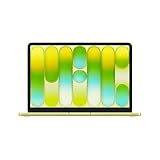
- AN AMAZING MAC AT A SURPRISING PRICE — With an incredibly portable and durable aluminum design, up to 16 hours of battery life,* and the A18 Pro chip, MacBook Neo is ready to go wherever school takes you.
- FOUR STUNNING COLORS. ONE DURABLE DESIGN — Choose from four beautiful colors — Silver, Blush, Citrus, or Indigo — each with a color-coordinated keyboard. And MacBook Neo is made with a durable recycled aluminum enclosure that helps it reach 60 percent recycled content by weight — the most ever in any Apple product.*
- FLY THROUGH EVERYDAY ASSIGNMENTS — Whether you’re cramming for finals, using Apple Intelligence* to summarize class notes, creating presentations, or even playing the latest Apple Arcade game,* MacBook Neo delivers the performance and AI capabilities you need to get things done.
- UP TO 16 HOURS OF BATTERY LIFE — MacBook Neo delivers all day battery life, so you can power through from early morning classes to late night study sessions without worrying about plugging in.
- A VIBRANT 13-INCH DISPLAY* — The gorgeous Liquid Retina display on MacBook Neo supports 1 billion colors, so photos and videos pop and text is crisp for easy reading.
How did macOS change through free upgrades and a new name?
Mavericks and the free-upgrade era
In 2013, Apple called Mavericks the tenth major release of OS X and made it available as a free upgrade from the Mac App Store. Apple presented the release as a mix of new apps and user-facing features alongside work on power and memory efficiency. The “tenth major release” label reflects Apple’s own release numbering. Apple’s Mavericks announcement framed free upgrades as a way for Mac users to get the latest features, technologies, and security improvements.
Sierra brings back the Mac name
In 2016, Apple introduced the macOS name with Sierra, aligning the Mac operating system’s naming with the company’s other platforms. Sierra also brought Siri to Mac and added continuity features including Universal Clipboard, iCloud Desktop and Documents, and Auto Unlock. These features extended the role of macOS beyond the individual computer, linking it more closely with other Apple devices and services. Apple’s Sierra preview introduced the naming change and features.
Best Value

- FAST RUNS IN THE FAMILY — The 16-inch MacBook Pro with the M5 Pro or M5 Max chip brings next-generation speed and powerful on-device AI to personal, professional, and creative tasks. With all-day battery life, double the starting storage,* and a breathtaking Liquid Retina XDR display, it’s pro in every way.*
- BUCKLE UP — Along with a next-generation CPU, faster unified memory, and up to 2x faster SSD storage,* M5 Pro and M5 Max feature a more powerful GPU with a Neural Accelerator built into each core, delivering faster AI performance and on-device training capabilities. So you can blaze through demanding workloads at mind-bending speeds.
- BUILT FOR AI — Apple silicon, and every major component that powers it, is designed to run demanding on-device AI workloads like LLM inference and training. And Apple Intelligence helps you write, express yourself, and get things done effortlessly with groundbreaking privacy protections at every step.*
- ALL-DAY BATTERY LIFE — MacBook Pro delivers the same exceptional performance whether it’s running on battery or plugged in.*
- MACOS RUNS APPS FAST — All your go-to apps run lightning fast in macOS, including built-in apps like FaceTime and Messages. Plus, built-in virus protection and free software updates help keep your Mac running smoothly and securely.
High Sierra develops the technology beneath the interface
High Sierra, released in 2017, emphasized platform technologies as well as visible features. Apple highlighted APFS for storage, HEVC support for video, Metal 2 for graphics, and Core ML for machine learning. Together, these show how macOS continued to evolve in areas users may not see directly—file systems, media handling, graphics, and developer capabilities. Apple’s High Sierra announcement described those advances.
What changed when Macs moved from Intel to Apple silicon?
Apple announced the transition to its own silicon in June 2020, saying the first Apple silicon Mac was planned for that year and the transition was expected to take about two years. To accommodate the period when Macs used different processor architectures, Apple described Universal 2 as a way to ship applications for both Apple silicon and Intel, and Rosetta 2 as translation technology for existing Intel applications on Apple silicon. Apple’s transition announcement set out that plan and those tools.
Big Sur, released in November 2020, included technologies for the move to Apple silicon. It was therefore part of a broader platform transition, not merely a new release name or interface update. Apple’s Big Sur announcement described its role in the change.
Where does macOS stand in the current generation?
Apple’s September 2025 macOS Tahoe features guide is a current-generation reference point. Its surfaced compatibility note says certain features are available on Apple silicon Macs or on Intel-based Macs with a T2 Security Chip. That caveat applies to those specific features; it is not a statement that every Tahoe feature works on every Mac. Apple’s Tahoe feature guide should be consulted for the individual feature qualifications.
Quick wins for a faster PC:
Scan for outdated or missing drivers - takes under a minuteDriver Scan →Repair Windows errors before they cause bigger problemsFix Now →Across the full arc, macOS has changed through recurring platform shifts: replacing classic Mac OS with a new foundation, adapting to different processor architectures, making major upgrades free, adopting a new name, and adding capabilities that connect the Mac to Apple’s wider ecosystem.
Quick Recap
Product prices and availability are accurate as of the date/time indicated and are subject to change. Any price and availability information displayed on Amazon at the time of purchase will apply.

