
Free tools Windows power users keep installed
One-click scans. No signup required.
Google’s SynthID Detector checks supported images, video and audio for an embedded SynthID watermark. A detected mark is evidence that some of the media was created or edited with Google AI or a participating partner system. No mark found does not prove a file is human-made: it only means the check did not detect the watermark it looks for.
What Google’s SynthID Detector checks
SynthID is an imperceptible watermark embedded in media made with supported AI systems. The Detector looks for that signal; it is not a universal test for every AI model or every synthetic file. Google says the service supports images, video and audio made with Google AI or partners including OpenAI, NVIDIA and Kakao. Its coverage depends on the media having a detectable SynthID mark.
| # | Preview | Product | Price | |
|---|---|---|---|---|
| 1 |
|
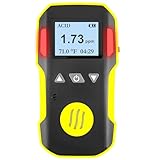
Acid Gas Detector by Forensics | USA NIST Calibration & Certificate | Dust & Explosion Proof | USB... | $495.00 | Buy on Amazon |
Google announced the Detector on May 20, 2025, initially describing a portal for checking images, audio, video and text. Google’s current overview describes the public Detector for images, video and audio; do not assume that the website checks text just because early testing included it. Google’s announcement said more than 10 billion pieces of content had been watermarked as of 2025. That is a dated Google-reported figure, not a count of all AI-generated media.
Google’s May 19, 2026 update reported 50 million SynthID verification uses globally through Gemini and announced expansion of verification to Search and Chrome. These figures describe Google’s services and the announcement date, not the number of files the Detector website has checked.
#1 Best Overall
- 🔬 DETECT: This acid gas detector is sensitive to acidic gases and vapors such as acetic acid (C2H4O2), hydrochloric acid (HCl), sulfuric acid (H2SO4), hydrofluoric acid (HF), nitric acid (HNO3), peracetic acid (C2H4O3) and formic acid (CH2O2).
- 🔬 DETECT: Electrochemical cell sensor with less than 5% F.S. and response time: T < 30 sec. Zero and span calibration options. Comes with USA NIST calibration certificate.
- 🔔 ALARMS: Adjustable alarm levels that trigger audio, visual, and vibration alarms.
- 💪 STRONG: Shockproof, water-resistant, dustproof, and explosion-proof with belt clip. Rechargeable Li-ion battery 1500 mAh via mini-USB cable, comes with all accessories.
- 🕵️ TRUST: ** 1-year limited warranty ** Arrives with calibration and QA certificates ** Product tested and verified in the USA **
How to interpret a SynthID result
Watermark detected
A positive result means SynthID was detected in all or part of the media. Google says this indicates that some or all of an image or video was created or edited by its AI models. In video, a reported interval marks where the system found evidence; it does not mean every frame or moment in that interval carries a watermark.
No watermark detected
This is not a clean bill of health or proof of human authorship. It means the check did not find SynthID. Content made with an AI system that does not use this watermark may still be AI-generated, and an edited file may no longer have a detectable mark.
Unclear result
Google says a result can be unclear when there is not enough detail to watermark or detect a mark—for example, in very simple or abstract content. Treat that as inconclusive rather than as evidence for or against AI involvement.
What editing does to detection
Google says SynthID generally survives common transformations such as resizing, recoloring and compression. However, many alterations or extreme manipulation can make a watermark undetectable. A negative result on a heavily edited copy therefore says less about the original than a check of the source file would.
Quick wins for a faster PC:
Scan for outdated or missing drivers - takes under a minuteDriver Scan →Repair Windows errors before they cause bigger problemsFix Now →Fix the driver behind crashes, sound loss and screen glitchesFind Drivers →For a stronger assessment, check the highest-quality original available and investigate its source and context. Google also recommends methods such as reverse image search, metadata review and inspection for visual inconsistencies. Garbled text, odd shadows or lighting, inconsistent small details and unnatural repetition can be clues, but none proves that an image is AI-generated.
SynthID versus Content Credentials
| Approach | What it checks or records | What the result can establish |
|---|---|---|
| SynthID | An imperceptible watermark embedded in supported AI media. | A detected mark is evidence of content created or edited by a system that uses SynthID. A missing mark does not rule out AI involvement. |
| C2PA Content Credentials | Signed provenance information that can record origin and edit history when that metadata is present. | Can provide context about composition, edits and AI involvement, but does not independently prove that a file is AI-generated. |
| Reverse search, metadata and visual inspection | Matching copies, file information and visible clues. | Can help investigate provenance, but are not conclusive AI-detection tests. |
The methods answer different questions and can complement one another. A watermark is an embedded signal; Content Credentials can provide a record of provenance and changes. Google’s May 2026 announcement said C2PA checks were rolling out in Gemini, with Search and Chrome planned for the following months. That was the status stated in the announcement, so current availability may differ.
Independent reader supportYour contribution helps us test, update, and keep practical guides available for everyone.Text detection is a separate case
Google documents SynthID Text as a separate system from media watermarking. Its detection is probabilistic and can return watermarked, not-watermarked or uncertain outcomes. Google’s developer documentation says the approach is less effective for factual responses and detector confidence can fall sharply when text is thoroughly rewritten or translated. These text-specific limits should not be read as descriptions of image, audio or video detection.
Access and usage limits
Google’s Gemini help page lists approximately 10 image checks, 10 video checks totaling up to five minutes, and 10 audio checks totaling up to three hours in a rolling 24-hour period in the Gemini app. Those are Gemini app limits; they should not be assumed to apply to the separate SynthID Detector website. Access requirements and accepted file formats can change, so check the live portal before relying on a particular upload workflow.
Quick Recap
Sources and further details
- Google DeepMind: SynthID overview
- Google Gemini Apps Help: Verify AI-generated images, videos, and audio
- Google Blog: SynthID Detector — a new portal to help identify AI-generated content
- Google Blog: Making it easier to understand how content was created and edited
- Google AI for Developers: SynthID tools for watermarking and detecting LLM-generated text
- Google DeepMind: Identifying AI-generated images with SynthID
Product prices and availability are accurate as of the date/time indicated and are subject to change. Any price and availability information displayed on Amazon at the time of purchase will apply.

