
For most U.S. independent pharmacies, start with PioneerRx, Liberty PharmacyOne, BestRx, PrimeRx, and Datascan WinPharm. The best choice depends on the pharmacy’s operating model: FrameworkLTC, SuiteRx SRx, and FSI deserve priority for long-term-care operations; EnterpriseRx and ScriptPro are stronger starting points for enterprise, health-system, and automation-heavy environments.
This is a research-based comparison, not a hands-on software test. Vendor documentation explains intended capabilities, while Capterra provides directory coverage and user-review context. Treat every feature, rating, price, and availability statement as something to verify in a live demonstration and written proposal.
How to use this pharmacy software comparison
A pharmacy management system is not simply a prescription-entry application. Depending on the business, it may control intake, e-prescribing, claims, clinical verification, filling, inventory, purchasing, point of sale, delivery, adherence programs, facility communication, compounding, specialty documentation, reporting, and regulatory records.
That makes a universal ranking misleading. A system that is highly effective for a single-location community pharmacy may be a poor fit for a 500-bed long-term-care operation or a health system with centralized fulfillment. The list below therefore identifies the best starting point for each use case rather than claiming that one product is objectively best for every buyer.
Recommended Free Tools
#1 Best Overall

- 【High‑Quality, Energy‑Efficient Thermal Printing】The NULLTONEX shipping label printer uses direct thermal technology, eliminating the need for ink or toner and reducing maintenance and replacement costs. It delivers crisp 203 DPI resolution for sharp barcodes, text, and addresses that scan easily, with print speeds up to 150mm/s (72 labels per minute). Ideal for high‑volume small business shipping, it minimizes downtime during peak hours and boosts operational efficiency.
- 【Bluetooth & USB Dual Connectivity】 Connect seamlessly to your phone, laptop or PC via Bluetooth or USB. Download the free "FlashLabel Pro" app for quick Bluetooth pairing to create and print labels wirelessly. Also, simply use the USB cable to connect directly to your laptop for a steadier, interference‑free office workflow
- 【User‑Friendly Operation】 Easy setup and a dedicated FlashLabel Pro app offer 1,800+ customizable templates, 300+ fonts, and multiple editing tools for everything from daily home organization to express waybill printing. Offline capability allows local storage of templates and designs, so you can start printing immediately without waiting for cloud downloads – perfect for busy small businesses
- 【Wide Compatibility with Popular Shipping Platforms】 Works seamlessly with major shipping carriers and e‑commerce platforms including Amazon, Shopify, Etsy, USPS, UPS, FedEx, and DHL. Supports standard 4"×6" shipping labels as well as other sizes from 1.57" to 4.3" wide – ideal for shipping labels, barcode labels, mailing labels, and more.(Note: prints in black & white only)
- 【Durable, Compact & Ready to Use】 Featuring a special matte finish with reinforced coating and a space‑saving design that fits neatly on any desk. Built‑in printhead overheat protection ensures stable long‑run performance. The package includes the thermal printer, power cord, USB cable, and 25 sheets of 4"×6" thermal labels – everything you need to start efficient printing right out of the box
Before comparing vendors, define the pharmacy’s model:
- Independent retail: prescription workflow, claims, inventory, POS, patient communication, medication synchronization, clinical services, and support usually matter most.
- Specialty pharmacy: intake configuration, clinical documentation, prior authorization, high-cost inventory, adherence, outcomes, and payer workflows become more important.
- Long-term care: facility connectivity, eMAR, cycle fill, MAR generation, regimen changes, emergency fills, delivery routes, and exception management are central.
- Hospital outpatient or enterprise retail: centralized operations, workload balancing, APIs, analytics, security, integration governance, and multi-location control often outweigh ease of use for a single store.
For an independent owner, the most useful next step is a best pharmacy software for independent pharmacies shortlist followed by demonstrations using real prescriptions, payer scenarios, inventory exceptions, and delivery workflows—not a generic sales presentation.
Quick comparison of the 23 systems
| system | best starting use case | important qualification | |
|---|---|---|---|
| 1 | PioneerRx | Independent pharmacy | Public pricing was not located; configuration and add-on costs require a written quote. |
| 2 | Liberty PharmacyOne | Integrated community pharmacy | Verify which integrations and modules are included in the proposal. |
| 3 | BestRx | Simpler customizable independent operation | Confirm current interfaces, reporting, support, and migration tools. |
| 4 | PrimeRx | Retail, multi-store, specialty, and compounding | Choose between cloud and traditional deployment only after reviewing connectivity, backup, and data-residency requirements. |
| 5 | Datascan WinPharm | Service-oriented independent pharmacy | Capterra lists $2,500 per month; confirm whether that directory figure applies to the required configuration. |
| 6 | EnterpriseRx | Enterprise retail, specialty, or health-system outpatient | Likely excessive for a small pharmacy seeking a lightweight implementation. |
| 7 | FrameworkLTC | Long-term-care pharmacy | Vendor-reported scale figures should be validated with comparable customer references. |
| 8 | SuiteRx SRx | Organizations serving multiple pharmacy segments | Clarify native functionality versus separately configured modules. |
| 9 | Rx30 | Community pharmacy with broad integrations or automation | Reviews are mixed; support response and data conversion deserve extra scrutiny. |
| 10 | QS/1 NRx | Established retail, hospital outpatient, or HME operation | Request current roadmap and lifecycle commitments before selecting a legacy platform. |
| 11 | FSI Pharmacy Management Software | LTC, DME, compounding, and specialty combinations | Demonstrate the exact institutional, compounding, and automation workflows required. |
| 12 | ScriptPro SP Central | Automation-centered operations | Evaluate it with the intended robotics, packaging, barcode, and central-fill architecture. |
| 13 | Computer-Rx | Legacy or niche evaluation | Public current product evidence is limited; require extensive direct validation. |
| 14 | Axys LTC | LTC exploration | Current authoritative product documentation was not located in this research pass. |
| 15 | PrimeCare | LTC and institutional exploration | Verify current packaging, availability, and lifecycle status with the vendor. |
| 16 | DigitalRx | LTC or specialty exploration | Confirm current U.S. availability, deployment model, interfaces, and references. |
| 17 | SRS Pharmacy Systems | Specialty, retail, or institutional comparison | Present-day product scope and support evidence require direct validation. |
| 18 | VIP Pharmacy Management System | Personal-support or mixed operations | Public review sample is small; conduct comparable-customer reference calls. |
| 19 | DRX | Smaller prescription-processing operation | Limited public review evidence makes it exploratory rather than an enterprise recommendation. |
| 20 | Pharmony One | Cloud-first, multi-country, or automation-connected operation | U.S. buyers must verify payer, NCPDP, wholesaler, e-prescribing, and regulatory compatibility. |
| 21 | VIP Computer Systems | Pharmacy prioritizing direct support | Validate current references, uptime commitments, data ownership, and conversion support. |
| 22 | Lagniappe Pharmacy Services | Performance and revenue programs | Determine whether it is a complete PMS, an overlay, or a service-supported solution. |
| 23 | ZibMEDS | Online pharmacy and chain-oriented operations | Do not assume it replaces a full U.S. dispensing and claims platform. |
The 23 best pharmacy management systems in 2026
1. PioneerRx — best overall starting point for independent pharmacies
PioneerRx is a strong first demonstration for an independent pharmacy that wants substantial workflow configuration and the option to expand into clinical, specialty, or institutional services. Its vendor materials emphasize customizable workflow, integrated point of sale, inventory, 340B and patient-assistance programs, clinical services, eCare Plans, and LTC functionality.
Its breadth is the main attraction. A pharmacy can investigate prescription processing and POS first, then test how the same platform handles immunizations, adherence, specialty programs, or long-term-care work. The trade-off is that a highly configurable system can require more implementation design, training, and governance than a simpler product.
Public pricing was not located. Require a written quote that separates licenses, interfaces, support, hardware, training, data conversion, implementation travel, and optional modules.
2. Liberty PharmacyOne — best for an integrated community-pharmacy platform
Liberty PharmacyOne is designed for community pharmacies that want a broad platform with fewer disconnected add-on systems. Documented areas include prescription processing, insurance adjudication, patient messaging, MedSync, eCare Plans, immunization workflows, compounding, inventory, POS, reporting, and audit support. Its integration catalog includes categories such as adherence packaging, automation, delivery, eMAR, specialty, telepharmacy, and 340B.
That integration breadth is particularly relevant when a pharmacy is adding packaging, delivery, facility services, or specialty programs. Ask the vendor to show the exact handoff between PharmacyOne and every external system, including error handling, duplicate records, status updates, and responsibility when an interface fails.
Liberty’s materials also discuss reimbursement and Medicare Maximum Fair Price impacts. Buyers should ask how claims, reversals, audit trails, and relevant reporting are handled in the pharmacy’s payer mix rather than assuming that a general claims feature covers every requirement. See the Liberty PharmacyOne product information for the vendor’s current positioning.
3. BestRx — best for an independent pharmacy seeking a simpler customizable system
BestRx combines pharmacy-management software with an integrated POS system and is described as customizable for individual pharmacies. Capterra lists strong user-review scores for prescription processing and e-prescribing, but public vendor pricing was unavailable.
BestRx belongs on a shortlist when the buyer values a focused independent-pharmacy workflow and does not need the broadest documented enterprise platform. In a live demo, verify refill queues, e-prescribing exceptions, claims reversals, reporting depth, third-party interfaces, support hours, and the tools used to convert patient and prescription data.
4. PrimeRx — best for configurable retail, multi-store, specialty, and compounding workflows
PrimeRx is one of the more versatile candidates for pharmacies that combine retail with specialty, compounding, delivery, or multi-store operations. Its documented capabilities include automated refill management, patient histories, immunizations, eCare Plans, compounding, claims, inventory, wholesaler ordering, specialty workflows, delivery, POS, provider portals, electronic signatures, document management, and a central-management portal.
PrimeRx offers both a traditional on-premises product and PrimeRx Cloud. That is not merely a hosting preference. Ask where data is stored, how backups and recovery are tested, what happens during an internet outage, how interfaces connect, how updates are deployed, and whether all required modules are available in both deployment models.
Windows Errors? Fix Them Before They Spread
Repair common Windows errors and clear accumulated junk for a smoother, more stable PC - no reinstall needed.Free scan · no reinstallCrashes, No Sound, or Screen Glitches?
Random freezes, missing sound and display glitches usually trace back to one bad driver. Find and replace yours safely.Free scan · under a minute5. Datascan WinPharm — best for service-oriented independent pharmacies
Datascan says it has supported independent pharmacies since 1981. Capterra lists WinPharm for retail, POS, and assisted-living use cases and shows a directory price of $2,500 per month. That amount is directory information, not a universal or necessarily current quote; confirm the price, included users, interfaces, support, hardware, and implementation services directly.
WinPharm may appeal to owners who place a high value on service and a well-established independent-pharmacy focus. Its public evidence is primarily vendor and directory material rather than controlled performance testing, so reference calls should focus on response times, conversion quality, uptime, upgrade disruption, and how the system handles unusual prescription and billing exceptions.
6. EnterpriseRx — best for enterprise retail, specialty, and health-system outpatient operations
McKesson positions EnterpriseRx for enterprise retail, specialty, complex-care, and multi-location health-system environments. The platform is described as integrating workflow, clinical programs, pharmacy data, reporting, workload balancing, paperless medication guides, centralized operations, and connections to inventory and other systems.
This is a candidate for organizations that need centralized control and operational scale rather than a lightweight single-store deployment. A small independent pharmacy should not select it merely because the feature list is extensive. Evaluate implementation duration, local autonomy, total cost, integration ownership, and whether the organization has the staff to administer a larger platform.
7. FrameworkLTC — best for long-term-care pharmacies
FrameworkLTC is purpose-built around LTC workflows. Its materials describe workflow automation, centralized data, dashboards, compliance support, facility connectivity, and related modules including FrameworkFlow, FrameworkECM, FrameworkRxP, and FrameworkVision.
The vendor reports approximately 800 LTC pharmacies and more than two million lives managed. Those are vendor-reported figures and should be validated with references from pharmacies of similar size, facility mix, packaging model, and geographic footprint.
For buyers researching the best LTC pharmacy software, the important demonstration is not just prescription entry. Require a complete facility scenario: new admission, cycle-fill production, regimen change, missed dose, emergency fill, delivery exception, MAR output, facility message, and after-hours escalation.
8. SuiteRx SRx — best for pharmacies serving multiple segments
SuiteRx describes SRx as supporting LTC, retail, combination, 340B, and specialty pharmacies. That makes it worth considering where one organization operates more than one pharmacy model and wants to examine whether a common platform can support them.
Free tools Windows power users keep installed
One-click scans. No signup required.
Rank #2

- High-quality Label Printing; The Brother QL-600 Label Printer fits easily into small spaces, delivering high-res printing and big power to print a variety of paper and film labels; An automatic cutter lets you create banners up to 3 feet long
- Convenient Label Printing; Brother Genuine DK drop-in rolls use no ink or toner; Choose continuous tapes, film labels, and pre-sized paper labels up to 2. 4 inches (62 mm) wide, ideal for labeling tasks
- Fast and Affordable; Tackle labeling jobs in a hurry with the Brother QL-600 that prints at up to 44 labels per minute (1); The economical price lets you create cost-effective, high-quality paper and film labels for many labeling needs
- Print Labels Right Out of the Box; Use the 2. 4 in. (62 mm) x 26. 2 ft. (8 m) Continuous Length Black on White Paper Tape (DK-2205) and USB cable to connect to your PC or laptop and choose from pre-installed label options or create custom labels
- Create Custom Labels with the Free P-touch Editor Software; Seamlessly integrate with Microsoft applications such as Word, Excel, and Outlook to create labels using information from your computer; Compatible with Linux and Mac
The central procurement question is what is native and what requires configuration or separate modules. Verify facility communication, packaging, delivery, billing, 340B workflows, specialty documentation, reporting, and the ability to keep different business units’ permissions and workflows appropriately separated.
9. Rx30 — best for community pharmacies wanting broad integrations and automation
Rx30 is described as an end-to-end system with integrated POS, eCare, clinical-opportunity tools, automated e-scripts, automated prescription processing, and more than 80 integration partners in its product-directory description. Capterra’s 2026 coverage also lists compounding, multi-store management, inventory, claims, e-prescribing, POS, and workflow capabilities.
Reviews are mixed, so buyers should place unusual emphasis on support responsiveness and migration risk. Ask for a written conversion plan, a test conversion, a named escalation path, uptime history, and references from pharmacies that use the same automation, packaging, delivery, or specialty interfaces.
10. QS/1 NRx — best for organizations evaluating an established integrated suite
QS/1 describes its portfolio as serving retail community, hospital outpatient, and specialty pharmacies, with current-customer access to NRx and SystemOne materials. Capterra describes NRx as supporting community, chain, hospital outpatient, and HME operations, including POS, IVR, document management, mobile, delivery, and synchronization capabilities.
Quick wins for a faster PC:
Repair Windows errors before they cause bigger problemsFix Now →Scan for outdated or missing drivers - takes under a minuteDriver Scan →Clear out junk files and repair common Windows errorsFree Scan →The main diligence issue is platform lifecycle. Request a current product roadmap, supported operating environments, interface catalog, upgrade policy, security documentation, and written lifecycle commitments. A mature platform can be valuable, but buyers should understand how actively the specific product is being developed and supported.
11. FSI Pharmacy Management Software — best for LTC, DME, compounding, and specialty combinations
Foundation Systems International lists inventory, workflow, will-call, POS, IVR, automation interfaces, electronic and printed reporting, QR-code support, and pharmacy-dashboard functionality for LTC, DME, compounding, and specialty operations.
FSI is a reasonable candidate when the pharmacy crosses traditional retail and institutional workflows. The demo should use the pharmacy’s own packaging, delivery, DME, compounding, and reporting requirements. Confirm how clinical documentation, facility communication, controlled-substance records, and automation exceptions are managed.
12. ScriptPro SP Central — best for automation-centered pharmacy operations
ScriptPro SP Central covers prescription dispensing, inventory, workflow, central-fill and automation-related functions, along with clinical, specialty, and LTC capabilities. It should be evaluated as part of an automation architecture rather than as an isolated dispensing application.
Map every physical and software component: robots, packaging equipment, barcode verification, storage, central fill, work queues, exception bins, labels, patient identity checks, and final verification. Ask what happens when a robotic system, barcode reader, network connection, or interface is unavailable. Pharmacies considering a pharmacy automation integration should obtain a responsibility matrix showing which vendor supports each failure point.
13. Computer-Rx — legacy or niche candidate requiring direct validation
Computer-Rx remains present in pharmacy-software directories and historical industry references, but the current public evidence located for this comparison is much thinner than for the leading documented platforms.
Do not place it on a final shortlist without a current product roadmap, supported operating environment, interface catalog, security documentation, implementation references, data-export policy, and written support commitments. A working demonstration with the pharmacy’s own workflow is essential.
14. Axys LTC — candidate for long-term-care operations
Axys LTC appears in current industry discussions and software-market references as an LTC-oriented platform. Authoritative current product documentation was not located during this research pass, so it should be treated as a demo-stage candidate rather than a fully verified recommendation.
The Tool Desk
Outbyte PC Repair FREERepair Windows errors before they cause bigger problemsFix Now →Outbyte Driver Updater FREEScan for outdated or missing drivers - takes under a minuteDriver Scan →Validate e-prescribing, eMAR connectivity, facility communication, cycle fill, delivery, reporting, emergency fills, regimen changes, conversion tools, security controls, and support escalation. Ask for references from pharmacies serving facilities similar to yours.
15. PrimeCare — candidate for LTC and institutional workflows
PrimeCare is identified in current pharmacy-software market references as part of the LTC-oriented landscape. The available evidence was insufficient to verify current feature packaging, commercial availability, or lifecycle status.
Obtain current vendor documentation before treating PrimeCare as an active finalist. At minimum, confirm whether the product is currently sold and supported, which LTC workflows are included, what eMAR and e-prescribing connections are supported, and how data conversion and facility onboarding work.
16. DigitalRx — candidate for LTC and specialty workflow evaluation
DigitalRx is named in pharmacy-technology references and LTC buyer discussions, but this research did not locate a sufficiently authoritative current feature page or pricing source.
Do these 3 things before closing this tab:
1Fix the driver behind crashes, sound loss and screen glitches2Clear out junk files and repair common Windows errors3Scan for outdated or missing drivers - takes under a minuteKeep it in an exploratory comparison until the vendor confirms deployment model, supported interfaces, customer references, security documentation, commercial terms, and current U.S. availability. A buyer should not infer capability from a directory listing alone.
17. SRS Pharmacy Systems — candidate for specialty, retail, or institutional comparison
SRS Pharmacy Systems appears in pharmacy-technology directories and industry references. The public evidence was not sufficient to rank it confidently against better-documented vendors.
Ask for a present-day product demonstration covering prescription workflow, automation compatibility, specialty or institutional functions, reporting, APIs, support coverage, implementation, and data export. If SRS remains under consideration, compare its written answers directly against the same requirements matrix used for larger vendors.
18. VIP Pharmacy Management System — candidate for personal-support and mixed operations
Capterra lists VIP Pharmacy Management System as supporting pharmacy, LTC, and POS management, with claims centered partly on immediate and personal customer support. Its public review sample is small.
What’s actually slowing this PC down?
Pick the symptom - the matching free tool is one click away.
Rank #3

- Label maker for Shipping labels & small business labels
- supports multiple-size wide wireless printing
- Download "RONGTA" app for phone to bluetooth print
- Download computer driver for PC/Laptop to USB print
- Inkless Thermal Printing for Sharp Clarity
The appropriate next step is not to rely on the support claim but to conduct reference calls with pharmacies of comparable size and workflow complexity. Ask those references about actual response times, escalation quality, implementation, uptime, upgrades, and whether the system handles mixed retail and LTC operations without excessive manual work.
19. DRX — candidate for smaller prescription-processing operations
Capterra describes DRX as pharmacy-management software for prescriptions, customer communication, label printing, and related functions. With only a very small public review sample, it is better treated as a lightweight or exploratory option than as a proven enterprise platform.
For a small operation, test the full daily path: e-prescription intake, data entry, adjudication, refill requests, label printing, will-call, patient messaging, delivery, reversals, transfers, reporting, and backup. Confirm whether required interfaces are included or require separate agreements.
20. Pharmony One — best considered for cloud-first, multi-country, or automation-connected operations
AWS Marketplace describes Pharmony One as a cloud-based collaborative pharmacy-management system with multi-country and multilingual support, mobile POS, inventory, wholesaler ordering, click-and-collect, and automation integrations.
Recommended Free Tools
Its apparent geographic orientation is broader than that of the U.S.-centric systems in this comparison. U.S. buyers must verify NCPDP, payer and PBM connectivity, wholesaler support, e-prescribing, state-specific requirements, controlled-substance workflows, patient privacy terms, and regulatory compatibility before assuming it can replace a domestic dispensing platform.
21. VIP Computer Systems — candidate for pharmacies prioritizing direct support
VIP Computer Systems is listed by Capterra as offering pharmacy, LTC, and POS management software with immediate and personal support. Public evidence is limited, so procurement should focus on current customer references, uptime commitments, data ownership, conversion assistance, support hours, and the supported operating environment.
VIP Computer Systems and VIP Pharmacy Management System appear as separate entries in the supplied directory references. Buyers should confirm whether they are distinct products, related offerings, or directory naming variations before comparing them as separate vendors.
22. Lagniappe Pharmacy Services — candidate for performance and revenue programs
Capterra lists Lagniappe Pharmacy Services among pharmacy-software alternatives and describes it as focused on pharmacy performance and revenue. It should not automatically be compared with a dispensing platform.
Confirm whether the current offering is a complete pharmacy-management system, an overlay that works with another PMS, or a service-supported solution. Clarify data access, integration responsibilities, measurable deliverables, contract terms, and whether it replaces any core prescription, claims, inventory, or POS functions.
23. ZibMEDS — candidate for online pharmacy and chain-oriented operations
Capterra describes ZibMEDS as an online-pharmacy platform intended for pharmacy chains. It may be relevant when digital ordering, online customer experience, and chain operations are primary requirements.
Do not assume that an online-pharmacy platform replaces a full U.S. dispensing, claims, clinical, inventory, controlled-substance, e-prescribing, and regulatory-management system. Demonstrate the handoff between online orders and the dispensing workflow, including payment, identity verification, inventory reservation, counseling, delivery, returns, and claim status.
Recommended shortlist by pharmacy type
Single independent retail pharmacy
Begin with PioneerRx, Liberty PharmacyOne, BestRx, PrimeRx, and Datascan WinPharm. These systems are the most practical first comparisons for a store that needs prescription workflow, claims, inventory, POS, patient engagement, and room to add clinical or service programs.
Choose based on the quality of the live workflow demonstration, implementation plan, interface reliability, and support references—not on feature count alone. A simpler system may be preferable if the store has a small staff and limited appetite for configuration.
Independent pharmacy with compounding or specialty services
Compare PioneerRx, PrimeRx, Liberty PharmacyOne, Rx30, and SuiteRx SRx. Demonstrate prior-authorization intake, clinical documentation, high-cost inventory, compound formulas and records, outcomes tracking, patient communication, delivery, and payer exceptions using realistic cases.
Multi-store independent group
Start with Liberty PharmacyOne Chain Management, PrimeRx, PioneerRx, and EnterpriseRx. Focus on centralized versus local control, shared patient profiles, inventory transfers, permissions, reporting, workload balancing, store-level pricing, data governance, and the operational impact of an outage at one location or across the group.
LTC pharmacy
Start with FrameworkLTC, SuiteRx SRx, FSI, and ScriptPro SP Central, then conduct validated comparisons with Axys LTC or PrimeCare if they confirm current availability and fit. The central test is whether the system handles facility communication and regimen exceptions without forcing staff to maintain parallel spreadsheets or disconnected queues.
Crashes, No Sound, or Screen Glitches?
Random freezes, missing sound and display glitches usually trace back to one bad driver. Find and replace yours safely.Free scan · under a minuteWindows Errors? Fix Them Before They Spread
Repair common Windows errors and clear accumulated junk for a smoother, more stable PC - no reinstall needed.Free scan · no reinstallCMS has discussed electronic prescribing of controlled substances and LTC implementation timing in its EPCS webinar materials. Confirm the vendor’s current standards support, roadmap, and customer deployment experience rather than relying on a generic compliance statement. See the CMS EPCS webinar questions and answers.
Health-system outpatient or enterprise retail
Evaluate EnterpriseRx, PioneerRx, QS/1 NRx, PrimeRx, and ScriptPro SP Central where automation is material. The evaluation should include centralized operations, API governance, identity and access management, analytics, workload balancing, integration monitoring, disaster recovery, change control, and the vendor’s ability to support multiple facilities.
Cloud-first or internationally oriented operation
Compare PrimeRx Cloud and Pharmony One, but treat U.S. interoperability and regulatory validation as a gating requirement. Cloud deployment does not by itself prove that a system supports the buyer’s payer connections, e-prescribing standards, state rules, wholesaler interfaces, or controlled-substance processes.
Independent reader supportYour contribution helps us test, update, and keep practical guides available for everyone.What to compare before signing
1. Map the complete workflow
Ask each vendor to demonstrate the same path from intake to completion:
Free tools Windows power users keep installed
One-click scans. No signup required.
Rank #4
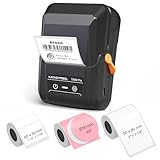
- For Home and Small Business: Prints 3/4" - 2" wide labels; ideal for home organization (storage bins, bottle, jar, food container, etc.), small business (address, product info, QR Code, barcode, brand logo, etc.), or school and office supplies (name tag, folder, documentation, etc.)
- Versatile App Editing Function: Easily add images from your phone, tablet or PC; customize your labels with 30+ fonts, 50+ frames, and 660+ icons; all free to use
- Enhanced Image Quality: The App delivers precise image processing capabilities, resulting in a high-resolution and clear output; enhanced aesthetic appeal, formality, and richness
- Easy to Use: The APP is completely free, requires no registration; features auto label size recognition; no ink or toner needed; create labels quickly and easily
- Versatile Label Compatiblity: Compatible with square, round, address, cable, jewelry and file labels, to meet all your needs; ensuring a perfect fit for any project; keeps everything neat and tidy
- Receive an e-prescription, transfer, refill request, or manually entered prescription.
- Identify the patient and prescriber, check allergies and clinical information, and capture required documentation.
- Run eligibility and claim adjudication, then demonstrate a rejection, reversal, rebill, coordination-of-benefits case, and cash transaction.
- Move the prescription through verification, filling, checking, will-call, delivery, pickup, return, and cancellation.
- Show what appears in an exception queue and which employee is responsible for resolving it.
- Demonstrate notifications, refill reminders, medication synchronization, patient messaging, and provider or facility communication.
Do not accept a feature checkbox as proof of workflow fit. Require the vendor to show how information moves between screens and systems and how staff know that an item needs attention.
2. Verify claims and reimbursement workflows
Confirm PBM connectivity, eligibility checks, reversals, rebilling, audit trails, rejected-claim queues, payment reconciliation, and reporting for fees or reimbursement adjustments relevant to the pharmacy. Ask how the system supports Medicare Drug Price Negotiation or Maximum Fair Price-related workflows where applicable, and whether reporting is native, interfaced, or manual.
Use realistic payer scenarios in the demo. A system that processes a clean claim quickly may still create labor-intensive work when a claim rejects, a prescription changes after adjudication, or a reversal does not return the expected response.
3. Examine inventory and DSCSA support
Review wholesaler EDI, perpetual inventory, lot and expiration handling, controlled-substance records, recalls, returns, barcode support, purchasing, cycle counts, and Drug Supply Chain Security Act workflows. Ask how the system handles partial fills, split packages, damaged stock, quarantined inventory, negative inventory, and discrepancies between the PMS and automation equipment.
4. Compare clinical and patient-engagement tools
Compare medication synchronization, adherence dashboards, immunization documentation, eCare Plans, refill reminders, two-way messaging, delivery status, provider portals, and facility portals. Ask whether staff can see unresolved patient tasks in one work queue or must check multiple modules.
5. Test specialty, compounding, and 340B requirements
Specialty and compounding buyers should provide a scripted demonstration that includes patient intake, prior authorization, benefits investigation, high-cost inventory, clinical notes, compound ingredients and documentation, refill monitoring, delivery, outcomes, and financial reporting. For 340B, establish whether the required workflow is native, partner-supported, or dependent on an external system.
6. Test LTC and institutional scenarios
An LTC demonstration should include eMAR and e-prescribing connectivity, cycle fill, MAR generation, facility portals, delivery routes, regimen changes, emergency fills, discontinued medications, missed doses, returns, credits, and after-hours workflows.
Ask how the system prevents a regimen change from being lost between the facility, pharmacist, production queue, packaging process, MAR, and delivery route. Also request examples of audit records and reports used when a facility disputes a fill or delivery.
7. Review architecture and security
Clarify cloud versus on-premises deployment; backup frequency; disaster-recovery objectives; multi-factor authentication; role-based access; audit logs; encryption; data export; API availability; uptime commitments; incident response; upgrade procedures; and business-associate terms where applicable.
For cloud systems, ask what happens if the pharmacy loses internet access and whether there is a documented downtime workflow. For on-premises systems, identify who patches servers, monitors backups, replaces failed hardware, and restores operations after a disaster.
8. Calculate implementation economics
Request a total-cost-of-ownership worksheet covering:
- Software licenses or subscriptions and the number of users or locations included.
- Claims, e-prescribing, IVR, POS, delivery, eMAR, automation, wholesaler, and other interfaces.
- Workstations, scanners, label printers, signature pads, servers, networking, and replacement hardware.
- Data conversion, testing, validation, training, travel, go-live staffing, and post-launch support.
- Upgrades, custom reports, additional stores, storage, security services, and premium support.
- Contract renewal increases, termination assistance, data-export fees, and the format and timing of returned data.
Public pricing is unavailable for many systems in this comparison. The Datascan WinPharm figure shown by Capterra is the notable directory price, but it still requires direct confirmation and should not be treated as a standard quote. Obtain comparable written proposals rather than comparing headline subscription prices.
Do these 3 things before closing this tab:
1Repair Windows errors before they cause bigger problems2Fix the driver behind crashes, sound loss and screen glitches3Clear out junk files and repair common Windows errorsHow to run a reliable pharmacy-management-system demo
- Send a requirements script in advance. Include the pharmacy model, locations, prescription volume, payer mix, wholesaler, automation, packaging, delivery, clinical services, facilities, and required interfaces.
- Use the same scenarios for every vendor. Include clean and rejected claims, partial fills, transfers, controlled substances, a recall, a regimen change, a delivery exception, and an outage or downtime procedure.
- Separate native features from integrations. For every capability, ask whether it is included, an optional module, a partner product, a custom interface, or a manual process.
- Measure staff effort. Count screens, clicks, duplicate entry, exception queues, approval steps, and the number of places staff must search for patient or prescription status.
- Request a test conversion. Review patient demographics, allergies, prescription history, notes, claims history, inventory, scanned documents, and audit records before signing.
- Call comparable customers. Speak with pharmacies using the same version, interfaces, automation, packaging model, and deployment type. Ask what they wish they had negotiated and how support performs during a real outage.
- Put promises in the contract. Include implementation milestones, interface responsibilities, response times, uptime, training, conversion acceptance criteria, data ownership, export format, and termination assistance.
Common selection mistakes
- Choosing by feature count: A long list does not show whether the workflow is fast, reliable, or appropriate for the staff structure.
- Using review scores as performance tests: Directory reviews can reveal user sentiment, but they do not replace controlled testing or references from comparable pharmacies. Capterra’s coverage is useful context, not a laboratory ranking.
- Ignoring interfaces: The PMS may appear capable until a pharmacy adds an automation device, packaging provider, delivery application, eMAR, 340B tool, or specialty platform.
- Underestimating conversion: Lost notes, incomplete prescription history, incorrect patient matching, or missing scanned documents can create safety and operational problems at go-live.
- Assuming cloud means effortless: Cloud products still need configuration, interface monitoring, downtime procedures, permissions, training, and vendor governance.
- Comparing unlike products: An online-pharmacy platform, revenue-service overlay, and full dispensing PMS should not be scored as interchangeable products.
- Accepting verbal commitments: If a vendor promises an interface, report, conversion field, response time, or future feature, put the commitment and acceptance criteria in writing.
Evidence and limitations
The leading recommendations are based mainly on official vendor documentation supplemented by software-directory coverage and user-review context. The thinner candidates—particularly Axys LTC, PrimeCare, DigitalRx, SRS Pharmacy Systems, VIP Pharmacy Management System, VIP Computer Systems, Lagniappe Pharmacy Services, and ZibMEDS—should be viewed as exploratory until current product documentation and references are obtained.
Vendor-reported customer counts and lives managed, such as FrameworkLTC’s reported scale, have not been independently audited here. Directory pricing, including the WinPharm figure, may vary by configuration, geography, contract, and date. Availability and product lifecycle can also change. Buyers should validate all material claims during procurement.
Frequently Asked Questions
What is the best pharmacy management system for an independent pharmacy in 2026?
PioneerRx, Liberty PharmacyOne, BestRx, PrimeRx, and Datascan WinPharm are the strongest starting points for most U.S. independent pharmacies. The final choice should be based on workflow fit, interfaces, support, conversion quality, and total cost rather than ranking alone.
What is the best pharmacy software for an LTC pharmacy?
Start with FrameworkLTC, SuiteRx SRx, FSI, and ScriptPro SP Central. Also investigate Axys LTC and PrimeCare only after confirming their current availability, features, support model, and customer references.
The Tool Desk
Outbyte Driver Updater FREEFix the driver behind crashes, sound loss and screen glitchesFind Drivers →Outbyte PC Repair FREERepair Windows errors before they cause bigger problemsFix Now →How much does pharmacy management software cost?
Pricing varies by location, users, interfaces, hardware, implementation, and optional modules. Public pricing was not located for most systems in this comparison. Capterra lists Datascan WinPharm at $2,500 per month, but that directory figure must be confirmed directly and should not be treated as a universal quote.
Should a pharmacy choose cloud or on-premises software?
Cloud software can reduce local server responsibilities, while on-premises deployment may suit organizations with specific control or connectivity requirements. Compare backup, disaster recovery, downtime operation, security, data residency, interface behavior, update policies, and total cost before choosing.
What should a pharmacy ask during a software demonstration?
Ask vendors to demonstrate the same real workflows, including e-prescribing, rejected and reversed claims, inventory exceptions, recalls, controlled substances, delivery, medication synchronization, facility or specialty cases, data conversion, interface failures, and downtime procedures.
The Bottom Line
Bottom line: Most U.S. independent pharmacies should begin with PioneerRx, Liberty PharmacyOne, BestRx, PrimeRx, and Datascan WinPharm. LTC buyers should start with FrameworkLTC, SuiteRx SRx, and FSI, while enterprise and automation-heavy operations should evaluate EnterpriseRx and ScriptPro alongside the appropriate integration architecture. Select the system that proves it can handle your pharmacy’s actual payer, wholesaler, automation, facility, clinical, security, and regulatory workflows—and that backs its promises with reliable support, a safe conversion plan, and clear contract terms.
Quick Recap
Product prices and availability are accurate as of the date/time indicated and are subject to change. Any price and availability information displayed on Amazon at the time of purchase will apply.

