
Windows Errors? Fix Them Before They Spread
Repair common Windows errors and clear accumulated junk for a smoother, more stable PC - no reinstall needed.Free scan · no reinstallOutdated Drivers Are Slowing You Down
One free scan finds every outdated or missing driver and matches the right update for your exact hardware.Free scan · exact hardware matchiTechGuides is reader-supported. When you buy through links on our site, we may earn an affiliate commission. As an Amazon Associate I earn from qualifying purchases. Learn more
For anyone comparing 20 Best Free Opensource Mail Server Software 2025, the best current choice depends on the job: mailcow is the strongest all-in-one suite, iRedMail suits traditional Linux or BSD deployments, Mailu is a focused Docker suite, Mail-in-a-Box fits personal servers, and Stalwart or Maddy suit compact modern architectures. None removes DNS, security, backup, or deliverability work.
Updated August 16, 2026: This guide keeps “2025” in the title for continuity, but the recommendations and project-status notes reflect the information available at the update date.

Key takeaways
- mailcow: dockerized is the best general-purpose all-in-one suite when you want web administration, mailboxes, webmail or groupware, filtering, and supporting services in one deployment.
- iRedMail is the strongest traditional Postfix/Dovecot-oriented option, but its current documentation recommends evaluating Enterprise Edition for new deployments, so the free and paid editions must be distinguished.
- Mailu is a focused Docker-based suite, while Mail-in-a-Box is better suited to an opinionated personal-domain server than complex multi-tenant hosting.
- Stalwart, Maddy, and Mox are modern integrated or compact server choices, but they do not all provide the same webmail, groupware, or hosting-panel experience as a full suite.
- Postfix, Exim, OpenSMTPD, and Dovecot are components, not equivalent turnkey alternatives to mailcow or iRedMail; a component deployment requires additional mailbox, webmail, filtering, authentication, and administration software.
- Free software does not mean free email operations: a reliable deployment still needs a domain, static public IP, reverse DNS, TLS, backups, monitoring, abuse handling, and sometimes a paid outbound relay.
What is the best free open-source mail server software?
There is no universal best free open-source mail server. mailcow: dockerized is the best default recommendation for a small organization that wants a polished administration interface and an integrated suite. iRedMail is better for administrators who prefer a conventional Linux or BSD mail stack. Mailu is a strong focused Docker alternative, Mail-in-a-Box is the simplest fit for a personal domain, and Stalwart or Maddy are attractive to advanced operators who prefer a compact modern server.
The correct choice depends on whether you need ordinary user mailboxes, webmail, calendars, multi-domain hosting, application email, or only an SMTP transport layer. The list below therefore separates complete suites from components and developer-oriented platforms instead of ranking unlike products as though they were interchangeable.
#1 Best Overall
What do “free,” “open source,” and “mail server” mean?
Free software may have no license fee, but hosting, storage, backups, support, monitoring, administration time, and outbound relays can still cost money. Open source means the source code is available under an identifiable open-source license; a proprietary product with a free edition is not automatically open source.
The phrase mail server covers several different jobs:
- MTA: sends and receives mail using SMTP. Postfix, Exim, and OpenSMTPD are examples.
- MDA or LDA: delivers messages into mailboxes.
- IMAP or POP3 server: lets desktop and mobile clients retrieve mail. Dovecot and Courier are examples.
- Webmail: provides browser-based mailbox access.
- Groupware: adds calendars, contacts, tasks, and shared resources.
- Mail-hosting suite: bundles many of those functions with account, domain, and policy management.
- Transactional-mail platform: focuses on application and outbound messages rather than employee mailboxes.
- Developer framework: provides programmable SMTP processing rather than a ready-to-use mailbox service.
That distinction is important: Postfix plus Dovecot can form the foundation of a production mail system, but neither product alone gives a beginner the complete administration, webmail, filtering, backup, and monitoring experience of a bundled suite.
Quick wins for a faster PC:
Repair Windows errors before they cause bigger problemsFix Now →Fix the driver behind crashes, sound loss and screen glitchesFind Drivers →Clear out junk files and repair common Windows errorsFree Scan →Quick comparison of the 20 candidates
| Product | Category | Best for | Webmail or groupware | Deployment model | Main limitation |
|---|---|---|---|---|---|
| mailcow | Complete mail suite | Small organizations and polished administration | Yes; integrated webmail/groupware options | Docker | Resource-heavy and operationally broad |
| iRedMail | Complete mail suite | Traditional Linux/BSD administrators | Yes, depending on selected components | Native installer and packages | Free and Enterprise editions require careful comparison |
| Mailu | Complete mail suite | Focused Docker deployments | Webmail support; groupware depth varies | Docker | Requires container and configuration knowledge |
| Modoboa | Mail-hosting platform | Web-based domain and account administration | Webmail and extensible platform features | Platform assembled around mail components | Still requires deployment and operational expertise |
| Mail-in-a-Box | Personal mail suite | One personal domain or simple server | Integrated web interfaces | Opinionated installer | Limited flexibility for complex hosting |
| Docker Mailserver | Modular mail stack | Administrators wanting Docker without a large panel | Not a turnkey groupware product | Docker | More manual configuration |
| Stalwart | Modern integrated mail server | Compact, contemporary architectures | Ancillary webmail may be separate | Single server application | Different and newer ecosystem |
| Maddy | Compact mail server | Small, configuration-driven deployments | Usually separate | Single Go daemon | Not a full groupware suite |
| Zimbra OSE | Collaboration suite | Broad web collaboration features | Yes | Integrated suite | Resource and edition/licensing complexity |
| Carbonio CE | Collaboration suite | Zimbra-ecosystem alternatives | Yes | Integrated suite | Edition boundaries and deployment complexity |
| Postfix | Mail transport component | Custom SMTP stacks | No | Native packages | Needs IMAP, webmail, filtering, and administration tools |
| Exim | Mail transport component | Highly configurable routing and policy | No | Native packages | Configuration can be difficult to maintain |
| OpenSMTPD | Mail transport component | Simple SMTP, especially BSD environments | No | Native packages | Not a mailbox platform by itself |
| Dovecot | IMAP/POP3 component | Mailbox access and authentication | No | Native packages | Needs an MTA and other services |
| Courier | Mailbox-access component | Existing traditional stacks | No | Native packages | Less compelling for many new deployments |
| Apache James | Programmable mail platform | Java developers and embeddable systems | Not primarily a turnkey suite | Java application | Requires architectural involvement |
| Haraka | Developer SMTP framework | Programmable SMTP processing | No | Node.js and plugins | Not ordinary mailbox hosting |
| Mox | Modern integrated mail server | Advanced Go-oriented operators | Feature requirements need checking | Single application | Smaller ecosystem |
| Sendmail | Mail transport component | Legacy maintenance | No | Native packages | Complex for most new installations |
| Postal | Transactional-mail platform | Application and outbound email | No mailbox focus | Application platform | Not an IMAP/webmail/groupware replacement |
Which complete mail suites should you consider?
1. mailcow: dockerized — best all-in-one administration
mailcow: dockerized is the strongest general recommendation for a small organization that wants integrated SMTP, IMAP, webmail or groupware, administration, TLS automation, and filtering-related services. Its main appeal is the broad web interface and the way the project integrates many normally separate services.
mailcow is a good fit for administrators who already understand Docker and want reproducible service isolation. Docker does not make email administration effortless: networking, persistent storage, logs, upgrades, and backups still need to be understood. The official mailcow documentation also distinguishes community support from separate commercial support and managed offerings.
Resource requirements are configuration-dependent. For many private installations, the project’s system prerequisite guidance recommends approximately 6 GiB of RAM plus 1 GiB of swap; the same guidance recommends 8 GiB of RAM for approximately five to ten users. Those figures are mailcow guidance, not universal requirements for every mail platform.
Choose mailcow when: you want a feature-rich suite and a visual administration experience. Avoid mailcow when: the server is very small, you want only a single compact daemon, or you are not comfortable troubleshooting a multi-container deployment.
The Tool Desk
Outbyte PC Repair FREEClear out junk files and repair common Windows errorsFree Scan →Outbyte Driver Updater FREEFix the driver behind crashes, sound loss and screen glitchesFind Drivers →2. iRedMail — best traditional Linux or BSD stack
iRedMail packages a conventional mail architecture commonly built around Postfix, Dovecot, spam filtering, databases, and web administration components. iRedMail suits administrators who value a familiar, documented stack and want support across selected Linux, BSD, or OpenBSD environments.
The important current qualification is edition status. iRedMail’s component and edition documentation recommends evaluating Enterprise Edition for new deployments, so readers must confirm which features, administration tools, support, and licensing apply to the free open-source edition. The official download page reported iRedMail 1.8.4, released July 22, 2026, when checked for this article; verify the current release immediately before installation on the official download page.
Choose iRedMail when: you want a traditional and flexible mail stack across supported Unix-like systems. Avoid iRedMail when: you expect a completely hands-off deployment or have not checked the current free-versus-Enterprise boundaries.
3. Mailu — best focused Docker suite
Mailu is a containerized mail suite aimed at users who want standard SMTP, IMAP, submission, account management, filtering, and client auto-configuration without assembling every service manually. The Mailu documentation is the appropriate place to verify supported releases, configuration, and deployment assumptions.
Mailu is generally a better fit than a component-only stack for a small team that wants Docker, but it still requires knowledge of container networking, volumes, DNS, TLS, and upgrades. Feature depth and administration polish should be compared against your exact webmail, groupware, and multi-domain requirements rather than assumed from the word “suite.”
4. Modoboa — best web-based mail-hosting administration
Modoboa is an open-source mail-hosting and administration platform with domain and account management, a web interface, and an extensible Python-based ecosystem. Modoboa is useful when delegated administration and a control panel matter more than adopting one monolithic mail daemon.
Rank #2

- Server 2022 Standard 16 Core
Modoboa is assembled around underlying mail components, so the platform does not eliminate operational work. Verify the supported deployment method, integrations, filtering, webmail, backup strategy, and upgrade path in the project’s current materials at Modoboa.org.
5. Mail-in-a-Box — best simple personal server
Mail-in-a-Box is an opinionated system for putting a personal domain and related services on one server. Automation and an integrated interface make it attractive to a technically capable person who wants a single-purpose installation rather than a highly customizable hosting platform.
Mail-in-a-Box is less suitable for unusual infrastructure, complex multi-tenant hosting, or organizations that need extensive customization. Check the current supported operating system and upgrade assumptions at the official Mail-in-a-Box site before committing a production domain.
6. Docker Mailserver — best modular Docker stack
Docker Mailserver provides a containerized Postfix/Dovecot-oriented foundation for administrators who want modularity without adopting a large control panel. The project is a useful middle ground between a turnkey suite and a completely native component build.
Docker Mailserver is not a turnkey groupware product. Expect to make more decisions about webmail, filtering, administration, authentication, monitoring, and backups. Use the official documentation to verify current environment variables, supported integrations, and upgrade procedures.
7. Stalwart Mail Server — best modern single-server architecture
Stalwart Mail Server is a modern integrated server designed to reduce the component sprawl associated with traditional mail deployments. Stalwart is a strong candidate for technically advanced operators who value a contemporary implementation and compact architecture.
What’s actually slowing this PC down?
Pick the symptom - the matching free tool is one click away.
Stalwart should not automatically be treated as a mailcow replacement. Depending on your requirements, webmail, calendars, contacts, monitoring, and other ancillary services may need separate products or configuration. Review the current project information at Stalwart’s official site and its source repository.
8. Maddy — best minimal configuration-driven server
Maddy Mail Server is a compact Go-based server that integrates core SMTP and IMAP functionality with a relatively small component footprint. Maddy suits a technically proficient administrator running a small installation who prefers configuration files over a large hosting panel.
Maddy is not a complete groupware suite. Webmail, advanced account administration, calendars, contacts, and some filtering or ecosystem features may require separate services. Start with the current documentation at maddy.email.
9. Zimbra Open Source Edition — best broad collaboration feature set, with qualifications
Zimbra Open Source Edition is aimed at organizations that want broad collaboration features and a substantial web interface. Zimbra can be appropriate for a larger collaboration-oriented deployment, but its resource needs, architecture, edition boundaries, packaging, and current maintenance status deserve careful investigation.
Recommended Free Tools
Do not describe every current Zimbra offering as fully open source. Confirm the exact edition and license at the official Zimbra site and review the project information at the Zimbra GitHub organization before selecting it.
10. Carbonio Community Edition — collaboration-oriented alternative
Carbonio Community Edition targets mail and collaboration use cases and is relevant to readers evaluating alternatives in the Zimbra ecosystem. Carbonio is not interchangeable with a lightweight personal mail server: deployment complexity, feature availability, edition boundaries, and licensing matter.
Check the current Community Edition details at Carbonio’s official site and its community project repository. Treat “community” as an edition label, not as proof that every feature or offering has the same license.
Rank #3

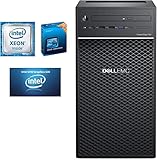
- Dell PowerEdge T140 Mini Tower Server & Windows Operating System for business server roles such as virtualization, applications, and databases!
- Intel Xeon E-2124 Quad-Core 3.3GHz 8MB CPU, Max Turbo Up To 4.3GHz; 32GB DDR4 PC4-21300 2666MHz Unbuffered Memory
- 8TB (4 x 2TB) 7.2K 6Gb/s SATA 3.5" HDDs for High Capacity Storage; PERC S140 6Gb/s RAID Controller
- Windows Server 2016 Standard Retail
Which mail-server components belong in a custom stack?
A custom stack gives an experienced administrator maximum control, but a custom stack is an engineering project rather than a ready-to-use mailbox product. A typical deployment combines an SMTP transport layer, mailbox delivery, IMAP access, authentication, spam and malware filtering, webmail, administration, TLS, monitoring, and backups.
Do these 3 things before closing this tab:
1Fix the driver behind crashes, sound loss and screen glitches2Repair Windows errors before they cause bigger problems3Scan for outdated or missing drivers - takes under a minute11. Postfix — the conventional SMTP transport choice
Postfix is a mature and widely used SMTP transport component. Postfix is an excellent foundation for a custom Linux mail system, but it does not provide user-facing webmail, IMAP access, mailbox administration, or a complete filtering and backup strategy by itself. See the official Postfix site.
12. Exim — highly configurable SMTP routing
Exim is suited to administrators who need extensive SMTP routing and policy control. Exim’s flexibility can become difficult to audit and maintain, and Exim still requires separate mailbox, webmail, filtering, and administration components. Consult Exim’s official documentation before choosing it for a new stack.
13. OpenSMTPD — simple SMTP, especially for BSD users
OpenSMTPD offers a comparatively clear configuration model and has strong associations with OpenBSD environments. OpenSMTPD is an SMTP daemon, not a complete mailbox platform, so add IMAP, delivery, filtering, webmail, and management layers as required. The project’s home page is opensmtpd.org.
14. Dovecot — IMAP, authentication, and mailbox access
Dovecot provides IMAP and POP3 access, authentication, indexing, and delivery integration. Dovecot normally works alongside an MTA such as Postfix or Exim and separate webmail, spam filtering, and administration tools. Dovecot’s official project site is dovecot.org.
15. Courier — traditional mailbox-access components
Courier supplies established IMAP, POP3, and mail-delivery components for traditional stacks. Courier can make sense when an administrator already knows the ecosystem or must maintain an existing deployment, but many new installations will find an integrated suite or a Postfix/Dovecot combination easier to source and maintain. See courier-mta.org.
16. Apache James — programmable Java mail platform
Apache James is a Java-oriented, modular mail-server platform suited to developers and organizations that need an embeddable or programmable architecture. Apache James is not usually the easiest choice for a small ordinary mailbox host because it requires more architectural involvement. The official project site is james.apache.org.
17. Haraka — programmable SMTP framework
Haraka is a Node.js SMTP server and plugin framework for programmable processing, filtering, and application-specific mail flows. Haraka is a developer tool rather than a complete employee-mailbox solution; it does not replace IMAP, webmail, groupware, or mailbox administration. Review Haraka’s documentation.
18. Mox — modern integrated Go server
Mox is a modern Go mail-server project aimed at advanced users who want a consolidated architecture. Mox may reduce the number of separate components, but its ecosystem and hosting adoption are smaller than the familiar Postfix/Dovecot pattern. Check the current project details at xmox.nl and the Mox repository.
19. Sendmail — mainly for legacy environments
Sendmail remains historically important and extremely mature, but Sendmail is generally not the first recommendation for a new installation because configuration and maintenance are less approachable than modern alternatives. Sendmail is most defensible when compatibility or existing operational knowledge is the deciding factor. The current project information is available from Proofpoint’s open-source Sendmail page.
20. Postal — best for transactional and application email
Postal is designed around application email, transactional messages, and outbound infrastructure. Postal is not a replacement for an employee mailbox system with IMAP, webmail, calendars, and contacts. Use Postal when the requirement is application sending rather than ordinary mailbox hosting, and consult the Postal documentation and source repository.
Which mail server should you choose for your situation?
| Use case | Recommended starting point | Why | Important caution |
|---|---|---|---|
| Personal domain | Mail-in-a-Box | Opinionated setup with integrated services | Check operating-system support and avoid unusual infrastructure |
| Small organization wanting a control panel | mailcow | Broad integrated features and web administration | Allow sufficient resources and learn Docker operations |
| Traditional Linux/BSD administration | iRedMail | Conventional architecture and broad configuration options | Compare free and Enterprise editions before deployment |
| Focused Docker suite | Mailu | Containerized, full-featured mail hosting | Docker knowledge remains necessary |
| Compact modern server | Stalwart or Maddy | Fewer components and contemporary architecture | Webmail and groupware may need separate tools |
| Maximum customization | Postfix + Dovecot + filtering | Fine-grained control over each layer | You own integration, upgrades, security, and recovery |
| Application or transactional mail | Postal | Built for outbound application traffic | It is not ordinary mailbox hosting |
For most first deployments, choose a complete suite rather than assembling components. Choose a component stack when you have a concrete reason to control each layer, such as an existing directory, a specialized routing policy, a migration requirement, or an experienced mail administrator.
What do you need before installing a mail server?
Before installing any platform, obtain a domain, a server with a stable public IP address, and provider control over reverse DNS. The mail hostname needs forward DNS, the provider must permit inbound and outbound SMTP, and the server needs enough disk for mailboxes, indexes, quarantine, logs, and backups.
Free tools Windows power users keep installed
One-click scans. No signup required.
Rank #4
- Windows server license is not included
- Domain name and reliable DNS hosting.
- Static public IPv4 address and correctly configured IPv6 if IPv6 will send mail.
- Provider-controlled PTR or reverse-DNS record matching the mail hostname.
- MX, SPF, DKIM, and DMARC records.
- Inbound SMTP on port 25, authenticated submission on port 587, and IMAP over TLS normally on port 993, subject to the chosen product and provider.
- TLS certificates and an automatic renewal process.
- Separate backup storage and a tested restoration procedure.
- Monitoring for disk space, certificate expiry, queue growth, authentication failures, and service outages.
- A process for spam, malware, abuse complaints, compromised accounts, and emergency shutdowns.
mailcow’s official prerequisites are a useful example of why resource claims must be product-specific: the project recommends approximately 6 GiB of RAM plus 1 GiB of swap for many private installations and 8 GiB of RAM for approximately five to ten users. A different suite or a component-only stack can have different requirements.
How should you configure DNS for self-hosted email?
For a domain such as example.com and a mail host named mail.example.com, the conceptual DNS model looks like this:
mail.example.com.       A       <public IPv4 address>
example.com.            MX 10   mail.example.com.
example.com.            TXT     "v=spf1 mx -all"
selector._domainkey.example.com. TXT "<DKIM public key>"
_dmarc.example.com.     TXT     "v=DMARC1; p=none; rua=mailto:dmarc@example.com"
This is a model, not a universal copy-and-paste configuration. SPF must authorize every legitimate sender, the mail platform generates the DKIM selector and public key, and DMARC should normally begin in monitoring mode before enforcement. A PTR record is configured at the hosting provider rather than in ordinary authoritative DNS.
Google’s Gmail sender guidelines require authentication and valid forward and reverse DNS for senders, with additional SPF, DKIM, DMARC, alignment, and unsubscribe requirements applying to relevant bulk traffic. Google recommends a 2048-bit DKIM key where supported. Yahoo publishes substantially similar guidance and recommends valid reverse DNS and DMARC in its sender best practices.
Free tools Windows power users keep installed
One-click scans. No signup required.
What is the practical installation sequence?
- Choose a VPS or dedicated server with a stable public IPv4 address and suitable IPv6 support.
- Confirm the provider permits mail hosting and outbound SMTP traffic.
- Set the server hostname and keep system time synchronized.
- Configure forward DNS and request a matching reverse-DNS/PTR record.
- Install the selected platform by following its official documentation.
- Issue and configure TLS certificates.
- Publish MX, SPF, DKIM, and DMARC records using values generated or specified by the platform.
- Verify inbound SMTP on port 25 and authenticated submission on port 587.
- Test IMAP over TLS, normally port 993, and verify webmail and account provisioning.
- Send test messages to Gmail, Yahoo, Outlook, and an independent testing mailbox.
- Inspect message headers for SPF, DKIM, DMARC, TLS, alignment, and reverse-DNS results.
- Configure backups, then perform a restoration test.
- Monitor disk usage, certificate renewal, queue size, failed logins, and service health.
- Restrict relay behavior and verify that the server is not an open relay.
- Document upgrades, rollback steps, account recovery, and abuse-response procedures.
Commands vary materially between operating systems, releases, Docker layouts, and products. A generic command sequence is therefore less reliable than the official installation path for the selected platform.
Does authentication guarantee email deliverability?
Authentication does not guarantee inbox placement. SPF, DKIM, DMARC, valid PTR and forward DNS, and TLS establish important technical requirements, but recipient providers also evaluate IP reputation, domain history, sending behavior, complaints, message content, list quality, and traffic patterns.
Google warns that non-compliant traffic can be rejected or placed in spam, and its sender-guidelines FAQ says enforcement was being expanded from November 2025. Yahoo’s guidance recommends separating bulk, transactional, and user traffic by IP or traffic type where appropriate. A new VPS with a poor reputation can therefore perform badly even when every DNS record is syntactically correct.
If a residential connection, dynamic address, blocked port 25, or poor IP reputation makes direct delivery impractical, a smarthost or managed outbound relay can improve operational reliability. A relay does not replace authentication, careful sending practices, abuse monitoring, or mailbox hosting; it changes who handles part of the outbound delivery path.
What are the major self-hosting edge cases?
Docker versus native installation
Docker suites can make deployment reproducible and isolate services, but Docker can also obscure networking, persistent storage, logging, and upgrade behavior. Native installations can be more transparent and sometimes lighter, but they demand more manual integration. Docker is easier mainly for operators who already understand containers.
Single server versus split architecture
A small installation can combine inbound SMTP, mailbox storage, webmail, filtering, and monitoring on one host. A larger or higher-risk deployment may separate an inbound filtering gateway, mailbox storage, outbound relay, webmail, directory services, and backup storage.
IPv6 configuration
If IPv6 is enabled, IPv6 needs correct forward and reverse DNS and a suitable reputation. A broken IPv6 path can cause recipients to prefer IPv6 and reject or distrust mail even when IPv4 delivery works. Disable or correctly configure unused mail-capable IPv6 rather than assuming IPv4 success covers both protocols.
Forwarding
Forwarding can fail SPF because the forwarding server is not authorized by the original sender’s SPF record. DKIM preservation and Sender Rewriting Scheme-style rewriting may be necessary, making forwarding a separate operational problem from ordinary mailbox hosting.
Quick wins for a faster PC:
Repair Windows errors before they cause bigger problemsFix Now →Fix the driver behind crashes, sound loss and screen glitchesFind Drivers →Clear out junk files and repair common Windows errorsFree Scan →Backups
A configuration backup alone is insufficient. Backups should cover mailbox data, user and domain databases, DKIM keys, relevant TLS configuration, spam-filter state, allow and block lists, webmail settings, database dumps, encryption keys, and recovery credentials. A successful restore test is more meaningful than a successful backup job.
Best Value

- A secure, private, and cost effective email solution
- High-availability architecture maximizes the service uptime
- Specially designed algorithm for high speed full-text search
- Beautifully designed and intuitive mail client allows efficient email management
- Cross-platform support on web client and dedicated mobile apps on Android/iOS
Spam, abuse, and compromised accounts
A compromised mailbox can damage the reputation of every domain on the server. Use strong authentication, administrative MFA where supported, rate limits, outbound queue monitoring, alerts for unusual sending volume, and procedures for disabling compromised accounts. Separate transactional and user-mail IPs when scale and risk justify the additional architecture.
What does free email software really cost?
The license fee is only one part of the total cost of ownership. A realistic budget can include the server, static IP, storage, snapshots, separate backup storage, DNS or domain services, monitoring, outbound SMTP relay, commercial support, security maintenance, migration work, and administrator time.
A small VPS can be inexpensive while still creating a large labor obligation. An organization that cannot tolerate missed messages may find managed mailboxes cheaper than the time required to maintain reputation, patch services, test restores, investigate abuse, and respond to delivery failures. Conversely, a privacy-conscious individual, developer, nonprofit, or homelab operator may value control and learning enough to accept those responsibilities.
Do these 3 things before closing this tab:
1Repair Windows errors before they cause bigger problems2Fix the driver behind crashes, sound loss and screen glitches3Clear out junk files and repair common Windows errorsInfrastructure purchasing checklist
When evaluating a hosting provider, check static IPv4 availability, reverse-DNS control, port-25 policy, backup and snapshot pricing, data-center location, abuse procedures, storage options, and IP reputation. A cheap VPS that blocks outbound SMTP or has unusable reputation is not a bargain. The same separation applies to backup storage: never keep the only backup on the same VPS or in the same failure domain as the live server.
Free editions that are not open source
Some products offer free editions or free tiers without being open-source projects. They may still be useful, but they should not be counted as equivalent open-source choices.
| Product | What it is | How to describe it accurately |
|---|---|---|
| MailEnable Standard | Windows-oriented free edition | Free proprietary edition, not an open-source mail server |
| Axigen Free | Edition-specific proprietary mail server | Free edition with limits that must be checked against current terms |
| Poste.io | Packaged mail server | Verify current license and edition terms instead of assuming open-source status |
Proxmox Mail Gateway is another important distinction: it is a mail-security gateway and filtering relay, not a complete end-user mailbox platform by itself. See the official Proxmox Mail Gateway page.
Should you self-host email?
Self-hosting is a good fit for privacy-conscious users, developers learning infrastructure, small organizations with experienced administrators, internal or low-volume systems, and operators who already maintain reliable servers, backups, and monitoring.
Self-hosting is a poor fit for a business that cannot tolerate missed or delayed messages, a residential or dynamic-IP connection, a server without PTR control, a high-volume marketing operation, or an organization without an abuse-response process. Self-hosting should not be treated as “install once and forget it” software.
Final recommendations
- Choose mailcow for the most complete and approachable all-in-one administration experience.
- Choose iRedMail for a conventional, flexible Linux or BSD-oriented stack, after checking current free and Enterprise edition boundaries.
- Choose Mailu for a focused Docker deployment with standard mail-hosting functions.
- Choose Mail-in-a-Box for a personal domain and simple, opinionated server.
- Choose Stalwart or Maddy for a compact modern architecture when separate webmail or groupware is acceptable.
- Choose Postfix plus Dovecot and a filtering stack when maximum customization matters more than installation simplicity.
- Choose Postal or Haraka for application-oriented or programmable SMTP workflows, not as a default employee-mailbox suite.
Frequently Asked Questions
Is mailcow completely free and open source?
mailcow: dockerized is an open-source mail suite that can be self-hosted without a software license fee. Hosting, backup, administration, and optional commercial support or managed services still cost money, and community support is separate from paid support.
Can Postfix replace mailcow or iRedMail?
Postfix cannot replace mailcow or iRedMail as a complete mail-hosting platform. Postfix primarily handles SMTP transport, so a usable mailbox service also needs mailbox delivery, IMAP access, authentication, webmail, filtering, administration, TLS, monitoring, and backups.
What is the easiest free mail server for personal use?
Mail-in-a-Box is the simplest fit for many personal-domain deployments because it uses an opinionated setup and integrates related services. Mail-in-a-Box is less suitable for complex multi-domain hosting or unusual infrastructure, so its current operating-system and upgrade requirements should be checked first.
Recommended Free Tools
Does SPF, DKIM, and DMARC guarantee inbox delivery?
SPF, DKIM, and DMARC are important authentication controls, but they do not guarantee inbox placement. Recipient providers also evaluate reverse DNS, TLS, IP and domain reputation, sending behavior, complaints, content, and traffic type.
Is Postal suitable for hosting employee mailboxes?
Postal is designed primarily for application and transactional outbound email, not ordinary employee mailboxes. Postal does not serve as a general replacement for an IMAP, webmail, calendar, contacts, and groupware suite.
The Bottom Line
The best free open-source mail server is determined by the operating model, not by a universal ranking. Start with mailcow for an integrated suite, iRedMail for a traditional stack, Mailu for focused Docker hosting, Mail-in-a-Box for a personal domain, Stalwart or Maddy for compact modern deployments, and Postfix plus Dovecot only when you are prepared to operate every surrounding service yourself. Before installing, confirm PTR control, SMTP access, authentication, backups, monitoring, and a realistic deliverability plan.
Quick Recap
Product prices and availability are accurate as of the date/time indicated and are subject to change. Any price and availability information displayed on Amazon at the time of purchase will apply.
What’s actually slowing this PC down?
Pick the symptom - the matching free tool is one click away.

