
Recommended Free Tools
Medieval Europe was shaped by technologies that people invented, adapted, and adopted—not by inventions made in Europe alone. The eighteen examples below are a popular, non-exhaustive selection: some transformed work, building, navigation, or access to knowledge; others belong at the edges of the medieval period or have uncertain origin dates.
Power, farming, and production
1. The heavy plow
With an asymmetric plowshare, colter, and mouldboard, the heavy plow could turn the dense, wet soils common in parts of northern Europe more effectively than lighter designs. Its use is one element in the region’s agricultural changes. Greater productivity may have supported population and commercial growth, but the plow alone did not cause urbanization.


2. Watermills and windmills
Mills converted flowing water or wind into mechanical power. Beyond grinding grain, watermills could saw timber, drive forge hammers and bellows, and help process cloth. Their significance lay partly in applying power to different kinds of work, rather than in a single new machine. Encyclopedia.com’s overview of medieval technology surveys these uses.
3. Fulling mills
Fulling cleaned and thickened woven cloth. Waterwheel-powered fulling mills mechanized part of that process, applying mechanical force to work that had previously required substantial manual labor. English Heritage describes fulling mills among medieval English inventions.
#1 Best Overall
4. Blast furnaces
Blast furnaces represent an important development in metalworking, but precise claims about the first European examples and their dates should be treated cautiously. The popular account associated with this eighteen-item selection places European examples in the thirteenth century; the evidence available here does not establish those first sites independently. The broader point is that medieval production depended on evolving methods of harnessing heat and labor.
5. Spinning wheel
The spinning wheel helped turn fibers into yarn, supporting textile production. Its history was one of transmission: the account traces possible origins to India, use in China, and arrival in Europe through the Middle East. It places European adoption around 1400, at the conventional medieval/Renaissance boundary, and that route and date are not independently confirmed by the institutional sources cited here.
6. Distillation and spirits
Distillation is older and geographically broader than medieval Europe. The technique should be distinguished from the later production of distilled alcoholic drinks in Europe. The available evidence supports that distinction, not a single European inventor or a definitive origin date for spirits.
7. Tidal mills
Tidal mills used the rise and fall of the sea to turn mill machinery, extending water power to suitable coastal locations. Their place in the larger history of milling is clear; a specific claim about the earliest European site and date is not established by the sources cited here.
What’s actually slowing this PC down?
Pick the symptom - the matching free tool is one click away.
Rank #2
Movement, ships, and navigation
8. Sternpost rudder
A stern-mounted rudder, hinged with fittings such as pintles and gudgeons, gave sailors greater control over a vessel’s direction. It was one element in changing ship design, rather than a stand-alone explanation for larger ships or longer voyages. The medieval technology overview discusses the rudder alongside other maritime developments.
9. Lateen sail
The triangular lateen sail could help a vessel sail at an angle to the wind. Its contribution to European maritime travel was part of a combination of design and navigational changes, not a technology that independently made exploration possible.
10. Compass
The compass offered sailors a directional reference when landmarks or clear skies were unavailable. Used alongside sails and improved steering, it contributed to more capable navigation. These technologies served different functions and should not be collapsed into one supposed invention of European seafaring.
11. Wheelbarrow
The wheelbarrow made it easier to move loads over short distances on land. The popular account places European use around 1170–1220 and distinguishes it from earlier Chinese wheelbarrows. That chronology is not independently corroborated by the institutional sources cited here, so it is safer to describe the European form as an adoption than to claim a universal European invention.
12. Hourglass
An hourglass measured a repeated interval of time and could be turned over for another measure, making it useful aboard ships as well as on land. The popular account points to ship inventories from the early fourteenth century as evidence of European use. The precise invention date is not established here.
13. Astrolabe
An astrolabe let a user measure the altitude of a celestial body and make related astronomical calculations. It was a practical scientific instrument, with uses relevant to navigation, rather than a modern computer in miniature. The Epact catalogue, maintained by Oxford’s History of Science Museum with partner European museums, documents European instruments and makers active before 1600.
Building and keeping time
14. Flying buttresses
In Gothic construction, a flying buttress carried outward thrust from a wall to a supporting pier. This structural arrangement helped builders create taller spaces, thinner walls, and larger windows. It worked as part of a wider architectural system that included rib vaulting and an emphasis on light. Encyclopedia.com’s overview places buttresses in this broader context.
15. Treadwheel cranes
In a treadwheel crane, people walking inside a large wheel supplied power to raise heavy loads. Such cranes helped move materials at building sites, ports, and mines. The popular account cites a French manuscript reference around 1225, but that specific first-reference claim is not independently corroborated here.
Rank #4

16. Mechanical clocks
Weight- and spring-driven mechanical clocks appeared in Europe in the fourteenth century, with wider use in the fifteenth. Many early clocks displayed only an hour hand; they were not immediately precise timekeepers by modern standards. Their value included making time visible and helping communities coordinate activities. The medieval technology overview describes their development.
Knowledge, reading, and vision
17. The European printing press
Gutenberg’s fifteenth-century press was a major European development in printing with movable type, but printing itself was not a European invention: movable type had earlier Chinese history. Printing changed how books could be produced and circulated; it did not create written learning from nothing. Medieval readers already relied on handwritten manuscripts, including university teaching texts copied through systems such as pecia. Cambridge’s chapter on book production and the book trade explains this transition in context.
18. Spectacles
English Heritage places the first spectacles in Italy around 1286, but says the inventor is unknown. Alessandro della Spina was making spectacles before 1300; he should not be credited with inventing them. Early glasses used frames and lenses unlike modern designs, but offered practical help to people with impaired vision. English Heritage’s account of medieval inventions discusses their early history.
Independent reader supportYour contribution helps us test, update, and keep practical guides available for everyone.Technologies at the edges of the medieval period
Gunpowder and cannon
Gunpowder originated in China and reached Europe later. Europeans adapted it for weapons, including cannon, as part of changing military practice. These are important medieval European technologies by adoption and development, not inventions of European origin. Specific battle chronologies in the popular account are not independently established by the sources cited here.
Do these 3 things before closing this tab:
1Repair Windows errors before they cause bigger problems2Fix the driver behind crashes, sound loss and screen glitches3Clear out junk files and repair common Windows errorsBest Value
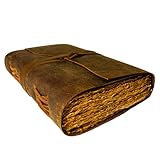
- UNIQUELY RUSTIC HANDCRAFTED: Our unique unruled leather journal is made with 100% pure buffalo leather that will stand the test of time. The leather is meant to age, developing an even better feel and color. A proprietary oil tanning process is used to give the cover its vintage feel. Since we believe in using only natural genuine leather, our products are truly unique and are destined for compliments.
- TRULY VERSATILE: The Modest Goods journal is the perfect size for all your drawing, writing, sketching, note taking, traveling and much more. Our customers have been known to use it for Nature journaling, Instagram photo book or scrapbook, Teen journal, Life moments tracker, Vacation scrapbook, Story writing, Hunting Logbook, Poetry Work, Bible Journaling.
- ECO-FRIENDLY BY NATURE: When we were designing this journal, we were seriously concerned about its environmental effects. So, we decided to use only 200 pages/100 sheets of handmade non-refillable deckle edge paper that is thick enough to withstand any type of pen. Our paper is acid free and no trees were harmed in its making.
- OLD SCHOOL VINTAGE FEEL: Let this journal take you back in time to when things were just so simple. Let your art flow under the shadow of our rustic cover or inscribe poetry on our smooth creamy pages. The leather strap will keep your diary tightly closed when not in use or could be used as a fancy bookmark. The notebook makes a perfect gift or present for anniversary, graduation, Birthday and will surely excite anyone.
- THE MODEST GOODS PROMISE: Try our handmade rustic leather journal for 365 days risk free. If you don't love it, we'll accept a return no questions asked. We are a US based small-business unlike others and are always here to help. Feel free to reach out to us anytime! For every journal we sell, we allocate a percentage of our profit towards donating fresh meals and educational materials to families and children in need. PICK ONE UP TODAY!
Coffee houses
Coffee reached Europe in the sixteenth century, and coffee houses later became social institutions. That arrival falls after the conventional medieval period, so coffee houses are a boundary case rather than a medieval European invention.
Paper money
Government-issued paper money originated in China in the account used for this selection; it did not become common in Europe until the late seventeenth century. It illustrates long-distance transmission, but it does not belong among core medieval European inventions.
Why these technologies matter together
The most useful way to compare this selection is by the work each technology made possible. Plows and mills supported food and material production; ship designs and navigational instruments aided movement; cranes and structural innovations changed what builders could raise; clocks, printing, and spectacles affected coordination, access to texts, and daily tasks. Their effects depended on adoption, skills, resources, and other technologies. The list is not a settled ranking, and its examples vary in how firmly their origins and dates are established.
Quick Recap
Product prices and availability are accurate as of the date/time indicated and are subject to change. Any price and availability information displayed on Amazon at the time of purchase will apply.

