
Speech Note is the best starting point for most Linux users who want private, offline speech recognition in a graphical app. It supports several local engines and can send recognized text to the active desktop window. Choose Buzz for recordings, lectures, interviews, and subtitle files; Vocalinux or Handy for modern type-anywhere dictation; Vosk for low-latency recognition on modest hardware; and Talon for hands-free desktop and coding control.
This guide ranks 17 free Linux speech-recognition tools, applications, engines, and developer toolkits. “Free” means free to download, free to use through an open-source license, or available through a no-cost path. It does not mean that every model, cloud provider, GPU, or commercial-support option is free.
What kind of Linux speech recognition do you need?
Speech recognition is an umbrella term. The best tool depends on whether you want to speak into a text field, turn an existing recording into text, control the computer by voice, or build your own recognition system.
Free tools Windows power users keep installed
One-click scans. No signup required.
#1 Best Overall
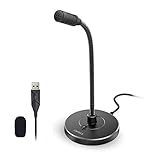
- 【Crystal Clear Audio Quality】Our Omnidirectional pattern condenser microphone accurately captures your voice, making it perfect for dictation, online classrooms, and more.
- 【Active Noise-Cancelling】Come in CMTECK CCS2.0 SMART CHIP with Omnidirectional Polar Pattern, which can effectively block the background noise. The pop filter prevents plosives from overloading the microphone, ensuring only your voice is heard.7
- 【Convenient Mute Button with LED Indicator】You can quickly mute/un-mute the microphone with the Mute Button and the built-in LED light lets you know the working status(Greenlight: Connected; Red light: Mute mode).
- 【Easy to use】 No drivers needed, just plug and record without external power supply, directly connect the microphone to a USB compatible device, well compatible with Windows(7, 8 and 10), Mac OS and PS4 (NOT compatible with Raspberry Pi/Linux/Android)
- 【Mini size with Adjustable Gooseneck】Adopted flexible and adjustable gooseneck metal pipe, easily adjust position 360 degrees to suit user comfort. The compact and stable base maximizes your desktop space.
- Dictation: converts live microphone input into text and types or pastes it into the focused application.
- Transcription: converts an audio or video file, microphone session, or online recording into a document or subtitle file.
- Voice control: interprets spoken commands to open applications, run actions, navigate the desktop, or write code.
- ASR engine or toolkit: provides the recognition model or programming interface, but usually does not include a polished desktop workflow.
That distinction explains why this list includes both end-user applications such as Speech Note and Buzz and technical foundations such as Whisper, Vosk, Kaldi, and Julius.
Quick comparison
| Tool | Type | Offline support | Best use | Important caveat |
|---|---|---|---|---|
| Speech Note | Desktop app | Yes | General offline dictation and notes | Models are downloaded separately |
| Buzz | Desktop transcription app | Yes | Audio, video, interviews, subtitles | More transcript-focused than type-anywhere dictation |
| Vocalinux | Desktop dictation app | Yes | Modern push-to-talk or toggle dictation | Wayland and packaging behavior varies by release |
| Handy | Desktop dictation app | Yes | Simple Whisper dictation | Compositor and model configuration matter |
| Nerd Dictation | Command-line utility | Yes | Keyboard shortcuts, scripting, lightweight systems | Text injection can require Wayland setup |
| OpenWhispr | Cross-platform desktop app | Yes, with optional cloud/BYOK modes | Local or user-selected provider workflows | Cloud use is not fully offline and may cost money |
| Voquill | Desktop dictation app | Yes | Privacy-focused type-anywhere dictation | Verify current maturity and desktop support |
| Spokenly | Desktop dictation app | Yes, with optional BYOK cloud engines | Polished cross-application dictation | Free features differ by local, BYOK, and subscription paths |
| S2Tui | Desktop overlay | Yes | Minimal Whisper workflow | GPU-driver setup may take extra work |
| Whisper | ASR model and Python package | Yes | Developers and multilingual transcription | Not a complete type-anywhere desktop app |
| whisper.cpp | Inference runtime | Yes | Efficient local Whisper deployment | Needs a front end or command-line workflow |
| Vosk | ASR toolkit | Yes | Streaming and modest hardware | Formatting can be less polished than Whisper |
| Talon | Voice-control environment | Yes | Hands-free desktop and coding control | Use an X11 session on Linux |
| Simon | Configurable voice-control suite | Yes | Traditional command-and-control systems | Older dependencies and HTK workflow |
| Coqui STT | Trainable ASR toolkit | Yes | Developers and researchers | Documented versions have older compatibility constraints |
| Kaldi | Research toolkit | Yes | Custom ASR research and engineering | Steep learning curve and build complexity |
| Julius | Decoder and embedded engine | Yes | Grammar-based and low-memory systems | Older release and model setup requirements |
The 17 best free Linux speech recognition tools
1. Speech Note — best overall offline Linux speech-recognition app
Speech Note is the strongest general recommendation for Linux users who want a graphical interface without sending recordings to a server. It is designed for note taking, reading, and translation, and its speech-to-text options include Coqui STT, Vosk, whisper.cpp, Faster Whisper, and April-ASR.
Speech Note processes speech locally and supports downloadable models. Its command-line integration can copy or insert decoded text into the active desktop window, making it useful for both notes and ordinary application fields. The multiple-engine approach is valuable when you need to trade accuracy, speed, language coverage, and hardware requirements.
Best for: private dictation, multilingual notes, offline transcription, and users who want to compare several local engines from one application.
The Tool Desk
Outbyte Driver Updater FREEFix the driver behind crashes, sound loss and screen glitchesFind Drivers →Outbyte PC Repair FREEClear out junk files and repair common Windows errorsFree Scan →Watch out for: the application and the model are separate pieces. You must download the appropriate model, and performance can change substantially with the selected engine, model size, language, CPU, GPU, and available memory.
2. Buzz — best for audio and video transcription
Buzz is the best choice in this list when the starting point is an existing recording rather than a text box. It uses OpenAI Whisper for offline transcription and translation and supports audio files, video files, microphone transcription, and YouTube links.
Its workflow is built around producing and reviewing transcripts. Useful features include speaker identification, speech separation, transcript search, and export to TXT, SRT, and VTT. Those subtitle formats make Buzz particularly practical for lectures, interviews, podcasts, and video production.
Linux installation is available through Flatpak, Snap, or Python packaging. The research snapshot identifies Buzz version 1.4.4 as a release dated March 14, 2026; verify the current release and packaging instructions before installation because project versions move over time.
Best for: batch transcription, subtitle creation, recorded meetings, lectures, interviews, and podcasts.
Watch out for: Buzz is more focused on creating and searching transcripts than on continuously typing into every active application field.
3. Vocalinux — best modern offline type-anywhere dictation app
Vocalinux is a free GPLv3 Linux desktop application for dictation into other applications. It supports both X11 and Wayland, local whisper.cpp, OpenAI Whisper, and Vosk engines, plus customizable hotkeys and GPU acceleration through Vulkan.
The main attraction is the workflow: press or toggle a shortcut, speak, and send the result to the application you are using. Local processing keeps the audio on the computer and avoids usage charges from a hosted transcription API.
Best for: users who want modern push-to-talk or toggle-based voice typing across desktop applications.
Watch out for: Vocalinux is a relatively young project. Check its current release, distribution package, desktop-environment behavior, and Wayland text-injection reliability before depending on it for accessibility-critical work.
4. Handy — best simple offline Whisper dictation app
Handy is a focused, free, open-source speech-to-text application powered by Whisper. It is a good alternative when you want local dictation without the broader transcription and engine-selection features of a larger application.
The project documentation specifically addresses Linux startup and Wayland issues, which is useful because speech recognition has two separate technical problems: capturing the microphone and inserting the recognized text. A tool may recognize speech correctly but still fail to type into a particular Wayland application.
What’s actually slowing this PC down?
Pick the symptom - the matching free tool is one click away.
Best for: straightforward private dictation with minimal feature overhead.
Watch out for: behavior can depend on the compositor, protocol support, audio configuration, and selected model. Test it in the applications where you actually plan to dictate.
5. Nerd Dictation — best lightweight command-line dictation utility
Nerd Dictation is a simple, hackable offline dictation utility for desktop Linux built around the Vosk API. It can start and stop recognition with keyboard shortcuts, write text to standard output, or simulate keystrokes into the focused application.
It supports several recording paths, including PulseAudio, SoX, and PipeWire, and can work with X11 input tools and Wayland-compatible tools such as ydotool, dotool, and wtype. That makes it attractive to users who prefer a scriptable solution and are comfortable adjusting their own desktop configuration.
Rank #2
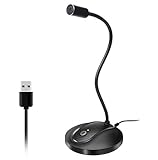
- 360 Degree Position Adjustable Gooseneck Design --Plug and play USB microphone Pick up the sound from 360-degree with high sensitivity, in the best possible location for sound to your PC gaming, dragon voice dictation, and talk to Cortana
- Mute Button & LED Indicator --One-click to mute/unmute your microphone for pc, Build-in LED indicator tells you the working status at any time
- Intelligent Noise-Canceling Tech --Premium omnidirectional condenser microphone with noise-canceling technology can pick up your clear voice and reduce background noise and echo
- USB Plug&Play(1.8/6ft USB Cable) -- No driver required. Just need to plug & play for the microphone to start recording, well compatible with Windows(7, 8, 10 and 11) and macOS. (NOT compatible with Xbox/Raspberry Pi/Android)
- Solid Construction--Adopting premium metal pipe and heavy-duty ABS stand to make sure that you will be satisfied with our computer mic quality
Best for: power users, keyboard-driven workflows, scripting, low-resource machines, and users who want to control the recognition pipeline.
Watch out for: Vosk generally produces less polished punctuation and formatting than newer Whisper-based systems. On Wayland, simulated keyboard input may require additional permissions, services, or tool-specific configuration.
6. OpenWhispr — best cross-platform local or BYOK dictation option
OpenWhispr is an open-source voice-to-text application for Linux, macOS, and Windows. It supports local Whisper and Parakeet models and can also connect to optional cloud or bring-your-own-key providers.
This makes OpenWhispr useful for people who want one application across several operating systems or who want to switch between local inference and a provider they already pay for. Its feature set also includes meeting transcription and integrations aimed at longer-form workflows.
Best for: cross-platform users, local-model experimentation, and people who want the choice of local processing or their own cloud credentials.
Watch out for: a BYOK cloud mode is not the same as offline recognition. The provider may charge for API usage, and audio leaves the computer when a remote service is selected.
7. Voquill — best privacy-focused FOSS dictation alternative
Voquill presents itself as free, open-source, offline dictation that types into any application. Its Linux support and local voice-to-text processing make it a potentially useful option for people who prioritize keeping spoken content on their own machine.
Best for: privacy-conscious users seeking a focused type-anywhere application.
Windows Errors? Fix Them Before They Spread
Repair common Windows errors and clear accumulated junk for a smoother, more stable PC - no reinstall needed.Free scan · no reinstallCrashes, No Sound, or Screen Glitches?
Random freezes, missing sound and display glitches usually trace back to one bad driver. Find and replace yours safely.Free scan · under a minuteWatch out for: verify the current release maturity, model-download requirements, supported desktop environments, and behavior under your X11 or Wayland session. It should not automatically be treated as as established as older Vosk- or Whisper-based projects.
8. Spokenly — best polished free or BYOK Linux dictation path
Spokenly offers a Linux dictation application with local models and optional cloud engines accessed through the user’s own API keys. Its Linux distribution paths include Debian packages, RPM packages, and an AppImage. Local options include Whisper and Parakeet models.
The appeal is a polished cross-application dictation workflow without requiring every user to assemble a command-line stack. Users who already have a preferred cloud provider can also choose a BYOK route, while privacy-focused users can stay with local models.
Best for: users who value a polished interface and want both local and provider-based recognition options.
Recommended Free Tools
Watch out for: do not assume every feature is permanently free. Local-model use, BYOK providers, and subscription features can have different limits and costs.
9. S2Tui — best minimal Whisper desktop overlay
S2Tui is a free, local, open-source speech-to-text application for Linux, macOS, and Windows. It uses Whisper and provides a floating overlay, a global shortcut, automatic clipboard handling, and offline processing.
The overlay-and-clipboard design is useful when direct keystroke injection is unreliable or when you want to review the result before pasting it. Its Linux instructions include Debian/Ubuntu and Fedora GPU-driver setup.
Best for: users who want a small, keyboard-driven Whisper workflow rather than a full transcript-management suite.
Quick wins for a faster PC:
Repair Windows errors before they cause bigger problemsFix Now →Scan for outdated or missing drivers - takes under a minuteDriver Scan →Watch out for: hardware acceleration may require additional driver setup, particularly on systems where Vulkan or the relevant GPU stack is not already configured.
10. Whisper — best original open-source ASR model and CLI foundation
OpenAI Whisper is an open-source automatic speech-recognition model and software package that can transcribe and translate speech. It is one of the most important foundations in the Linux speech-recognition ecosystem and is embedded by several desktop applications in this list.
On Linux, Whisper can be used through Python and community-built desktop applications. It is especially useful for developers, researchers, and users who want multilingual transcription and are comfortable with a command-line or Python workflow.
Best for: developers, researchers, multilingual transcription, and people building their own applications.
Do these 3 things before closing this tab:
1Clear out junk files and repair common Windows errors2Scan for outdated or missing drivers - takes under a minute3Repair Windows errors before they cause bigger problemsRank #3

- HIGH SENSITIVITY for CLEAR CALL - This portable USB microphone adpots a 6*10mm high sensitivity condensor microphone to capture clear voice, the audio signal processed by multi levels of audio gain amplifier and advanced ADC module, it provides crystal clear voice, reliable compatibility and noise cancelling. It's able to capture voice in 10ft distance clearly -it's very small, but powerful. Plug it into the computer, you'll experience better con-call immediately.
- PLUG-and-PLAY - The USB 2.0 interface is widely compatible with the most computer devices (Windows, Mac, Raspberry Pi, Linux, Chromebook & etc ) and softwares (Google Meetings, Zoom, Team, Skype & etc). Just plug it into the USB port and done. No extra driver or settings are required.
- COMPACT & PORTABLE - Like a flash disk, you can put it in the pocket with ease. Carry it with your laptop, and plug it in when you need it. No more tangled cords or bulky bases hogging your desk space, This mic is on a mission to keep your workspace sleek and organized.
- IDEAL REPLACEMENT - If you are looking for a quality microphone for work at home, online conferencing, online class, live streaming and webinar, this is a great choice. It's not a recording studio grade microphone, but the sound quality is better than most of laptop built-in microphones, and it's completely enough to meet your general demand.
- WHAT YOU GET - Packed in a metal carrying box, and comes with 12 months waranty. For any concern, you can send us messages and we will respond in 24 hours.
Watch out for: the original Python implementation is better understood as a model and developer foundation than as a polished type-anywhere desktop application. Model size affects download size, memory consumption, speed, and recognition quality; larger is not automatically better if your computer cannot run it comfortably.
11. whisper.cpp — best efficient local Whisper runtime
whisper.cpp is a high-performance C/C++ implementation of Whisper. Compared with a heavier Python stack, it is useful when you want a lower-dependency local runtime, an embedded application, or efficient CPU inference.
Its documented acceleration paths include CPU-only inference, quantization, Vulkan, NVIDIA GPU acceleration, AMD ROCm, and OpenVINO, among others. It also includes command-line examples for transcribing local audio and is widely used inside Linux dictation applications.
Best for: offline transcription, embedded deployments, low-dependency systems, and developers optimizing local inference.
Recommended Free Tools
Watch out for: whisper.cpp is an inference runtime, not a complete desktop dictation interface. You need a front end or your own command-line/application workflow. The research snapshot identifies stable version 1.8.1; check the current project documentation before choosing build instructions.
12. Vosk — best low-latency offline recognition toolkit
Vosk is an offline, open-source speech-recognition toolkit supporting more than 20 languages and dialects. It is designed for streaming recognition and can run with relatively small downloadable models, making it a strong choice for modest hardware and applications that need immediate partial results.
Vosk also supports vocabulary reconfiguration, speaker identification, and bindings for Python, Java, C#, Node.js, C++, Rust, Go, and other languages. Those capabilities make it more than a dictation application: it is a practical foundation for embedded systems, custom commands, and language-specific applications.
Best for: low-latency streaming, small systems, embedded projects, controlled vocabularies, and developers who need broad language bindings.
Free tools Windows power users keep installed
One-click scans. No signup required.
Watch out for: quality depends on the language, acoustic conditions, and selected model. Vosk may produce less fluent punctuation and formatting than a Whisper-based workflow, especially for unconstrained long-form dictation.
13. Talon — best hands-free computer and coding control
Talon is intended for voice control of programming tools, games, terminals, and the wider desktop. It supports advanced command-and-control workflows, including hands-free coding and custom voice commands. Talon includes a free speech-recognition engine and can also work with Dragon.
For Linux, the important compatibility detail is the display server. Talon’s documented Linux support is for X11; its documentation notes that Wayland compositors lack the required APIs and that Wayland support is not planned in the documented release. If hands-free control is the goal, use an X11 session rather than assuming a Wayland desktop will work.
Best for: accessibility, hands-free desktop use, command execution, and voice-driven programming.
Quick wins for a faster PC:
Clear out junk files and repair common Windows errorsFree Scan →Fix the driver behind crashes, sound loss and screen glitchesFind Drivers →Repair Windows errors before they cause bigger problemsFix Now →Watch out for: Talon is not simply a voice-typing application. It requires learning its command system and should be selected for control and accessibility rather than occasional paragraph dictation.
14. Simon — best configurable traditional voice-control suite
Simon is an open-source speech-recognition front end associated with KDE and the Simon Listens project. It is designed for configurable voice control and can be installed on Linux, making it relevant to users interested in traditional command-and-control or legacy accessibility workflows.
Simon’s model-generation workflow uses HTK, and its documentation and dependency stack are older than those of newer Whisper- and Vosk-based projects. That can be an advantage for a user maintaining an existing Simon setup, but it makes Simon a less convenient first choice for a new installation.
Best for: configurable voice commands, traditional accessibility workflows, and users willing to maintain an older recognition stack.
Watch out for: installation, dependencies, model creation, and current desktop compatibility require more caution than the newer end-user applications in this list.
15. Coqui STT — best free trainable speech-to-text toolkit with legacy constraints
Coqui STT is an open-source deep-learning toolkit for training and deploying speech-to-text models. Its documentation covers local model inference, Python and C APIs, Linux builds, and model-manager workflows.
Best for: developers and researchers who need a trainable or embeddable ASR toolkit rather than a finished dictation application.
Watch out for: the documented version is 1.4.0 and its supported Python range is older than that of many current Linux environments. Treat Coqui STT as a legacy-compatible toolkit unless you have confirmed that its dependencies build on your distribution.
Do these 3 things before closing this tab:
1Repair Windows errors before they cause bigger problems2Scan for outdated or missing drivers - takes under a minute3Clear out junk files and repair common Windows errorsRank #4

- Crystal-Clear Sound: This computer microphone features exceptional 360-degree omni-directional audio pickup, capturing your voice with clarity and natural tone within the optimal 6-12 inch range. And with windproof fluffy caps, the microphone can reduce the breaking noise generated by the spray and wind. You can create professional, authentic recordings effortlessly – without requiring specialized software or sound cards.
- Plug-and-Play, Easy To Use: No drivers or software, simply plug this usb microphone into your PC to be game-ready in seconds for gaming, streaming, or chatting. microphone for computer desktop for video recording is for windows and mac compatible. ( not a speaker.)
- Mute Button & LED Indicator: The gaming microphone features a touch-sensitive mute button, which allows you to instantly mute/unmute your computer microphone for desktop. This mute function effectively prevents audio mishaps during chats or recordings, ensuring your peace of mind. The built-in LED indicator shows the microphone status in real time (green: connected/working; red: mute mode).
- Multifunction Use: The microphone for podcast can be automatically recognized on your computer or pc. The desktop microphone for pc is versatile, not only it can be used for gaming, singing, home studio, Yahoo recording, YouTube recording, but also can use it for court reporting, remote training, business negotiation, video chatting and so on.
- Premium Materials & User-Friendly Design: This streaming microphone features a metal gooseneck tube and ABS shockproof base for durability, and a non-slip silicone pad that won't budge even if you tap the desktop hard during a passionate live broadcast. The small and compact design allows you to carry this gaming microphone pc in your backpack to the office, conference room or home without taking up a lot of space.
16. Kaldi — best research-grade ASR toolkit
Kaldi is a free, open-source speech-recognition toolkit with official support for Unix systems, including Linux. It provides extensive recipes, documentation, and research-oriented components for building and adapting recognition systems.
Kaldi is appropriate when you need custom acoustic or language-model development, reproducible research pipelines, or deep control over the ASR process. It is not intended to be a one-click desktop dictation program.
Best for: ASR researchers, speech engineers, custom model development, and reproducible experiments.
Watch out for: the learning curve, build process, data preparation, and model configuration are substantially more demanding than those of a desktop application or a ready-to-run local model.
The Tool Desk
Outbyte Driver Updater FREEScan for outdated or missing drivers - takes under a minuteDriver Scan →Outbyte PC Repair FREEClear out junk files and repair common Windows errorsFree Scan →17. Julius — best lightweight grammar and embedded LVCSR engine
Julius is an open-source large-vocabulary continuous speech-recognition decoder. Its Linux build instructions and capabilities include microphone and network input, grammar support, N-gram language models, confidence scoring, and a small memory footprint.
Julius is particularly relevant to embedded systems, grammar-constrained commands, Japanese or custom-language research, and low-memory deployments. It is a decoder for researchers and developers, not a turnkey desktop dictation application.
Best for: embedded recognition, custom grammars, low-memory systems, and research projects that need decoder-level control.
Watch out for: the project documentation identifies version 4.6, released September 2, 2020. Recognition quality depends heavily on obtaining and correctly configuring compatible acoustic and language models, so its age and setup burden should be considered before starting a new desktop project.
Best choices by task
Best free Linux tools for ordinary dictation
Start with Speech Note if you want a graphical application with multiple offline engines. Choose Vocalinux if push-to-talk or toggle-based typing into applications is your priority. Handy is a simpler Whisper-oriented alternative, while Voquill and Spokenly are worth evaluating if you want a focused, modern type-anywhere workflow.
Nerd Dictation is the better fit for users who are comfortable configuring shortcuts, audio backends, and text-injection tools themselves. S2Tui makes sense if a floating overlay and clipboard workflow are preferable to direct typing.
Best tools for recorded audio, video, and subtitles
Buzz is the clearest first choice because it accepts audio and video, can work from YouTube links, supports speaker-related features, lets you search the transcript, and exports TXT, SRT, and VTT. Choose Speech Note for a more general note-taking experience, or use Whisper and whisper.cpp when you want a scriptable or developer-controlled pipeline.
Best for privacy and offline processing
Speech Note, Buzz, Vocalinux, Handy, Nerd Dictation, Voquill, S2Tui, Whisper, whisper.cpp, Vosk, Talon, Simon, Coqui STT, Kaldi, and Julius can support local processing in the workflows described here. That means the audio can remain on your computer, but it does not mean the setup is effortless: you may need to download models and provide enough CPU, GPU, RAM, and disk space.
OpenWhispr and Spokenly can also run locally, but their optional cloud and BYOK modes change the privacy and cost profile. Always identify which engine is active before processing confidential recordings.
Best for accessibility and hands-free control
Talon is the strongest specialized choice for hands-free desktop interaction and coding, provided you use Linux with X11. Simon is a configurable alternative for users maintaining or deliberately choosing a traditional voice-control stack. For ordinary speech-to-text rather than command execution, try Vocalinux, Handy, Voquill, or Speech Note first.
KDE’s current accessibility documentation, including documentation for Plasma 6.6 in the research snapshot, should not be confused with a complete native Linux speech-to-text dictation feature. Desktop accessibility infrastructure and speech recognition are related but separate capabilities.
Best for developers and researchers
Choose Vosk for streaming recognition, vocabulary control, and many language bindings; whisper.cpp for efficient local Whisper inference; Whisper for the original model and Python foundation; Coqui STT for a trainable toolkit if its older dependencies are acceptable; Kaldi for research-grade pipelines; and Julius for grammar-based, embedded, or low-memory decoder work.
Crashes, No Sound, or Screen Glitches?
Random freezes, missing sound and display glitches usually trace back to one bad driver. Find and replace yours safely.Free scan · under a minuteWindows Errors? Fix Them Before They Spread
Repair common Windows errors and clear accumulated junk for a smoother, more stable PC - no reinstall needed.Free scan · no reinstallLinux setup issues that determine whether speech recognition works
1. Check the microphone before blaming the model
A noisy room, distant microphone, aggressive noise suppression, or an incorrect input device can make any recognizer appear inaccurate. Before changing models, confirm that Linux sees the intended microphone and that the input meter responds when you speak.
These commands are useful diagnostics on many distributions:
echo "$XDG_SESSION_TYPE"
wpctl status
pactl info
arecord -l
wpctl status is useful on PipeWire systems, while pactl info can report the PulseAudio-compatible sound server layer. arecord -l lists ALSA capture devices. Not every application uses the same audio path, so select the input inside the application as well as in the desktop sound settings.
If the built-in laptop microphone is muffled or picks up keyboard noise, a USB microphone for PC can be a practical upgrade. A USB headset can also help when you need the microphone close to your mouth and want to reduce room sound. No specific microphone model was independently tested with every tool in this list, so verify Linux support, connector type, mute controls, and return policies before buying.
Disclosure: This article may contain product links added after publication. Hardware suggestions are category-level guidance, not independent product-test results.
Best Value

- CONDENSER MICROPHONE: High sensitivity, low noise, and low distortion with a large 14mm diaphragm and clear sound pickup
- FOR STREAMING & MORE: 360° rotation adjustable stand mic is ideal to track your voice in real-time conference, online streaming, podcasting, music recording, solo vocals or instruments and more
- CARDIOID PICKUP PATTERN: Cardioid pickup pattern microphone effectively isolates background noise, ensuring clear and clean sound for recording and broadcasting
- ONE TAP SILENT MODE: Stylish design USB microphone built-in convenient one-tap mute function that syncs with your laptop or PC. Compatible with Windows OS 7, XP, 8, 10 or higher, Mac OS 10.10 or higher, streaming and broadcasting applications
- PLUG AND PLAY: Easy to use with no additional drivers required and connect with USB data transfer cable; it can be detached and installed on tripods, boom arm or microphone stands that with a standard 5/8 inch thread
2. Identify whether you are using X11 or Wayland
Run echo "$XDG_SESSION_TYPE" to identify the current session when the variable is available. X11 and Wayland differ most visibly in how an application is allowed to inject keystrokes into another application.
- X11: tools such as
xdotoolare commonly used for simulated input. - Wayland: applications may use tools such as
ydotool,dotool, orwtype, but compositor support, permissions, portals, and the application’s implementation matter.
This is why a recognizer can display correct text in its own window yet fail to type into a browser, terminal, or editor. Clipboard-based applications such as S2Tui may be easier to use in some environments because they do not depend on unrestricted global keystroke injection.
Talon deserves a specific warning: its documented Linux support targets X11, and the documented release does not provide a Wayland-native path. If you need Talon, choose an X11 session rather than spending time trying to make a Wayland compositor expose APIs it does not provide.
3. Choose a model appropriate for your hardware
Local recognition trades recurring cloud charges for local resource use. Model downloads consume disk space; inference uses CPU, GPU, and RAM; and larger models generally require more time and memory. Start with a smaller model if you need responsive dictation on a laptop, then move up only if the result quality justifies the additional load.
Whisper-family tools generally offer strong general transcription and multilingual coverage. Vosk is often a better architectural fit when you need low-latency streaming, small models, or vocabulary restriction on modest hardware. These are general trade-offs between model families, not independent benchmark results for every Linux distribution or language.
Whisper.cpp documents CPU-only inference, quantization, Vulkan, NVIDIA GPU acceleration, AMD ROCm, and OpenVINO paths. Vocalinux also documents Vulkan acceleration. Hardware can reduce waiting time, but it cannot compensate for a wrong language model, a poor microphone signal, or severe background noise.
If you plan to keep several large local models, an external SSD for AI models can help when internal storage is limited. If you routinely process long recordings, compare the requirements of a GPU for local Whisper before buying; support depends on the runtime, drivers, backend, and application, not merely on the presence of a GPU.
What’s actually slowing this PC down?
Pick the symptom - the matching free tool is one click away.
4. Test the complete workflow, not just recognition
- Open the application you intend to use, such as a text editor or browser.
- Select the correct microphone and speak a short sentence with punctuation words if the application supports them.
- Confirm that the words are recognized accurately.
- Confirm that the text is inserted, pasted, or copied where you expect.
- Repeat the test in the applications you use most, especially under Wayland.
- Try a longer recording if your goal is transcription rather than short dictation.
A successful microphone test does not prove that global shortcuts, clipboard handling, speaker separation, subtitle export, or text injection will work. Test each feature that matters to your workflow.
Privacy, cloud use, and the real cost of “free”
Offline recognition is attractive because audio stays on the local machine and there is no per-minute cloud transcription bill. The trade-off is that you supply the compute, storage, driver configuration, and model downloads. You also remain responsible for protecting locally stored recordings and transcripts.
Cloud and BYOK modes can be convenient, particularly when a service has better support for a language, long recordings, or meeting features. However, sending audio to a provider introduces its terms, retention practices, account requirements, and possible API charges. OpenWhispr and Spokenly should therefore be described as flexible local-or-cloud options, not automatically offline tools in every configuration.
“Free” also has several meanings in this category:
Recommended Free Tools
- Free and open source: the application or engine is published under an open-source license, but models and hardware may still require work or expense.
- Free local use: recognition runs on your computer without a recurring service charge.
- Free tier: a hosted service permits limited use and may charge beyond its allowance.
- BYOK: the software may be free, but your selected API provider can bill you separately.
A practical decision guide
| If you want to… | Start with… | Why |
|---|---|---|
| Dictate private notes offline | Speech Note | Graphical workflow with several local engines |
| Transcribe interviews or lectures | Buzz | Audio/video input, search, speaker features, and export formats |
| Type into desktop applications | Vocalinux or Handy | Focused live dictation workflows |
| Configure shortcuts and scripts | Nerd Dictation | Command-line control and multiple input-injection paths |
| Switch between local and your own cloud API | OpenWhispr or Spokenly | Local models plus optional provider flexibility |
| Use a small overlay and clipboard | S2Tui | Minimal Whisper-based interface |
| Run streaming recognition on modest hardware | Vosk | Small models, streaming support, and vocabulary control |
| Control the computer by voice | Talon | Specialized hands-free commands and coding support |
| Build a custom ASR application | Vosk, Whisper, or whisper.cpp | Useful APIs, runtimes, and local deployment options |
| Conduct ASR research or train systems | Kaldi or Coqui STT | Research and training-oriented toolkits |
| Build a grammar-constrained embedded system | Julius | Grammar, N-gram, confidence, and low-memory decoder features |
Troubleshooting common failures
The app hears nothing
Check the selected input device, desktop microphone permissions, mute switches, and the PipeWire/PulseAudio or ALSA path. Use wpctl status and arecord -l to confirm that the device exists, then test with another audio application. If only one speech tool fails, its input selection or sandbox permissions are more likely than a system-wide hardware failure.
The text is accurate but does not appear in the target application
This is usually a text-injection or clipboard problem rather than an ASR problem. On X11, check the application’s supported input tool. On Wayland, check whether the chosen tool supports your compositor and whether a required service or permission is active. Try a clipboard workflow, such as S2Tui, or use the application’s command-line integration where available.
Recognition is slow
Use a smaller model, choose a runtime with quantization or hardware acceleration, close competing workloads, and check available RAM. whisper.cpp offers several acceleration paths, but the correct one depends on your GPU, drivers, backend, and build. A smaller Vosk model may be preferable when immediate streaming response matters more than long-form transcription quality.
Recognition is inaccurate
First improve the microphone position and recording conditions. Then verify the language and model, speak closer to the microphone, reduce background noise, and compare another engine. Whisper-family models and Vosk have different strengths, and no single model is best for every language, accent, room, or vocabulary.
A package will not install on a current distribution
Check whether the project is distributing a Flatpak, Snap, AppImage, Debian package, RPM package, or Python installation path. Older toolkits may fail because of compiler, library, or Python-version changes. Coqui STT, Simon, and Julius require more compatibility checking than the newer desktop applications; do not assume that an old Linux instruction will work unchanged on a current release.
Which tools should beginners avoid?
“Avoid” does not mean “bad.” It means that the tool solves a different problem or imposes more setup than most beginners need.
- Do not start with Kaldi if you only want to dictate email. It is a research toolkit.
- Do not install Julius expecting a polished desktop transcription app. You need compatible acoustic and language models.
- Do not choose Whisper or whisper.cpp expecting a complete global-hotkey interface without adding a front end or script.
- Do not choose Talon for a Wayland-native workflow. Its documented Linux path is X11.
- Do not assume a KDE accessibility feature is speech-to-text. Accessibility infrastructure and native dictation are separate features.
Final recommendations
For the broadest combination of privacy, flexibility, and ease of use, install Speech Note first. If your work involves recorded audio or video, use Buzz. If your priority is speaking into any active text field, compare Vocalinux, Handy, Voquill, and Spokenly, while checking their current Wayland behavior.
Choose Nerd Dictation when you want a configurable command-line tool, Vosk when low-latency streaming and small models matter, and Talon when voice control and accessibility matter more than ordinary dictation. Developers should select among Whisper, whisper.cpp, Vosk, Coqui STT, Kaldi, and Julius according to whether they need a model, runtime, streaming API, trainable toolkit, research pipeline, or grammar-based decoder.
Free tools Windows power users keep installed
One-click scans. No signup required.
The Bottom Line
Bottom line: Most Linux users should begin with Speech Note for offline dictation or Buzz for recorded audio and video. The best technical choice changes with your display server, microphone, language, model, and hardware: Whisper-family tools are flexible for general transcription, Vosk is attractive for low-latency and modest systems, and Talon is the specialist option for hands-free X11 control.
Quick Recap
Product prices and availability are accurate as of the date/time indicated and are subject to change. Any price and availability information displayed on Amazon at the time of purchase will apply.

