
iTechGuides is reader-supported. When you buy through links on our site, we may earn an affiliate commission. As an Amazon Associate I earn from qualifying purchases. Learn more
The 11 best eCommerce accounting software options for online businesses are not interchangeable: QuickBooks Online or Xero is usually the best core ledger, while A2X, Link My Books, Synder, Webgility, or Bookkeep may be needed for accurate marketplace reconciliation. Finaloop is the strongest ecommerce-native alternative; Sage Intacct and NetSuite fit larger finance teams.
Ecommerce accounting has two separate layers. The first layer is the accounting ledger that manages the chart of accounts, bank feeds, bills, financial statements, tax reporting, payroll, and controls. The second layer converts orders and marketplace settlements into accounting entries for sales, refunds, discounts, shipping, taxes, fees, reserves, chargebacks, and payouts.
That distinction matters because an accounting platform can be excellent at general finance while still failing to reconcile marketplace deposits. The best choice depends on your sales channels, order volume, inventory complexity, countries, currencies, accountant, reporting requirements, and total stack cost.
Outdated Drivers Are Slowing You Down
One free scan finds every outdated or missing driver and matches the right update for your exact hardware.Free scan · exact hardware matchWindows Errors? Fix Them Before They Spread
Repair common Windows errors and clear accumulated junk for a smoother, more stable PC - no reinstall needed.Free scan · no reinstallKey takeaways
- QuickBooks Online is the most practical starting ledger for many U.S. sellers, especially businesses that need accountant familiarity, payroll, and a broad integration ecosystem.
- Xero is a strong alternative for international and accountant-led businesses, with more than 1,000 connected apps advertised on its U.S. pricing page.
- A2X, Link My Books, Synder, Webgility, and Bookkeep are connectors or automation platforms, not substitutes for a general ledger such as QuickBooks Online, Xero, or Zoho Books.
- Finaloop is an ecommerce-focused option that combines automation with optional managed accounting, inventory, analytics, CFO, and tax services.
- Sage Intacct and NetSuite are better suited to finance teams, multi-entity organizations, and complex operations than to new or very small online stores.
11 best eCommerce accounting software options at a glance
The table separates core accounting platforms from ecommerce connectors and managed-finance products. A “yes” in a channel column means the vendor or its documented ecosystem lists that channel; exact country, payment-service, plan, and settlement features still require verification.
#1 Best Overall

- Accurate to 0.1oz: High precision for postage, packaging, or food preparation.
- Solid design with high weight limit: 50Lbs
- Smart Tare & Hold Functions: Effortlessly subtract container weight or lock readings for larger boxes.
- Clear LCD Display: Large, backlit screen makes weights easy to read, even in dim rooms.
- Multi-measuring units: Kg, lb/oz, oz
| Product | Category | Best for | Shopify | Amazon | Multichannel | Inventory position | Pricing signal | Main drawback |
|---|---|---|---|---|---|---|---|---|
| QuickBooks Online | Core ledger | Many U.S. sellers | Supported through ecommerce connectors | Supported through ecommerce connectors | Broad app ecosystem | Basic-to-moderate; verify COGS and inventory workflow | Subscription plus add-ons | Settlement accuracy may require a connector |
| Xero | Core ledger | International and accountant-led businesses | Supported through marketplace apps | Supported through marketplace apps | More than 1,000 connected apps advertised | Often extended through apps | Country-specific subscription; promotions vary | Marketplace workflows commonly need an app |
| Zoho Books | Core ledger | Value-conscious sellers using Zoho | Third-party or ecosystem integration | Third-party or ecosystem integration | Zoho ecosystem plus external tools | Includes inventory-related features | Free or paid tiers vary by market | Accountant and integration availability varies |
| Finaloop | Ecommerce accounting and managed finance | DTC brands seeking automation | Verify supported store connection | Verify supported marketplace connection | Stores, banks, payments, ads, and finance services | Ecommerce-focused inventory capabilities | Plan and service scope vary | Software and managed-service scope must be separated |
| Sage Intacct | Advanced financial management | Growing finance teams | Usually through integrations | Usually through integrations | More than 350 integrations reported by Sage | Advanced finance layer; commerce tools may be separate | Quote-based | Implementation-heavy for small businesses |
| NetSuite | ERP | Enterprise and multi-entity businesses | Supported through configured integrations | Supported through configured integrations | ERP, financial, and operational consolidation | Strong potential, configuration-dependent | Quote-based | Complex and excessive for most small sellers |
| A2X | Settlement connector | Marketplace payout accounting | Listed integration | Listed integration | Amazon, Shopify, eBay, Etsy, Walmart, PayPal | Accounting entries; not a full inventory system | Channel and volume dependent | Requires QuickBooks, Xero, or NetSuite |
| Link My Books | Multichannel connector | Accessible guided mapping | Listed integration | Listed integration | Amazon, Shopify, eBay, Etsy, TikTok Shop, Walmart, Square, WooCommerce | Connector-level data; separate inventory may be needed | Order volume and channel count; 14-day trial listed | Cost increases with channels and orders |
| Synder | Transaction synchronizer | Payment and transaction-level workflows | Listed ecommerce workflow | Walmart listed; verify other marketplaces | Shopify, Stripe, Walmart, and payment platforms | Synchronization rather than full inventory management | Transaction and plan dependent | High transaction volume can become expensive |
| Webgility | Commerce and accounting automation | Operations-heavy multichannel retailers | Listed store integration | Listed marketplace integration | Shopify, WooCommerce, Wix, BigCommerce, Magento, Amazon, Walmart, eBay, Etsy | Order and inventory workflows included in broader platform | Feature, channel, order, and user dependent | More configuration than a pure reconciler |
| Bookkeep | Summarized journal-entry automation | Established sellers | Listed integration | Listed integration | Amazon, eBay, Shopify, Square, Stripe, Walmart, WooCommerce | Shopify inventory product listed separately | Pro displayed at $199/month on August 18, 2026 | Expensive for microbusinesses; limits matter |
What does eCommerce accounting software actually include?
eCommerce accounting software can mean a general ledger, a marketplace settlement connector, an inventory system, a sales-tax tool, a managed bookkeeping service, or an ERP. Those categories overlap, but they do different jobs.
| Layer | What it handles | Examples from this list |
|---|---|---|
| Core accounting ledger | Chart of accounts, bank feeds, bills, invoices, reconciliations, reports, tax records, and sometimes payroll | QuickBooks Online, Xero, Zoho Books |
| Ecommerce accounting connector | Maps orders or settlements into sales, fees, refunds, taxes, clearing accounts, and payout entries | A2X, Link My Books, Synder, Bookkeep |
| Commerce operations platform | Order management, inventory workflows, purchasing, fulfillment, and accounting automation | Webgility |
| Ecommerce-native finance service | Accounting automation combined with inventory, analytics, data, bookkeeping, CFO, or tax services | Finaloop |
| Advanced finance or ERP platform | Dimensions, approvals, audit controls, consolidation, multi-entity reporting, and broader operations | Sage Intacct, NetSuite |
QuickBooks Online is a ledger, not automatically a complete Amazon settlement system. A2X is a connector, not a replacement for QuickBooks Online, Xero, or NetSuite. Webgility covers more operational territory than a pure settlement reconciler. Finaloop is a different buying model because its offer can include both software and managed finance services.
Why is ecommerce bookkeeping different from ordinary bookkeeping?
Ecommerce bookkeeping is different because an order, a marketplace settlement, and a bank deposit are three different events. A $10,000 payout may represent gross sales less refunds, marketplace commissions, payment fees, shipping adjustments, sales tax, reserves, chargebacks, and prior-period timing differences.
Quick wins for a faster PC:
Clear out junk files and repair common Windows errorsFree Scan →Scan for outdated or missing drivers - takes under a minuteDriver Scan →A bank-feed-only workflow records the net deposit but can hide gross revenue, refunds, fees, taxes, shipping income, reserves, and chargebacks. A better workflow posts the platform activity to revenue, expense, tax-liability, refund, inventory, and clearing accounts, then matches the net payout to the clearing account and bank deposit.
Accounting details the selected stack should handle
- Gross product sales, discounts, gift cards, and store credit
- Refunds, returns, partial refunds, chargebacks, and damaged goods
- Marketplace commissions, payment-processing fees, and advertising charges
- Shipping income and shipping expense
- Sales tax, VAT, GST, tax-exempt sales, and marketplace-collected tax
- Reserves, withheld balances, delayed payouts, and settlement timing
- Foreign-currency settlements and exchange gains or losses
- Inventory purchases, COGS, landed cost, bundles, warehouses, and returns to stock
Which accounting platform is best for most online businesses?
QuickBooks Online or Xero is the strongest default for many small and midsize sellers, but the better choice depends mainly on geography, accountant compatibility, and the required ecommerce connector.
1. QuickBooks Online: best overall for many U.S. ecommerce businesses
QuickBooks Online is the best general-purpose starting ledger for many U.S. sellers that need accountant familiarity, payroll, financial reporting, and a large integration ecosystem. QuickBooks is especially practical for a Shopify seller with a U.S. bookkeeper or CPA, or an Amazon or Walmart business that expects lender, tax, and payroll requirements to grow.
Intuit’s August 5, 2026 ecommerce connector migration documentation says the newer QuickBooks Online ecommerce connectors replace the legacy OneSaas and Commerce connectors and support payout reconciliation, detailed order imports, product tracking, customer tracking, and automated U.S. tax handling. The documentation identifies U.S. tax automation specifically; sellers outside the United States may need mapping and separate tax review.
Best fit: U.S. Shopify, Amazon, Walmart, or multichannel sellers working with a QuickBooks-compatible accountant.
Strengths: broad small-business reporting, payroll availability, accountant familiarity, a large app marketplace, and a newer ecommerce connector architecture.
Weaknesses: the ledger alone does not solve marketplace settlement accounting, and the total cost can rise after adding connectors, payroll, inventory, sales-tax tools, and bookkeeping.
Buy it from: QuickBooks Online’s official product page.
Free tools Windows power users keep installed
One-click scans. No signup required.
2. Xero: best for international and accountant-led businesses
Xero is a strong choice for international, multichannel, and accountant-led businesses that are comfortable building a modular technology stack. Xero provides core accounting, invoicing, bills, purchase orders, expenses, bank reconciliation, fixed-asset tracking, and reporting.
Xero’s U.S. pricing page advertises more than 1,000 connected apps. Xero’s ecommerce app marketplace lists tools for Shopify, Amazon, eBay, Etsy, Walmart, and other channels. Individual app, country, payment-service, and plan support still needs checking before purchase.
Best fit: international or multichannel sellers whose accountant already works in Xero.
Strengths: international orientation, broad app ecosystem, cloud collaboration, and strong accountant workflows.
Recommended Free Tools
Weaknesses: marketplace settlement quality depends heavily on the selected app, and inventory depth may require a dedicated system.
Rank #2
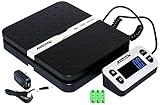
- Solid structure & Sleek/Modern Design – ACCUTECK postal scale is designed with durable plastic platform, user-friendly buttons, backlit extended display and two way 90 degree-opened lid.
- Enhanced capacity with higher precision- This new postal scale can hold a max weigh up to 110 lbs in 0.1 oz graduation. It can meet all your needs from a first-class package to parcel packages. Start weight: 10g.
- Multi Measuring Units with extra Large LCD display. Measure in oz, g, lb/oz. The extra large back-lit LCD display allows you to work under any environment.
- Convenient Tare/Hold Function and the shipping postal scale features are tare function which allows you to zero out the number for multi-packages purpose. Hold function allows you to lock the number after you take the package off the platform.
- Power supply: Batteries, USB cable Charger, AC adapter (All Included). When using on Battering, it will turn off automatically after 90 seconds. When using Ac adapter for power supply, it won't turn off automatically.
Xero’s ecommerce page displayed a 90%-off promotion for the first six months ending September 30, 2026. Treat that promotion as temporary rather than as Xero’s normal price.
3. Zoho Books: best value and best for the Zoho ecosystem
Zoho Books is a credible value option for small sellers that already use Zoho CRM, Zoho Inventory, Zoho Analytics, or related Zoho products. The Zoho Books U.S. pricing page lists quotes, invoices, sales orders, bills, purchase orders, banking, inventory, expenses, reporting, online payments, mobile accounting, and tax-related capabilities.
Best fit: a small product business seeking a broad feature set without immediately adopting enterprise software.
The Tool Desk
Outbyte Driver Updater FREEScan for outdated or missing drivers - takes under a minuteDriver Scan →Outbyte PC Repair FREERepair Windows errors before they cause bigger problemsFix Now →Strengths: the wider Zoho ecosystem, inventory and sales-order features, and potentially lower entry cost depending on geography and eligibility.
Weaknesses: marketplace accounting may still require Zoho Flow or a third-party connector, while accountant familiarity and compliance features vary by market.
Which products automate ecommerce accounting rather than act as the ledger?
A2X, Link My Books, Synder, Webgility, and Bookkeep are best evaluated as data-layer products. These tools can reduce manual posting and reconciliation, but they normally sit beside a core accounting platform.
4. Finaloop: best ecommerce-native automation
Finaloop is the strongest ecommerce-native alternative for a DTC brand or founder who wants less manual work across stores, payment platforms, banks, advertising accounts, inventory, analytics, and financial reporting.
The Finaloop pricing page describes accounting, inventory management, data analytics, data warehousing, CFO services, tax services, financial statements, general-ledger functionality, and reconciliation across stores, banks, payment platforms, and advertising platforms.
Best fit: an ecommerce brand that wants an automation-heavy or managed-finance relationship rather than a conventional ledger-plus-connector stack.
Main caution: distinguish software-only capabilities from managed accounting, inventory, CFO, and tax services. Confirm supported channels, revenue or transaction limits, inventory complexity, month-end responsibilities, and service level before migrating.
5. A2X: best for marketplace settlement accounting
A2X is the clearest specialist choice when the central problem is converting marketplace settlements into clean accounting entries. A2X is not a general ledger; A2X connects channels to accounting destinations.
A2X’s official pricing page lists Amazon, Shopify, eBay, Etsy, Walmart, PayPal, and multichannel integrations, with QuickBooks, Xero, and NetSuite among the accounting destinations.
Best fit: an Amazon-heavy or high-volume marketplace seller that wants settlement summaries rather than thousands of individual order entries.
Strengths: marketplace-specific settlement workflows, clearer matching between deposits and platform statements, and separation of fees, refunds, taxes, and other settlement components.
Weaknesses: it adds another subscription, requires an accounting ledger, and still needs correct mapping and review. Verify the exact marketplace country, payout currency, reserve treatment, FBA workflow, and historical backfill.
What’s actually slowing this PC down?
Pick the symptom - the matching free tool is one click away.
6. Link My Books: best accessible multichannel connector
Link My Books is a practical connector for small and midsize multichannel sellers using QuickBooks or Xero. The Link My Books pricing page lists Amazon, Shopify, eBay, Etsy, TikTok Shop, Walmart, Square, and WooCommerce integrations, with pricing based on order volume and the number of sales channels. The page also lists a 14-day free trial with no card required.
Rank #3

- Digital tabletop postal scale for quickly and precisely weighing items
- Includes a shipping postal scale and AC adapter; made of durable black ABS, aluminum, and iron
- 65 pound (30kg) capacity reads to 0.1 ounce (1g) in 0.1 ounce increments; minimum load weight is 0.2 ounces (5g)
- Extra large LCD display for easy viewing; measuring units in ounces, pounds, g, and kg
- Tare function for resetting the scale to zero after setting a container on the platform; great for net weights
Best fit: a seller seeking guided mapping, broad channel coverage, and a lower-friction test before committing.
Strengths: channel breadth, visible order-volume pricing, multiple currency views, and guided workflows.
Weaknesses: cost increases with orders and channels, and the connector still requires testing for refunds, shipping, taxes, fees, clearing accounts, and settlement timing.
Do these 3 things before closing this tab:
1Scan for outdated or missing drivers - takes under a minute2Clear out junk files and repair common Windows errors3Fix the driver behind crashes, sound loss and screen glitches7. Synder: best for transaction-level synchronization
Synder is most relevant when a business needs detailed transaction synchronization across ecommerce and payment platforms rather than only summarized marketplace settlements.
Synder’s integration directory and ecommerce accounting materials describe workflows involving Shopify, Stripe, Walmart, QuickBooks Online, and Sage Intacct. Synder’s pricing page should be checked for current transaction, plan, and destination limits.
Best fit: a payment-heavy seller that wants customizable synchronization rules or order-level detail.
Main trade-off: transaction-level data can provide flexibility but may create more reconciliation work and higher costs than summarized settlement accounting at scale.
8. Webgility: best for ecommerce operations plus accounting
Webgility is broader than a pure settlement reconciler because it combines ecommerce accounting with order management, inventory management, financial reporting, and custom workflows.
Webgility’s official product and pricing page lists store integrations including Shopify, WooCommerce, Wix, BigCommerce, and Magento, plus marketplaces including Amazon, Walmart, eBay, and Etsy.
Best fit: a multichannel retailer whose operational problems include order processing, purchasing, inventory, receivables, and accounting—not only bank reconciliation.
Main trade-off: Webgility may be too broad for a small seller that needs only payout journal entries. Compare Webgility with a dedicated inventory or order-management system before committing.
Free tools Windows power users keep installed
One-click scans. No signup required.
9. Bookkeep: best for summarized journal entries
Bookkeep is designed for established ecommerce and retail sellers that want summarized journal entries posted to a core accounting system. Bookkeep’s pricing page describes postings to QuickBooks Online, Xero, or Zoho Books and summarized entries for gross sales, discounts, refunds, and sales tax across Amazon, eBay, Shopify, Square, Stripe, Walmart, and WooCommerce.
The Bookkeep page displayed a Pro plan at $199 per month on August 18, 2026, with a stated limit of up to $5 million in annual revenue and five segmented sales channels. Pricing and limits are volatile, so confirm the current plan before purchase.
Best fit: an established seller for whom clean summarized postings justify a higher monthly automation cost.
Main caution: confirm channel limits, posting dimensions, revenue thresholds, and whether the Shopify inventory product is sufficient for the required SKU, warehouse, bundle, and COGS workflow.
Which advanced accounting platforms fit growing finance teams?
10. Sage Intacct: best for growing finance teams
Sage Intacct is better suited to an ecommerce company with a finance department, multiple entities, approval workflows, audit requirements, dimensions, and management-reporting needs than to a new store.
Rank #4
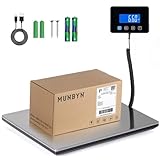
- Cost-Saving Precision: Experience unmatched accuracy with the Munbyn 440lbs digital postal scale. As a digital scale for shipping packages, scale for packages, and postage scale, it ensures you only pay for what you ship—vital for small business essentials—with a margin of error consistently under 0.5%.
- Convenient Hold Function for Easy Use: The MUNBYN 440lbs postal scale features a handy Hold Function that locks the weight on the screen, making it easy to record measurements without rushing. Simply press the “T” key to reset for the next use, making it a reliable shipping scale for small business packages.
- Quick, User-Friendly Operation: With fast USB connectivity and an intuitive display, this digital postal scale simplifies your workflow. It’s a top choice among digital scales for shipping and postal scales for shipping packages.
- Dual Power Options for Uninterrupted Use: Choose between 2 AAA batteries (offering 13 hours of runtime) or USB-C charging with a built-in 250mAh rechargeable battery (11-hour runtime). This versatile digital scale for shipping provides consistent performance as a postal scale, package scale, and essential small business tool.
- All-in-One Weighing Solution: Cover all your needs with one device that works as a digital postal scale, shipping scale, suitcase weight scale, and even package scale shipping small business. It’s the ultimate solution among postal scales for shipping packages and weight scale for packages.
Sage describes Intacct as finance-management software with real-time visibility, AI features, industry solutions, and more than 350 integrations on its official product page.
Best fit: a fast-growing organization that has outgrown basic small-business accounting and needs structured financial controls.
Weaknesses: pricing is generally quote-based, implementation can be substantial, and ecommerce capabilities may require third-party integrations and specialist configuration.
What’s actually slowing this PC down?
Pick the symptom - the matching free tool is one click away.
11. NetSuite: best enterprise option
NetSuite is the best enterprise option in this shortlist for businesses with multiple legal entities, international operations, complex inventory and fulfillment, wholesale and DTC channels, consolidation, and formal procurement or finance processes.
Oracle NetSuite’s ERP page describes the enterprise product family, while A2X lists NetSuite as an accounting destination for Amazon, Shopify, eBay, Etsy, Walmart, PayPal, and multichannel configurations.
Best fit: an enterprise organization that needs financial, operational, inventory, and multi-entity processes centralized in an ERP.
Main caution: NetSuite is quote-based, complex, and implementation-heavy. A new or single-store seller should not select NetSuite merely because sales volume is increasing; entity structure, inventory, consolidation, controls, and process complexity are better triggers.
Do these 3 things before closing this tab:
1Scan for outdated or missing drivers - takes under a minute2Clear out junk files and repair common Windows errors3Fix the driver behind crashes, sound loss and screen glitchesHow should you compare ecommerce accounting software?
Use a weighted evaluation instead of an unexplained ranking. The most important criterion for many sellers is whether the system reconciles payouts accurately, not whether the system imports every order.
| Criterion | Suggested weight | What to test |
|---|---|---|
| Settlement and reconciliation quality | 20% | Deposits, fees, refunds, taxes, reserves, chargebacks, clearing accounts, and delayed payouts |
| Channels and payment providers | 15% | Exact marketplace country, store, payment service, currency, and plan support |
| Inventory and COGS | 15% | SKU valuation, bundles, landed cost, FBA, warehouses, returns, adjustments, and COGS |
| Core accounting and reporting | 15% | Accrual reports, chart of accounts, bank reconciliation, bills, financial statements, and audit trail |
| Tax and compliance | 10% | Tax calculation, mapping, marketplace facilitator treatment, VAT/GST, filing, and remittance responsibility |
| Scalability | 10% | Orders, transactions, channels, users, entities, currencies, approvals, and consolidation |
| Accountant ecosystem and support | 5% | Advisor access, permissions, locked periods, exports, support, and local expertise |
| Total cost of ownership | 10% | Ledger, connector, inventory, tax, payroll, bookkeeping, implementation, and migration costs |
Does the software use cash or accrual accounting?
Cash-basis reporting may be adequate for some very small businesses or particular tax situations, but accrual accounting is generally more informative for inventory businesses and growing brands. Inventory purchases, COGS, returns, outstanding liabilities, and payout timing can make cash-basis reports misleading.
Cash basis records activity when money moves. Accrual accounting records revenue and expenses when the economic activity occurs, subject to the business’s accounting policies. The seller’s CPA should determine the required tax basis and reporting method because requirements depend on jurisdiction, entity, revenue, inventory rules, and other facts.
Can the software reconcile payouts or does it only import orders?
The answer must be tested at the specific integration level. Ask every vendor whether the integration imports individual orders, summarizes settlements, matches deposits to platform statements, separates fees and refunds, handles reserves and delayed payouts, supports multiple stores, and can correct or reprocess historical transactions.
| Workflow | What enters the books | Best use | Main risk |
|---|---|---|---|
| Order import | Individual sales or transaction records | Detailed operational visibility | High transaction volume and possible duplicate postings |
| Settlement posting | Summarized sales, fees, refunds, taxes, and payout components | Marketplace reconciliation and cleaner ledgers | Less order-level detail; mapping must be correct |
| Bank-feed categorization | Net deposit | Simple, low-volume activity during an interim workflow | Gross sales, fees, taxes, refunds, and reserves may disappear |
How do inventory and COGS change the buying decision?
Inventory and COGS should be central selection criteria for product businesses. A seller should verify whether the stack supports perpetual or periodic inventory, SKU-level quantities, bundles and kits, landed cost, purchase orders, multiple locations, manufacturing or assembly, FBA inventory, dropshipping, returns to inventory, damaged stock, obsolete stock, adjustments, and valuation methods.
QuickBooks Online, Xero, and Zoho Books can serve as core ledgers, but a basic accounting subscription may need an inventory add-on or dedicated inventory platform. Webgility offers a broader operational workflow, while Finaloop positions inventory as part of its ecommerce finance offering. Neither claim removes the need to test the exact COGS and valuation workflow with real transactions.
Independent reader supportYour contribution helps us test, update, and keep practical guides available for everyone.How should sales tax, VAT, and GST be evaluated?
Accounting integration is not the same as tax compliance. A seller must distinguish tax calculation, tax mapping, tax reporting, tax filing, and tax remittance.
- U.S. sellers need to evaluate sales-tax nexus, marketplace facilitator rules, direct-store obligations, product taxability, exemptions, and filing responsibility.
- Marketplace-collected tax may be recorded as a liability or treated differently depending on jurisdiction and platform reporting; the marketplace’s collection does not automatically resolve every direct-store obligation.
- International sellers must assess VAT/GST registration, local reporting, tax-inclusive pricing, marketplace rules, and payment-provider documentation.
- QuickBooks’ current ecommerce documentation identifies automated tax handling for the United States; sellers in other regions may need mapping and separate tax advice.
What matters for international and multichannel sellers?
International sellers should verify functional currency, foreign-currency bank accounts, marketplace settlement currencies, exchange gains and losses, VAT/GST reporting, local bank feeds, local accountant access, and country-specific plan availability.
Xero’s broad app marketplace can make a modular international stack practical, but a U.S. feature page should not be treated as proof of identical availability in Canada, the United Kingdom, Australia, or the European Union. Check the exact app, country, currency, and tax workflow before signing up.
Best Value

- Lightweight Postal Scale - Max. Capacity: 440lb/200kg, Min. Readability: 40g, Display Resolution: 10g. Features a Carbon Fiber platform paired with a durable ABS housing. Lightweight + sturdy, easy to clean, move, and store.
- Digital Shipping Scale - 3 weighing Modes: kg/lb/lb:oz. Separate large back-lit LCD display with adjustable/disable Auto-off. Easy to handhold or wall-mount with the included drywall anchors and screws.
- User Friendly Design - Ships pre-calibrated and can also be easily calibrated. Dual powered by 2 x AAA batteries or AC adapter (both included).
- Hold & Tare Function - Locks readings and removes container weight for multiple weighing needs. Ideal for post offices, warehouses, commercial and home use.
- Fuzion Support - We offer 2-Year Warranty and Lifetime Support for this digital scale. Full day service by our support team. We are always glad to help with all your questions or concerns.
What are the most practical ecommerce accounting stacks?
| Business type | Recommended starting stack | Why it fits | Verify before purchase |
|---|---|---|---|
| New U.S. Shopify seller | QuickBooks Online plus an approved Shopify connector | Familiar ledger and broad small-business ecosystem | Shopify Payments, refunds, fees, sales tax, historical import, and accountant setup |
| Amazon-heavy seller | QuickBooks Online or Xero plus A2X, Bookkeep, or another settlement connector | Matches marketplace statements and deposits more cleanly | FBA, reserves, refunds, fees, country, currency, and inventory treatment |
| Shopify, Amazon, Etsy, and Walmart seller | QuickBooks Online or Xero plus Link My Books, A2X, Synder, Webgility, or Bookkeep | Supports a multichannel data layer | Each channel’s exact integration, duplicate prevention, and inventory system |
| International brand | Xero or another country-appropriate ledger plus a multicurrency connector | Better fit for international accountant and app workflows | VAT/GST, local tax, settlement currencies, bank feeds, and country support |
| DTC brand seeking managed finance | Finaloop or QuickBooks/Xero plus a specialist ecommerce bookkeeper | Reduces founder bookkeeping workload | Software versus managed services, month-end close, inventory, tax, and CFO scope |
| Growing omnichannel retailer | Webgility or Bookkeep plus a suitable ledger and inventory layer | Addresses operations as well as accounting | Order, purchasing, warehouse, user, channel, and reporting limits |
| Multi-entity or enterprise business | Sage Intacct or NetSuite plus implementation and commerce integrations | Supports controls, dimensions, consolidation, and complex operations | Implementation partner, total cost, entity design, inventory, and close process |
What ecommerce accounting mistakes should you avoid?
Recording only net deposits
Categorizing each marketplace payout as revenue can hide gross sales, refunds, fees, sales tax, shipping, chargebacks, reserves, and timing differences. Use settlement-based accounting or a carefully designed clearing-account workflow.
Double-counting sales
Double-counting occurs when individual orders are imported, marketplace settlements are posted, and bank deposits are also categorized as sales. An order import, a settlement journal entry, and a bank-feed deposit are different records and must be connected without recording the same economic activity three times.
Treating marketplace tax as revenue
Tax collected by a marketplace may be a liability or may be remitted by the platform under marketplace-facilitator rules. The correct treatment depends on the jurisdiction, channel, and platform report.
Ignoring inventory
Profit can look artificially high when all product purchases are expensed immediately and ending inventory is not recorded. Profit can also be wrong when COGS is recognized without reliable quantity and valuation data.
Assuming every integration handles every edge case
Before selecting a connector, test countries and marketplaces, settlement currencies, refund timing, FBA or fulfillment-center treatment, reserves, gift cards, bundles, partial refunds, shipping income, tax mapping, historical backfill, duplicate prevention, API limits, error recovery, and correction procedures.
Choosing by the cheapest headline price
The core ledger is only part of the cost. Calculate accounting subscription plus ecommerce connector, inventory software, sales-tax software, payroll, payment-processing fees, bookkeeping, implementation, and migration support. A connector can cost as much as or more than the accounting platform.
Assuming AI means autonomous compliance
AI may assist with categorization, anomaly detection, reporting, or workflow automation, but AI does not remove the need for account mapping, reconciliation, tax review, inventory controls, human approval, period-end close, and CPA oversight where appropriate.
The Tool Desk
Outbyte PC Repair FREEClear out junk files and repair common Windows errorsFree Scan →Outbyte Driver Updater FREEScan for outdated or missing drivers - takes under a minuteDriver Scan →How should you migrate to new ecommerce accounting software?
- List every store, marketplace, payment provider, bank account, country, currency, warehouse, and legal entity.
- Choose the ledger before choosing the connector, unless an ecommerce-native service such as Finaloop is replacing both layers.
- Decide whether the books should use order-level transactions or summarized settlement entries.
- Document the chart of accounts and mappings for sales, refunds, discounts, shipping, fees, taxes, reserves, chargebacks, inventory, and COGS.
- Export and preserve the chart of accounts, historical transactions, customer and vendor records, inventory quantities and valuations, open invoices and bills, tax mappings, reconciliation history, attachments, and audit evidence.
- Import a controlled test period and compare platform statements, connector output, clearing accounts, and bank deposits.
- Run the old and new workflows in parallel for at least one complete reporting period when inventory, multiple channels, or active tax filings make errors costly.
- Have the accountant review opening balances, inventory, tax liabilities, clearing accounts, and the first month-end close.
Which ecommerce accounting software should you choose?
Choose QuickBooks Online plus A2X or Bookkeep when you are a U.S. seller that values accountant familiarity and needs reliable marketplace settlement postings. Choose Xero plus A2X or Link My Books when international operations, accountant collaboration, and a modular app ecosystem matter most.
Choose Zoho Books when value and the Zoho ecosystem are more important than universal accountant familiarity. Choose Finaloop when ecommerce-native automation or managed finance can reduce the complexity of maintaining a conventional ledger-and-connector stack.
Choose Webgility when order, inventory, and operational workflows are as important as accounting. Choose Sage Intacct or NetSuite only when finance-team controls, multi-entity reporting, consolidation, inventory complexity, or enterprise operations justify implementation and quote-based software.
Frequently Asked Questions
Is QuickBooks Online good for ecommerce accounting?
QuickBooks Online is a strong core ledger for many U.S. ecommerce businesses, but marketplace payout reconciliation may require an ecommerce connector or careful configuration. The seller must verify how the selected integration handles gross sales, refunds, fees, taxes, reserves, chargebacks, inventory, and deposits.
Recommended Free Tools
Do I need both accounting software and an ecommerce connector?
Many marketplace and multichannel sellers need both. QuickBooks Online, Xero, and Zoho Books provide the accounting ledger, while A2X, Link My Books, Synder, Webgility, and Bookkeep can convert orders or settlements into mapped accounting entries.
Is A2X an accounting system?
No. A2X is an ecommerce accounting connector designed for settlement accounting, and it normally works with a ledger such as QuickBooks Online, Xero, or NetSuite.
What is the cheapest ecommerce accounting software?
There is no universally cheapest ecommerce accounting stack because the total cost includes the ledger, connector, inventory, sales-tax tools, payroll, bookkeeping, and implementation. Zoho Books may be attractive for value-conscious sellers, while promotional prices from vendors such as Xero should not be treated as permanent list prices.
Should ecommerce businesses use cash or accrual accounting?
Cash basis may be suitable for some small businesses or tax situations, but accrual accounting usually gives inventory-heavy and growing ecommerce businesses a clearer view of revenue, COGS, returns, liabilities, and payout timing. A CPA should determine the required method for the business’s jurisdiction and circumstances.
Quick wins for a faster PC:
Scan for outdated or missing drivers - takes under a minuteDriver Scan →Repair Windows errors before they cause bigger problemsFix Now →Fix the driver behind crashes, sound loss and screen glitchesFind Drivers →The Bottom Line
The best eCommerce accounting software for online businesses is usually a stack, not a single app. Start with QuickBooks Online or Xero as the ledger, add a settlement-focused connector when marketplace deposits need detailed reconciliation, and choose Finaloop, Webgility, Sage Intacct, or NetSuite only when their broader automation or finance capabilities match the business’s complexity.
Quick Recap
Product prices and availability are accurate as of the date/time indicated and are subject to change. Any price and availability information displayed on Amazon at the time of purchase will apply.

