
You can reduce a file to meet a size limit, but no single setting can guarantee that every file will reach an exact byte count. First decide whether you need to get below a maximum or hit a precise target, then choose a method for the file type. Work on a copy, change one setting at a time, and check the result’s actual size and quality.
First, distinguish a size limit from an exact target
A size limit is usually a ceiling: the file must be smaller than a stated maximum to upload or send it. An exact target means the output must match a particular number of bytes. Compression tools can help reduce size, but the result depends on the file’s contents and settings; the official instructions below do not promise an exact-size output for arbitrary files.
There are two broad approaches. Lossless archiving packages data without deliberately lowering image or audio quality, though it may save little space on files that are already compressed. File-specific export tools can reduce images, PDFs, or video more substantially, but may change quality, resolution, or compatibility.
- For a per-file upload ceiling: reduce or package the file, inspect the resulting byte size, and confirm it is below the service’s limit.
- For a per-part ceiling: split an archive into volumes, understanding that the parts together still make up the full archive.
- For an exact byte target: expect to adjust and re-export, then measure the output. Do not assume a compression slider predicts an exact result.
Choose a method by file type and constraint
| Method | Best suited to | Effect on quality or data | Size predictability |
|---|---|---|---|
| Windows ZIP | Packaging files or folders for sharing | Packages data; already-compressed files may barely shrink | No exact target control |
| 7-Zip settings | Files that may benefit from stronger archive compression | Lossless archive; higher settings may take more time and memory | No exact final-size guarantee |
| Split archive volumes | Uploads with a maximum size per part | Creates multiple pieces of an archive | Controls piece size, not total archive size |
| Preview PDF export | Reducing a PDF on a Mac | May lower image quality | Results vary |
| PDF image optimization | Reducing image-heavy PDFs with print or screen needs in mind | Can downsample or compress images, potentially harming print use | Requires inspection and testing |
| Image resize or re-export | Images larger or higher-resolution than the destination needs | Can reduce dimensions, resolution, or fidelity | Requires checking the exported file |
| Pages media reduction | Pages documents with embedded images, audio, or video | Changes embedded media; some combinations can increase size | Must inspect the reduced copy |
| Video re-encoding | Video that must be smaller for sharing or upload | Lower bitrate or dimensions can reduce quality | Export and measure; no universal exact-size setting |
1. Create a ZIP with Windows File Explorer
For a quick package, select the file or folder in File Explorer and use the compressed (zipped) folder action. This is convenient for bundling files, but it is not a precise size-control tool. Microsoft notes that JPEG images are already highly compressed, so placing them in a ZIP may make little difference to the total size. See Microsoft’s Zip and unzip files guide.
Free tools Windows power users keep installed
One-click scans. No signup required.
#1 Best Overall

- Easily store and access 2TB to content on the go with the Seagate Portable Drive, a USB external hard drive
- Designed to work with Windows or Mac computers, this external hard drive makes backup a snap just drag and drop
- To get set up, connect the portable hard drive to a computer for automatic recognition no software required
- This USB drive provides plug and play simplicity with the included 18 inch USB 3.0 cable
- The available storage capacity may vary.
Windows support and archive-format options vary by version. Microsoft says Windows 11 version 24H2 supports ZIP, RAR, 7z, and TAR formats; check the recipient’s system and the target computer before relying on a less familiar format.
2. Try a stronger archive format or setting
For files that are still compressible, 7-Zip provides choices for archive format and compression level. Its documentation says Maximum can offer a higher compression ratio than Normal, but may take longer and use more memory. A stronger setting does not guarantee that the archive will land at a particular size. Test that the archive opens and can be extracted on the recipient’s device before sharing it. The available controls are described in 7-Zip’s Add to Archive Dialog Box.
Rank #2
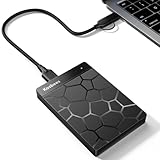
- 【Plug-and-Play Expandability】 With no software to install, just plug it in and the drive is ready to use in Windows(For Mac,first format the drive and select the ExFat format.
- 【Fast Data Transfers 】The external hard drives with the USB 3.0 cable to provide super fast transfer speed. The theoretical read speed is as high as 110MB/s-133MB/s, and the write speed is as high as 103MB/s.
- 【High capacity in a small enclosure 】The small, lightweight design offers up to 500GB capacity, offering ample space for storing large files, multimedia content, and backups with ease. Weighing only 0.35 Lbs, it's easy to carry "
- 【Wide Compatibility】Supports PS4 5/xbox one/Windows/Linux/Mac and other operating systems, ensuring seamless integration with game consoles,various laptops and desktops .
- Important Notes for PS/Xbox Gaming Devices: You can play last-gen games (PS4 / Xbox One) directly from an external hard drive. However, to play current-gen games (PS5 / Xbox Series X|S), you must copy them to the console's internal SSD first. The external drive is great for keeping your library on hand, but it can't run the new games.
3. Archive only the files you actually need
Before making an archive, remove duplicate copies and exclude large items the recipient does not need. This reduces the amount of content being packaged; it is not a compression ratio trick, and it cannot guarantee a target size. Check the archive contents after creating it so the recipient gets the necessary files without redundant material.
4. Split an archive for a per-part upload limit
If a service limits each uploaded file, 7-Zip’s split-volume option can divide an archive into parts sized for that limit. The split size applies to each piece, not to the complete compressed payload: the recipient needs all the parts to reconstruct the archive. Use this only when multiple uploads are accepted and the recipient can join or extract the volumes.
Recommended Free Tools
Rank #3

- Ultra fast data transfers: the external hard drive works with USB 3.0 thickened copper cable to provide super fast transfer speeds. Theoretical read speed is as high as 110MB/s-133MB/s and write speed is as high as 103MB/s.
- Ultra-thin and quiet: the motherboard adopts a noise-free solution, giving you a quiet working environment. Lightweight and portable size designed to fit in your pocket for easy portability.
- Compatibility: compatible with PS4/xbox one/Windows/Linux/Mac/Android,Stable and fast downloading on game console no difference from fast transmission when using on PC.
- Plug and Play: no software to install, just plug it in and the drive is ready to use. The hard drive chip is wrapped with aluminum anti-interference layer to increase heat dissipation and protect data
- Package Contents: 1* portable hard drive, 1 *USB 3.0 cable, 1*USB to type C adapter,1 *user manual, shell packaging, three-year manufacturer's warranty and free technical support services
5. Reduce a PDF in Preview on Mac
On a Mac, open the PDF in Preview and choose File > Export. In the Quartz Filter menu, select Reduce File Size, then export to a new file so the original remains intact. Apple warns that the reduced file may have lower quality and that results vary. Compare the exported file’s size and inspect its text and images at the viewing size you need. Apple’s steps are in Reduce the size of a PDF in Preview on Mac.
6. Tune PDF image compression for screen or print
When an all-purpose PDF reduction is too aggressive, consider how the recipient will use the document. Preview can optimize images for screen viewing or save images as JPEG. Adobe Acrobat’s PDF optimization reference describes image compression, downsampling, and an audit of space use; it also warns that some compression can make images unsuitable for print production. Prioritize legibility and print requirements before choosing aggressive image settings.
Rank #4
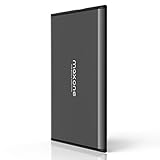
- Ultra Slim and Sturdy Metal Design: Merely 0.4 inch thick. All-Aluminum anti-scratch model delivers remarkable strength and durability, keeping this portable hard drive running cool and quiet.
- Compatibility: It is compatible with Microsoft Windows 7/8/10, and provides fast and stable performance for PC, Laptop.
- Improve PC Performance: Powered by USB 3.0 technology, this USB hard drive is much faster than - but still compatible with - USB 2.0 backup drive, allowing for super fast transfer speed at up to 5 Gbit/s.
- Plug and Play: This external drive is ready to use without external power supply or software installation needed. Ideal extra storage for your computer.
- What's Included: Portable external hard drive, 19-inch(48.26cm) USB 3.0 hard drive cable, user's manual, 3-Year manufacturer warranty with free technical support service.
Adobe’s cited Acrobat PDF optimization reference is older documentation, so current menus may differ. Treat its general tradeoffs as guidance rather than exact directions for every current Acrobat version.
7. Resize or resample an image
For an image destined for a website, presentation, or message, reduce its pixel dimensions to what the destination actually needs. In Preview on Mac, use the image-size controls to resize or resample; Apple’s instructions are in Crop, resize, or rotate an image in Preview on Mac. Keep the original and inspect the exported image at its intended display size: fewer pixels can reduce file size, but may make the image look soft or blocky when enlarged.
Do these 3 things before closing this tab:
1Repair Windows errors before they cause bigger problems2Scan for outdated or missing drivers - takes under a minute3Clear out junk files and repair common Windows errorsBest Value

- 2-in-1 Dual Design: Features both USB-C and USB-A connectors, making it compatible with phones, tablets, MacBooks, PCs, and laptops-no adapter needed
- Wide Compatibility: Works seamlessly with USB A and USB C devices, ensuring reliable file transfers across smartphones, computers, and more
- Ample Storage Options: Available in 16GB/32GB/64GB/128GB providing plenty of space for photos, videos, music, and documents
- Portable & Lightweight: Compact and durable design for travel, school, or daily use-take your files anywhere
- Plug-and-Play Convenience: No software or drivers required; simply insert into USB-C or USB-A ports and start transferring files instantly
8. Export an image in a suitable format and quality
Preview supports exporting images in multiple formats, with quality controls for applicable formats. A different format or lower quality setting may reduce the output size, but can affect appearance or whether the recipient’s software supports it. Export a copy, check its byte size, and open it in the application or device where it will be used. Apple documents Preview’s image workflows in its image resizing and editing guide.
9. Reduce embedded media in a Pages document
For a Pages file containing large images, audio, or video, Apple’s file-size controls can scale images, remove trimmed portions of movie or audio clips, set a movie quality ceiling, and create a reduced copy. Because media can dominate a document, these controls may help more than archiving the Pages file alone. Apple cautions that some combinations of settings can increase file size, so compare the new copy with the original. Follow the Mac steps in Reduce a document’s file size in Pages on Mac.
10. Re-encode video with a size-and-quality tradeoff
Video size depends on factors including bitrate, frame dimensions, frame rate, and codec. Adobe’s encoding reference explains that lowering bitrate can reduce size while lowering image quality if frame rate remains unchanged; no single codec is best for every type of content. Export a copy, adjust one factor at a time, and check playback and visual quality on the devices that matter. Adobe’s video and audio encoding reference is older, so confirm the controls in your current application rather than relying on dated menu directions.
Verify the result before sending or uploading
- Keep the original. Export, resize, or archive a copy rather than overwriting the only source.
- Change one thing at a time. This makes it easier to tell which setting changed the size or quality.
- Check the actual output size. Inspect the file’s properties or information panel; do not infer the size from a setting name.
- Test the file itself. Open the document or image, extract the archive, or play the video. Check readability, sharpness, playback, and compatibility with the recipient’s software.
- Compare with the real limit. Confirm that the file or each required part is below the service’s stated maximum, leaving room for any stricter upload rule.
If the file remains too large, make another copy and reduce a file-specific setting further, or remove content that is not needed. If quality or compatibility becomes unacceptable, return to the original and choose a less aggressive method.
PC Slower Than It Used to Be?
A free scan shows the junk files, broken settings and background clutter dragging Windows down - then fixes them in one click.Free scan · Windows 10 & 11Outdated Drivers Are Slowing You Down
One free scan finds every outdated or missing driver and matches the right update for your exact hardware.Free scan · exact hardware matchQuick Recap
Product prices and availability are accurate as of the date/time indicated and are subject to change. Any price and availability information displayed on Amazon at the time of purchase will apply.

