
The best website screenshot generator depends on the job: GoFullPage is the simplest choice for a full-page capture in Chrome, FireShot is stronger for local exports and PDFs, ScreenshotOne and Urlbox convert URLs into automated images, and Playwright or Puppeteer handle custom browser workflows. Chrome DevTools is the best no-install fallback.
“Website screenshot generator” describes several different products. A Chrome plugin captures a page already open in your browser; a URL-to-image API renders a page remotely; a headless-browser library lets developers control navigation and authentication; and an HTML/CSS renderer creates a designed image from supplied markup. The recommendations below keep those categories separate.
Key takeaways
- GoFullPage is the best default Chrome extension for a quick full-page screenshot of the page currently open in Chrome.
- FireShot is the better local option when you need PDF, image, annotation, blur, or batch-export workflows.
- Chrome DevTools captures full-size, visible-area, and node screenshots without installing an extension.
- ScreenshotOne starts with 100 screenshots per month free and lists paid plans from $17 per month for 2,000 screenshots, according to its pricing page viewed August 18, 2026.
- Playwright and Puppeteer are better than extensions when a workflow must log in, click, wait for JavaScript, emulate a viewport, or run repeatedly.
What is the best website screenshot generator?
GoFullPage is the best choice for most people who want to capture a long webpage already open in Chrome. FireShot is a better fit for local PDFs, multiple export formats, annotations, and batch captures. Chrome DevTools is the strongest free no-install alternative.
For a URL-to-image service, choose ScreenshotOne for a straightforward API and Urlbox when production rendering, higher usage, JavaScript-heavy pages, custom scripts, or proxy-related features matter. Choose Playwright or Puppeteer when you need programmatic browser control rather than a one-click extension.
#1 Best Overall

- Compatible with Nintendo Switch 2’s new GameChat mode
- Auto-Light Balance: RightLight boosts brightness by up to 50%, reducing shadows so you look your best—compared to previous-generation Logitech webcams (1)
- Privacy with a Slide: The integrated webcam cover makes it easy to get total, reliable privacy when you're not on a video call
- Built-In Mic: The built-in microphone lets others hear you clearly during video calls
- Easy Plug-And-Play: The Brio 101 works with most video calling platforms, including Microsoft Teams, Zoom and Google Meet—no hassle; it just works
| Need | Best-fit tool | Why |
|---|---|---|
| One full webpage in Chrome | GoFullPage | Simple full-page image or PDF capture from the current tab |
| Local exports and PDFs | FireShot | PNG, JPEG, GIF, BMP, PDF, clipboard, printing, annotation, blur, and batch options |
| Annotation and team handoff | FuseBase Capture | Blur, annotations, recording, comments, tasks, dashboards, and branded sharing |
| No extension installation | Chrome DevTools | Built-in full-size, visible-area, and node screenshot commands |
| Simple URL or HTML API | ScreenshotOne | URL and HTML rendering, screenshots, PDFs, webhooks, caching, and storage integrations |
| Production API and difficult pages | Urlbox | JavaScript rendering, full-page output, PDFs, custom JavaScript, higher limits, and proxy-related options |
| Custom browser automation | Playwright | Navigation, clicking, waiting, cookies, authentication, viewport control, and visual testing |
| Self-hosted Chromium automation | Puppeteer | Direct Chromium control for custom screenshot services and browser workflows |
| Generated social cards or graphics | HTML/CSS to Image | Renders supplied HTML and CSS instead of simply capturing an arbitrary live webpage |
How do website screenshot tools differ?
A Chrome extension captures the page currently open in the browser, often using the browser session that is already logged in. An online URL tool or screenshot API accepts a URL and renders it on a remote service. A headless browser library gives developers control over navigation, interaction, cookies, timing, and output. An HTML/CSS renderer generates a graphic from supplied markup and should not be confused with a live webpage capture.
The difference matters. A full-page Chrome extension does not automatically crawl every URL on a website. A screenshot API may not be able to access an internal dashboard or reproduce a private browser session. A headless browser can handle interaction, but it requires code, browser maintenance, and infrastructure. A mockup generator that places an image inside a laptop or phone frame is another separate category.
Which Chrome plugins are best for website screenshots?
1. GoFullPage: best dedicated Chrome full-page screenshot plugin
GoFullPage is the best starting point for a reader who wants one complete webpage from the current Chrome tab. The Chrome Web Store listing describes full-page capture with image and PDF export, and lists support claims for complex pages, inner scrollable elements, and embedded iframes.
The extension is useful for long articles, documentation, receipts, bug reports, and design reviews. The listed keyboard shortcut is Alt+Shift+P. The store listing showed approximately 11 million users and a 4.9 rating from approximately 84,000 ratings when researched, but store counts and ratings change and are not independent reliability tests.
The Tool Desk
Outbyte Driver Updater FREEFix the driver behind crashes, sound loss and screen glitchesFind Drivers →Outbyte PC Repair FREERepair Windows errors before they cause bigger problemsFix Now →Choose GoFullPage when: you want a fast, uncomplicated capture of a page already open in Chrome. Skip GoFullPage when: you need scheduled URL capture, batch processing independent of a browser tab, or complex authenticated interactions.
2. FireShot: best for PDFs, local exports, and batch capture
FireShot is the better choice when a screenshot must become a document, a local archive, or a batch of files. FireShot supports visible-area, selected-area, and entire-page capture. Its Chrome Web Store listing describes export to PDF, JPEG, GIF, PNG, and other formats, as well as capturing all tabs, processing URL lists, annotating images, and blurring sensitive areas.
FireShot also lists local processing and offline screenshot storage. That is a vendor-stated behavior, not an independent security audit, so organizations should still review permissions and the product’s privacy policy. Useful workflows include PDF archiving, printing, clipboard export, cropping, resizing, email, and sending images to an external editor.
The listing showed version 2.1.4.18, an update date of May 24, 2026, approximately 3 million users, and a 4.8 rating from approximately 51,700 ratings when researched. Those store details are volatile. Some advanced PDF and export capabilities require an upgrade.
Rank #2
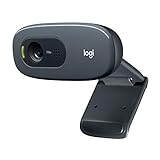
- Compatible with Nintendo Switch 2’s new GameChat mode
- Crisp HD 720p/30 fps video calls with diagonal 55° field of view and auto light correction. Compatible with popular platforms including Skype and Zoom.
- The built-in noise-reducing mic makes sure your voice comes across clearly up to 1.5 meters away, even if you’re in busy surroundings.
- C270’s RightLight 2 feature adjusts to lighting conditions, producing brighter, contrasted images to help you look good in all your conference calls.
- The adjustable universal clip lets you attach the camera securely to your screen or laptop, or fold the clip and set the webcam on a shelf. You’re always ready for your next video call.
3. FuseBase Capture: best for annotated team documentation
FuseBase Capture, presented in the vendor’s materials as part of the FuseBase collaboration suite and associated with the former Nimbus Capture product, is designed for explanations and handoffs rather than clean image export alone. The vendor’s screenshot page promotes entire-page screenshots, blur, annotations, screen recording, video trimming, watermarks, branded sharing, comments, tasks, dashboards, and uploads to services such as Slack, YouTube, Google Drive, and Dropbox.
The vendor page states that the free version allows recordings up to five minutes and the Pro plan allows recordings up to 10 hours. The product is a strong fit for bug reports, customer instructions, onboarding, and internal process documentation.
Cloud collaboration can be valuable for teams but creates data-governance questions. Choose a local extension instead when a confidential dashboard or customer record should not be uploaded to a collaboration service.
4. Awesome Screenshot: best for screenshot and recording workflows
Awesome Screenshot combines browser-based screenshot and screen-recording use cases with annotation and sharing. The product is more naturally evaluated as a communication tool than as a bare full-page capture utility. Consult the current product page and live pricing page before purchase because current plan details, storage, and collaboration limits were not readable in the research material.
Quick wins for a faster PC:
Repair Windows errors before they cause bigger problemsFix Now →Fix the driver behind crashes, sound loss and screen glitchesFind Drivers →Clear out junk files and repair common Windows errorsFree Scan →Awesome Screenshot is worth considering when a team wants screenshots, recordings, explanations, and sharing in one workflow. A reader who only needs a local PNG may find a focused extension such as GoFullPage or FireShot simpler.
How can you capture a full webpage in Chrome without an extension?
Chrome DevTools can capture a full-size webpage without installing a plugin. Open the page, open DevTools, open the Command Menu, search for screenshot, and select the relevant full-size screenshot command.
- Open the webpage in Chrome.
- Open DevTools with
F12,Ctrl+Shift+Ion Windows or Linux, orCmd+Option+Ion macOS. - Open the Command Menu with
Ctrl+Shift+Pon Windows or Linux, orCmd+Shift+Pon macOS. The shortcut is documented in Chrome’s DevTools Command Menu documentation. - Type
screenshot. - Choose the full-size, visible-area, or node screenshot command that matches the required output.
DevTools is particularly useful during development and debugging because it can capture a selected DOM node as well as the page. DevTools is not a batch URL service, scheduled monitoring system, or hosted screenshot API. Exact command labels can change between Chrome releases, so look for the command beginning with “Capture screenshot” if wording differs.
Which screenshot APIs generate an image from a URL?
5. ScreenshotOne: best straightforward screenshot API
ScreenshotOne is a strong choice when code needs to turn a URL or HTML into a screenshot or PDF. Its pricing page viewed August 18, 2026 listed 100 free screenshots per month without a credit card, followed by Basic at $17 per month for 2,000 screenshots, Growth at $79 per month for 10,000, and Scale at $259 per month for 50,000. The page states that prices exclude VAT and that annual billing provides two months free.
Rank #3

- 【Full HD 1080P Webcam】Powered by a 1080p FHD two-MP CMOS, the NexiGo N60 Webcam produces exceptionally sharp and clear videos at resolutions up to 1920 x 1080 with 30fps. The 3.6mm glass lens provides a crisp image at fixed distances and is optimized between 19.6 inches to 13 feet, making it ideal for almost any indoor use.
- 【Wide Compatibility】Works with USB 2.0/3.0, no additional drivers required. Ready to use in approximately one minute or less on any compatible device. Compatible with Mac OS X 10.7 and higher / Windows 7, 8, 10 & 11 / Android 4.0 or higher / Linux 2.6.24 / Chrome OS 29.0.1547 / Ubuntu Version 10.04 or above. Not compatible with XBOX/PS4/PS5.
- 【Built-in Noise-Cancelling Microphone】The built-in noise-canceling microphone reduces ambient noise to enhance the sound quality of your video. Great for Zoom / Facetime / Video Calling / OBS / Twitch / Facebook / YouTube / Conferencing / Gaming / Streaming / Recording / Online School.
- 【USB Webcam with Privacy Protection Cover】The privacy cover blocks the lens when the webcam is not in use. It's perfect to help provide security and peace of mind to anyone, from individuals to large companies. 【Note:】Please contact our support for firmware update if you have noticed any audio delays.
- 【Wide Compatibility】Works with USB 2.0/3.0, no additional drivers required. Ready to use in approximately one minute or less on any compatible device. Compatible with Mac OS X 10.7 and higher / Windows 7, 10 & 11, Pro / Android 4.0 or higher / Linux 2.6.24 / Chrome OS 29.0.1547 / Ubuntu Version 10.04 or above. Not compatible with XBOX/PS4/PS5.
The service lists full-page screenshots, HTML rendering, PDF rendering, PNG, WebP, and JPEG output, webhooks, S3 uploads, caching, signed links, ad and cookie-banner blocking, and stealth mode. The pricing FAQ states that successful requests are charged, subject to the page’s quota rules.
Choose ScreenshotOne when: an application needs a relatively simple URL-to-image API, previews, scheduled jobs, or document rendering. Do not choose it automatically when: the page contains confidential information or requires a private browser session that the service cannot authenticate into.
6. Urlbox: best for production-oriented rendering
Urlbox targets businesses that need more production-oriented rendering controls and higher usage than a browser extension provides. The Urlbox pricing page viewed August 18, 2026 listed Lo-Fi at $19 per month for up to 2,000 renders, Hi-Fi at $49 for up to 5,000, Ultra at $99 for up to 15,000, Business at $498 with base-plus-usage terms, and Enterprise starting from $3,000 per month. The page states that prices exclude VAT.
Depending on the plan, Urlbox lists JavaScript rendering, full-page screenshots, 4K or 5K output, PDFs, custom JavaScript, proxy support, storage integrations, and higher request rates. Several plans advertise a seven-day trial without a credit card.
Do these 3 things before closing this tab:
1Clear out junk files and repair common Windows errors2Fix the driver behind crashes, sound loss and screen glitches3Repair Windows errors before they cause bigger problemsUrlbox is much more expensive than a one-off extension, so the extra controls should justify the cost. Claims that a service can capture “any webpage” should be qualified: CAPTCHAs, anti-bot systems, private networks, login screens, geo restrictions, and interactive consent flows can still block or change a render.
Which developer tools give the most screenshot control?
7. Playwright: best for custom automation and visual testing
Playwright is the best fit when a screenshot requires navigation, clicking, scrolling, authentication, custom waits, viewport emulation, or visual-regression testing. The official Playwright screenshot documentation provides these Node.js patterns:
await page.screenshot({ path: 'screenshot.png' });For a full page:
await page.screenshot({
  path: 'screenshot.png',
  fullPage: true
});
For a specific element:
await page.locator('.header').screenshot({
  path: 'screenshot.png'
});
Playwright can also capture into a buffer for further processing. The trade-off is engineering effort. Reliable automated screenshots require controlled fonts, animations, network conditions, viewport size, device-pixel ratio, page readiness, timeouts, and browser versions.
8. Puppeteer: best established Chromium automation library
Puppeteer is a good alternative for developers already working in the Chrome and Chromium ecosystem. The official Puppeteer screenshot guide covers browser-controlled screenshot workflows, while the documentation identified version 25.8.0 at research time. Puppeteer releases frequently, so the version should be checked before publication.
Puppeteer is suitable for URL capture, full-page images, PDFs, and self-hosted screenshot services. Puppeteer is not a casual consumer utility: the team must manage Chromium versions, timeouts, fonts, page readiness, resource limits, and infrastructure.
Rank #4

- 1080P Webcam with Cover for Video Calls - EMEET computer webcam provides design and Optimization for professional video streaming. Realistic 1920 x 1080p video, 5-layer anti-glare lens, providing smooth video. C960 computer camera delivers 1920x1080 video with fixed focus (11.8–118.1 inches), so as to provide a clearer image. C960 USB webcam has a cover and can be removed automatically to meet your needs for privacy. For optimal image performance, use the webcam in a well-lit environment.
- Built-in 2 Omnidirectional Mics - EMEET webcam with microphone for desktop features 2 built-in omnidirectional microphones, picking up your voice to create clear audio for communication. When installing the webcam, select EMEET C960 as the default microphone input device in your computer and video applications and select C960 as the default device in Zoom/Teams and ensure microphone permissions are enabled for proper use. Please note that C960 does not include built-in speakers.
- Automatic Light Adjustment - Automatic exposure adjustment is applied in EMEET HD webcam 1080p so that the streaming webcam can deliver stable image performance. EMEET C960 camera for computer also features color adjustment and exposure optimization to help you look your best. For optimal video quality, it is recommended to use the webcam in normal or well-lit environments and select suitable video settings in your application. Proper lighting helps achieve a clearer and more balanced image.
- Plug-and-Play & Upgraded USB Connectivity - New C960 webcam features both USB Type-A & A-to-C adapter connections for wider compatibility. For stable performance, connect the webcam directly to the computer's main USB port and ensure the device is recognized correctly. If a hub or docking station is used, please ensure it provides sufficient power and stable data transmission, as limited ports may affect performance. 90° wide-angle lens captures more participants without frequent adjustments.
- High Compatibility & Multi Application - C960 webcam for laptop is compatible with Windows 10/11, macOS 10.14+, and Android TV 7.0+. Not supported: Windows Hello, TVs, tablets, or game consoles. It works with Zoom, Teams, Facetime, Google Meet, YouTube and more. Please select C960 webcam as the default camera and microphone device in your application and ensure camera/microphone permissions are enabled, especially on macOS. (Tips: Incompatible with Windows Hello)
9. Browserless: best managed browser infrastructure
Browserless is aimed at developers who need hosted browser automation or browser infrastructure rather than a simple screenshot button. Browserless can be considered when a team wants to operate Playwright or Puppeteer-style workflows without maintaining every browser process itself. The Browserless pricing page should be checked for current usage limits and plan details because exact readable prices were not captured in the research material.
Browserless is a poor fit for a one-off personal screenshot. Browserless becomes more relevant when browser sessions, automation, and production infrastructure are part of a larger application.
Which tool generates images from HTML and CSS?
10. HTML/CSS to Image: best for generated social cards and templates
HTML/CSS to Image belongs in this list because many searches for a website screenshot generator actually mean “create a consistent image from HTML and CSS.” The service is suited to social cards, certificates, invoices, badges, product images, and other templated graphics. Its pricing page is the correct place to verify current quotas and plan prices; exact dollar amounts were not exposed in the research material.
Recommended Free Tools
HTML/CSS to Image is not a direct replacement for GoFullPage. A renderer receives supplied markup and styles, whereas a webpage-capture tool attempts to represent a live page with its current content, session, layout, and browser state. Choose HTML/CSS to Image when repeatable template output matters more than capturing an arbitrary third-party website.
How do the 10 website screenshot tools compare?
| Tool | Category | Capture source | Automation | Output or workflow | Privacy model | Main limitation |
|---|---|---|---|---|---|---|
| GoFullPage | Chrome extension | Current Chrome page | One-off browser capture | Image and PDF | Browser-based; review current permissions | Not a scheduled URL or batch API |
| FireShot | Chrome extension | Current page, selected area, or tabs | Batch tabs and URL lists | PNG, JPEG, GIF, BMP, PDF, clipboard, annotation, blur | Vendor states local/offline processing | Some useful functions require an upgrade |
| FuseBase Capture | Browser extension and collaboration suite | Current browser page | Team sharing and recording workflow | Screenshot, recording, blur, annotations, comments, tasks | Cloud collaboration | May be excessive for a local image |
| Awesome Screenshot | Browser screenshot and recording tool | Browser content and screen | Sharing and collaboration | Screenshot, annotation, recording, sharing | Cloud features may be available | Current plans and storage need verification |
| Chrome DevTools | Built-in browser tool | Current Chrome page or DOM node | Manual developer workflow | Visible-area, full-size, and node capture | Performed in the browser | Less convenient and not a hosted API |
| ScreenshotOne | Hosted screenshot API | URL or HTML | Webhooks, caching, S3, batch application jobs | PNG, WebP, JPEG, PDF, full-page output | Remote rendering | Cost and access limitations for private pages |
| Urlbox | Production screenshot API | Remote URL | Higher-volume rendering and custom scripts | Images, PDFs, JavaScript rendering, high-resolution output | Remote rendering | Higher cost and plan differences |
| Playwright | Browser automation library | URL, authenticated context, or local app | Custom code, CI, testing | Page, element, clipped, and full-page images | Self-managed or hosted by the developer | Requires code and maintenance |
| Puppeteer | Chromium automation library | URL or controlled Chromium page | Custom self-hosted automation | Images, PDFs, and browser workflows | Self-managed or hosted by the developer | Chromium and infrastructure maintenance |
| HTML/CSS to Image | HTML/CSS rendering service | Supplied markup and styles | Application and template automation | Generated graphics and social images | Remote rendering unless self-hosted alternative is used | Not intended for arbitrary live pages |
Which capture modes should you look for?
The correct capture mode depends on what the final image must prove or communicate.
| Capture mode | Best use | Common problem |
|---|---|---|
| Visible viewport | Showing exactly what a visitor sees without scrolling | Does not include content below the fold |
| Selected region | Highlighting a small interface or error | May omit context needed by the reader |
| Full scrollable page | Articles, documentation, receipts, and page archives | Lazy loading, sticky elements, and virtual scrolling can break the result |
| DOM element | Capturing a header, card, chart, or component | Requires a browser tool that can select the element |
| Inner scrollable element | Capturing a table, panel, or embedded list | The tool may scroll the page instead of the nested container |
| Batch URL capture | Site previews, inventories, and repeated jobs | Requires an API or automation workflow rather than a normal extension |
| Authenticated capture | Private dashboards and staging environments | Remote APIs need documented authentication or supplied cookies |
| Mobile or desktop viewport | Responsive design checks and visual regression | Different fonts, breakpoints, device pixels, and timing change the image |
How do you choose between a Chrome extension, API, and automation library?
Use a browser extension or DevTools when one person needs one page immediately. Use an API when an application needs many URLs, scheduled jobs, webhooks, storage integrations, or captures independent of a user’s computer. Use Playwright or Puppeteer when the browser must click, scroll, log in, wait for a selector, set cookies, inject JavaScript, or reproduce a controlled test state.
- One page now: GoFullPage, FireShot, or Chrome DevTools.
- PDF archive or local batch: FireShot.
- Bug explanation or team handoff: FuseBase Capture or Awesome Screenshot.
- Many public URLs: ScreenshotOne or Urlbox.
- Login, interaction, or visual testing: Playwright or Puppeteer.
- Self-hosted browser service: Playwright, Puppeteer, or Browserless.
- Social cards and templated graphics: HTML/CSS to Image.
Why do full-page screenshots fail?
Full-page capture is a stitched rendering operation, not a guarantee that every pixel in a web application will be represented correctly. The most common failures are lazy-loaded images, infinite scrolling, virtualized lists, nested scroll containers, sticky headers, fixed chat widgets, cross-origin iframes, unfinished fonts, animations, canvas or WebGL content, cookie dialogs, and screenshots taken before JavaScript hydration finishes.
Free tools Windows power users keep installed
One-click scans. No signup required.
Fixes for incomplete or distorted captures
- Wait for content: Allow images, fonts, and JavaScript-rendered components to finish before capturing. In automation, wait for a meaningful selector rather than relying only on a fixed short delay.
- Scroll before capture: Slowly scroll through pages that lazy-load images, then return to the top and capture. This does not solve true infinite scrolling or virtualized lists.
- Capture the element: Use a node or element screenshot for a panel, table, card, or chart instead of trying to stitch the entire application.
- Disable motion: Turn off animations and transitions when producing repeatable test images.
- Remove overlays carefully: Close cookie notices, chat widgets, and modals when the goal is a clean documentation image. Keep the overlay when the screenshot is meant to document the real visitor experience.
- Use automation for private workflows: Extensions and DevTools use the open browser session; a URL API needs an authentication method that the service supports.
- Split very long pages: A PDF or several section captures may be more useful than one extremely tall image.
How should you handle privacy, permissions, and logged-in pages?
Prefer local browser capture for internal dashboards, customer records, financial information, private support tickets, and other confidential pages. A local workflow avoids sending the rendered page to a remote screenshot service, although “local” does not automatically mean that an extension collects no telemetry or account information.
Before installing an extension, inspect whether it requests permission to read and change data on websites, whether the screenshot can be uploaded optionally or automatically, whether an account is required, and whether the publisher provides a clear privacy policy. Before using a cloud API, check data retention, request logging, regional processing, authentication support, and whether URLs or rendered images are stored.
Best Value

- Compatible with Nintendo Switch 2’s new GameChat mode
- HD lighting adjustment and autofocus: The Logitech webcam automatically fine-tunes the lighting, producing bright, razor-sharp images even in low-light settings. This makes it a great webcam for streaming and an ideal web camera for laptop use
- Advanced capture software: Easily create and share video content with this Logitech camera that is suitable for use as a desktop computer camera or a monitor webcam
- Stereo audio with dual mics: Capture natural sound during calls and recorded videos with this 1080p webcam, great as a video conference camera or a computer webcam
- Full HD 1080p video calling and recording at 30 fps. You'll make a strong impression with this PC webcam that features crisp, clearly detailed, and vibrantly colored video
For login-protected pages, use Chrome DevTools or a local extension if the page is already open and authenticated. Use Playwright or Puppeteer with an explicit authenticated browser context when automation is required. Use a hosted API only when its documented authentication and security model is acceptable for the data involved.
What should you check before paying for a screenshot API?
Check the actual quota, output dimensions, PDF availability, full-page limits, cache rules, overage pricing, VAT treatment, annual-billing terms, webhooks, storage integrations, JavaScript support, custom scripts, authentication options, proxy or geographic controls, and data-retention policy. A free quota may restrict image dimensions, rendering features, commercial use, or caching.
What’s actually slowing this PC down?
Pick the symptom - the matching free tool is one click away.
API prices are not directly comparable with extension prices. An extension mainly saves a user time; an API adds recurring rendering and storage costs; a self-hosted library shifts the cost into engineering time, compute, CI, browser maintenance, and support; and a team product may add collaboration, storage, and retention costs.
Do not buy a production API solely because it claims to capture any webpage. Test the exact pages that matter, including login screens, dashboards, CAPTCHA or bot protection, consent banners, lazy-loaded content, iframes, and pages with geographic restrictions.
Frequently Asked Questions
Can I take a full-page screenshot in Chrome without installing a plugin?
Yes. Open Chrome DevTools, open the Command Menu with Ctrl+Shift+P on Windows or Linux or Cmd+Shift+P on macOS, search for “screenshot,” and choose the full-size screenshot command. Chrome documents the Command Menu at its official DevTools documentation.
What is the best free Chrome extension for a full-page screenshot?
GoFullPage is the best default free Chrome extension for a quick full-page capture of the current page. FireShot is a stronger alternative when you need broader local export, PDF, annotation, blur, or batch-capture features, although some FireShot functions require an upgrade.
Outdated Drivers Are Slowing You Down
One free scan finds every outdated or missing driver and matches the right update for your exact hardware.Free scan · exact hardware matchPC Slower Than It Used to Be?
A free scan shows the junk files, broken settings and background clutter dragging Windows down - then fixes them in one click.Free scan · Windows 10 & 11Can a screenshot API capture a page that requires a login?
A screenshot API can capture a login-protected page only when the API supports an appropriate authentication method and the account, cookies, or credentials are configured safely. For a page already open in a private browser session, Chrome DevTools or a local extension is usually simpler; Playwright or Puppeteer is better for repeatable authenticated automation.
What is the difference between a screenshot generator and an HTML/CSS image generator?
A screenshot generator captures a live webpage or renders a URL, while an HTML/CSS image generator creates an image from supplied markup and styles. HTML/CSS to Image is better for repeatable social cards, certificates, invoices, and templates than for capturing an arbitrary live website.
The Bottom Line
Choose the tool that matches the workflow rather than treating all 10 products as interchangeable. Use GoFullPage for a fast Chrome full-page capture, FireShot for local documents and batch exports, FuseBase Capture or Awesome Screenshot for collaborative explanations, Chrome DevTools for a no-install capture, ScreenshotOne or Urlbox for URL-based rendering, Playwright or Puppeteer for controlled automation, and HTML/CSS to Image for generated graphics.
Quick Recap
Product prices and availability are accurate as of the date/time indicated and are subject to change. Any price and availability information displayed on Amazon at the time of purchase will apply.
Do these 3 things before closing this tab:
1Repair Windows errors before they cause bigger problems2Fix the driver behind crashes, sound loss and screen glitches3Clear out junk files and repair common Windows errors
